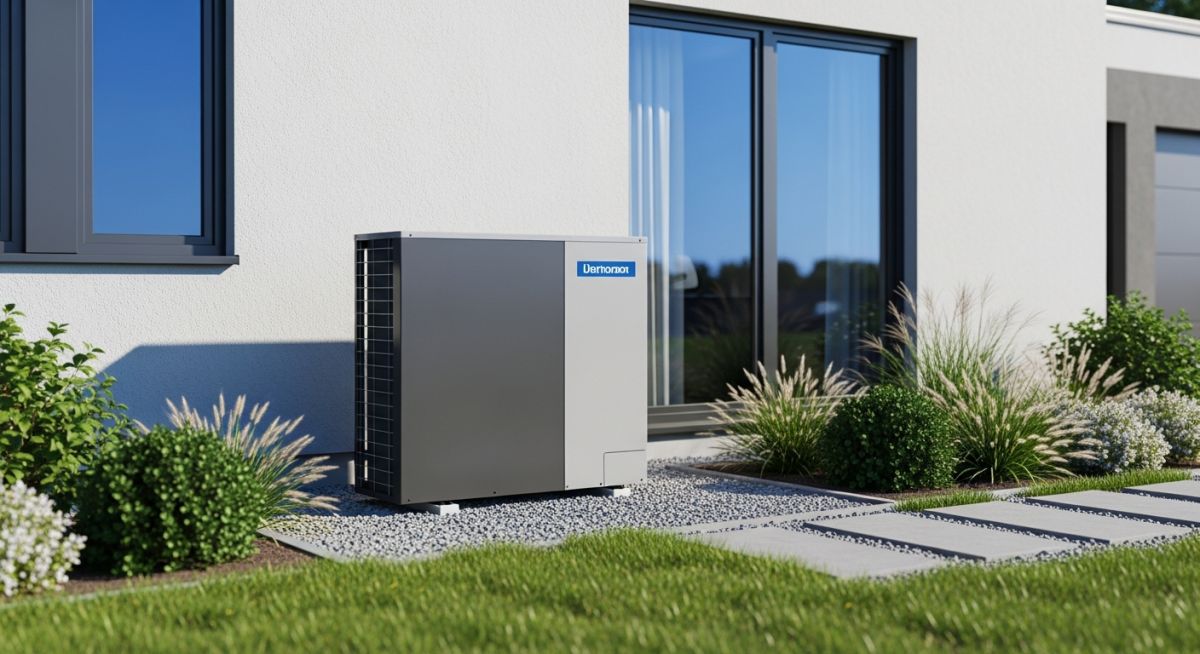
What is a Heat Pump and How Does It Work?
In my 20 years of designing industrial piping and HVAC systems, I have watched the industry shift dramatically toward decarbonization. The heat pump is no longer just an alternative heating option; it has become the cornerstone of modern, low-carbon thermal engineering. When I review mechanical designs for commercial facilities, the first question I ask is how we can optimize the refrigeration cycle to minimize energy consumption. Understanding the mechanical nuances of these systems is what separates a standard installation from an ultra-efficient, long-lasting thermal plant.
Key Engineering Takeaways
- Thermodynamic Efficiency: Heat pumps deliver up to three to four times more heat energy than the electrical energy they consume by moving heat rather than generating it.
- Reversibility: A single reversing valve allows the system to switch seamlessly between heating and cooling modes, eliminating the need for separate boiler and chiller loops.
- Decarbonization Impact: Transitioning to high-efficiency heat pump technology directly supports electrification goals and reduces scope 1 emissions on-site.
How Does a Heat Pump Transfer Thermal Energy?
Refrigeration Cycle Dynamics: The heat pump refrigeration cycle utilizes a closed loop of volatile refrigerant to absorb, compress, and reject heat across indoor and outdoor coils, governed by the second law of thermodynamics and AHRI 210/240 testing protocols.
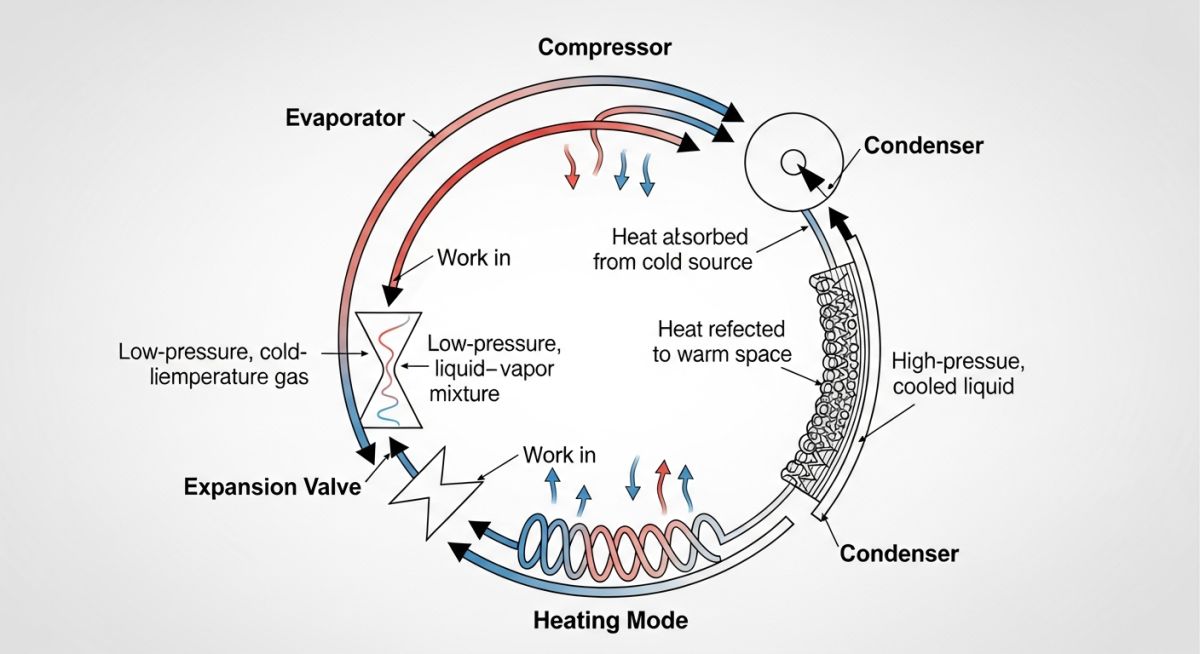
To truly understand a heat pump, we must look at the closed-loop vapor-compression cycle. The system does not create heat; instead, it uses a refrigerant working fluid to capture heat from one environment and reject it into another. This cycle relies on four primary mechanical components:
- The Compressor: The heart of the system. It draws in low-pressure, low-temperature refrigerant vapor and compresses it into a high-pressure, high-temperature vapor. This process requires electrical work input.
- The Condenser: In heating mode, this is the indoor heat exchanger. The high-temperature vapor rejects its latent heat to the indoor air or water loop, causing the refrigerant to condense into a high-pressure liquid.
- The Expansion Valve (TXV/EEV): This device throttles the high-pressure liquid refrigerant, dropping its pressure and temperature rapidly. This flash-gas mixture is now colder than the outdoor ambient air.
- The Evaporator: In heating mode, this is the outdoor heat exchanger. The cold refrigerant absorbs heat from the outdoor air, ground, or water source, boiling the liquid back into a low-pressure vapor before it re-enters the compressor.
The magic of the heat pump lies in the Reversing Valve. This four-way slide valve alters the flow path of the refrigerant discharge from the compressor. By shifting its internal slide, it swaps the roles of the indoor and outdoor coils, allowing the system to transition from heating to cooling mode instantly.
Operating a heat pump in low ambient temperatures without adequate superheat control can lead to unevaporated liquid refrigerant entering the compressor suction port. Because liquids are incompressible, this causes immediate mechanical failure of the scroll or reciprocating elements, violating ASHRAE 15 safety and design limits.
The Mathematics of Efficiency
We measure heat pump efficiency using the Coefficient of Performance (COP). Unlike combustion systems which have a maximum theoretical efficiency of 100 percent, a heat pump regularly achieves COPs of 3.0 to 4.5.
COP_heating = Q_high / W_input
COP_cooling = Q_low / W_input
Where Q_high is the heat delivered to the hot sink, Q_low is the heat absorbed from the cold source, and W_input is the electrical work supplied to the compressor and auxiliary controls. The maximum theoretical limit is defined by the Carnot COP:
COP_carnot_heating = T_high / (T_high – T_low)
Note that all temperatures must be in Kelvin. As the temperature difference between the source and the sink increases, the denominator grows, which mathematically reduces the COP. This is why air-source heat pumps become less efficient as outdoor temperatures drop.
Which Heat Pump Type Fits Your Project?
Heat Pump Classification: Selecting the correct heat pump configuration depends on the thermal source medium, local climate profiles, and specific coefficient of performance targets under ISO 13256 standards.
| Heat Pump Type | Source / Sink Medium | Typical Heating COP | Typical Cooling EER | Operating Limits | Standard Reference |
|---|---|---|---|---|---|
| Air-Source (ASHP) | Ambient Air / Indoor Air | 2.5 – 4.0 | 10.0 – 15.0 | -25°C to 45°C | AHRI 210/240 |
| Ground-Source (GSHP) | Ground Soil / Indoor Air or Water | 3.5 – 5.0 | 15.0 – 25.0 | -5°C to 35°C (Fluid) | ISO 13256-1 |
| Water-Source (WSHP) | Surface Water / Indoor Air | 4.0 – 5.5 | 18.0 – 30.0 | 5°C to 30°C (Water) | ISO 13256-2 |
| Absorption Heat Pump | Waste Heat or Gas / Water Loop | 1.2 – 1.8 | 0.7 – 1.2 | Dependent on heat source | ANSI Z21.40.1 |
| Acronym / Entity | Technical Definition | Physical Unit | Design Significance |
|---|---|---|---|
| COP | Coefficient of Performance | Dimensionless (W/W) | Indicates instantaneous efficiency at a specific operating point. |
| HSPF2 | Heating Seasonal Performance Factor 2 | BTU / Wh | Measures seasonal heating efficiency under realistic external static pressures. |
| SEER2 | Seasonal Energy Efficiency Ratio 2 | BTU / Wh | Measures seasonal cooling efficiency taking standby losses into account. |
| TXV / EEV | Thermostatic / Electronic Expansion Valve | N/A (Mechanical Device) | Controls refrigerant mass flow rate to maintain target evaporator superheat. |
How to Commission a Heat Pump System?
Commissioning Protocols: Field verification of heat pump installations requires systematic testing of refrigerant charge, electrical draw, airflow rates, and sensor calibration in accordance with ACCA Manual 5 guidelines.
During my field audits, I often find that poor commissioning is the root cause of premature compressor failure and high energy bills. Use this checklist to verify that your system is set up for maximum reliability:
-
Refrigerant Charge Verification: Measure subcooling (for TXV systems) or superheat (for fixed orifice systems) to ensure compliance with manufacturer specifications within +/- 1 degree Fahrenheit.
-
Airflow Rate Validation: Verify that the indoor blower delivers between 350 and 450 CFM per ton of cooling capacity using a calibrated balometer.
-
Electrical Draw Analysis: Measure compressor run-load amps (RLA) and locked-rotor amps (LRA) to confirm they do not exceed nameplate values.
-
Reversing Valve Operation: Cycle the system between heating and cooling modes three times to ensure the slide valve shifts completely without sticking.
-
Sensor Calibration: Verify that ambient air temperature sensors and coil thermistors read within 0.5 degrees Celsius of actual temperatures.
Field Case Study: Real-World Application
Low-Temperature Performance Optimization: Resolving capacity degradation in sub-zero climates requires advanced compressor technologies and precise defrost cycle management to maintain system reliability.
A commercial office building in Minneapolis, Minnesota, experienced a severe heating capacity drop of 45% when outdoor temperatures fell below -15 degrees Celsius. The existing air-source heat pump system entered frequent, uncoordinated defrost cycles, causing the auxiliary electric resistance heaters to run continuously. This resulted in a massive spike in utility costs and unstable indoor temperatures, violating the facility’s comfort criteria.
I led the engineering team to retrofit the system with vapor-injection scroll compressors and updated the defrost control logic. By injecting intermediate-pressure refrigerant vapor directly into the compression pocket, we increased low-temperature heating capacity by 28% and raised the low-ambient COP from 1.2 to 1.8. We also replaced the time-temperature defrost controllers with demand-defrost sensors that monitor coil-to-ambient temperature differentials. This reduced unnecessary defrost cycles by 40%, saving the client over 12,000 in seasonal operating costs and stabilizing the indoor thermal environment.
Recommendation: Always specify vapor-injection or variable-speed inverter compressors for installations where design temperatures drop below -5 degrees Celsius.
Frequently Asked Engineering Questions
Technical FAQ Directory: Addressing common engineering inquiries regarding heat pump operation, efficiency metrics, and maintenance requirements ensures optimal system selection and longevity.
What is the difference between COP and HSPF2?
How does a heat pump perform in extremely cold climates?
Why is a reversing valve necessary in a heat pump?
What are the environmental impacts of modern refrigerants?
How does auxiliary heat work and when does it engage?
What maintenance steps prevent compressor failure?
Complete Course on
Piping Engineering
Check Now
Key Features
- 125+ Hours Content
- 500+ Recorded Lectures
- 20+ Years Exp.
- Lifetime Access
Coverage
- Codes & Standards
- Layouts & Design
- Material Eng.
- Stress Analysis