What is Process Engineering and What Do Process Engineers Do?

Imagine a massive petrochemical refinery or a high-tech pharmaceutical plant suddenly losing 5% of its production yield. To the uninitiated, it looks like a mechanical failure. To the Process Engineer, it is a problem of thermodynamics, fluid dynamics, and mass balance.
Whether it is turning crude oil into gasoline or ensuring a vaccine is produced with 99.9% purity, Process Engineering is the invisible hand that makes large-scale industrial production possible. In this 2026 guide, we strip away the jargon to explain what this discipline entails and how you can master it.
Key Takeaways
- The Core Focus: Understanding that process engineering is about the “system” rather than just the “substance.”
- Career Versatility: Exploring why process engineers are in high demand across energy, pharma, and food sectors.
- Practical Mastery: How to transition from theoretical chemical engineering to field-ready process design.
Quick Answer
Process Engineering is the design, operation, and optimization of chemical and physical processes that turn raw materials into valuable products. While chemical engineering focuses on the “what,” process engineering focuses on the “how”—ensuring efficiency, safety, and scalability in industrial environments through P&IDs, heat balances, and automation.
“I have spent over two decades in the EPC world, and I can tell you this: A Process Engineer is the architect of the plant. Without their P&IDs and mass balances, the mechanical, civil, and electrical teams have nothing to build. It is the most critical starting point for any industrial project.”
— Atul Singla, Founder of Epcland
Complete Course on
Piping Engineering
Check Now
Key Features
- 125+ Hours Content
- 500+ Recorded Lectures
- 20+ Years Exp.
- Lifetime Access
Coverage
- Codes & Standards
- Layouts & Design
- Material Eng.
- Stress Analysis
Process Engineering Knowledge Check
Test your expertise in industrial process design and optimization.
1. Which document serves as the primary “blueprint” for a Process Engineer during the detailed design phase?
Definition: What is Process Engineering in the 2026 Industry?
In the current industrial landscape of 2026, Process Engineering has evolved far beyond the traditional manipulation of chemicals. It is now defined as the holistic discipline focused on the design, operation, control, and optimization of physical and chemical processes. At its core, it is about transforming raw materials and energy into finished products in the most efficient, sustainable, and safe manner possible. Whether the output is refined gasoline, life-saving pharmaceuticals, or processed food products, the process engineer ensures the entire system functions as a cohesive unit.
The modern Process Engineer utilizes advanced digital twins and AI-driven simulation models to predict how a plant will behave before a single pipe is laid. In the context of Engineering, Procurement, and Construction (EPC) projects, process engineering is the “lead” discipline. It sets the design basis for every other department. If the process design is flawed, the mechanical equipment will be sized incorrectly, the piping will be inefficient, and the control systems will fail to maintain stability.

Process Engineering vs. Chemical Engineering: Understanding the Key Differences
One of the most frequent points of confusion for students and young professionals is the distinction between Chemical Engineering and Process Engineering. While they share a common scientific foundation—thermodynamics, kinetics, and fluid mechanics—their application scales are vastly different. Chemical Engineering often focuses on the “molecular” level: understanding the reaction kinetics, the chemistry of the catalyst, and the fundamental properties of the matter.
In contrast, Process Engineering is the application of these chemical principles on an “industrial” scale. A chemical engineer might determine that a specific reaction requires a temperature of 250 degrees Celsius; the process engineer determines how to achieve that temperature using a shell-and-tube heat exchanger, what the flow rate should be, how to handle the pressure drop, and how to integrate that heat into the rest of the plant’s energy cycle. Essentially, chemical engineering provides the “What,” while process engineering provides the “How” within the constraints of a real-world facility.
Core Technical Skills Required for Process Engineering Excellence
To succeed in Process Engineering, a professional must master a blend of theoretical knowledge and practical design tools. The barrier to entry is high because the cost of error in this field can lead to catastrophic plant failures or multi-million dollar production losses. The following technical pillars form the foundation of the discipline:
-
1
Heat and Mass Balance (HMB): The ability to account for every kilogram of material and every kilojoule of energy entering and leaving the system. This is the ultimate verification of a process design.
-
2
PFD & P&ID Development: Creating Process Flow Diagrams (PFDs) to show the main flow and Piping and Instrumentation Diagrams (P&IDs) to show the granular detail of every valve, instrument, and pipe size.
-
3
Process Simulation: Mastery of software like Aspen HYSYS, PRO/II, or Honeywell UniSim to create steady-state and dynamic models of the industrial process.
-
4
Equipment Sizing & Selection: Calculating the necessary dimensions for distillation columns, reactors, pumps, and compressors based on hydraulic requirements and process conditions.
Day in the Life: What Does a Process Engineer Do?
The daily routine of a Process Engineer varies significantly depending on whether they are in the “Design” phase (Office) or the “Operational” phase (Plant). In a design office, the focus is on creation and calculation. You might spend your morning simulating a new separator in Aspen HYSYS and your afternoon coordinating with the Piping team to ensure the nozzle orientations on a vessel allow for proper fluid flow.
In a plant environment, the role becomes more tactical. A Process Engineer in operations is the primary troubleshooter. If a distillation column is experiencing “flooding” or a heat exchanger is losing efficiency due to fouling, the process engineer performs a “Root Cause Analysis” (RCA). They analyze real-time sensor data from the Distributed Control System (DCS), calculate current heat transfer coefficients, and recommend operational changes to stabilize the plant.
Process Engineering Jobs: Top Industries and Career Paths
The versatility of Process Engineering skills makes these professionals indispensable across multiple high-stakes industries. While the oil and gas sector remains a major employer, the transition toward “Green Energy” has opened massive opportunities in Hydrogen production, Carbon Capture, and Battery manufacturing.
| Industry Sector | Primary Responsibility | Key Deliverables |
|---|---|---|
| Oil & Gas (EPC) | Upstream and Downstream plant design. | P&IDs, HMB, Flare Header Sizing. |
| Pharmaceuticals | Batch process design and validation. | Sterile Process Design, CIP/SIP Cycles. |
| Renewable Energy | Electrolyzer and Biofuel scaling. | Mass balances for H2 production units. |
| Water Treatment | Desalination and waste purification. | Membrane selection and Hydraulic profiles. |
Global Salary Benchmarks for a Process Engineer
As of 2026, the demand for high-level Process Engineering expertise has driven salaries to record highs, especially for those with “Chartered” or “Professional Engineer” (PE) status. A Junior Process Engineer can expect a starting salary ranging from 70,000 USD to 90,000 USD in North America or Western Europe. Senior roles, particularly those in specialized sectors like LNG or Nuclear processing, often exceed 160,000 USD.
Compliance: The Role of Engineering Standards
A professional Process Engineer does not work in a vacuum; they work within a strict framework of international safety and quality standards. Mastery of these codes is what separates a student from a lead engineer.
Safety & Relief
API 520 / 521: These are the gold standards for sizing pressure-relieving systems and flare headers to prevent plant overpressure.
Pressure Vessels
ASME Section VIII: While mechanical engineers build the vessels, the process engineer defines the design pressure and temperature based on this code.
How to Become a Better Process Engineer
Becoming a “Master” in Process Engineering requires a commitment to continuous learning. First, get comfortable with the “Field.” Spend time walking down lines and seeing the actual pumps and valves you draw on paper. Second, learn the control logic. Understanding how a PID controller works will make you a better designer. Lastly, stay current with software updates; the integration of AI into process simulation is the most significant shift the industry has seen in a decade.
EPCLand YouTube Channel
2,500+ Videos • Daily Updates
Process Engineering: Pump Hydraulic Power Calculator
Quickly estimate the required shaft power for centrifugal pumps based on process conditions.
Hydraulic Power (kW)
13.62
Estimated Shaft Power (kW)
18.17
Note: Calculations based on g = 9.81 m/s2. Always include a safety margin (typically 10-20%) for final motor selection.
Process Engineering Failure Case Study: The Distillation Column Flooding Crisis
The Problem: Lost Throughput
A mid-sized chemical refinery reported a sudden 20% drop in the purity of its top-product stream from a primary distillation column. Operators attempted to increase the reflux ratio to compensate, but this led to a rapid increase in column differential pressure, eventually causing the column to "flood." The entire unit had to be shut down, costing the facility approximately 150,000 USD per day in lost production.
The Process Engineering Analysis
The lead Process Engineer performed a detailed hydraulic analysis using field data. By comparing the current operating point against the original design "Vapor-Liquid Traffic" charts, they discovered two critical issues:
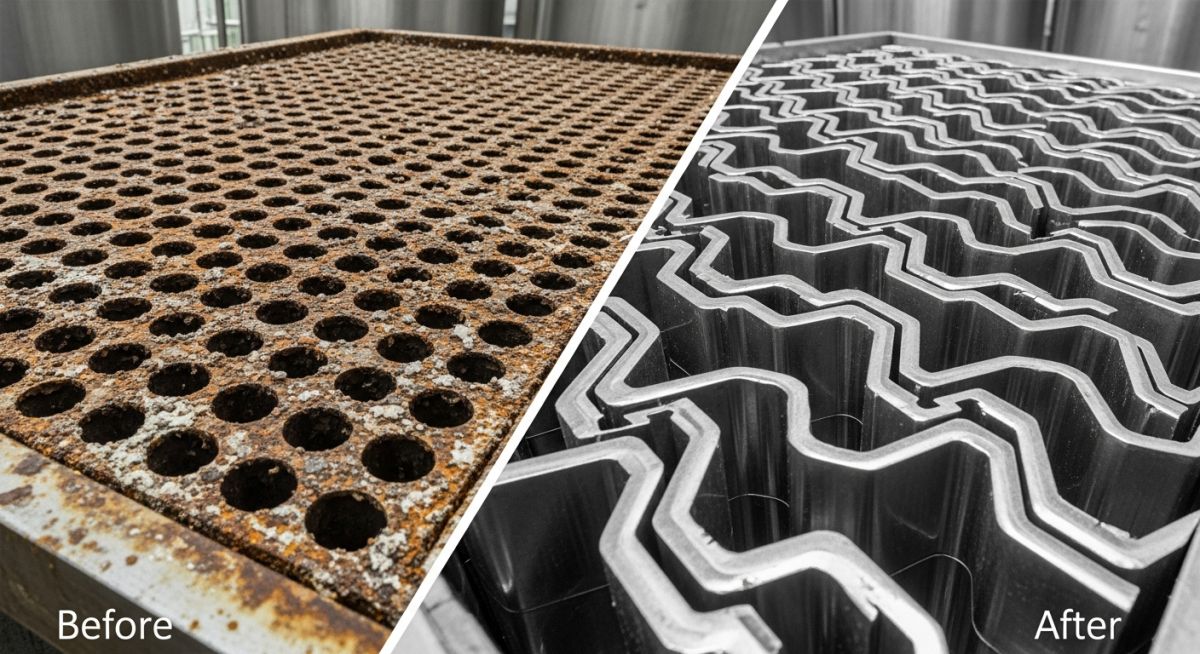
- Fouling accumulation: The tray active areas were partially blocked by polymer buildup, reducing the available area for vapor flow.
- Incorrect Feed Temperature: A failing upstream pre-heater was delivering feed at a sub-cooled temperature, forcing the column to use more internal energy to vaporize the liquid, thus overloading the lower trays.
The Engineering Intervention
Instead of simply cleaning the trays, the Process Engineering team redesigned the internal configuration. They replaced the standard sieve trays with high-capacity structured packing. This modification significantly reduced the pressure drop across the column and increased the surface area for mass transfer. Simultaneously, they implemented a new control logic in the DCS to maintain feed temperature within a strict 5-degree window.
The Result
Post-commissioning, the column not only returned to its original purity levels but exceeded its original design capacity by 12%. The total project ROI was achieved within just 45 days of operation. This case proves that a Process Engineer doesn't just "maintain" a plant—they evolve it.
Expert Insights: Lessons from 20 years in the field
Prioritize the P&ID: Never rush the Piping and Instrumentation Diagram. It is the legal and technical contract of the plant. A small error here costs ten times more to fix during construction.
Data over Intuition: In 2026, rely on your Digital Twin. If the simulation and the field data disagree, the field is usually telling you a truth about fouling or heat loss that your model missed.
Safety is Design: A Process Engineer's greatest contribution to safety isn't wearing a hard hat; it's ensuring the Pressure Safety Valves (PSVs) are sized for the "worst-case scenario."
Communicate Clearly: You are the bridge between the chemist and the pipefitter. If you cannot explain your process to a mechanical lead, your design will likely be unbuildable.
Frequently Asked Questions
What is the main difference between chemical and process engineering?
What software do process engineers use most in 2026?
Is process engineering a sustainable career path?
How does a Process Engineer impact plant safety during an EPC project?
Can a Process Engineer transition into Data Science or AI?
What is the first document a Process Engineer creates for a new project?
References & Standards
- → ASME (American Society of Mechanical Engineers) - BPVC Standards
- → API (American Petroleum Institute) - RP 520/521 Pressure Relieving Systems
- → ISO (International Organization for Standardization) - Quality & Environmental Standards
- → IChemE (Institution of Chemical Engineers) - Process Professional Development

Related posts:
![High-grade industrial Wing Nut Types and Applications for mechanical assemblies.]()
Wing Nut Types and Applications: The 2026 Engineering Guide
![Industrial Monorail Crane Systems installed in a modern manufacturing plant 2026.]()
Monorail Crane Systems: Design, Types & 2026 Standards Guide
![Lead engineer performing a Factory Acceptance Test FAT on an industrial skid system 2026]()
Factory Acceptance Test FAT: The 2026 Engineering Guide to Zero-Defect Delivery
![Professional engineering workspace showing a Basis of Design document layout for a 2026 project.]()
Basis of Design: How to Write a BOD for Engineering Projects in 2026
![Industrial Flare Knockout Drum Sizing and installation in a refinery relief system.]()
Flare Knockout Drum Sizing: Design & API 521 Standards (2026 Guide)
![Advanced Reboiler Control Systems in a modern petrochemical refinery 2026.]()
Reboiler Control Systems: Engineering Guide to Precision Control 2026