What is NFPA 37? NFPA 37 vs NFPA 110 for Stationary Engines
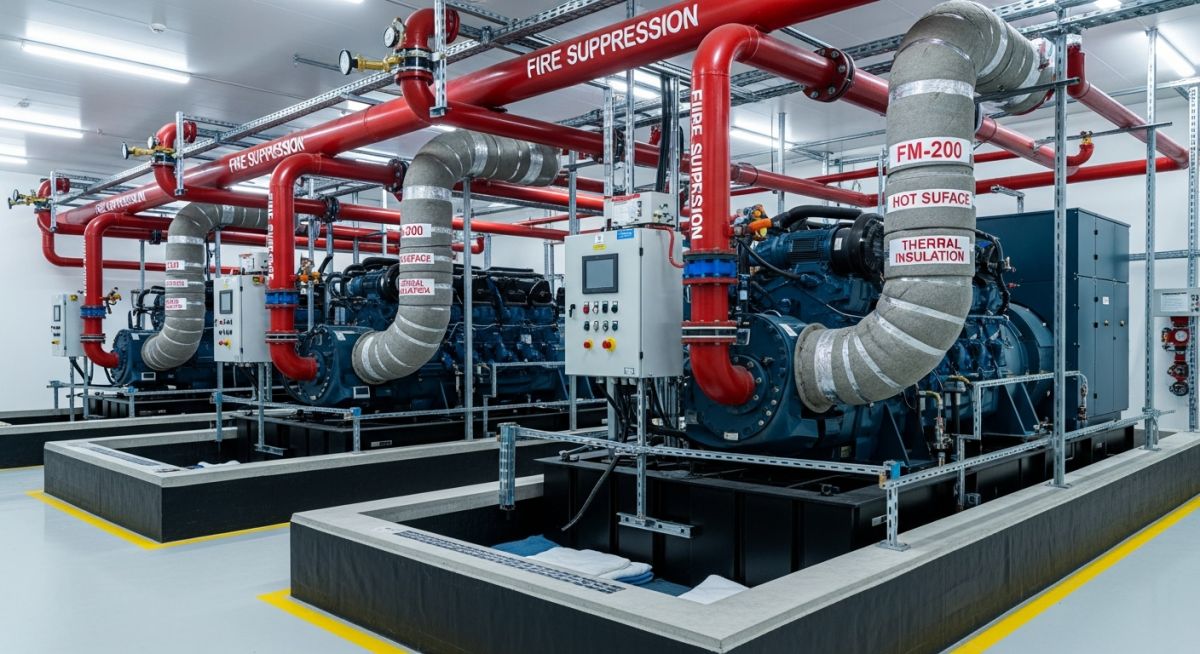
NFPA 37, officially titled the Standard for the Installation and Use of Stationary Combustion Engines and Gas Turbines, is the definitive regulatory framework for minimizing fire hazards associated with stationary power drivers. Whether used for emergency power, mechanical drive, or cogeneration, engines governed by this standard require specific engineering controls for fuel supply, exhaust systems, and physical placement to ensure the safety of both the facility and its personnel in the event of a fire.
What is the Purpose of NFPA 37?
NFPA 37 establishes minimum fire safety requirements for the installation and operation of stationary combustion engines and gas turbines. It focuses on physical installation parameters, including engine room construction, clearance to combustible materials, fuel piping safety, and exhaust system ventilation to prevent ignition and fire spread.
Article Contents
- Engineering Scope: What is NFPA 37 and Why Does it Matter?
- Key Fire Protection Requirements of NFPA 37 for Stationary Engines
- Critical NFPA 37 Installation Rules for Engine Rooms and Enclosures
- Essential Benefits of NFPA 37 for Industrial Facility Safety
- Technical Comparison: NFPA 37 vs NFPA 110 Explained
- Fuel System Integrity: NFPA 37 Guidelines for Gas and Liquid Fuels
- Exhaust System and Ventilation Standards Under NFPA 37
- NFPA 37 Case Study: Fire Mitigation in Emergency Generator Rooms
- Summary and Conclusion on NFPA 37 Compliance
NFPA 37 Technical Knowledge Check
Question 1 of 5Quiz Completed!
Complete Course on
Piping Engineering
Check Now
Key Features
- 125+ Hours Content
- 500+ Recorded Lectures
- 20+ Years Exp.
- Lifetime Access
Coverage
- Codes & Standards
- Layouts & Design
- Material Eng.
- Stress Analysis
Engineering Scope: What is NFPA 37 and Why Does it Matter?
The technical objective of NFPA 37 is to minimize the fire hazards associated with the installation and operation of stationary combustion engines and gas turbines. This standard applies to engines used for a variety of purposes, including emergency power generation, driving fire pumps, and providing mechanical power for compressors or pumps in industrial settings.
Failure to comply with NFPA 37 can lead to significant life safety risks and property damage. Because stationary engines involve high-temperature exhaust systems and flammable fuel supplies, they are inherent ignition sources. Compliance ensures that if a mechanical failure or fuel leak occurs, the resulting fire is contained and prevented from spreading to the rest of the facility.
Key Fire Protection Requirements of NFPA 37 for Stationary Engines
The fire protection strategy within NFPA 37 relies on a combination of physical separation, structural fire resistance, and automated safety controls. For engineers, understanding the "Fire Area" concept is vital for determining the necessary protection levels.
Fire Resistance Ratings and Containment
If an engine is located inside a building, NFPA 37 requires that the engine room be separated from the remainder of the building by walls, floors, and ceilings with at least a 1-hour fire resistance rating. This rating must increase to 2 hours if the engine is part of a mission-critical system where the failure of one engine could impact others.
Critical NFPA 37 Installation Rules for Engine Rooms and Enclosures
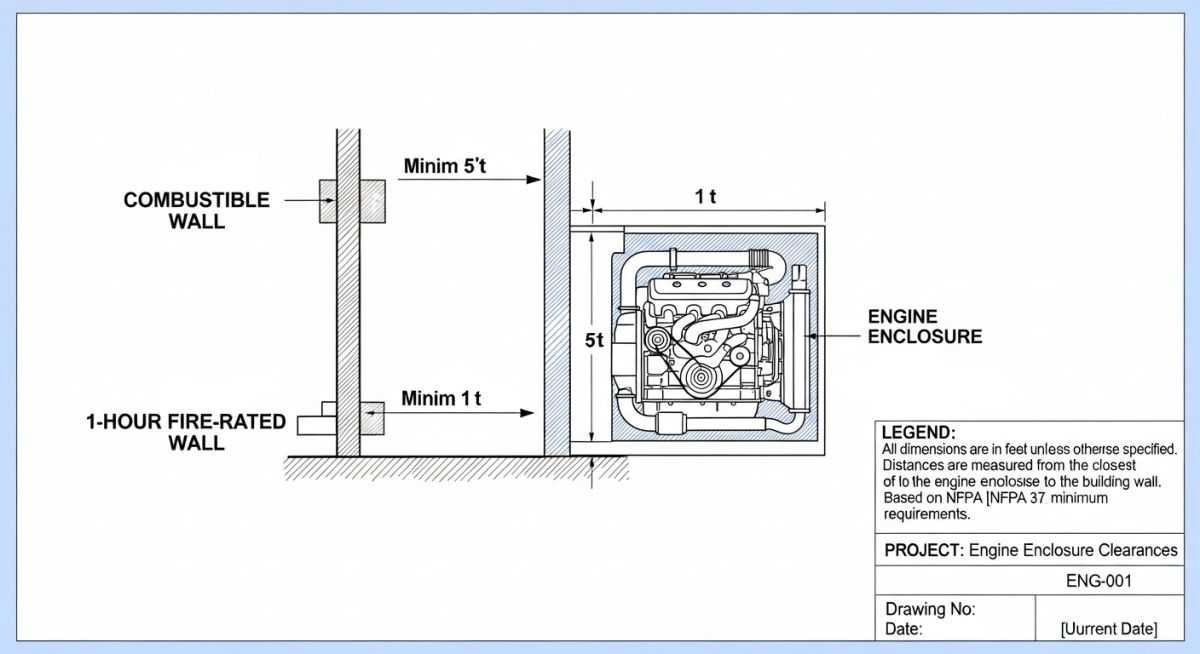
One of the most frequent points of inspection for NFPA 37 compliance is the clearance between the engine (or its enclosure) and the surrounding structures. These rules are designed to prevent radiant heat from igniting adjacent buildings.
The 5-Foot Clearance Rule in NFPA 37
Engines installed outdoors must be located at least 5 feet (1.5 meters) from openings in walls and at least 5 feet from structures having combustible walls. There are exceptions to this NFPA 37 rule if the wall has a fire resistance rating of at least 1 hour or if the engine is housed in a non-combustible weatherproof enclosure that has been tested for fire spread prevention.
| Installation Location | Wall Construction Type | Required Min. Distance |
|---|---|---|
| Outdoor Enclosure | Combustible Wall | 5 Feet (1.5 m) |
| Outdoor Enclosure | Non-combustible Wall | No Minimum (Refer to AHJ) |
| Engine Room (Interior) | Internal Partition | 1-Hour Fire Rating Required |
Integration with ASME and Mechanical Codes
While NFPA 37 governs the safety aspect, the mechanical design of the fuel piping systems must often adhere to ASME B31.3 (Process Piping). The standard requires that fuel lines are robustly supported and protected from vibration-induced fatigue, which is a common occurrence in stationary combustion engines.
Don't miss this video related to NFPA

Summary: Master Piping Engineering with our complete 125+ hour Certification Course: ......
Essential Benefits of NFPA 37 for Industrial Facility Safety
Adhering to NFPA 37 provides a multi-layered safety net for facilities that rely on stationary combustion engines. Beyond simple regulatory compliance, the standard offers tangible engineering benefits that safeguard long-term operations.
- Risk Mitigation: By enforcing strict fuel shutoff and exhaust temperature controls, NFPA 37 significantly reduces the probability of a small mechanical failure escalating into a facility-wide fire.
- Insurance Compliance: Most industrial insurers require proof of NFPA 37 compliance before underwriting policies for power plants or data centers.
- Operational Continuity: Proper ventilation and exhaust design prevent engine overheating and the ingestion of hot exhaust gases, ensuring the Emergency Power Supply Systems (EPSS) remain available during a grid failure.
- Personnel Safety: Standards for egress and engine room construction ensure that technicians have clear, safe paths for maintenance and emergency exit.
Technical Comparison: NFPA 37 vs NFPA 110 Explained
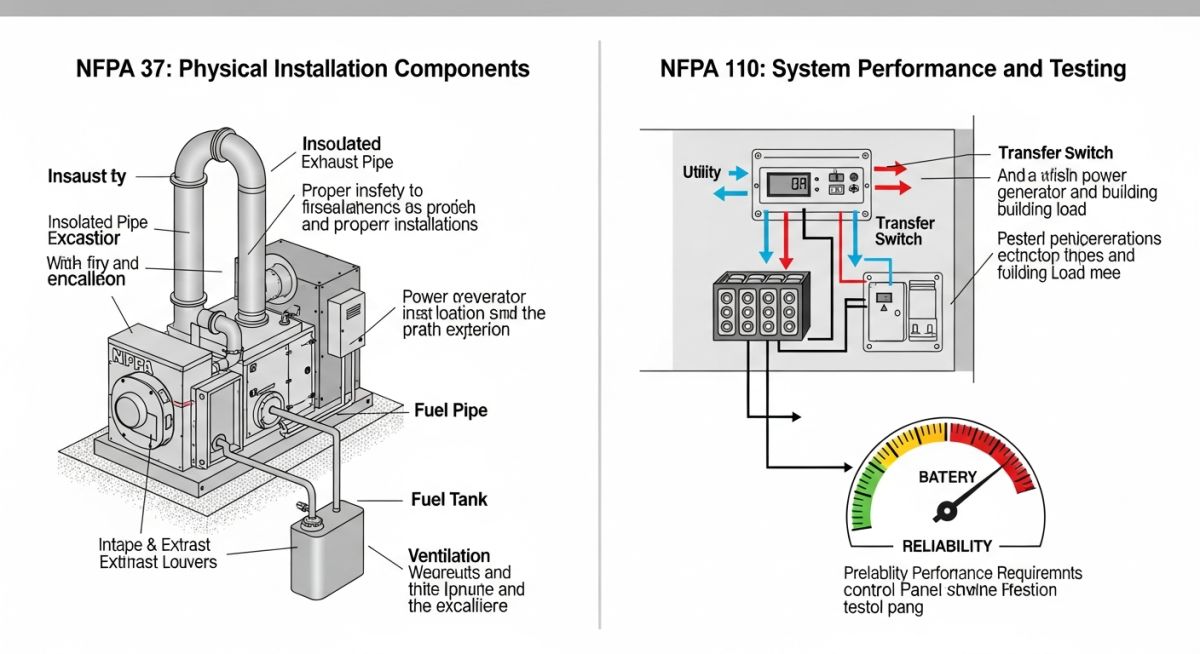
A common point of confusion for facility managers is the distinction between NFPA 37 and the NFPA 110 Standard. While both are critical for emergency power, they govern entirely different aspects of the system.
| Category | NFPA 37 Focus | NFPA 110 Focus |
|---|---|---|
| Primary Goal | Fire Safety & Physical Installation | System Performance & Reliability |
| Key Components | Fuel pipes, exhaust, engine rooms | Batteries, transfer switches, fuel quality |
| Testing | Leak tests, fire-rated wall integrity | Weekly exercises, load bank testing |
| Applicability | All stationary engines/turbines | Emergency & standby power only |
Fuel System Integrity: NFPA 37 Guidelines for Gas and Liquid Fuels
The fuel supply is the most significant fire hazard in a stationary combustion engine installation. NFPA 37 mandates specific hardware and layout requirements to ensure that fuel can be quickly isolated in the event of a fire.
Gaseous Fuel Supply Piping Requirements
For gas turbine installation and natural gas engines, NFPA 37 requires a manual shutoff valve located outside the engine room. Additionally, an automatic shutoff valve must be provided that closes when the engine is stopped, whether by manual shutdown or by a safety trip (such as overspeed or high temperature).
Liquid Fuel Containment and Safety
For diesel engines, Fuel Supply Piping must be constructed of steel or other non-combustible materials. NFPA 37 also requires that day tanks located inside a building have a capacity limit (typically 660 gallons) and be equipped with spill containment to prevent leaking fuel from reaching ignition sources.
Exhaust System and Ventilation Standards Under NFPA 37
Exhaust temperatures on a stationary combustion engine can exceed 500 degrees Celsius (932 degrees Fahrenheit). Proper management of this heat is a cornerstone of NFPA 37 compliance.
- Termination Points: Exhaust pipes must terminate outside the building at a point where they will not ignite combustible materials or enter building openings.
- Clearance to Combustibles: Exhaust systems must maintain a minimum clearance of 9 inches (229 mm) from combustible materials, or be properly insulated to maintain a surface temperature that does not exceed the ignition point of the surrounding environment.
- Ventilation: The engine room must have sufficient ventilation to provide combustion air and to remove the heat radiated from the engine.
Combustion Air Calculation Logic
Engineers must calculate the required air flow to prevent the engine room temperature from exceeding 40 degrees Celsius (104 degrees Fahrenheit). A simplified logic for ventilation requirement (CFM) based on heat rejection (H) and temperature rise (T) is:
Where:
H = Heat rejected to the room (BTU/hr)
ΔT = Allowable temperature rise (Troom - Tambient in degrees F)
EPCLand YouTube Channel
2,500+ Videos • Daily Updates
NFPA 37 Engine Room Ventilation Calculator
Calculate the required ventilation airflow to dissipate the radiant heat rejected by a stationary engine into its enclosure, ensuring compliance with NFPA 37 temperature limits.
Engineering Formula Used:
Required Airflow (CFM) = (Heat Rejection / (1.08 × Delta T)) × Margin Factor
Where Delta T is the difference between the Target Room Temperature and the Ambient Outdoor Temperature.
Note: This does not include combustion air intake requirements; consult the engine manufacturer for total intake data.
NFPA 37 Case Study: Fire Mitigation in Emergency Generator Rooms
📊 Project Data
- Asset Type: 2.5 MW Standby Diesel Generator
- Facility Type: Urban Medical Center (Level 1 Trauma)
- Primary Fuel: Ultra-Low Sulfur Diesel (ULSD)
- Regulatory Focus: Compliance with NFPA 37 and NFPA 110
⚠️ Failure Analysis
During a final commissioning inspection, the local fire marshal identified that the generator enclosure was installed only 3 feet from a combustible structure, violating the 5-foot clearance rule. Furthermore, the manual fuel shutoff valve was located inside the enclosure, meaning that in the event of an engine fire, technicians could not safely isolate the fuel supply.
The Engineering Fix
To rectify the NFPA 37 violations without relocating the massive generator, the engineering team constructed a 1-hour fire-rated masonry barrier between the generator and the combustible wall. Additionally, the fuel supply piping was modified to include a remote-mounted manual shutoff valve and a solenoid-controlled automatic valve tied to the building's fire alarm system. These changes ensured that fuel flow would cease immediately upon fire detection, satisfying both the AHJ and the facility's insurance requirements.
💡 Lessons Learned
Conclusion: Integrating NFPA 37 standards during the initial site planning phase can prevent costly field modifications and ensure that emergency power systems are as safe as they are reliable.
Frequently Asked Questions about NFPA 37 Standards
What are the specific NFPA 37 fire protection requirements for stationary combustion engines?
Fire protection for stationary combustion engines under NFPA 37 involves a multi-layered approach. This includes the use of fire-rated enclosures or rooms (minimum 1-hour rating), automatic fuel shutoff valves that trigger on engine failure or fire detection, and maintaining a 5-foot clearance from combustible materials. Additionally, for critical installations, integrated fire suppression systems (such as CO2 or clean agent) may be required to protect the asset and surrounding building.
How do NFPA 37 fuel supply piping rules ensure safety during an engine fire?
The NFPA 37 standard mandates that fuel supply piping must be constructed of non-combustible materials, typically steel. Crucially, the system must include a manual shutoff valve located at a distance from the engine, allowing emergency personnel to cut the fuel source without entering a fire zone. For gas-fueled engines, an automatic solenoid valve is also required to ensure that gas flow stops immediately when the engine is not running, preventing fuel accumulation.
What is the primary technical difference between NFPA 37 and NFPA 110?
The core difference lies in their engineering objective. NFPA 37 focuses on the physical installation and fire safety of the engine itself, including where it sits, how its fuel is piped, and how its exhaust is vented. Conversely, NFPA 110 is a performance standard that governs the entire Emergency Power Supply System (EPSS). It ensures that the system will actually start and carry the load within a specified time frame (usually 10 seconds for hospitals) and establishes rigorous maintenance and testing schedules.
Are there specific rules for emergency power supply systems installation near building openings?
Yes, emergency power supply systems installation must comply with NFPA 37 clearance rules regarding building openings. Engines or their enclosures must be located at least 5 feet from any window, door, or air intake. This prevents exhaust fumes from being drawn back into the building and ensures that a fire at the engine does not immediately breach the building through an opening, providing more time for fire suppression and evacuation.
Final Engineering Summary
Compliance with NFPA 37 is an essential component of industrial and commercial facility safety. By establishing rigorous standards for engine placement, fuel system integrity, and exhaust thermal management, the standard ensures that stationary combustion engines can provide critical power without introducing undue fire risks.
While technical standards like NFPA 110 manage the reliability of the power, NFPA 37 provides the safe physical foundation upon which that power is built. As we move through 2026, engineers and facility managers must remain vigilant in auditing their engine installations to ensure they meet the latest fire protection requirements, safeguarding both their personnel and their mission-critical infrastructure.


