What is Chromoly Steel? Characteristics and Engineering Applications
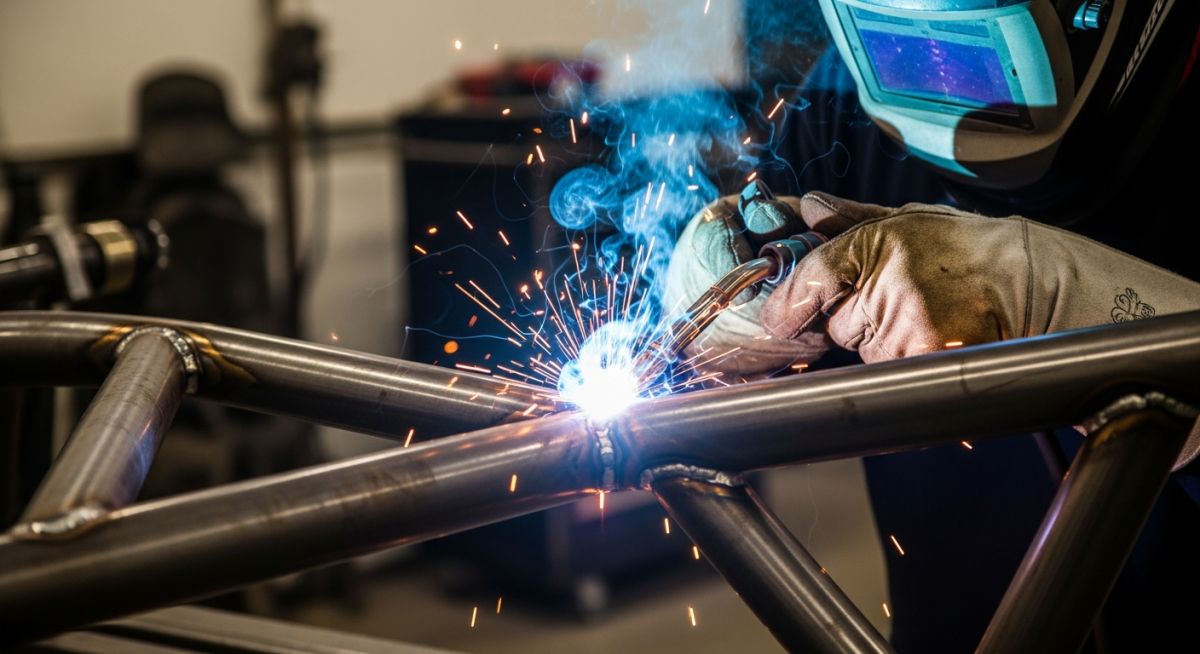
Imagine you are designing a roll cage for a high-performance vehicle or a structural mount for a light aircraft. You need a material that offers high tensile strength, yet you cannot afford the weight penalty of standard carbon steel. You face a critical dilemma: standard 1018 mild steel is too heavy, but high-end titanium is prohibitively expensive and difficult to weld.
This is where Chromoly Steel (specifically AISI 4130) becomes the “Goldilocks” solution for modern engineering. By the end of this guide, you will understand the metallurgical secrets of Chromium-Molybdenum alloys and how to leverage their 2026 performance standards in your next project.
Key Engineering Takeaways
- • Strength-to-Weight Ratio: Chromoly Steel allows for thinner-walled tubing without sacrificing structural integrity compared to mild steel.
- • AISI 4130 Chemistry: The addition of Chromium and Molybdenum enhances hardenability and atmospheric corrosion resistance.
- • Weldability: Unlike many high-strength alloys, 4130 maintains excellent weldability through TIG and MIG processes when proper pre-heat protocols are followed.
What is Chromoly Steel?
Chromoly Steel is a low-alloy steel containing chromium and molybdenum as strengthening agents. Specifically known as AISI 4130 in engineering, it offers a superior strength-to-weight ratio, high ductility, and excellent weldability, making it the industry standard for aerospace frames, motorsports roll cages, and high-pressure oil and gas components in 2026.
“In my 20 years of structural auditing, I’ve seen many fail to account for the ‘Normalized’ state of Chromoly. If you don’t specify the heat treatment of your 4130 stock, you’re leaving 30% of your mechanical safety margin on the table.”
— Atul Singla, Founder of Epcland
Article Navigation
Complete Course on
Piping Engineering
Check Now
Key Features
- 125+ Hours Content
- 500+ Recorded Lectures
- 20+ Years Exp.
- Lifetime Access
Coverage
- Codes & Standards
- Layouts & Design
- Material Eng.
- Stress Analysis
Knowledge Check: Chromoly Steel Fundamentals
Question 1 of 5
Which alloying element in Chromoly Steel (AISI 4130) is primarily responsible for increasing “Hardenability” and atmospheric corrosion resistance?
Understanding Chromoly Steel (AISI 4130) Chemistry
To understand why Chromoly Steel remains the bedrock of structural engineering in 2026, we must look at its molecular architecture. The name “Chromoly” is a portmanteau of its two most critical alloying elements: Chromium and Molybdenum. Unlike standard mild steel, which relies primarily on carbon for strength, AISI 4130 utilizes a sophisticated blend of elements to achieve high hardenability without the brittleness associated with high-carbon steels.
The “41” in the AISI 4130 designation indicates that the alloy belongs to the Chromium-Molybdenum family, while the “30” denotes a nominal carbon content of 0.30%. This specific balance is intentional. The Chromium (typically 0.8% to 1.1%) provides improved oxidation resistance and increases the steel’s response to heat treatment. Meanwhile, the Molybdenum (0.15% to 0.25%) increases the material’s toughness and creep resistance, ensuring it can withstand high-stress environments without deformation.
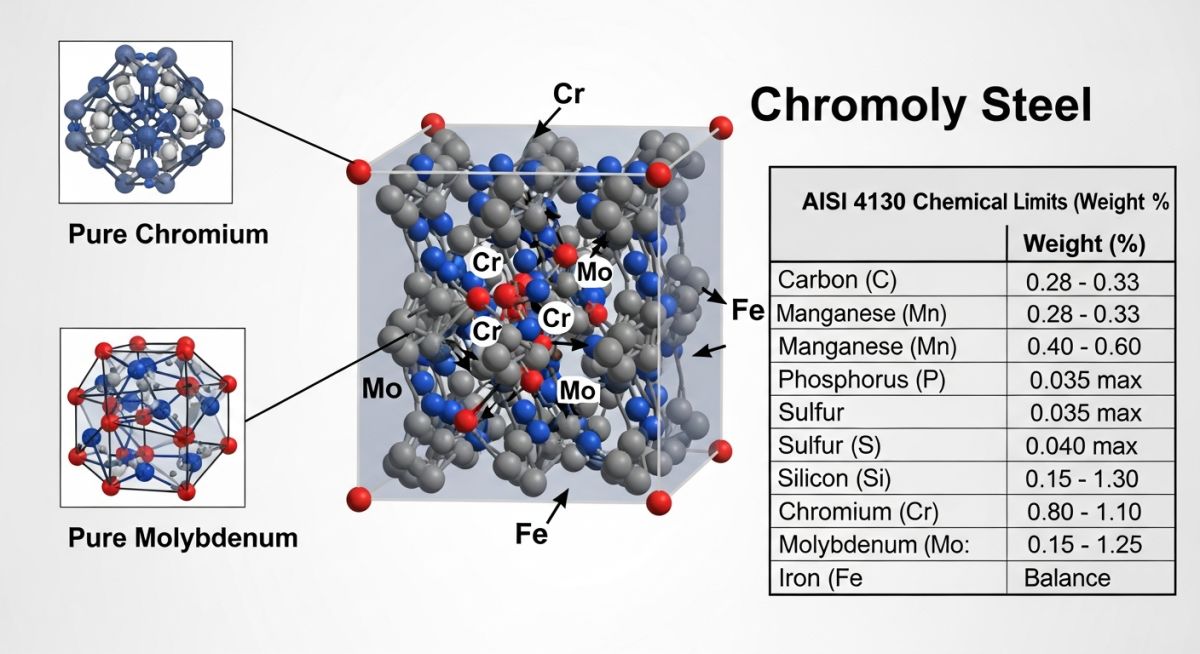
In 2026, precision manufacturing allows for extremely tight tolerances in these elemental ratios. Small additions of Manganese (0.4% to 0.6%) further enhance the “hardenability” of the matrix. This chemical synergy results in a material that exhibits a fine-grained microstructure, which is the primary reason for its exceptional fatigue life in cyclic loading applications like bicycle frames and aircraft engine mounts.
Mechanical Characteristics of Chromoly Steel
The mechanical profile of Chromoly Steel is defined by its versatility. Depending on the heat treatment state—whether it is Normalized, Annealed, or Quenched and Tempered—the properties can be tailored to the specific demands of an engineering project. In its most common structural form (Normalized), AISI 4130 offers a Yield Strength of approximately 63,100 PSI and an Ultimate Tensile Strength (UTS) reaching 97,200 PSI.
Ductility and Formability
Despite its high strength, Chromoly Steel maintains excellent ductility. This means that under extreme stress, the material will deform rather than shatter instantly, providing a critical safety margin in motorsports and aerospace crashes.
Fatigue Resistance
The alloy’s resistance to “metal fatigue” makes it ideal for parts subjected to constant vibration. Modern 2026 simulations show that 4130 outlasts 6061-T6 Aluminum by a significant margin in high-cycle fatigue tests.
Furthermore, the thermal conductivity of Chromoly Steel allows for more efficient welding compared to high-alloy stainless steels. However, engineers must be wary of the “Heat Affected Zone” (HAZ). If cooled too quickly, the area around a weld can become brittle, necessitating a controlled cooling environment or post-weld stress relief to maintain the design-spec toughness.
EPCLand YouTube Channel
2,500+ Videos • Daily Updates
Industrial Applications of Chromoly Steel
The industrial footprint of Chromoly Steel in 2026 spans across sectors that demand high-integrity structural components under extreme thermal or mechanical stress. Unlike standard carbon steels, the chromium-molybdenum synergy allows these components to operate in environments where atmospheric corrosion and “creep” (deformation under constant high temperature) would normally cause premature failure.
- Aerospace Engineering: Used extensively in the manufacture of engine mounts, landing gear components, and fuselage space frames for light aircraft. Its compliance with AMS-S-6758 standards ensures reliability in flight-critical parts.
- Oil & Gas Infrastructure: AISI 4130 is the preferred material for high-pressure manifolds, “Christmas tree” valve assemblies, and drill collars. Its resistance to sulfide stress cracking (SSC) makes it indispensable in sour gas environments.
- Automotive & Motorsports: From Formula 1 suspension linkages to NHRA-certified roll cages, Chromoly Steel provides the requisite impact absorption and rigidity required by 2026 safety regulations.
Engineering Standards and Mechanical Comparison
When specifying Chromoly Steel for a project, engineers must reference the correct governing bodies. In the United States, ASTM A519 covers seamless carbon and alloy steel mechanical tubing, while API 5CT dictates the requirements for casing and tubing in the petroleum industry. The table below compares the 2026 baseline mechanical properties of 4130 against other common engineering alloys.
| Material Property | AISI 4130 (Normalized) | AISI 1018 (Mild Steel) | 6061-T6 Aluminum |
|---|---|---|---|
| Yield Strength (PSI) | 63,100 | 53,700 | 40,000 |
| Tensile Strength (PSI) | 97,200 | 63,800 | 45,000 |
| Elongation at Break (%) | 25.5% | 15.0% | 12.0% |
| Brinell Hardness | 197 | 126 | 95 |
Is Chromoly Steel Stronger than Standard Steel?
The answer is a definitive yes. As demonstrated in the data above, Chromoly Steel exhibits nearly 50% higher tensile strength than standard 1018 carbon steel while maintaining superior elongation (ductility). This specific combination allows designers to utilize thin-wall tubing—reducing the total weight of a structure by up to 40% without compromising the safety factor. This “strength-to-weight” advantage is why 4130 has remained the industry standard despite the rise of modern composites.
Chromoly Steel (AISI 4130) Weight & Strength Estimator
Calculate the weight and estimated tensile capacity of Chromoly Steel tubing vs. Mild Steel.
Total Component Weight
14.26 lbs
Based on 0.284 lb/in3 density
Tensile Capacity (Est. Normalized)
40,750 lbs
Max load before failure (Static)
Engineering Note: These values are theoretical based on nominal AISI 4130 properties (95,000 PSI UTS). Always apply a safety factor (typically 1.5x to 4.0x) as per 2026 ASME or FAA structural guidelines.
Chromoly Steel Failure Case Study: The “Cold-Lap” Manifold Fracture
The Scenario
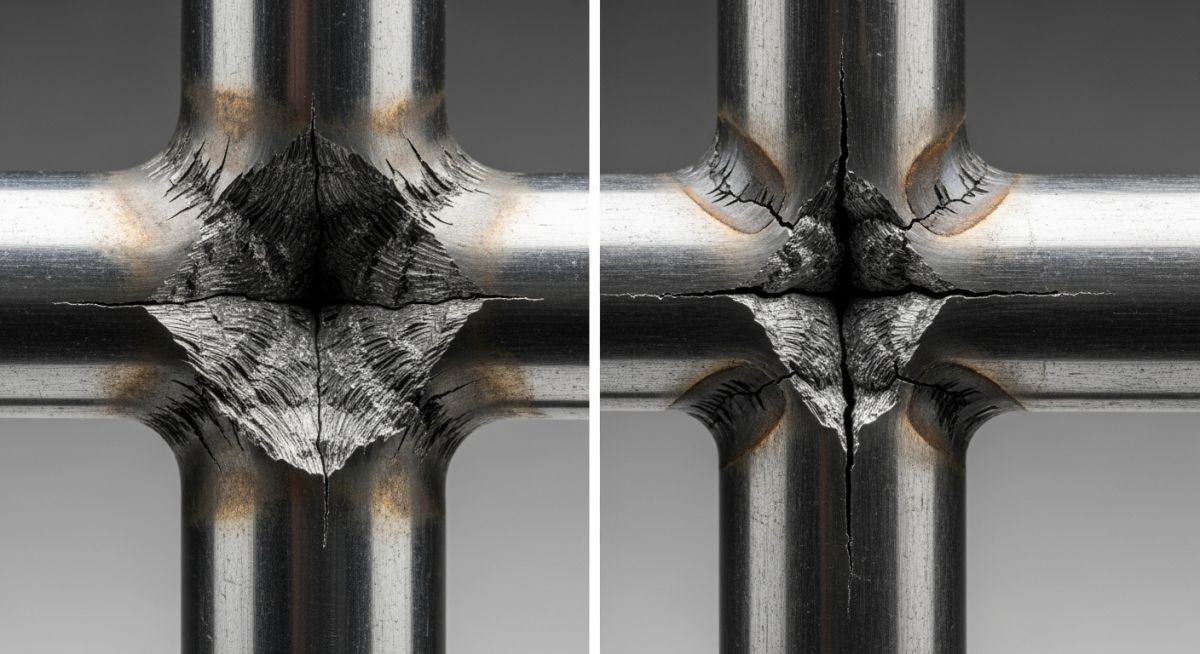
In early 2026, a high-pressure hydraulic manifold constructed from Chromoly Steel (AISI 4130) failed during a 15,000 PSI hydro-test at an offshore facility. The manifold, designed to reduce weight by using 4130 instead of carbon steel, suffered a catastrophic longitudinal fracture along a primary weld seam.
The project team initially suspected a material defect in the Chromoly Steel stock, but metallurgical analysis revealed a more complex structural issue related to thermal management.
The Audit Findings
- × Inadequate Pre-heat: The welder failed to pre-heat the 4130 to the required 400°F, causing a rapid quench in the Heat Affected Zone (HAZ).
- × Martensitic Transformation: The fast cooling rate transformed the ductile pearlite matrix into brittle martensite, leading to “Hydrogen Induced Cracking.”
- ✓ The Fix: Implementation of a Post-Weld Heat Treatment (PWHT) cycle at 1100°F for one hour, which restored 98% of the material’s original toughness.
Lessons for 2026 Engineers:
“This case proves that while Chromoly Steel is vastly superior in strength, it is ‘unforgiving’ compared to mild steel. You must strictly adhere to AWS D10.10 heating protocols or you will trade strength for brittleness.”
Expert Insights: Lessons from 20 years in the field
- • Beware of “Mystery Metal”: In 2026, the market is flooded with “Chro-moly” imports that don’t meet AISI 4130 trace element limits (specifically Phosphorus and Sulfur). Always demand a Mill Test Report (MTR).
- • The Normalization Myth: Never assume “Off-the-shelf” tubing is Normalized. Cold-drawn tubing (CD) has high internal stresses; unless it is stress-relieved, it can warp significantly during welding.
- • Filler Rod Selection: While many use ER70S-2 for welding Chromoly Steel to improve ductility, if your application requires the weld to match the base metal strength, you must move to ER80S-D2.