Underground Piping Insulation: Engineering Guide for 2026
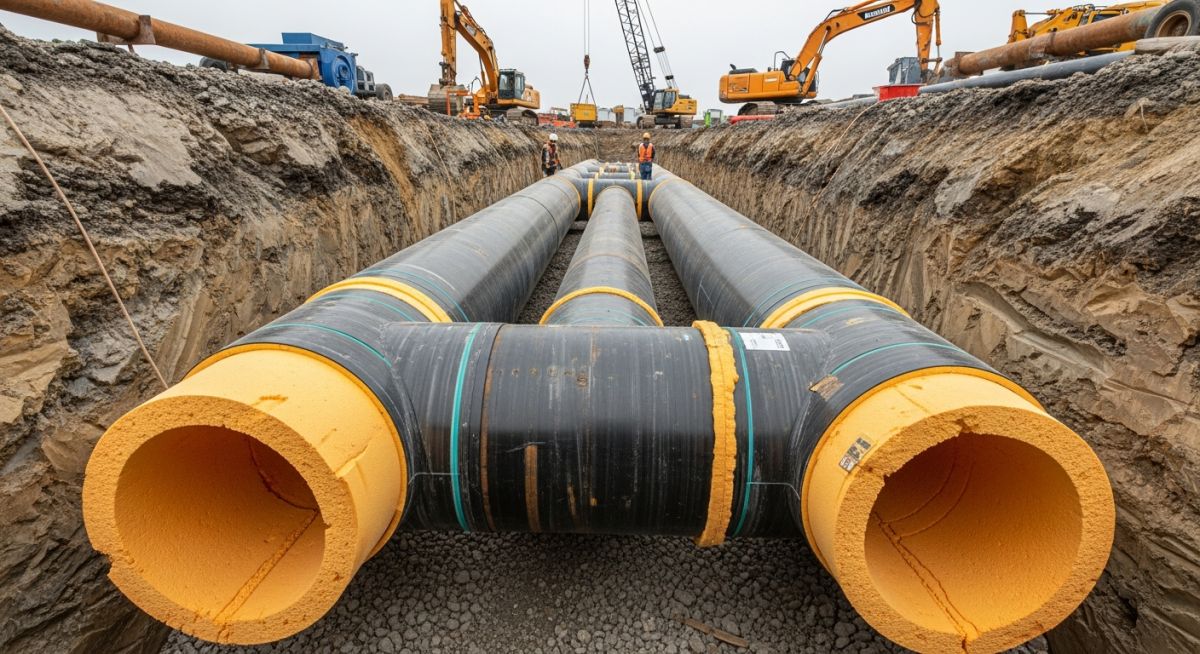
Imagine a district cooling network losing 30% of its thermal efficiency before the chilled water even reaches the first heat exchanger. You discover the culprit isn’t the chiller plant, but a compromised vapor barrier in the direct-buried trench that has turned your Underground Piping Insulation into a heavy, waterlogged sponge.
In the high-stakes world of EPC projects, sub-surface thermal management is a “set it and forget it” trap. This guide provides the technical roadmap to ensure hydrostatic pressure resistance, minimize k-value degradation, and select materials that survive decades of soil stress.
Key Takeaways
- Selection of Underground Piping Insulation must prioritize compressive strength and zero-permeability to withstand hydrostatic loads.
- Closed-cell Polyurethane (PUR) and Cellular Glass remain the gold standards for 2026 high-performance direct burial applications.
- Effective corrosion under insulation (CUI) prevention requires a seamless HDPE outer jacket and integrated leak detection systems.
What is Underground Piping Insulation?
Underground Piping Insulation is a specialized thermal barrier system designed for direct-buried or conduit-enclosed pipes. It utilizes high-density, moisture-resistant materials like cellular glass or PUR foam, encased in a protective HDPE or PVC jacket, to prevent heat loss/gain and protect against soil-borne corrosion and hydrostatic pressure.
Founder’s Insight
“The most common mistake I see in the field is treating underground insulation like it’s above-ground piping but with a thicker jacket. In 2026, if you aren’t accounting for the soil’s thermal resistivity and the precise hydrostatic head of the local water table, you’re designing for failure, not for decades.”
— Atul Singla
Table of Contents
- Critical Examples of Underground Piping Insulation Systems
- Primary Engineering Purposes of Underground Piping Insulation
- High-Performance Underground Piping Insulation Materials
- Technical Factors Affecting Underground Piping Insulation Selection
- Direct Burial Standards: Can Underground Piping Insulation Be Buried?
- Pre-insulated Underground Piping Insulation Solutions
- Expert Lessons: Troubleshooting Underground Piping Insulation Failures
Complete Course on
Piping Engineering
Check Now
Key Features
- 125+ Hours Content
- 500+ Recorded Lectures
- 20+ Years Exp.
- Lifetime Access
Coverage
- Codes & Standards
- Layouts & Design
- Material Eng.
- Stress Analysis
Engineering Assessment: Underground Piping Insulation
1. Which material is preferred for Underground Piping Insulation in cryogenic applications due to its zero-permeability and high compressive strength?
Critical Examples of Underground Piping Insulation Systems
The application of Underground Piping Insulation is not universal; it is a strategic engineering decision based on fluid thermodynamics and environmental protection. While standard gravity sewers or ambient water lines rarely require thermal barriers, complex industrial networks depend on them for survival. Modern 2026 specifications prioritize systems that can withstand both internal process temperatures and external soil pressures.
Common systems requiring high-performance Underground Piping Insulation include:
- District Cooling Networks: Chilled water lines (typically 4°C to 12°C) requiring moisture-proof Underground Piping Insulation to prevent massive energy gain from warmer soil and to eliminate condensation-driven corrosion.
- High-Pressure Steam Distribution: Direct-buried steam lines where Underground Piping Insulation must withstand temperatures exceeding 200°C while maintaining mechanical integrity under heavy overburden soil loads.
- Cryogenic Fuel Pipelines: Systems transporting LNG or liquid nitrogen, where specialized Underground Piping Insulation prevents “frost heave”—a phenomenon where soil freezes and expands, potentially rupturing the pipe.
- Sulfur and Polymer Lines: Jacketed or heat-traced systems that require Underground Piping Insulation to maintain high viscosity for fluid transport across long distances.
Primary Engineering Purposes of Underground Piping Insulation
In the subsurface environment, Underground Piping Insulation serves as more than just a thermal shield. It is a multi-functional barrier that addresses three critical engineering challenges simultaneously. Failure in any one of these areas typically leads to a complete system overhaul within five to ten years.
1. Thermal Conservation & Process Control
By minimizing heat flux between the carrier pipe and the surrounding soil, Underground Piping Insulation ensures that fluids reach their destination within specified temperature tolerances. This is vital for maintaining the efficiency of district heating and cooling systems where energy loss equates directly to financial deficit.
2. Structural Protection (Direct Burial)
Modern Underground Piping Insulation, such as high-density cellular glass, provides significant compressive strength (often exceeding 100 psi). This allows the system to support the weight of the overburden soil and live traffic loads without crushing the carrier pipe or the insulation itself.
3. Corrosion Mitigation (CUI)
The insulation system, when paired with a seamless HDPE jacket, creates a primary defense against groundwater and soil acids. By keeping the pipe surface dry, Underground Piping Insulation effectively eliminates the risk of Corrosion Under Insulation (CUI), a leading cause of pipeline failure.
4. Frost Protection
In cold climates, Underground Piping Insulation prevents static water lines from freezing, which would otherwise lead to catastrophic pipe bursts. This is particularly critical for emergency fire water lines buried above the frost line.
High-Performance Underground Piping Insulation Materials
Material selection for 2026 projects is driven by the “Zero-Permeability” mandate. Any moisture ingress instantly destroys the k-value of the Underground Piping Insulation, turning an expensive engineering asset into a waterlogged liability.
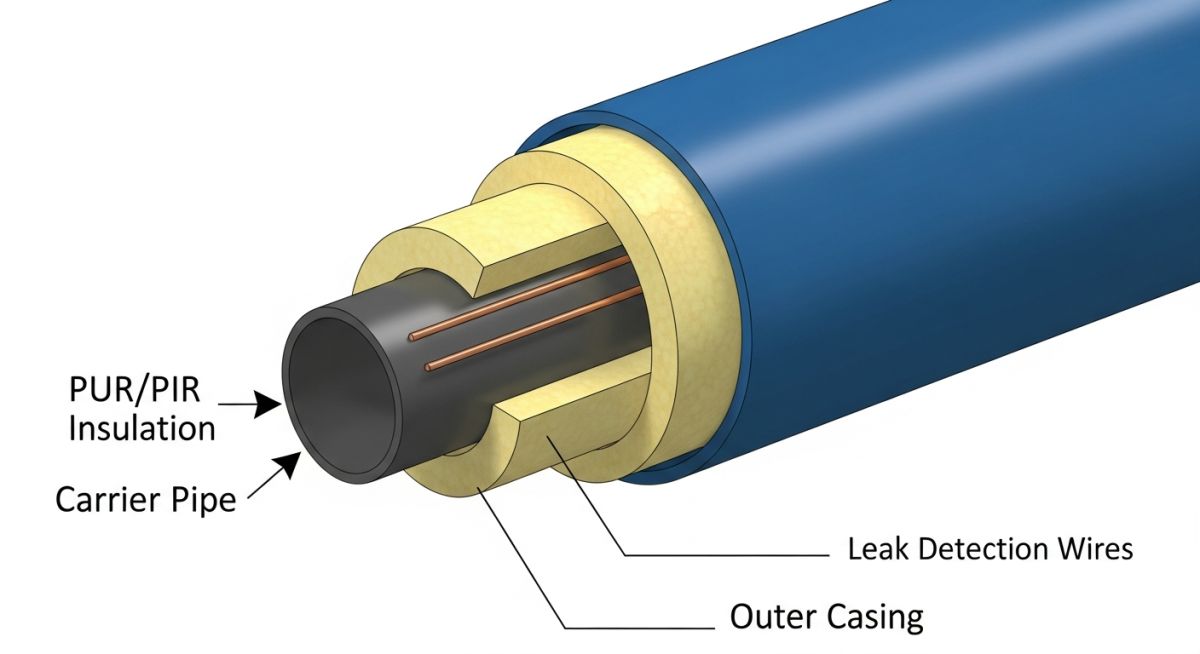
Below are the industry-leading materials currently utilized in Underground Piping Insulation specifications:
- Cellular Glass (Foamglas): The premier choice for steam and high-load areas. It is inorganic, non-combustible, and completely impervious to water and vapor, making it the most durable Underground Piping Insulation for long-term burial.
- Polyurethane Foam (PUR): The standard for pre-insulated “pipe-in-pipe” systems. It offers the lowest thermal conductivity (k-value) but requires a perfectly sealed HDPE jacket to remain effective over time.
- Phenolic Foam: A high-efficiency, closed-cell material used where trench space is limited, offering superior fire resistance and a very low k-value (approx. 0.025 W/m·K) for chilled water applications.
- Expanded Perlite: Often used as a pour-able or monolithic “insulating concrete” in trenches where irregular shapes or multiple pipes are present, providing a seamless Underground Piping Insulation envelope.
Technical Factors Affecting Underground Piping Insulation Selection
The subsurface environment is significantly more aggressive than atmospheric conditions. When selecting Underground Piping Insulation, engineers must calculate the total heat gain/loss by factoring in the soil’s thermal resistivity (RHO), which varies based on moisture content and compaction. In 2026, predictive modeling for Underground Piping Insulation also accounts for the “Heat Sink” effect of surrounding utilities in congested urban corridors.
Critical selection parameters include:
- Hydrostatic Pressure: The insulation must resist water ingress at the maximum projected water table depth.
- Compressive Strength: The material must support H-20 highway loading if buried under roadways without deformation.
- Operating Temperature Range: Systems must remain stable during thermal cycling to prevent the “pumping effect” that draws in moisture.
Direct Burial Standards: Can Underground Piping Insulation Be Buried?
Yes, but only when compliant with stringent mechanical codes. The ASME B31.1 Power Piping and ASME B31.3 Process Piping codes dictate the stress analysis requirements for buried systems. Furthermore, the EN 253 standard provides the framework for “District heating pipes – Bonded single pipe systems for directly buried hot water networks,” ensuring the Underground Piping Insulation and the HDPE casing act as a monolithic unit.
| Insulation Material | Temp Range (°C) | K-Value (W/m·K) | Compressive Strength |
|---|---|---|---|
| Cellular Glass | -268 to 482 | 0.041 | High (100+ psi) |
| Polyurethane (PUR) | -200 to 149 | 0.023 | Moderate (40-60 psi) |
| Phenolic Foam | -180 to 120 | 0.021 | Low/Moderate |
| Calcium Silicate | Up to 650 | 0.059 | High (100+ psi) |
Pre-insulated Underground Piping Insulation Solutions
The industry has shifted toward pre-insulated piping for superior quality control. Unlike field-applied Underground Piping Insulation, these systems are factory-bonded. This ensures the insulation layer is consistent and the protective jacket is hermetically sealed before it ever reaches the job site.
According to ISO 21307 standards for polyethylene welding, the joints in pre-insulated systems are the most critical failure points. Modern 2026 techniques involve electro-fusion welding of the outer jackets to create a continuous, leak-proof Underground Piping Insulation envelope across the entire pipeline length.
Thermal Loss Estimator for Underground Piping Insulation
Calculate the estimated heat loss per meter for your Underground Piping Insulation system based on 2026 thermal conductivity standards.
Note: This calculation uses a simplified steady-state Fourier model for Underground Piping Insulation. Actual results may vary based on soil RHO and jacket emissivity.
Case Study: 2026 District Cooling Efficiency Optimization
Optimizing Energy Loss in High-Density Urban Chilled Water Networks
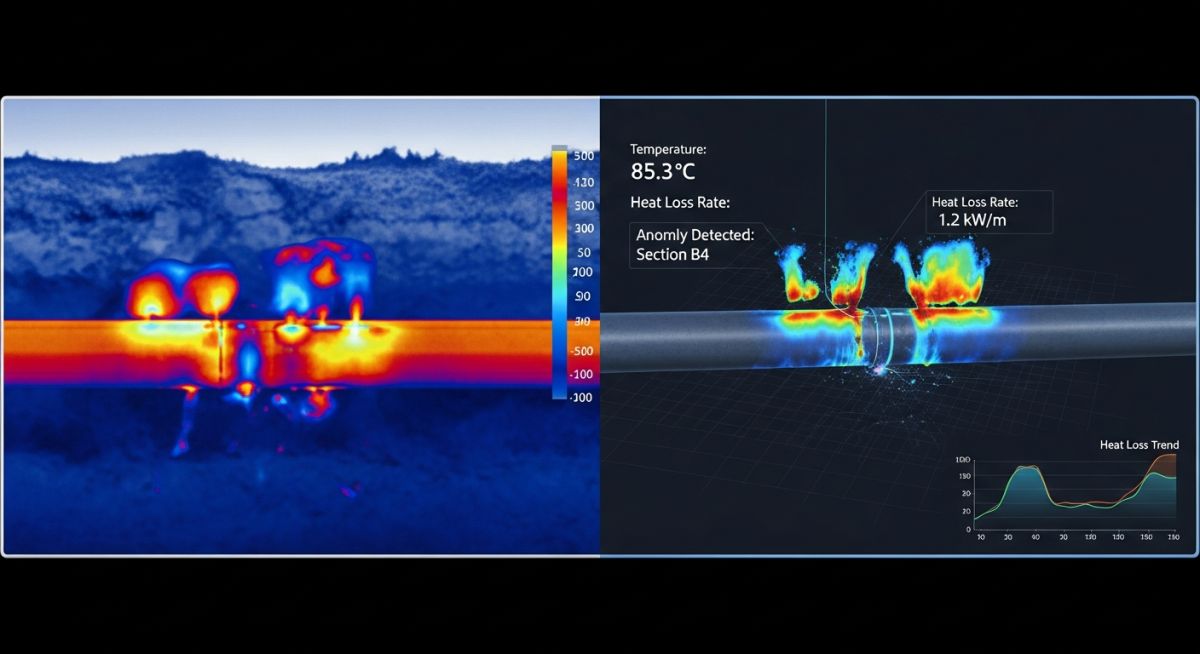
In early 2026, a major district cooling provider faced a 15% increase in operational costs due to thermal gain in their direct-buried distribution lines. The investigation revealed that the Underground Piping Insulation in Phase 1 of the network had suffered from “Thermal Bridging” at the field joints, where the HDPE jacket welding had failed under hydrostatic pressure.
The Challenge
- High water table creating 1.5 bar of hydrostatic pressure on the Underground Piping Insulation.
- Existing PUR foam saturated with moisture, increasing k-value from 0.023 to 0.58 W/m·K.
- Inaccurate leak detection due to aged copper sensor wires.
The 2026 Solution
- Retrofit using Cellular Glass sections with a cold-applied mastic vapor barrier.
- Implementation of Fibre Optic Distributed Temperature Sensing (DTS) within the insulation void.
- Electro-fusion welded HDPE casing for 100% moisture-proof joints.
Final Results:
Thermal efficiency was restored to 98.2% of design specifications. The use of DTS allowed for real-time monitoring of the Underground Piping Insulation integrity, saving an estimated $1.2M in annual energy costs.
Expert Insights: Lessons from 20 years in the field
The “Pumping Effect” Paradox
In 2026, we’ve confirmed that thermal cycling in Underground Piping Insulation acts like a bellows. As the pipe cools, it creates a partial vacuum that can suck moisture through microscopic jacket pinholes. Always specify a secondary vapor barrier, even if using an HDPE casing.
Soil RHO Miscalculations
Never assume a standard soil thermal resistivity. In urban EPC projects, the presence of parallel electrical conduits can bake the soil, altering the Underground Piping Insulation performance. Conduct a thermal resistivity test of the native soil before finalising thickness.
The Zero-Point Failure
Most Underground Piping Insulation failures occur at the building entry point or manhole penetration. These “interface zones” require modular link seals and flexible insulation boots to accommodate the differential settlement between the pipe and the structure.
References & Standards
For deep technical verification of Underground Piping Insulation, refer to the following authoritative bodies:
- Visit the ASME Official Site for B31.1 and B31.3 buried piping stress and insulation requirements.
- Review the ISO 21307 Standard for high-density polyethylene (HDPE) welding specifications used in pre-insulated jackets.
- Consult ASTM C552 on the official ASTM portal for cellular glass Underground Piping Insulation physical property benchmarks.
- Reference the API (American Petroleum Institute) standards for corrosion protection and insulation of buried hydrocarbon lines.
Frequently Asked Questions: Underground Piping Insulation
What is the best material for Underground Piping Insulation in 2026?
Can standard pipe insulation be buried directly in soil?
How deep should insulated pipes be buried to prevent freezing?
How do I detect a leak in a buried insulated system?
Does soil thermal resistivity (RHO) really affect insulation thickness?
Why use Cellular Glass for underground steam lines instead of cheaper PUR?

Related posts:
![High-grade industrial Wing Nut Types and Applications for mechanical assemblies.]()
Wing Nut Types and Applications: The 2026 Engineering Guide
![Industrial Monorail Crane Systems installed in a modern manufacturing plant 2026.]()
Monorail Crane Systems: Design, Types & 2026 Standards Guide
![Lead engineer performing a Factory Acceptance Test FAT on an industrial skid system 2026]()
Factory Acceptance Test FAT: The 2026 Engineering Guide to Zero-Defect Delivery
![Professional engineering workspace showing a Basis of Design document layout for a 2026 project.]()
Basis of Design: How to Write a BOD for Engineering Projects in 2026
![Industrial Flare Knockout Drum Sizing and installation in a refinery relief system.]()
Flare Knockout Drum Sizing: Design & API 521 Standards (2026 Guide)
![Advanced Reboiler Control Systems in a modern petrochemical refinery 2026.]()
Reboiler Control Systems: Engineering Guide to Precision Control 2026