Types of Structural Steel Shapes: The Engineering Guide to Section Properties

Imagine you are finalizing the skeletal design for a 40-story commercial tower or a sprawling industrial warehouse. A single miscalculation in selecting the wrong Types of Structural Steel Shapes doesn’t just inflate your budget; it compromises the torsional rigidity of the entire frame. Are you choosing a W-Beam for its flange width, or should you have opted for the superior lateral-torsional buckling resistance of a Square HSS? In this guide, we break down the critical geometry and load-bearing characteristics of modern steel sections to ensure your 2026 projects exceed safety and efficiency benchmarks.
Key Engineering Takeaways
- Optimized Load Distribution: Learn why W-beams dominate gravity loads while HSS sections are the gold standard for compression and torsion.
- Standard Compliance: Understanding the nuances between ASTM A36, A572, and A992 across various shapes.
- Material Efficiency: How to reduce total tonnage by selecting shapes with higher section modulus-to-weight ratios.
What are the main types of structural steel shapes?
The primary Types of Structural Steel Shapes used in modern engineering include W-Beams (Wide Flange), S-Beams (American Standard), Channels (C-Shapes), Angles (L-Shapes), and Hollow Structural Sections (HSS). These sections are classified by their cross-sectional geometry and are manufactured to meet specific ASTM standards for yield strength and ductility in load-bearing applications.
“In over two decades of structural design, I’ve seen that the most common error isn’t the math—it’s the application. Selecting Types of Structural Steel Shapes based purely on cost without considering the connection complexity or the radius of gyration often leads to field-fix nightmares. In 2026, efficiency is found in the geometry.”
— Atul Singla, Founder of Epcland
Complete Course on
Piping Engineering
Check Now
Key Features
- 125+ Hours Content
- 500+ Recorded Lectures
- 20+ Years Exp.
- Lifetime Access
Coverage
- Codes & Standards
- Layouts & Design
- Material Eng.
- Stress Analysis
Structural Steel Engineering Challenge
Question 1 of 5What Is Structural Steel? (Core Properties & Chemistry)
At its core, structural steel is a category of steel used for making construction materials in a variety of Types of Structural Steel Shapes. It is not a single material but rather a strictly regulated alloy, primarily composed of iron and carbon. To meet 2026 engineering standards, the carbon content is typically maintained below 2.1% by weight. Higher carbon concentrations increase hardness but significantly reduce ductility, which is the material’s ability to undergo plastic deformation before failure—a critical safety factor in seismic zones.
Beyond carbon, alloying elements like manganese, phosphorus, sulfur, and silicon are added to refine the mechanical properties of different Types of Structural Steel Shapes. For instance, manganese improves the strength and toughness of the grain structure, while silicon acts as a deoxidizer during the manufacturing process. In the modern 2026 fabrication landscape, “Grade 50” steel (like ASTM A992) has become the baseline, offering a yield strength of 50,000 psi, which allows for thinner sections and lighter overall structures compared to the historical A36 standards.
The Benefits of Various Types of Structural Steel Shapes
The strategic selection of Types of Structural Steel Shapes offers unparalleled advantages in modern civil engineering. First and foremost is the Strength-to-Weight Ratio. Steel sections can support massive loads with significantly less mass than reinforced concrete, leading to reduced foundation costs and faster assembly times. This high efficiency is why steel is the preferred medium for long-span bridges and skyscrapers.
Furthermore, the Ductility and Predictability of these shapes provide a safety margin that brittle materials cannot match. Under extreme stress, steel shapes will bend and deform rather than shatter, providing occupants with crucial time to evacuate during an emergency. In 2026, the industry has also pivoted heavily toward Sustainability; nearly 98% of structural steel sections produced today are sourced from recycled scrap, and 100% of these shapes are fully recyclable at the end of a building’s lifecycle.
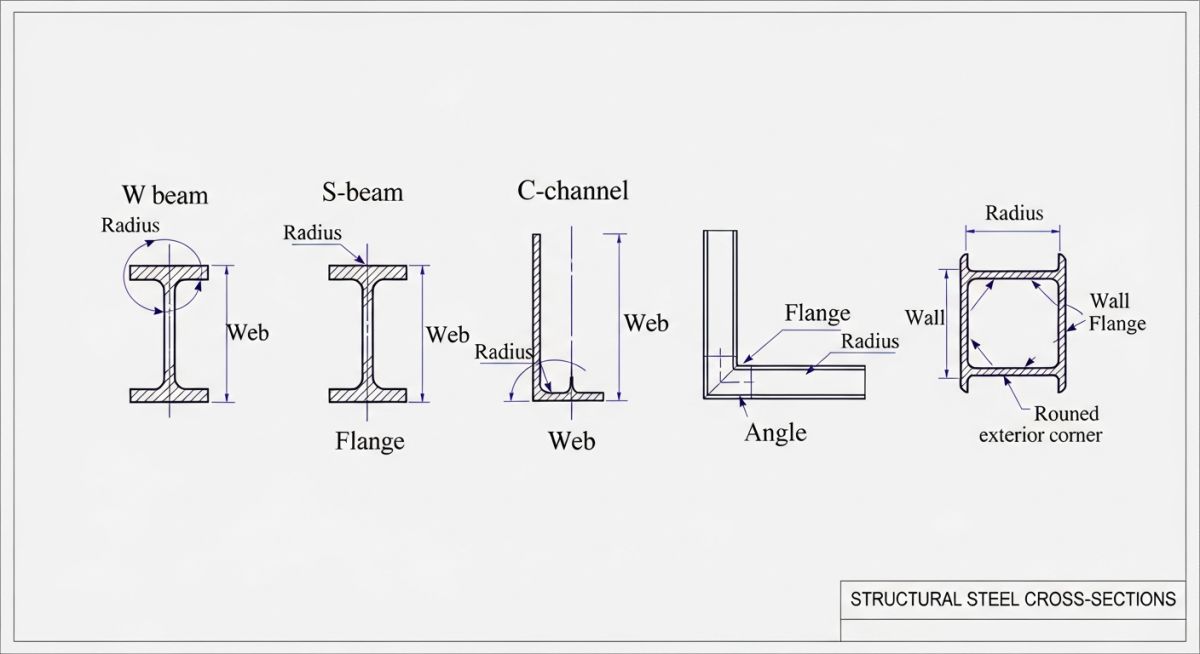
Categorizing the Main Types of Structural Steel Shapes
Engineers categorize Types of Structural Steel Shapes based on their cross-sectional geometry, which dictates how they respond to different forces like tension, compression, and shear. Understanding the “Principal Axes” of these sections is vital for preventing premature buckling. Let us examine the specific geometries that dominate the 2026 market.
Angles (L-Shapes)
The Angle or L-shape consists of two legs that meet at a 90-degree angle. These legs can be of equal or unequal length. While they lack the bending strength of a beam, they are indispensable for truss members, bracing, and lintels. In 2026 engineering, we often use angles as “tension members” because they are easy to bolt or weld to larger sections. However, designers must account for the eccentric loading inherent in L-shapes to avoid unwanted twisting.
Hollow Structural Sections (HSS)
Hollow Structural Sections (HSS) come in square, rectangular, or circular profiles. These are essentially the “high-tech” members of the Types of Structural Steel Shapes family. Because they are closed loops, HSS sections provide exceptional resistance to torsion and are much more efficient than open I-beams when used as columns. In 2026, HSS is frequently used in exposed architectural steel (AESS) because of its clean lines and high aesthetic value.
Structural Steel Beams (I-Beam, W-Beam, S-Beam)
Structural beams are the workhorses of the construction industry. The Wide Flange (W-Beam) is the modern standard for most building frames in 2026. Unlike the American Standard (S-Beam), which has tapered flanges, the W-Beam features parallel inner and outer flange surfaces. This geometry provides a significantly higher Moment of Inertia relative to its weight, making it the most efficient choice for spanning long distances under heavy gravity loads.
Channels (C-Shapes)
Channels, often referred to as C-shapes, consist of a wide web with two flanges on one side. While they do not possess the same symmetrical stability as I-beams, they are ideal for stair stringers, joists, and sub-framing. In 2026 industrial design, C-channels are frequently used back-to-back to create a “built-up” box section when a standard HSS is unavailable.
Plates and Flat Bars
Often overlooked, Steel Plates are the connective tissue between other Types of Structural Steel Shapes. They are used as base plates, gusset plates, and stiffeners. In high-seismic regions in 2026, thick plates are engineered as “shear walls” within steel frames to absorb energy through controlled yielding.
Compliance Standards for Different Types of Structural Steel Shapes (ASTM/AISC)
Engineering integrity relies on strict adherence to international standards. For 2026 projects, the AISC 360-22 (Specification for Structural Steel Buildings) remains the primary reference. Material chemistry and mechanical properties are governed by ASTM International. It is critical to match the shape to the correct grade:
- W-Shapes: Primarily ASTM A992 (Yield: 50 ksi).
- Channels & Angles: Commonly ASTM A36 (Yield: 36 ksi).
- HSS (Rectangular/Square): ASTM A500 Grade C (Yield: 50 ksi).
- Plates: ASTM A36 or A572 Grade 50 depending on thickness requirements.
Comparative Analysis: Types of Structural Steel Shapes
| Shape Category | Primary Loading | Standard Grade | Key Advantage |
|---|---|---|---|
| W-Beam | Bending / Gravity | A992 | Highest Moment of Inertia |
| HSS (Square) | Compression / Torsion | A500 Grade C | Multi-axis stability |
| Channel (C) | Shear / Secondary | A36 | Flat back for easy mounting |
| Angle (L) | Tension / Bracing | A36 | Versatile connection geometry |
EPCLand YouTube Channel
2,500+ Videos • Daily Updates
Structural Steel Weight & Section Property Estimator
Calculate the estimated weight and cross-sectional area for common Types of Structural Steel Shapes based on 2026 AISC density standards (490 lbs/ft3).
Note: This calculator provides theoretical values. For precise W-Beam or C-Channel properties, consult the AISC Steel Construction Manual, 16th Edition.
Don’t miss this video related to Structural Stee
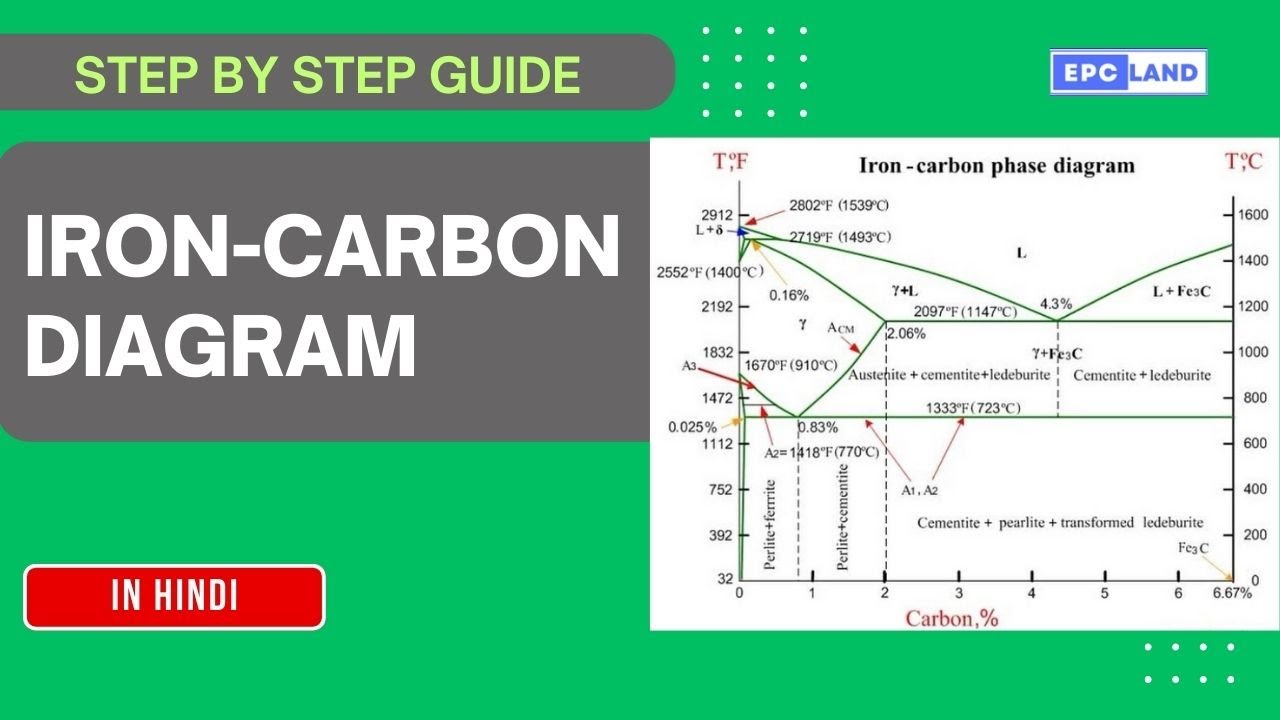
Summary: In this video, we will explain Iron-Carbon Phase Diagram in detail in Hindi. This video is very important for engineering students, ……
Types of Structural Steel Shapes Failure Case Study
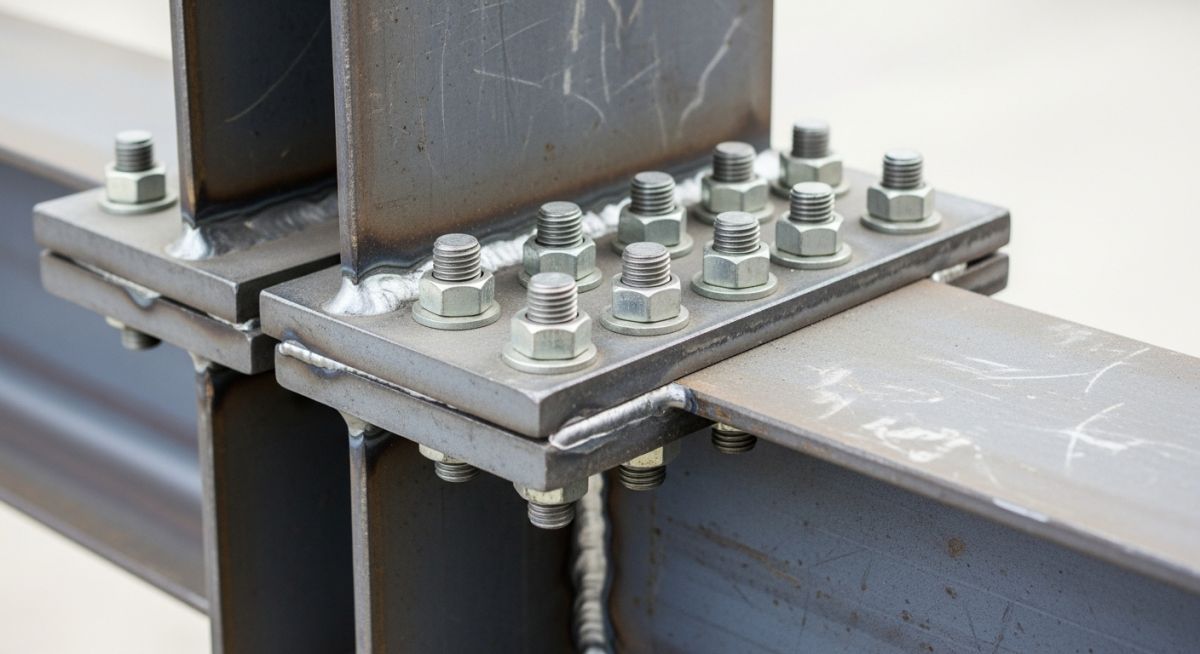
The Scenario: Lateral-Torsional Buckling in an Industrial Mezzanine
In a 2026 industrial warehouse retrofit, an engineering team was tasked with adding a heavy-duty mezzanine to support new CNC machinery. The original design specified W-Beams for the primary girders. However, due to supply chain constraints, the contractor substituted the long-span beams with C-Channels of equivalent depth, assuming the section properties were interchangeable.
The Critical Error
The C-Channel is an open, asymmetrical shape. Unlike the W-Beam, its shear center does not coincide with its centroid. Under the heavy point loads of the CNC machines, the channels experienced Lateral-Torsional Buckling (LTB), causing the floor to deflect and twist significantly, leading to a near-collapse of the secondary joints.
The Engineering Fix
The solution involved welding Steel Plates across the toes of the channels to create a “built-up” closed box section, effectively mimicking the torsional rigidity of Hollow Structural Sections (HSS). This increased the torsional constant (J) by over 400%, stabilizing the mezzanine without requiring a full tear-down.
Lessons Learned for 2026 Projects:
- Shape Symmetry Matters: Never substitute a doubly-symmetric shape (W-Beam) with a mono-symmetric shape (Channel) without re-calculating for eccentricity.
- Closed vs. Open Sections: For applications where lateral bracing is minimal, HSS or box-sections are significantly safer than I-beams or channels.
- Stiffener Utilization: Properly placed plate stiffeners can drastically alter the performance of standard Types of Structural Steel Shapes.
Expert Insights: Lessons from 20 years in the field
- Beyond Geometry: While the cross-section defines the capacity, the 2026 engineer must focus on “Connection Compatibility.” A Square HSS might be structurally superior for a column, but the labor cost of welding gusset plates to a curved or closed surface often exceeds the material savings compared to a W-Beam.
- Material Resilience: In 2026, we are seeing a shift toward ASTM A1085 for HSS sections. It offers tighter mass tolerances and a mandatory Charpy V-Notch toughness test, making it far more reliable for dynamic or seismic loading than the standard A500.
- Coating Considerations: Always consider the “Surface Area-to-Weight” ratio. L-Angles and C-Channels have more exposed surface area per pound of steel than HSS. If your project requires high-performance galvanizing or intumescent fireproofing, the HSS section might be cheaper in the “Total Installed Cost” analysis.
Frequently Asked Questions
What is the most common structural steel shape used in 2026? ▼
How do I choose between an I-beam and a C-channel? ▼
Are all structural steel shapes recyclable? ▼
Why does my HSS column keep failing in local buckling? ▼
Is ASTM A36 still relevant for structural shapes in 2026? ▼
How do I prevent corrosion in Hollow Structural Sections (HSS)? ▼
References & Standards
📚 Recommended Resources: Structural Stee
Read these Guides
🎓 Advanced Training



Related posts:
![High-grade industrial Wing Nut Types and Applications for mechanical assemblies.]()
Wing Nut Types and Applications: The 2026 Engineering Guide
![Industrial Monorail Crane Systems installed in a modern manufacturing plant 2026.]()
Monorail Crane Systems: Design, Types & 2026 Standards Guide
![Lead engineer performing a Factory Acceptance Test FAT on an industrial skid system 2026]()
Factory Acceptance Test FAT: The 2026 Engineering Guide to Zero-Defect Delivery
![Professional engineering workspace showing a Basis of Design document layout for a 2026 project.]()
Basis of Design: How to Write a BOD for Engineering Projects in 2026
![Industrial Flare Knockout Drum Sizing and installation in a refinery relief system.]()
Flare Knockout Drum Sizing: Design & API 521 Standards (2026 Guide)
![Advanced Reboiler Control Systems in a modern petrochemical refinery 2026.]()
Reboiler Control Systems: Engineering Guide to Precision Control 2026