Types of Pressure Vessels: Engineering Classification and Selection Guide

Understanding the distinct Types of Pressure Vessels is fundamental for mechanical engineers designing for the oil and gas, chemical, and nuclear industries. From high-pressure reactors to vacuum storage bullets, the correct classification ensures compliance with codes like ASME Section VIII and API 620. This guide breaks down vessel selection based on geometry, orientation, and functional application.
What Defined the Major Types of Pressure Vessels?
Types of Pressure Vessels are primarily classified by their geometry (cylindrical, spherical, or conical), orientation (horizontal or vertical), and function (storage, separation, or reaction). The selection of a specific type depends on the operating pressure, fluid characteristics, and the volume required. The most common industrial standard governing their design is the ASME Boiler and Pressure Vessel Code (BPVC).
Table of Contents
- Technical Classification of Types of Pressure Vessels
- Types of Pressure Vessels Based on Geometrical Shape
- Functional Types of Pressure Vessels in Industry
- Material Selection for Various Types of Pressure Vessels
- Engineering Selection Criteria
- Interactive Calculator: Hoop Stress
- Case Study: Failure of a Mismatched Reactor
- Frequently Asked Questions
Test Your Knowledge: Vessel Fundamentals
Complete Course on
Piping Engineering
Check Now
Key Features
- 125+ Hours Content
- 500+ Recorded Lectures
- 20+ Years Exp.
- Lifetime Access
Coverage
- Codes & Standards
- Layouts & Design
- Material Eng.
- Stress Analysis
Technical Classification of Types of Pressure Vessels
The engineering classification of Types of Pressure Vessels is not merely academic; it dictates the applicable safety factors, material allowables, and inspection frequencies required by law. Most industrial nations adhere to the ASME Boiler and Pressure Vessel Code (BPVC), specifically Section VIII. This code categorizes vessels based on their complexity and the severity of their operating environment, distinguishing between Division 1 (Rules for Construction), Division 2 (Alternative Rules), and Division 3 (High Pressure).
Types of Pressure Vessels Based on Geometrical Shape
The geometry of a vessel is selected based on the internal pressure it must contain and the space available for installation. The three primary shapes found in heavy industry include:
1. Cylindrical Pressure Vessels
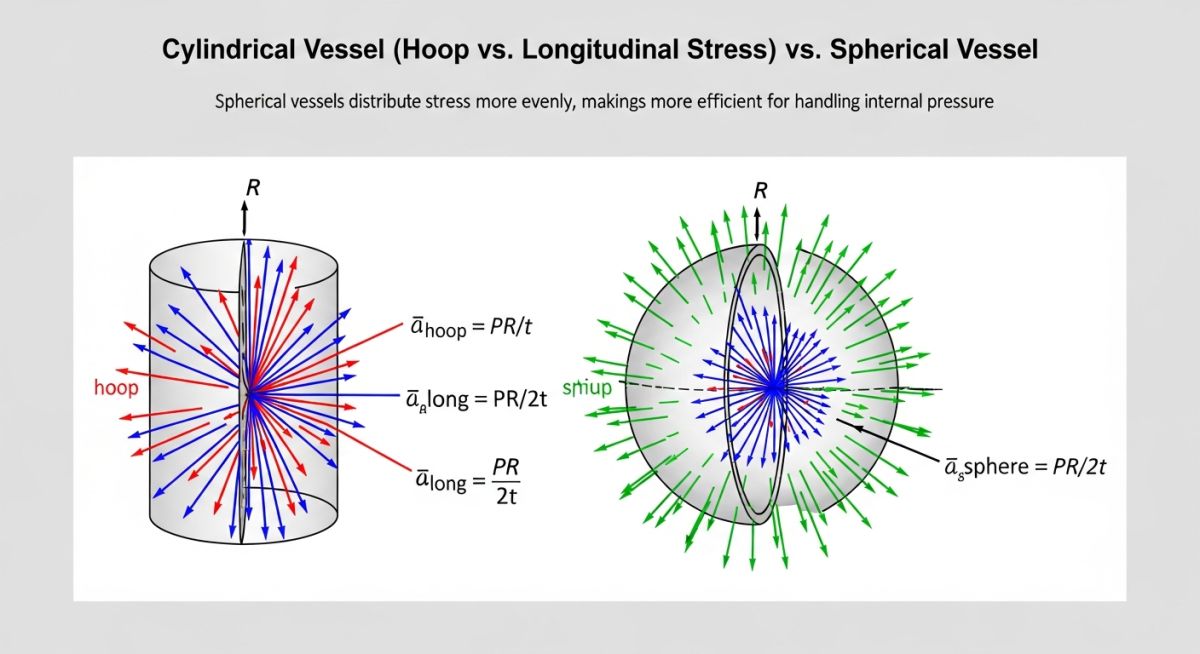
Cylindrical shapes are the most prevalent Types of Pressure Vessels due to their balance between fabrication ease and structural efficiency. They consist of a cylindrical shell and two heads (end caps) which can be hemispherical, ellipsoidal, or torispherical. In these vessels, the Hoop Stress is typically twice the Longitudinal Stress. According to ASME Section VIII Div 1, the required thickness (t) for a seamless shell is calculated as: t = PR / (SE – 0.6P), where P is internal pressure, R is radius, S is allowable stress, and E is joint efficiency.
2. Spherical Pressure Vessels
Spherical vessels are the most efficient Types of Pressure Vessels for containing extremely high pressures. Because the stress is distributed uniformly across the entire surface, the wall thickness required for a sphere is roughly half that of a cylinder of the same diameter and pressure. However, they are more expensive to manufacture due to the complex forming of “orange-peel” segments.
3. Conical and Rectangular Geometries
Conical sections are often used as transitions between different diameters in a vertical tower. Rectangular Types of Pressure Vessels are rare and generally limited to low-pressure applications (like clean rooms or small autoclaves) because the corners act as massive stress risers, requiring heavy internal bracing or external ribbing to prevent deformation.
Functional Types of Pressure Vessels in Industry
Beyond shape, we must classify Types of Pressure Vessels by their role within the process flow. Each functional type has specific design considerations under API (American Petroleum Institute) or ASME standards.
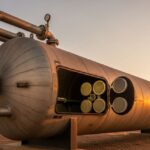
- Storage Vessels (Bullets & Spheres): Used to store liquefied gases like LPG or anhydrous ammonia. “Bullets” are horizontal cylindrical vessels with large length-to-diameter ratios, often semi-mounded to protect against fire.
- Heat Exchangers: Specifically shell-and-tube exchangers. These are unique Types of Pressure Vessels designed to transfer heat between two fluids. They must account for differential thermal expansion between the tubes and the shell.
- Process Reactors: These vessels facilitate chemical reactions. They often feature internal agitators, baffles, and heating/cooling jackets. Selection here is driven by kinetics and thermodynamics rather than just pressure containment.
- Distillation Columns: Tall, vertical Types of Pressure Vessels used for separating fluid mixtures. They are designed for high wind loads and seismic activity due to their extreme height.
Fabrication: Types of Pressure Vessels by Construction
The method of manufacturing determines the structural integrity and the maximum allowable working pressure (MAWP) for different Types of Pressure Vessels. ASME Section VIII provides specific guidelines for the following fabrication methods:
Welded Construction
The most common method where rolled plates are joined via longitudinal and circumferential welds. Requires 100% Radiographic Testing (RT) for high-criticality service.
Forged Construction
Used for extreme high-pressure Types of Pressure Vessels. Forging eliminates weld seams in the shell, significantly reducing the risk of brittle fracture.
Multilayer Vessels
Constructed by wrapping multiple thin layers of steel around an inner shell. This prevents crack propagation through the entire wall thickness, often used in ammonia synthesis.
Brazed and Cast Vessels
Typically smaller units found in refrigeration or hydraulic systems. Cast iron vessels are strictly limited by ASME codes due to low ductility.
Orientation: Horizontal vs Vertical Types of Pressure Vessels
Choosing between a horizontal or vertical orientation for different Types of Pressure Vessels depends on the process requirements, plot plan constraints, and the fluid phase being handled.
| Feature | Horizontal Vessels | Vertical Vessels |
|---|---|---|
| Primary Support | Two Saddles | Skirt, Legs, or Lugs |
| Main Advantage | Easier cleaning and maintenance | Smaller footprint (Plot space) |
| Typical Use | Storage bullets, Heat exchangers | Fractionation, Reactors, Gas Scrubbers |
| Stress Factors | Bending moments between saddles | Wind and Seismic overturning moments |
Material Selection for Various Types of Pressure Vessels
Materials for Types of Pressure Vessels are selected based on the design temperature and the corrosivity of the fluid. Under 2026 engineering standards, common choices include:
- Carbon Steel (SA-516 Gr. 70): The industry standard for moderate temperature and pressure.
- Stainless Steel (SS 304/316): Essential for cryogenic service or corrosive chemical environments.
- Chrome-Moly Steel (SA-387): Used for high-temperature reactors to prevent hydrogen attack.
- Clad Materials: A carbon steel base for strength with a thin layer of expensive alloy (like Monel or Titanium) for corrosion resistance.
Engineering Selection Criteria for Types of Pressure Vessels
When selecting between different Types of Pressure Vessels, an engineer must perform a multi-variable analysis. The following formula for longitudinal stress (Sl) in a thin-walled cylinder provides a baseline for wall thickness selection:
Sl = (P × D) / (4 × t)
Where: P = Design Pressure (PSI), D = Internal Diameter (in), t = Wall Thickness (in)
Beyond the basic math, several critical factors must be considered:
- Lethal Service: If the vessel contains toxic fluids, ASME Section VIII Div 1 requires 100% radiography and post-weld heat treatment (PWHT), regardless of the vessel type.
- Cyclic Loading: Vessels subject to frequent pressure or temperature fluctuations require a fatigue analysis (Division 2 rules).
- Location and Environment: Coastal installations require specialized exterior coatings and higher corrosion allowances for all Types of Pressure Vessels.
Inspection and NDT for Different Types of Pressure Vessels
The reliability of all Types of Pressure Vessels is verified through rigorous Non-Destructive Testing (NDT) both during fabrication and throughout their operational life. Per 2026 updates to API 510 (Pressure Vessel Inspection Code) and ASME Section V, the selection of NDT methods is heavily influenced by the vessel geometry and the “Lethal Service” classification of the contents.
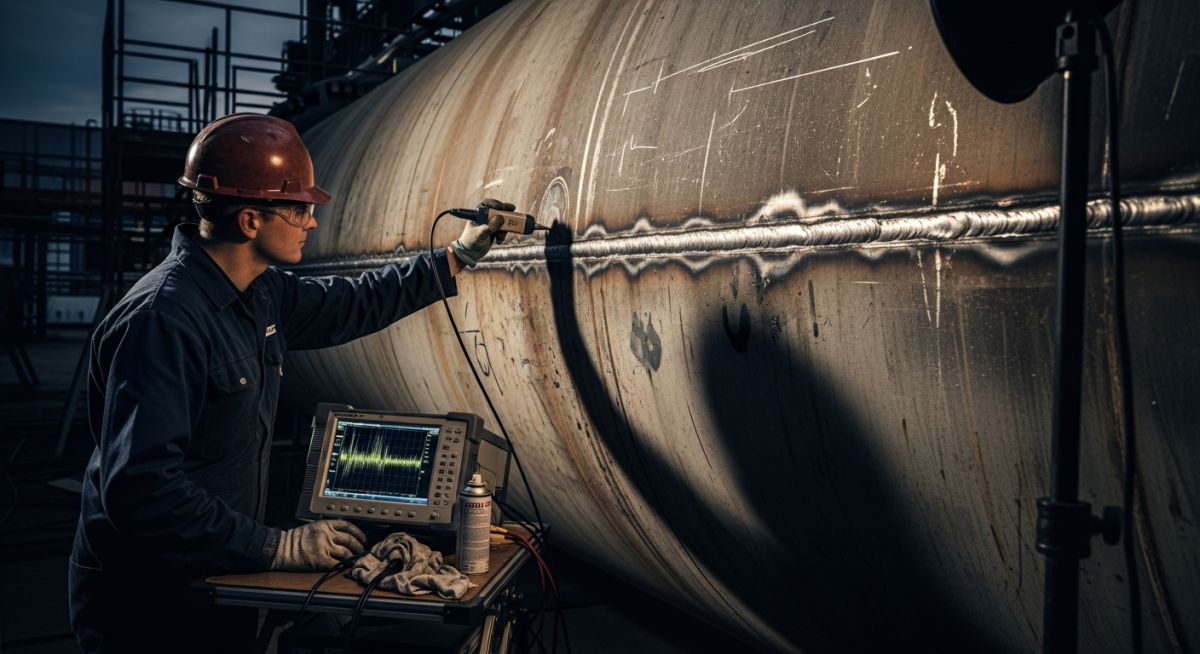
Different Types of Pressure Vessels present unique challenges for inspectors. For example, spherical vessels require extensive scaffolding for full external radiography, while horizontal bullets may favor internal automated ultrasonic testing (AUT) to minimize downtime.
| NDT Method | Targeted Defect | Vessel Type Suitability |
|---|---|---|
| Radiography (RT) | Volumetric (Porosity, Slag) | Small cylindrical vessels; shop fabrication. |
| Ultrasonic (UT/PAUT) | Planar (Cracks, Lack of Fusion) | Thick-walled forged or welded reactors. |
| Magnetic Particle (MT) | Surface/Sub-surface cracks | Carbon steel storage bullets and saddles. |
| Dye Penetrant (PT) | Surface-breaking defects | Stainless steel and non-ferrous alloy vessels. |
Pro Tip: Joint Efficiency and Selection
When designing various Types of Pressure Vessels, the “Joint Efficiency” (E) factor in thickness formulas is tied directly to the extent of NDT. A vessel with 100% radiography (E = 1.0) allows for a thinner shell compared to a spot-radiographed vessel (E = 0.85), often offsetting the higher inspection costs through material savings.
Don’t miss this video related to Types of Pressure Vessels
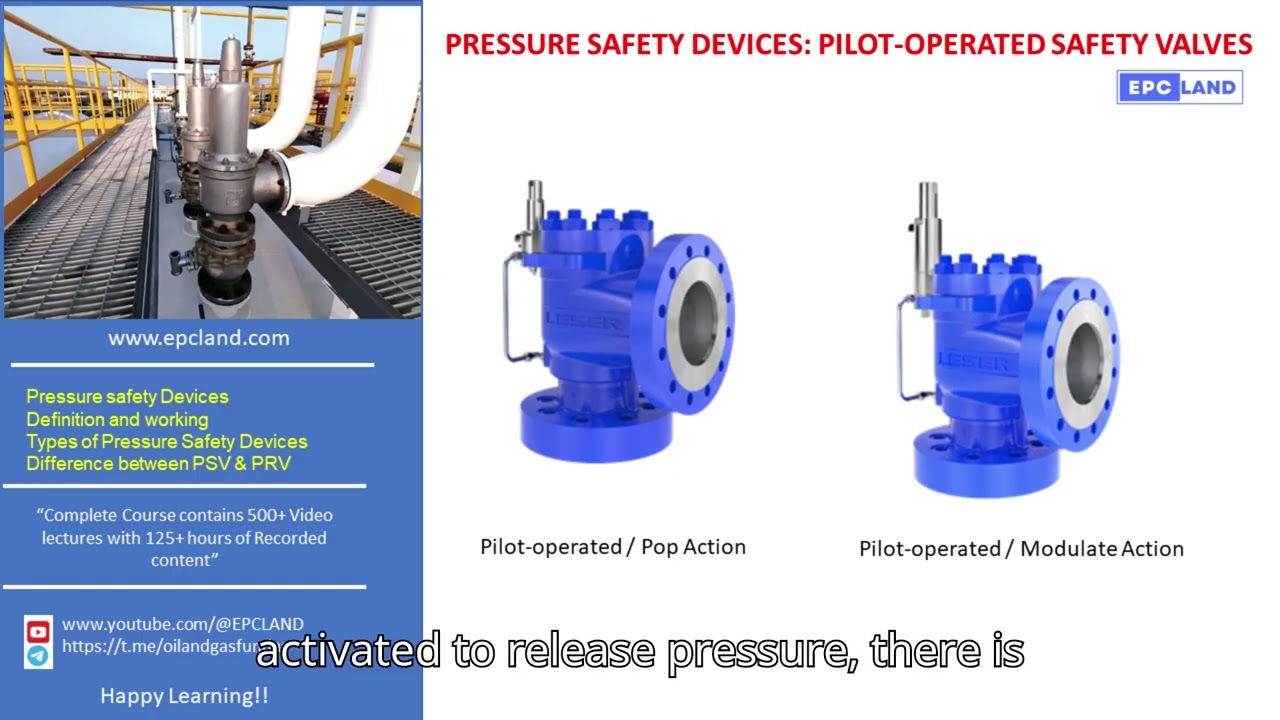
Summary: Master Piping Engineering with our complete 125+ hour Certification Course: ……
Types of Pressure Vessels Calculator
This tool calculates the Hoop Stress (Circumferential Stress) for thin-walled cylindrical vessels, a primary factor in determining the safety limits for various Types of Pressure Vessels.
Case Study: Failure Analysis of Mismatched Types of Pressure Vessels
1. Project Data and Background
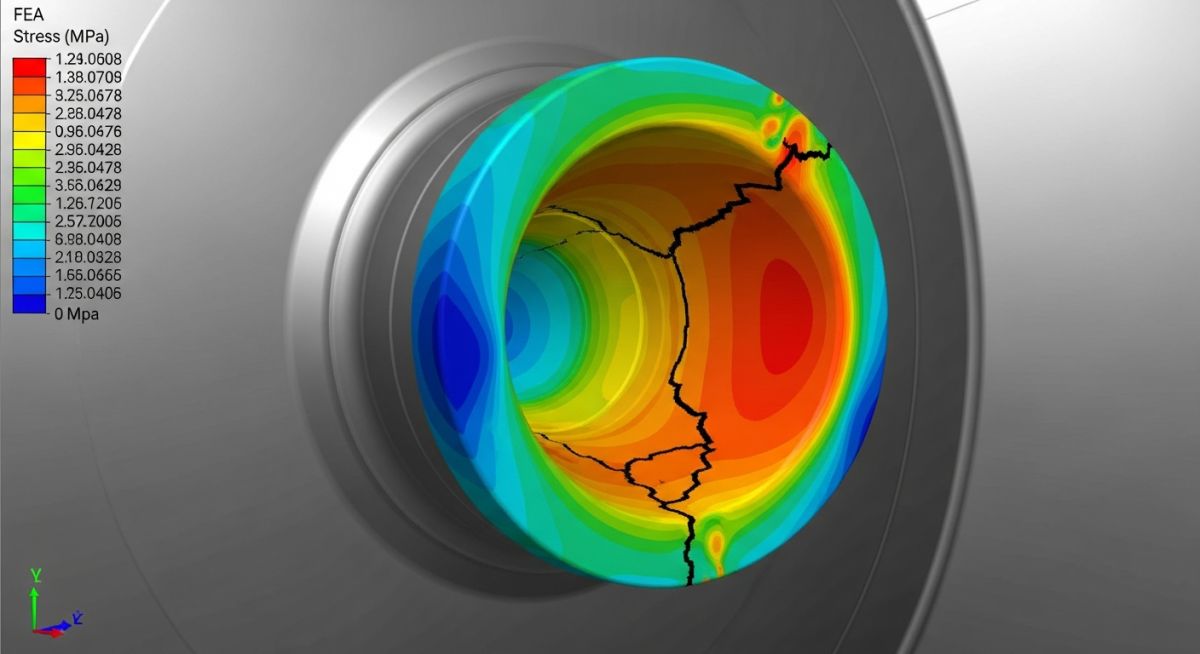
In early 2026, a specialty chemical facility in Texas experienced a containment loss in a 15,000-gallon batch reactor. The vessel was a standard vertical cylindrical type constructed from SA-516 Grade 70 carbon steel. While the vessel met the original Types of Pressure Vessels criteria for its 250 PSI design pressure, the selection failed to account for the rapid thermal cycling inherent in the new exothermic process.
2. Failure Analysis
Post-incident inspection using dye penetrant and ultrasonic testing revealed extensive cracking at the skirt-to-shell junction. The engineering team determined that the failure was caused by Thermal Fatigue combined with Stress Corrosion Cracking (SCC). Because a standard “Type A” vertical vessel support was used without a forged transition ring, the localized thermal gradient exceeded the material yield strength during every 4-hour batch cycle.
3. Engineering Fix and Redesign
The remediation involved replacing the failed unit with a high-performance vessel designed under ASME Section VIII Division 2 (Design by Analysis). Key changes included:
- Replacement of the lap-welded skirt with a forged Y-ring transition to distribute stresses.
- Upgrading the material to SA-240 Type 316L Stainless Steel for superior corrosion resistance.
- Implementation of high-density mineral wool insulation to minimize thermal gradients.
Lessons Learned for Engineers
Always consider the Mode of Operation when evaluating different Types of Pressure Vessels. A vessel that is safe for steady-state storage may fail catastrophically if subjected to cyclic thermal or pressure loads. For batch processes, design by analysis (Division 2) is often a safer selection than standard design by rule (Division 1).
Frequently Asked Questions about Types of Pressure Vessels
What is the difference between ASME Section VIII Division 1 and Division 2 types of pressure vessels?
How do engineers decide between horizontal vs vertical pressure vessel orientation selection?
Why are spherical vs cylindrical pressure vessel efficiency ratings different for gas storage?
What are the common pressure vessel support types for industrial tanks in seismic zones?
Final Engineering Overview
Selecting the appropriate Types of Pressure Vessels is one of the most critical decisions in industrial plant design. Whether choosing a spherical tank for high-efficiency LPG storage or a complex vertical reactor for chemical synthesis, engineers must balance fabrication costs, material allowables, and safety code compliance. By adhering to 2026 ASME standards and utilizing advanced stress analysis, facilities can ensure long-term mechanical integrity and operational safety.
📚 Recommended Resources: Types of Pressure Vessels
Read these Guides
🎓 Advanced Training



Related posts:
![High-grade industrial Wing Nut Types and Applications for mechanical assemblies.]()
Wing Nut Types and Applications: The 2026 Engineering Guide
![Industrial Monorail Crane Systems installed in a modern manufacturing plant 2026.]()
Monorail Crane Systems: Design, Types & 2026 Standards Guide
![Lead engineer performing a Factory Acceptance Test FAT on an industrial skid system 2026]()
Factory Acceptance Test FAT: The 2026 Engineering Guide to Zero-Defect Delivery
![Professional engineering workspace showing a Basis of Design document layout for a 2026 project.]()
Basis of Design: How to Write a BOD for Engineering Projects in 2026
![Industrial Flare Knockout Drum Sizing and installation in a refinery relief system.]()
Flare Knockout Drum Sizing: Design & API 521 Standards (2026 Guide)
![Advanced Reboiler Control Systems in a modern petrochemical refinery 2026.]()
Reboiler Control Systems: Engineering Guide to Precision Control 2026