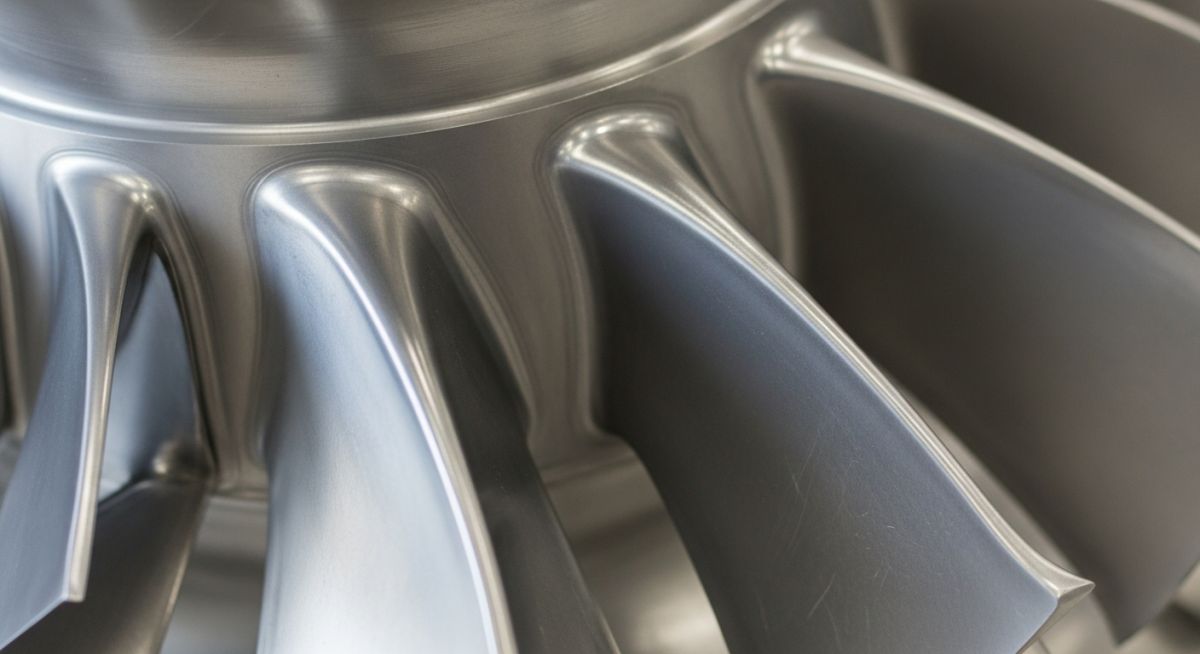
Verified Engineering Content Updated: February 2026 Titanium Alloys: Applications, Types, Grades, and Engineering Standards 2026 Imagine a material that possesses the strength of high-grade steel but weighs 45% less, while remaining virtually immune to the corrosive bite of seawater and sulfuric acid. For engineers designing the next generation of subsea valves or hypersonic airframes, Titanium Alloys are not just an option—they are a necessity. However, selecting the wrong grade for a high-temperature environment can lead to catastrophic stress-corrosion cracking. This guide provides the technical precision needed to master these transition metals in 2026. Key Takeaways for Engineers Strength-to-Weight Mastery: Titanium alloys provide superior specific strength compared to aluminum and steel, critical for aerospace payload optimization. Metallurgical Phases: Performance is dictated by Alpha (hcp) and Beta (bcc) crystal structures, controlled through precise alloying elements like Aluminum and Vanadium. Grade Selection: Transitioning from Grade 5 (Ti-6Al-4V) to Grade 23 (ELI) is mandatory for medical and cryogenic applications to ensure fracture toughness. What are Titanium Alloys? Titanium Alloys are metallic materials composed of titanium mixed with elements like aluminum, vanadium, or molybdenum. These alloys utilize two primary crystal phases—Alpha and Beta—to achieve exceptional strength-to-weight ratios, high-temperature stability up to 600°C, and superior corrosion resistance across aerospace, medical, and chemical processing industries in 2026. "In my 20 years of material procurement, the biggest mistake I see is engineers over-specifying for corrosion. While Grade 7 is the gold standard for acidic environments, Grade 12 often provides the necessary protection at a significantly lower cost-point for 2026 projects." — Atul Singla, Founder of EPCLand Table of Contents 1. Beyond the Basics: Why Titanium Alloys Dominate Extreme Engineering 2. Industrial Application of Titanium Alloys in 2026 3. Metallurgical Classification: Types of Titanium Alloys 4. High-Performance Examples of Titanium Alloys 5. The Critical Temperature of Transition in Titanium Alloys 6. Mechanical and Thermal Properties of Titanium Alloys 7. Essential Grades of Titanium Alloys for Engineers 8. Technical References for Titanium Alloys Technical Proficiency Check: Titanium Metallurgy Question 1 of 5 Which alloying element is primarily used as an Alpha stabilizer in Titanium Alloys? A) Aluminum B) Vanadium C) Molybdenum D) Iron What is the crystal structure of Pure Alpha Titanium at room temperature? A) Body-Centered Cubic (BCC) B) Hexagonal Close-Packed (HCP) C) Face-Centered Cubic (FCC) D) Simple Cubic Which grade is known as "ELI" (Extra Low Interstitials) and preferred for medical implants? A) Grade 2 B) Grade 5 C) Grade 23 D) Grade 7 The "Beta Transus" temperature refers to what transition? A) Minimum temperature for 100% Beta phase B) Solidification from liquid phase C) Recrystallization temperature D) Ductile-to-brittle transition Which element is added to Titanium Grade 7 to significantly enhance corrosion resistance? A) Nickel B) Palladium C) Chromium D) Copper Next Question Beyond the Basics: Why Titanium Alloys Dominate Extreme Engineering At the atomic level, the dominance of Titanium Alloys in 2026 stems from their unique allotropic nature. Unlike many structural metals, titanium exists in two distinct crystal forms: the Alpha phase, characterized by a Hexagonal Close-Packed (HCP) structure, and the Beta phase, which adopts a Body-Centered Cubic (BCC) lattice. This phase duality allows engineers to "tune" the metal’s mechanical behavior by adding stabilizers. Alpha stabilizers, such as Aluminum, expand the temperature range where the HCP structure is stable, enhancing creep resistance and weldability. Conversely, Beta stabilizers like Vanadium, Molybdenum, and Iron lower the transition temperature, allowing for heat-treatable alloys with immense tensile strength and better cold-formability. The synergy of these phases results in a material that maintains structural integrity at temperatures where aluminum softens and possesses corrosion resistance that rivals platinum. For high-pressure systems, engineers rely on the ASME Section VIII Division 1 codes to ensure that vessel designs account for titanium's unique fatigue profiles and thermal expansion coefficients. In 2026, the strategic use of these alloys is not merely about weight savings; it is about extending the lifecycle of critical infrastructure in environments ranging from cryogenic fuel tanks to geothermal brine processors. Industrial Application of Titanium Alloys in 2026 In the current engineering landscape, Titanium Alloys have transitioned from "exotic" materials to standard specifications across diverse sectors. In aerospace, Ti-6Al-4V Grade 5 remains the industry workhorse, accounting for nearly 50% of all titanium usage due to its balance of strength and fabricability. Modern turbine engines utilize these alloys for fan blades and compressor discs where centrifugal forces demand high specific strength. Beyond the atmosphere, the medical sector utilizes Grade 23 (ELI) for orthopedic implants and cardiac stents, leveraging its bio-inert nature and modulus of elasticity that closely mimics human bone. Chemical and subsea engineering applications favor the palladium-enhanced grades. For instance, in desalination plants and offshore oil rigs, Titanium Grade 7 is specified for piping and heat exchangers to prevent crevice corrosion in high-temperature chloride solutions. The 2026 shift toward sustainable energy has also seen titanium used in hydrogen fuel cell plates and high-efficiency geothermal systems, where its resistance to acidic condensates is unparalleled. Metallurgical Classification: Types of Titanium Alloys Classification is dictated by the microstructure present after processing. In 2026, engineers categorize these materials into three primary families based on their room-temperature phase composition: i) Alpha Alloys: Creep Resistance and Weldability Consisting primarily of the Alpha phase, these alloys (e.g., Ti-5Al-2.5Sn) cannot be strengthened by heat treatment but offer excellent weldability and toughness. They are the preferred choice for cryogenic applications and high-temperature components like steam turbine blades where creep resistance is paramount. ii) Alpha-Beta Alloys: The Versatile Workhorse These contain both Alpha and Beta phases and are heat-treatable. Grade 5 (Ti-6Al-4V) is the standout example, providing a superior combination of strength, ductility, and fatigue resistance. These alloys are extensively covered under ASTM B265 for sheet and plate applications in 2026. iii) Beta Alloys: High Strength and Formability Rich in Beta stabilizers, these alloys stay in the BCC phase even at room temperature. They offer the highest strength-to-weight ratios after heat treatment and possess excellent cold formability, making them ideal for high-strength fasteners and springs. High-Performance Examples of Titanium Alloys When evaluating Titanium Alloys for high-stress applications in 2026, engineers must differentiate between general-purpose grades and those optimized for specific environmental extremes. Grade 5 (Ti-6Al-4V) remains the global benchmark, favored for its balanced alpha-beta structure that supports a tensile strength of approximately 1000 MPa while maintaining a lightweight density of 4.43 g/cm3. For projects requiring enhanced fracture toughness—such as subsea pressure hulls or cryogenic storage—the Grade 23 ELI variant is specified under ASTM F136, which enforces strict limits on interstitial elements like oxygen and iron to prevent brittle failure. The Critical Temperature of Transition in Titanium Alloys The Beta Transus temperature is the most critical metallurgical threshold for any engineer working with these materials. It represents the temperature above which the hexagonal alpha phase completely transforms into the body-centered cubic beta phase. For Grade 5, this occurs at approximately 999°C. Processing above this limit (beta processing) can improve fracture toughness but may compromise fatigue strength. In 2026, advanced heat treatments such as Solution Treating and Aging (STA) are utilized to manipulate these phase distributions, enabling parts to withstand temperatures up to 400°C in aerospace turbines without losing structural integrity. Mechanical and Thermal Properties of Titanium Alloys One of the most defining characteristics of Titanium Alloys is their exceptionally low thermal conductivity (6.7 to 7.5 W/m·K for Grade 5), which is roughly 80% lower than that of steel. While this provides excellent insulation in heat-shielding applications, it presents significant challenges for machining, as heat tends to concentrate at the tool-cutting edge rather than dissipating into the workpiece. Consequently, 2026 manufacturing standards emphasize high-pressure coolant systems and carbide tooling to maintain surface integrity. Essential Grades of Titanium Alloys for Engineers Alloy Grade Composition (Nominal) Tensile Strength (MPa) Primary 2026 Application Grade 5 Ti-6Al-4V ~1000 Aerospace Airframes & Turbines Grade 7 Ti-0.15Pd ~345 Chemical Processing (Acid Resistance) Grade 12 Ti-0.3Mo-0.8Ni ~483 High-Temp Heat Exchangers Grade 23 Ti-6Al-4V ELI ~860 Medical Implants & Cryogenics Titanium Alloy Grade 5, Ti 6Al-4V The ultimate engineering "workhorse," Grade 5 combines high strength with excellent corrosion resistance. In 2026, it is the primary alloy used for 3D printing (Additive Manufacturing) via Selective Laser Melting (SLM) to produce complex geometries for high-performance aerospace components. Titanium Alloy Grade 7 (Palladium Enhanced) By adding 0.12% to 0.25% Palladium, Grade 7 offers the highest resistance to crevice corrosion of all Titanium Alloys. It is indispensable for 2026 desalination plants and chemical reactors handling hot chloride brines. Titanium Alloy Grade 12 (Mo-Ni Enhanced) Often specified for its enhanced weldability and strength at elevated temperatures, this alloy utilizes Molybdenum and Nickel to provide superior resistance to reducing acids compared to commercially pure grades. It remains a top choice for 2026 shell-and-tube heat exchangers. Titanium Alloy Weight & Strength Calculator (2026) Compare the weight and estimated tensile strength of standard Titanium Alloy shapes against Steel equivalents. Select Titanium Grade Grade 5 (Ti-6Al-4V) - 4430 kg/m³ Grade 2 (Commercially Pure) - 4510 kg/m³ Grade 7 (Palladium) - 4660 kg/m³ Grade 23 (ELI) - 4480 kg/m³ Volume of Component (cm³) Calculate Engineering Metrics Titanium Weight -- grams Steel Weight (Ref) -- grams Weight Saving -- % Engineering Case Study Optimizing Desalination Infrastructure with Titanium Alloys Grade 7 The Challenge A massive 2026 desalination project in the Middle East faced recurring tube-bundle failures in heat exchangers due to crevice corrosion from hot brine (95°C) and high H2S concentrations. The Solution Engineering teams replaced 316L Stainless Steel components with Titanium Grade 7 (Palladium-stabilized), leveraging its superior anodic protection in reducing-acid environments. The Result The implementation resulted in a zero-leakage record over a 24-month period, reducing lifecycle maintenance costs by 40% compared to traditional alloy steels. The success of this deployment hinged on the metallurgical stability of Titanium Alloys enhanced with noble metals. While Grade 2 titanium would have sufficed for general seawater exposure, the specific temperature and pH profile of this plant necessitated the Grade 7 specification. This case proves that in 2026, the higher initial CAPEX of palladium-doped titanium is offset within three years by the elimination of unplanned downtime. Technical Note: All welding for this project followed the AWS D1.9 Structural Welding Code for Titanium to ensure no atmospheric contamination occurred during the joining process. Expert Insights: Lessons from 20 years in the field Drawing from two decades of material integration in EPC projects, several critical nuances define the successful deployment of Titanium Alloys in 2026. Understanding these field-tested realities is essential for avoiding premature component failure. ● Galvanic Isolation is Mandatory: Despite the incredible corrosion resistance of titanium, it sits at the noble end of the galvanic series. When coupled with carbon steel or aluminum in subsea environments, the titanium remains pristine while the "lesser" metal dissolves rapidly. Always use dielectric isolation kits in 2026 piping designs. ● Contamination Crack Sensitivity: Titanium is a "getter" metal; at welding temperatures, it absorbs oxygen, nitrogen, and hydrogen with extreme voracity. In my experience, 90% of field weld failures are due to inadequate trailing gas shields, leading to "alpha case" embrittlement that is invisible to the naked eye but fails under pressure. ● Surface Integrity in Machining: Because of the low thermal conductivity mentioned earlier, surface galling is a persistent risk. For 2026 aerospace precision parts, ensure your CNC shop utilizes high-lubricity vegetable-based oils and avoids chlorine-heavy cutting fluids, which can induce stress-corrosion cracking in certain Titanium Alloys. ● The Modulus Factor: Titanium's Young's Modulus is roughly half that of steel (110 GPa vs 210 GPa). When designing structural members for 2026 infrastructure, you must account for double the deflection. High strength does NOT mean high stiffness. References & Standards The following international standards govern the production, testing, and application of Titanium Alloys in 2026: ASME BPVC Section II, Part B - Nonferrous Material Specifications for Pressure Vessels. ASTM B265 - Standard Specification for Titanium and Titanium Alloy Strip, Sheet, and Plate. ISO 5832-3 - Implants for surgery — Metallic materials — Part 3: Wrought titanium 6-aluminum 4-vanadium alloy. AWS D1.9/D1.9M - Structural Welding Code for Titanium. API Technical Report 938-C - Use of Duplex Stainless Steels and Titanium Alloys in the Oil Refining Industry. Expert Insights: Lessons from 20 years in the field Drawing from two decades of material integration in EPC projects, several critical nuances define the successful deployment of Titanium Alloys in 2026. Understanding these field-tested realities is essential for avoiding premature component failure. ● Galvanic Isolation is Mandatory: Despite the incredible corrosion resistance of titanium, it sits at the noble end of the galvanic series. When coupled with carbon steel or aluminum in subsea environments, the titanium remains pristine while the "lesser" metal dissolves rapidly. Always use dielectric isolation kits in 2026 piping designs. ● Contamination Crack Sensitivity: Titanium is a "getter" metal; at welding temperatures, it absorbs oxygen, nitrogen, and hydrogen with extreme voracity. In my experience, 90% of field weld failures are due to inadequate trailing gas shields, leading to "alpha case" embrittlement that is invisible to the naked eye but fails under pressure. ● Surface Integrity in Machining: Because of the low thermal conductivity mentioned earlier, surface galling is a persistent risk. For 2026 aerospace precision parts, ensure your CNC shop utilizes high-lubricity vegetable-based oils and avoids chlorine-heavy cutting fluids, which can induce stress-corrosion cracking in certain Titanium Alloys. ● The Modulus Factor: Titanium's Young's Modulus is roughly half that of steel (110 GPa vs 210 GPa). When designing structural members for 2026 infrastructure, you must account for double the deflection. High strength does NOT mean high stiffness. References & Standards The following international standards govern the production, testing, and application of Titanium Alloys in 2026: ASME BPVC Section II, Part B - Nonferrous Material Specifications for Pressure Vessels. ASTM B265 - Standard Specification for Titanium and Titanium Alloy Strip, Sheet, and Plate. ISO 5832-3 - Implants for surgery — Metallic materials — Part 3: Wrought titanium 6-aluminum 4-vanadium alloy. AWS D1.9/D1.9M - Structural Welding Code for Titanium. API Technical Report 938-C - Use of Duplex Stainless Steels and Titanium Alloys in the Oil Refining Industry. Expert Q&A: Master Class on Titanium Alloys What are the primary advantages of Titanium Alloys over Stainless Steel? ▼ In 2026 engineering, the primary advantages are specific strength (strength-to-weight ratio) and superior corrosion resistance. Titanium is approximately 45% lighter than steel but offers comparable tensile strength. Additionally, titanium forms a much more stable and regenerative oxide film, making it virtually immune to pitting and crevice corrosion in seawater. Can Titanium Alloys be welded to other metals like Steel or Aluminum? ▼ Direct fusion welding of Titanium Alloys to steel or aluminum is not recommended because they form brittle intermetallic compounds that lead to immediate cracking. Joining typically requires specialized transition inserts (like explosion-bonded joints) or mechanical fastening with proper galvanic isolation. What is the difference between Titanium Grade 5 and Grade 23? ▼ Both are Ti-6Al-4V alloys, but Grade 23 is the ELI (Extra Low Interstitial) version. Grade 23 has stricter limits on oxygen, nitrogen, and iron content, which results in significantly higher fracture toughness and better performance in cryogenic and medical implant applications compared to standard Grade 5. Why does titanium "gall" during machining, and how do we prevent it in 2026? ▼ Galling occurs because titanium has a high chemical affinity for tool materials and low thermal conductivity. In 2026, we mitigate this by using PVD-coated carbide tools, high-pressure through-spindle cooling, and maintaining "positive feed" to ensure the tool is always cutting rather than rubbing against the work-hardened surface. Is Titanium Grade 7 worth the price premium for acid environments? ▼ Absolutely, if you are dealing with reducing acids or crevice corrosion risks. The 0.15% Palladium in Grade 7 shifts the corrosion potential of the alloy, allowing the protective oxide layer to reform even in oxygen-starved crevices. For high-temp brine or diluted sulfuric acid, the ROI on Grade 7 over Grade 2 is realized within the first major maintenance cycle. How do I identify "Alpha Case" contamination in a finished weld? ▼ Alpha case is a brittle, oxygen-rich layer that cannot always be seen visually. However, any discoloration beyond silver or pale straw (like deep blue, purple, or white flaky deposits) indicates atmospheric contamination. In high-spec 2026 projects, we use eddy current testing or hardness profiles to confirm the absence of alpha case before deployment.