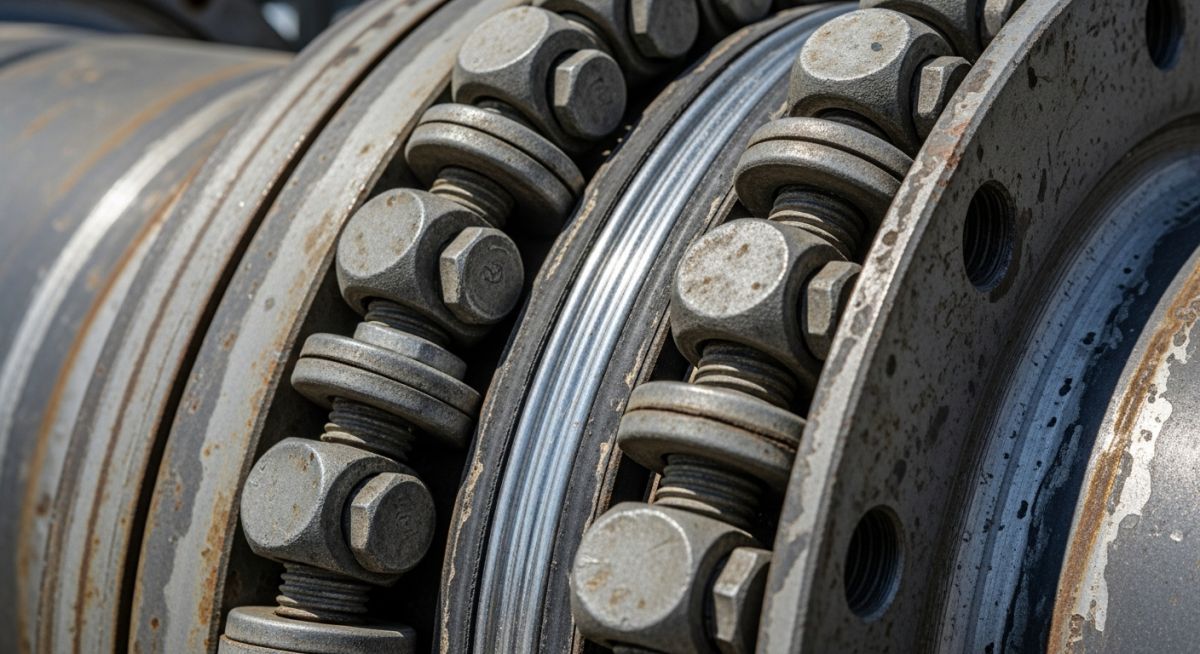
Verified Engineering Guide Updated: January 2026 Washers vs Gaskets: Main Differences between a Gasket and a Washer Imagine you are tightening the final bolt on a high-pressure heat exchanger. You reach for a component to protect the flange surface, but you stop: should this be a washer or a gasket? It is a common point of confusion for junior technicians and seasoned engineers alike. While they look similar—often circular with a hole in the middle—mixing them up is a recipe for catastrophic leaks or structural failure. In the world of Washers vs Gaskets, one is designed to manage force, while the other is designed to manage fluids. Key Engineering Takeaways • Purpose: Washers distribute fastener load; Gaskets create a fluid-tight static seal. • Material: Washers are typically rigid (Steel/SS); Gaskets are deformable (Rubber/PTFE/Graphite). • Standards: Gasket selection is governed by ASME B16.21, while washers follow fastener standards like ASTM F436. What is the difference between a Washer and a Gasket? The primary difference between Washers vs Gaskets lies in their function: a washer is a rigid hardware component used to distribute the load of a threaded fastener and prevent surface damage. A gasket is a deformable seal used to fill the gap between two surfaces to prevent gas or liquid leakage. "In my 20 years of field inspections, the most dangerous error isn't forgetting a washer—it's assuming a washer can act as a seal. A washer provides mechanical stability, but only a gasket provides hydraulic integrity. Never substitute one for the other in pressurized systems." — Atul Singla, Founder of Epcland Table of Contents 1. What is a Washer? 2. What is a Gasket? 3. Critical Engineering Differences 4. ASME/API Compliance Standards 5. Failure Case Study 6. Interactive Stress Calculator 7. Expert Field Lessons 8. Frequently Asked Questions Question 1 of 5 What is the primary engineering function of a standard flat washer? To prevent fluid leakage under high pressure. To distribute the load of a threaded fastener over a larger area. To provide a sacrificial layer for galvanic corrosion only. Correct! Washers increase the bearing area, reducing the compressive stress on the clamped material to prevent deformation. Which standard primarily governs the dimensions of nonmetallic flat gaskets for pipe flanges? ASTM F436 ASME B16.21 API 6D Correct! ASME B16.21 covers nonmetallic gaskets, ensuring compatibility with standard pipe flanges. In "Washers vs Gaskets", which component is specifically designed to deform under load? Structural Steel Washer Compressed Elastomeric Gasket Hardened Split Lock Washer Correct! Gaskets must deform to fill microscopic surface irregularities and create a seal, whereas washers are meant to remain rigid. What is a primary risk of using a rigid washer where a gasket is required? Inability to conform to surface imperfections, leading to leaks. Excessive lubrication of the bolt threads. Increased bolt fatigue life. Correct! Rigid washers do not "flow" into surface voids, making them ineffective as high-pressure seals. Which type of washer is designed specifically to prevent unintentional loosening due to vibration? Fender Washer Spring or Lock Washer Flat Hardened Washer Correct! Spring washers provide axial tension to maintain bolt preload during thermal cycling or vibration. Next Question → What is a Washer? (Load Support and Fastener Stability) In engineering terms, a washer is a structural hardware component designed primarily for load distribution and fastener security. When a bolt or nut is tightened directly against a surface, the point of contact is often small, leading to high localized stress that can mar or crush the base material. The washer acts as an intermediary, spreading the clamping force over a significantly larger surface area. Beyond simple load spreading, washers perform critical secondary functions. Spring washers (or lock washers) maintain axial tension in the fastener assembly, preventing loosening during vibration or thermal expansion/contraction cycles. High-grade hardened washers, such as those meeting ASTM F436 standards, are essential in structural steel connections where high-strength bolts are used. By providing a smooth, hard bearing surface, they ensure that the torque applied to the nut is efficiently converted into clamping force rather than being lost to friction or surface deformation. Common types of washers include: Flat Washers: Standard load distribution and surface protection. Split Lock Washers: Provide a spring-like tension to resist vibration. Fender Washers: Extra-wide outer diameters for thin sheet metal or soft materials. Belleville Washers: Conical springs capable of supporting very high loads with small deflections. What is a Gasket? (Leak Prevention and Static Sealing) A gasket is a mechanical seal that fills the space between two or more mating surfaces, generally to prevent leakage from or into the joined objects while under compression. Unlike the rigid nature of a washer, a gasket is designed to be deformable. This conformability allows the gasket material to "flow" into the microscopic irregularities (pits, scratches, and machining marks) of the flange faces, creating a fluid-tight barrier. In the context of Washers vs Gaskets, the gasket's role is governed by the science of "sealing stress." For a seal to be effective, the bolt load must provide enough pressure to compress the gasket beyond its yield point (for metallic gaskets) or into its elastic range (for elastomeric gaskets), while remaining within the limits of the flange's structural integrity. Standards like ASME B16.21 define the dimensions and material requirements to ensure safety in pressurized systems. The selection of a gasket is highly dependent on the "STAMP" criteria: Size, Temperature, Application, Media, and Pressure. Using the wrong gasket, such as a simple rubber sheet in a high-temperature steam line, can lead to a "blowout," where the internal pressure physically ejects the gasket material from the joint. Washers vs Gaskets: Critical Engineering Differences The technical divergence between Washers vs Gaskets is most evident in their Young's Modulus and yield characteristics. A washer is designed to operate within its elastic region, maintaining its shape to provide a consistent bearing surface. In contrast, many gaskets are designed to undergo controlled plastic deformation or high elastic strain to achieve a seal. When analyzing a bolted joint, engineers must distinguish between Mechanical Load Paths (Washer) and Hydraulic Pressure Boundaries (Gasket). Feature Washer (Fastener Hardware) Gasket (Static Seal) Primary Goal Load distribution and surface protection. Fluid/Gas containment and leak prevention. Typical Material Hardened Steel, Stainless Steel, Brass. EPDM, PTFE, Graphite, Spiral Wound Metal. Mechanical State Rigid; Minimal deformation. Compressible; High deformation/conformability. Failure Mode Cracking, yielding, or galling. Blowout, creep relaxation, or chemical degradation. Standards and Materials: Choosing Washers vs Gaskets Engineering compliance requires strict adherence to international standards. For pressurized piping, the [ASME B16.5 Flange Standard](https://www.asme.org) dictates the dimensions of the mating surfaces, while [ASME B16.21](https://www.asme.org) defines the non-metallic gaskets that must sit between them. Material compatibility is the second pillar of selection. In the Washers vs Gaskets debate, galvanic corrosion is a high-risk factor. For example, using a zinc-plated carbon steel washer on a stainless steel flange in a marine environment creates a battery effect, leading to rapid fastener failure. Similarly, a gasket material must be chemically inert to the process media; a Nitrile (Buna-N) gasket will thrive in oil service but swell and fail rapidly in an oxidizing acid environment. Key Regulatory References: ASME B16.20: Metallic Gaskets for Pipe Flanges (Spiral Wound, Jacketed). ASTM F436: Standard Specification for Hardened Steel Washers. API 6A: Specification for Wellhead and Tree Equipment (Ring Joint Gaskets). Washers vs Gaskets: Stress & Torque Calculator Calculate the estimated compressive stress on your gasket vs. the bearing stress under your washer based on bolt torque. Bolt Diameter (inches) Applied Torque (ft-lbs) Washer Outer Diameter (inches) Calculate Unit Stress Estimated Clamp Force 12,000 lbs Washer Bearing Stress 9,054 PSI Gasket Sealing Stress (Estimated) 4,527 PSI Note: Calculation uses K=0.2 (dry bolt) friction factor. Results are for estimation per ASME PCC-1 guidelines. Don't miss this video related to Washers vs Gaskets Summary: Master Piping Engineering with our complete 125+ hour Certification Course: ...... ✅ 2500+ VIDEOS View Playlists → JOIN EXCLUSIVE EDUCATION SUBSCRIBE Washers vs Gaskets Failure Case Study: The "Rigid Seal" Fallacy Background: The Thermal Cycling Incident In a mid-sized chemical processing plant, a maintenance team was tasked with reassembling a heat exchanger outlet flange carrying cooling water at 80 PSI. Due to a warehouse stockout of standard ASME B16.21 non-metallic gaskets, the lead technician attempted to use a high-diameter structural steel washer coated in a heavy RTV silicone as a substitute. The Failure Mechanism While the initial hydro-test held, the joint failed spectacularly three days later during a thermal ramp-up. The engineering difference became the "smoking gun": Compliance Failure: The rigid steel washer had a Young's Modulus too high to conform to the flange's slight warp. Stress Concentration: The washer concentrated the entire bolt load on a narrow ring, causing microscopic "coining" (permanent deformation) of the expensive flange face. Expansion Mismatch: As the temperature rose, the thermal expansion of the steel washer differed from the stainless flange, creating a gap that the rigid "seal" could not bridge. Outcome & Financial Impact The resulting leak caused an emergency plant shutdown. The cost of replacing the ruined flange faces and the lost production time exceeded $45,000—all because of a fundamental misunderstanding of Washers vs Gaskets mechanics. The Solution (Correct Application) The joint was repaired using a Spiral Wound Gasket with an outer centering ring. The washers were moved back to their rightful place: under the nut to provide a smooth bearing surface for torque application, while the gasket handled the internal pressure boundary. Expert Insights: Lessons from 20 years in the field Watch for Washer Creep: In high-temperature applications, low-grade washers can "creep" or thin out over time, leading to a loss of bolt preload. Always match washer grade to bolt grade (e.g., use ASTM F436 with Grade 8 bolts). The "Gasket Sandwich" Danger: Never stack two gaskets to fill a gap. This creates an unstable joint prone to lateral blowout. Use a thicker single gasket or a spacer plate instead. Surface Finish Matters: Gaskets require specific flange serrations (per ASME B16.5) to "bite" into. A surface that is too smooth can allow a gasket to slide out under pressure. Don't Reuse Gaskets: While a washer can often be reused if not deformed, a gasket is a one-time-use component. Once compressed, its "elastic memory" is gone. Frequently Asked Questions about Washers vs Gaskets Can a washer replace a gasket in low-pressure plumbing? ▼ No. Even at low pressure, a metal washer lacks the conformability to seal microscopic leak paths. Using a washer instead of a gasket will result in persistent leaks. When should I use both a washer and a gasket? ▼ In standard flanged joints. The gasket sits between the flange faces to seal fluid, while the washer sits under the bolt head to ensure even torque and protect the flange exterior. Do gaskets have a shelf life? ▼ Yes. Elastomeric gaskets can become brittle over time. Always verify the manufacturer's expiration date on the [Garlock Sealing Technologies](https://www.garlock.com) or similar official guides. Why did my gasket "blow out" even though the bolts were tight? ▼ Blowouts occur when internal pressure exceeds the friction holding the gasket in place, often due to uneven loading or improper torque following [ASME PCC-1](https://www.asme.org) guidelines. Are there metallic gaskets that look like washers? ▼ Yes, Ring Type Joint (RTJ) gaskets look like solid metal rings, but they are precision-engineered to seal high-pressure API-rated flanges. What is the best material for a chemical-resistant gasket? ▼ PTFE (Polytetrafluoroethylene) provides the broadest chemical resistance, though it requires specific handling to prevent "cold flow" or creep. References & Standards ASME B16.21: Nonmetallic Gaskets for Pipe Flanges ASME B16.20: Metallic Gaskets (Spiral-Wound & Jacketed) ASTM F436: Standard Specification for Hardened Steel Washers API Spec 6A: Wellhead and Tree Equipment Standards 📚 Recommended Resources: Washers vs Gaskets Read these Guides 📄 Engineering Guide to Aluminum Pipes and Tubes | 2026 Industrial Specs 🎥 Watch Tutorials What is Gasket II Function of Gaskets II Piping Engineering II EPCLand.com #Gasket #gaskets ASTM A193 vs. ASTM A320: Decoding Alloy Steel Bolting Materials | Which is Best for Your Application