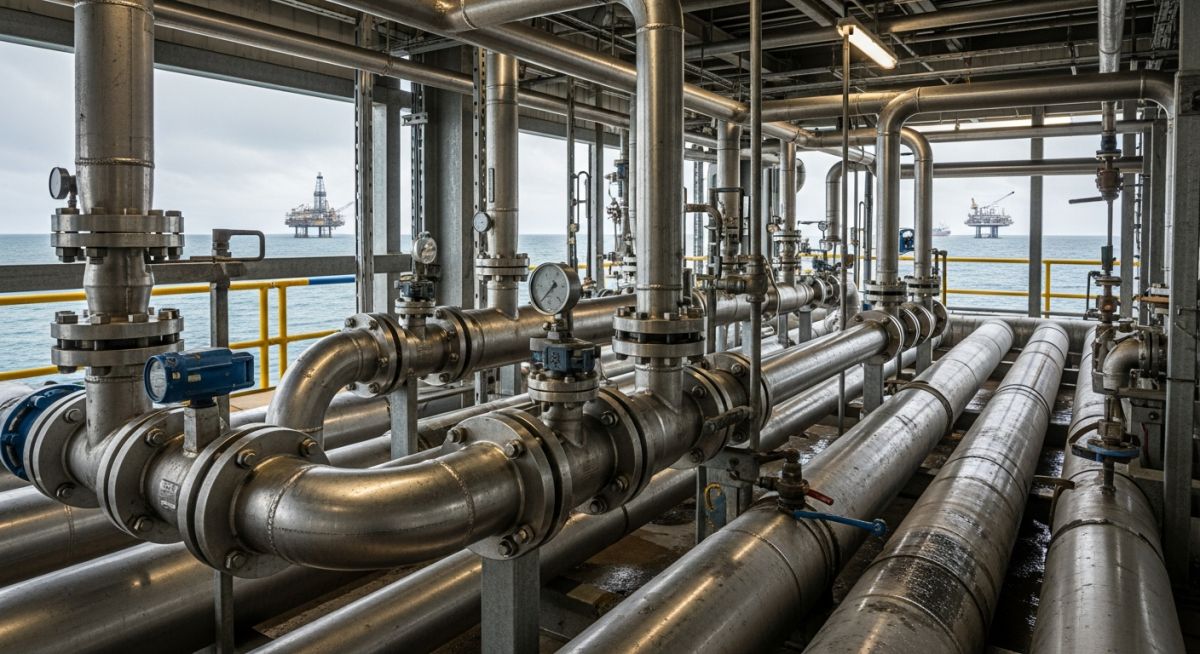
Author: Atul Singla | Piping Engineering Expert | Updated: May 2026 What is Monel Alloy? Properties, Applications, Grades, Advantages & Disadvantages In my 20+ years of piping engineering experience, especially in harsh service environments like coastal plants and chemical units, I’ve repeatedly seen one material outperform others under extreme corrosion conditions — Monel alloy. This nickel-copper alloy is not just another material option; it is often the final solution when stainless steels and even duplex alloys fail. Whether you are dealing with seawater corrosion, hydrofluoric acid service, or high-strength rotating components, understanding Monel alloy can save significant maintenance costs and prevent catastrophic failures. ✅ Key Engineering Takeaways Monel alloy is a nickel-copper alloy with exceptional corrosion resistance Performs extremely well in seawater, marine, and chemical environments Common grades include Monel 400 and Monel K500 Higher cost than stainless steel but superior lifecycle performance Widely used in offshore, chemical plants, pumps, and piping systems Monel alloy is a corrosion-resistant nickel-copper material used in marine, chemical, and high-performance engineering applications. Known for its strength and durability in aggressive environments, it is commonly available in grades like Monel 400 and Monel K500 and is preferred where stainless steel fails. Interactive Engineering Quiz Q1: What is the primary composition of Monel alloy? A. Iron and Chromium B. Nickel and Copper C. Aluminum and Magnesium D. Titanium and Zinc ✅ Correct Answer: Nickel and Copper. Monel alloys are primarily Ni-Cu alloys with excellent corrosion resistance. Q2: Which Monel grade is precipitation hardened for high strength? A. Monel 400 B. Monel R-405 C. Monel K500 D. Monel 404 ✅ Correct Answer: Monel K500. It contains aluminum and titanium for precipitation hardening. Q3: What is the key advantage of Monel in marine applications? A. Excellent seawater corrosion resistance B. Low density C. High electrical insulation D. Magnetic properties ✅ Correct Answer: Excellent seawater corrosion resistance, making it ideal for offshore piping and marine systems. Previous Next Monel Alloy: Technical Deep-Dive (Properties, Uses & Grades) What is Monel Alloy? In my experience across marine systems and chemical plants, Monel alloy is one of the most reliable corrosion-resistant materials available for harsh environments. It is a nickel-copper alloy primarily composed of around 65–70% nickel and 20–30% copper, with small additions of iron, manganese, and silicon. Monel alloys fall under the UNS designation system such as ASME material standards and are widely used in industries where failure due to corrosion is unacceptable. ⚠️ Field Lesson: I have seen multiple offshore piping failures where carbon steel lasted less than 6 months due to aggressive seawater corrosion. Switching to Monel alloy eliminated recurring shutdowns and saved significant maintenance costs. What is Monel Alloy Used For? Monel alloy finds application in critical services where standard materials like stainless steel cannot perform reliably. Based on my EPC project exposure, these are the most common applications: Marine and offshore piping systems exposed to seawater Chemical plant equipment for hydrofluoric acid handling Heat exchanger tubes in corrosive environments Pump shafts and valves requiring high strength and corrosion resistance Oil & gas offshore platforms Real Case: In a chemical plant dealing with hydrofluoric acid, SS316L failed rapidly. Monel 400 was selected after failure analysis and performed reliably for years without corrosion damage. Properties of Monel Alloy The performance of Monel alloy comes from its unique combination of mechanical strength and corrosion resistance. Excellent corrosion resistance in seawater and acids Good mechanical strength up to 500°C Non-magnetic in most conditions Excellent resistance to stress corrosion cracking High toughness even at sub-zero temperatures Grades of Monel Alloy Monel alloys are available in different grades tailored for specific applications: Monel 400: General purpose corrosion-resistant alloy used in piping and marine systems Monel K500: High-strength precipitation-hardened alloy used in shafts and fasteners Monel R405: Free-machining grade used for improved machinability Monel Alloy Engineering Data Table Property Monel 400 Monel K500 UNS Number N04400 N05500 Tensile Strength 480 MPa 965 MPa Yield Strength 170 MPa 690 MPa Temperature Limit ~500°C ~480°C Corrosion Resistance Excellent Excellent Monel Alloy: Field Case Studies from EPC Projects Field Case Study: Real-World Application Problem: In one offshore intake system I handled, carbon steel piping experienced aggressive seawater corrosion, leading to wall thinning and leakage in less than 6 months. Maintenance cost and downtime became unacceptable. ✅ Solution & Outcome: We evaluated options against ASME corrosion guidelines and selected Monel 400. The system ran more than 10 years with negligible corrosion and zero unplanned shutdowns. Problem: In a chemical unit handling hydrofluoric acid (HF), SS316L piping failed repeatedly due to localized corrosion and pitting, creating serious safety risks. ✅ Solution & Outcome: Based on compatibility data from ASTM material standards, Monel 400 was selected. The alloy showed excellent resistance to HF acid, eliminating failure cases and improving plant reliability. Problem: Pump shafts operating in marine conditions were failing due to combined corrosion attack and cyclic fatigue loading. ✅ Solution & Outcome: We upgraded to Monel K500, which offers higher strength due to precipitation hardening. Following guidelines aligned with API equipment standards, shaft life improved by nearly 4 times. 👉 My Engineering Recommendation: Whenever you are dealing with seawater exposure, HF acid service, or rotating equipment under corrosion-fatigue conditions, Monel alloy should always be part of your material selection study. The upfront cost is higher, but lifecycle reliability and safety justify the investment. Frequently Asked Engineering Questions Is Monel alloy better than stainless steel in corrosive services? Yes. Monel alloy offers superior resistance to seawater, hydrofluoric acid, and chloride environments compared to stainless steels. Material selection should follow ASME corrosion control codes for critical services. What is the key difference between Monel 400 and Monel K500? Monel 400 is primarily used for corrosion resistance, whereas Monel K500 provides enhanced strength due to precipitation hardening with aluminum and titanium. These differences are defined under ASTM alloy specifications. Can Monel alloy be welded in field conditions? Yes, Monel alloys are weldable using GTAW, SMAW, and other standard processes. Welding procedures should comply with AWS welding standards to avoid defects and maintain corrosion resistance. What is the temperature limit of Monel alloy? Monel alloys maintain mechanical integrity up to approximately 500°C. For pressure equipment, design must follow ASME Boiler & Pressure Vessel Code. Why is Monel alloy more expensive? The high nickel content and controlled alloying process make Monel expensive. However, lifecycle cost analysis often proves it more economical in corrosive environments due to reduced maintenance and failure risk. Where is Monel alloy commonly used in EPC projects? Monel is widely used in offshore piping, marine systems, chemical plants, heat exchangers, and rotating equipment. Industry practices align with API engineering standards for such applications.