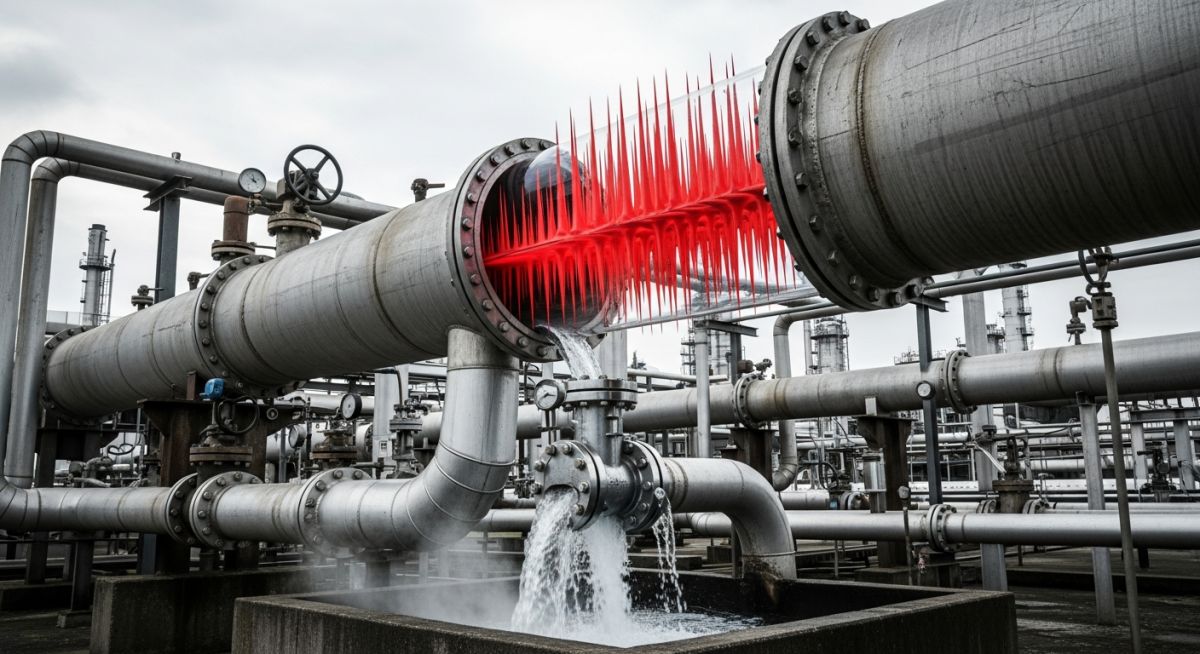
Author: Atul Singla | Piping Engineering Expert | Updated: May 2026 Surge Relief Valve Design Function Types and Selection Guide Surge Relief Valve Definition: A surge relief valve is a fast-acting protective device designed to release excess pressure caused by hydraulic transients in pipelines, ensuring system integrity as per API and ASME guidelines. It operates dynamically during transient events such as pump trips, rapid valve closure, or column separation to prevent pipe rupture, flange failure, and equipment damage. In my 20+ years of handling cross-country pipelines and process plants, I’ve seen surge events destroy perfectly designed systems within seconds. One methanol transfer line I worked on experienced a pressure spike nearly double the design limit during a pump trip — and the standard PSV simply couldn’t react fast enough. That’s where a properly engineered surge relief valve makes the difference. It’s not just another valve — it’s a transient protection strategy that must be designed with real hydraulic behavior in mind, not theoretical steady-state assumptions. Key Engineering Takeaways: Surge relief valves respond within milliseconds unlike conventional PSVs Critical for pump trip, power failure, and rapid valve closure scenarios Improper sizing leads to ineffective surge suppression or system instability Must be integrated with transient hydraulic analysis, not standalone selection Interactive Engineering Quiz Q1: What is the primary purpose of a Surge Relief Valve? Control steady-state pressure in pipelines Relieve transient pressure spikes instantly Regulate continuous flow rate Correct. Surge relief valves are designed to act within milliseconds to control hydraulic transients such as water hammer. Q2: Which condition generates the highest surge pressure? Sudden pump trip or power failure Stable steady-state operation Gradual manual valve opening Correct. Pump trips create rapid velocity change, producing high surge pressure based on transient flow reversal. Q3: Why are PSVs not suitable for surge protection? They are not rated for pressure systems They respond too slowly to transient spikes They increase flow resistance Correct. Conventional PSVs are designed for steady overpressure, not high-speed transient events. Previous Next Surge Relief Valve Working and Engineering Principles How surge relief valve actually works Surge Relief Valve Working Principle: A surge relief valve operates through high-speed pilot sensing of upstream pressure rise and instant opening of the main valve to discharge excess fluid, thereby limiting transient pressure within allowable limits defined by API Standards and ASME Codes. In my experience on cross-country pipeline systems and process units, the key difference between a system that survives and one that fails is response speed. Surge events occur in milliseconds, and unless the valve reacts within that time frame, the pressure peak has already damaged the system. Pressure transient generation mechanism explained Surge pressure (ΔP) in pipelines is typically calculated using the Joukowsky equation: ΔP = ρ × a × ΔV ρ = Fluid density (kg/m³) a = Wave velocity (m/s) ΔV = Change in velocity (m/s) For a typical water system: ρ = 1000 kg/m³ a = 1200 m/s ΔV = 1.5 m/s ΔP = 1000 × 1200 × 1.5 = 1.8 MPa (~18 bar surge) Now imagine this being added instantly to your operating pressure. That’s where surge relief design becomes non-negotiable in critical systems like methanol transfer or cooling water networks. Field Warning: I have seen pipelines designed at 16 bar fail because transient surge crossed 30 bar during a pump trip. This is a classic design oversight where steady-state thinking replaced transient analysis. Types of surge relief valves used Surge Relief Valve Types: Surge relief valves are classified based on actuation mechanism and control logic, including pilot-operated, direct-acting, and surge anticipation valves designed as per hydraulic system requirements. Pilot Operated: Most widely used in large pipelines due to accuracy and fast response Direct Acting: Used in smaller systems with limited flow requirements Surge Anticipation Valves: Open before surge arrival based on pressure drop sensing Air Vessel Integrated Systems: Used along with surge tanks for damping How surge relief valve sizing is done Surge Relief Valve Sizing: Valve sizing is based on transient flow discharge required to limit maximum pressure below allowable design pressure, considering worst-case hydraulic transient conditions. From real EPC projects, sizing is never guesswork. It follows transient simulation tools such as AFT Impulse or Bentley HAMMER. However, quick estimation can be done using: Q = A × V Q = Discharge flow (m³/s) A = Valve flow area (m²) V = Velocity during surge (m/s) Design checks include: Valve opening time less than surge rise time Capacity adequate to avoid pressure exceeding MAWP Stable closure to prevent oscillation Surge Relief Valve Design Data Table Parameter Typical Range Remarks Response Time 10–100 ms Critical for transient protection Operating Pressure Up to 150 bar Depends on system design Fluid Type Water, Hydrocarbon Material selection critical Valve Size DN50–DN600 Based on discharge flow Standards API, ASME Design compliance Comparison and Specifications Matrix Type Response Speed Accuracy Application Pilot Operated Very Fast High Large pipelines Direct Acting Moderate Medium Small systems Anticipation Valve Pre-emptive Very High Pump trip protection Surge Relief Valve Site Verification Checklist What should be validated before commissioning Surge Relief Valve Commissioning Checklist: Surge relief valve performance must be verified through pressure setpoint calibration, response testing, hydraulic compatibility checks, and installation validation aligned with API Standards and ASME Codes to ensure reliable transient protection under real operating conditions. From my plant commissioning experience, most surge valve failures are not due to wrong selection — they happen due to poor installation practices, incorrect pilot tuning, or lack of transient testing. Pre-Commissioning Mechanical Checks Verify valve orientation matches P&ID and hydraulic profile Ensure no restriction in inlet sensing line Check isolation valves are fully open and locked Confirm downstream discharge line is free draining Inspect flange alignment to avoid stress-induced distortion Instrumentation and Control Checks Pressure pilot setpoint calibrated using certified gauge Pilot response tested for rapid opening (milliseconds range) Damping needle valve tuned to prevent chatter Signal lines purged to remove trapped air pockets Hydraulic Performance Validation Simulate pump trip to observe actual valve response Confirm peak surge pressure remains below MAWP Ensure valve fully closes without oscillation Check discharge capacity matches transient simulation results Safety and Design Compliance Checks Material compatibility with process fluid verified Relief discharge safely routed to tank or flare Backpressure impact evaluated Documentation aligned with API and ASME Field Warning: One of the most common failures I have seen is blocked pilot sensing lines due to debris — the valve never "sees" the surge, and the system fails silently under transient pressure. A surge relief valve is only as good as its commissioning. If not validated under simulated transient conditions, it gives you a false sense of safety. Surge Relief Valve Selection and Field Use How surge relief valve selection is finalized Surge Relief Valve Selection: Surge relief valve selection depends on transient severity, pipeline profile, fluid characteristics, and response time requirements validated through hydraulic simulation and aligned with API Standards and ASME Codes. In real EPC execution, I never select a surge valve purely from datasheets. It must match the system dynamics—especially pump inertia, pipeline length, and elevation changes. Key parameters engineers must validate Maximum allowable pressure vs predicted surge peak Pipeline length and wave travel time (L/a) Pump shutdown characteristics and coast down time Fluid compressibility and temperature effects Surge Travel Time = 2L / a This value defines how quickly the valve must react. If valve opening time exceeds this, pressure reflection already amplifies. Field Warning: Selecting valve based only on line size without transient study leads to under-capacity discharge and pipeline overstress during actual surge events. Skid based surge relief valve systems explained Skid-Based Surge Relief System: A skid-mounted surge relief system integrates valve, pilot controls, dampers, instrumentation, and discharge piping into a pre-engineered package ensuring faster installation, consistent performance, and reduced site errors. For large facilities like methanol plants or steel industry cooling networks, skid-based systems offer practical advantages: Factory-tested response and calibration Reduced site erection complexity Integrated instrumentation for control logic Minimal dependency on site fabrication quality Real Plant Failure and Solution Case Study Field Case Study: Real-World Application A cross-country cooling water pipeline faced repeated flange leakage and vibration during pump trips. Design pressure was 16 bar, but transient analysis later revealed spikes exceeding 28 bar due to rapid flow deceleration. After installing a pilot-operated surge relief valve with tuned response time under 50 milliseconds, peak pressure reduced below 18 bar. Pipeline vibration disappeared, and maintenance incidents dropped drastically. My direct recommendation in such cases is always: validate surge risk early using transient tools and select a surge protection system, not just a valve. Frequently Asked Engineering Questions Why surge relief valve is needed in pipelines? Surge relief valves protect pipelines from transient pressure spikes caused by pump trips or valve closures, preventing rupture and fatigue failure beyond design limits. Difference between PSV and surge relief valve? PSVs handle steady overpressure conditions, while surge relief valves react in milliseconds to transient hydraulic events. Where should surge relief valve be installed? Typically near pump discharge or critical high-pressure locations where surge is expected to originate. What is response time requirement? Response time must be lower than surge wave travel time, typically within 10 to 100 milliseconds. Can surge be fully eliminated? Surge cannot be eliminated completely but can be controlled within safe limits using relief valves, air vessels, and proper system design. Is transient analysis mandatory for design? For critical pipelines and long-distance systems, transient analysis using tools is strongly recommended to ensure safe and optimized surge protection design. 📚 Recommended Resources: Surge Relief Valve Read these Guides 📄 Air Relief Valve: Engineering Guide to Surge Protection 2026 📄 Zero Velocity Valves: Prevent Water Hammer Damage in 2026 📄 Blowdown Valve Guide: Engineering Design, Types & Standards 2026 📄 Shut-Off Valve Guide: Engineering, Selection & Working (2026) 🎥 Watch Tutorials Non Slam Check Valve Explained | Piping Engineering Heat Exchanger Piping Layouts: Certification Course | Piping