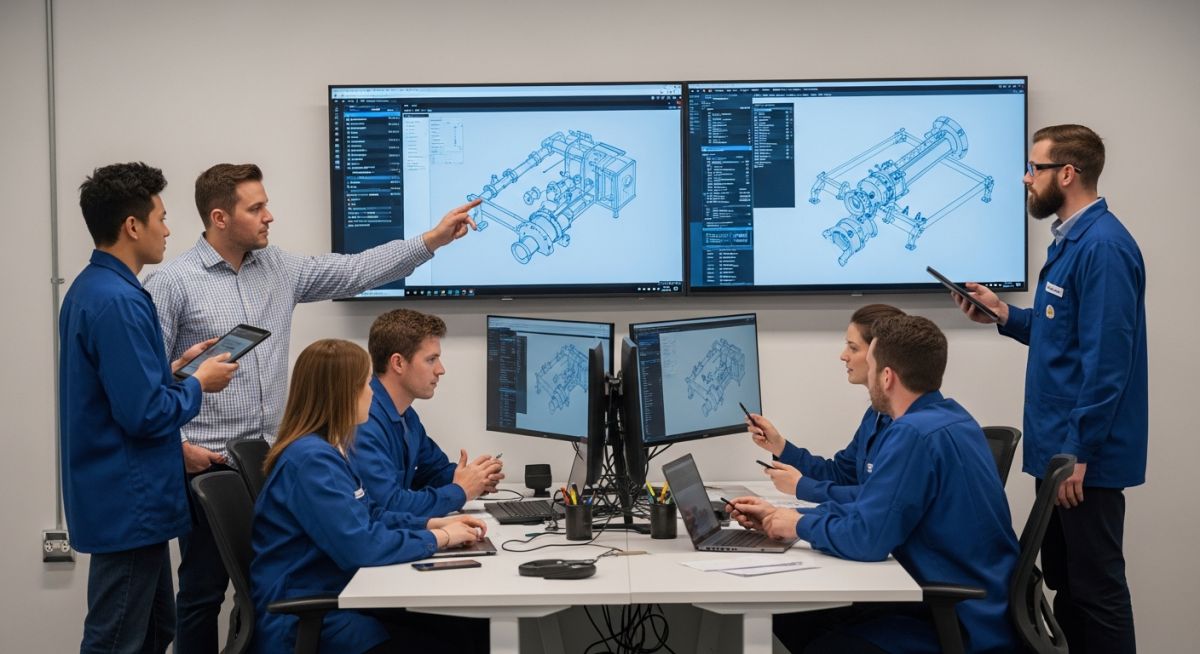
Author: Atul Singla | Senior Piping Engineer | Last Updated: May 2026 What is Concurrent Engineering? Complete Guide with Field Applications In my early EPC projects, I’ve seen one mistake repeat itself—teams working in isolation. The piping team finishes, then structural wakes up, then electrical reacts late. That’s where delays creep in, clashes multiply, and costs quietly explode. In the field, we don’t have the luxury of disconnected workflows. That’s exactly where concurrent engineering changes the game. Key Takeaways: Concurrent engineering enables parallel execution of design, analysis, and development activities. It significantly reduces project timelines and engineering rework. Cross-functional collaboration is the backbone of successful implementation. In EPC projects, it drives faster model freeze and minimizes site clashes. It contrasts sharply with sequential design, which relies on step-by-step execution. Featured Snippet (50 Words): Concurrent engineering is a product development approach where multiple teams work simultaneously across different stages like design, analysis, and manufacturing. It reduces delays, improves collaboration, and minimizes rework. Unlike sequential design, it integrates processes in parallel, enabling faster delivery and higher-quality engineering outcomes in complex industrial projects. 1. What defines concurrent engineering? Step-by-step linear product development Parallel execution of design, analysis, and development activities Only manufacturing-focused engineering Outsourced engineering process Field Insight: In my projects, real progress happens when piping, civil, and electrical teams work together—not in sequence. 2. What is the biggest advantage of concurrent engineering? Higher documentation workload Reduced project time and rework Elimination of coordination Delay in approvals Field Insight: I’ve personally seen rework drop drastically when teams align early instead of fixing issues late. 3. How does concurrent engineering differ from sequential design? Sequential design runs faster Activities overlap instead of following a strict linear order No collaboration in concurrent engineering Sequential design avoids delays completely Field Insight: Sequential design looks neat on paper—but in EPC execution, overlap is where speed is gained. Previous Next Definition of Concurrent Engineering In my field experience across EPC projects, I define concurrent engineering as a development approach where multiple disciplines execute design, analysis, procurement, and planning activities in parallel instead of waiting for one phase to finish before another starts. But here is the catch—parallel work only succeeds when there is tight coordination, shared digital models, and early validation loops. Otherwise, it creates chaos faster than it creates progress. Field Warning: Running disciplines in parallel without version control and clash management will multiply rework. I’ve seen teams save weeks—then lose months fixing uncontrolled overlaps. What are the Benefits of Concurrent Engineering? Reduced project duration: Overlapping engineering and procurement reduces idle time. Lower rework: Early cross-discipline visibility avoids late-stage corrections. Faster decision-making: Stakeholders collaborate in real-time. Improved product quality: Design is validated continuously, not after completion. Better cost control: Fewer surprises during construction or manufacturing. Elements of Concurrent Engineering Cross-functional teams (mechanical, piping, electrical, procurement) Integrated digital platforms (3D CAD, BIM, PLM systems) Real-time communication systems Design for X (DFX) including manufacturability and maintainability Continuous validation loops Principles of Concurrent Engineering Early involvement of all stakeholders Parallel workflow execution Continuous feedback integration Data sharing and transparency Lifecycle-oriented design thinking Concurrent Engineering vs Sequential Design Aspect Concurrent Engineering Sequential Design Workflow Parallel execution Step-by-step Speed Faster project completion Slower due to dependencies Rework Reduced High at later stages Collaboration High Limited Product Development Process Using Concurrent Engineering Concept design with multi-discipline inputs Parallel feasibility analysis and cost estimation Simultaneous detail design and procurement planning Continuous model review and clash detection Integrated testing and validation Early manufacturing or construction preparation Challenges of Concurrent Engineering High coordination demand Dependency on digital tools Change management complexity Risk of misalignment without governance Examples of Concurrent Engineering Automotive product development Aerospace system design Oil & gas EPC 3D model coordination Consumer electronics rapid prototyping Field Case Study: Real-World Application Problem Statement: During a refinery expansion project, I encountered repeated piping clashes because structural and piping layouts were developed sequentially. This caused rework during 3D model reviews. I implemented a concurrent engineering workflow where piping, structural, and electrical teams worked in a shared 3D environment. We scheduled weekly integrated model reviews and enforced strict version control. Coordination points were defined at 30%, 60%, and 90% model maturity. Clash detection tools were used continuously instead of at the end. Measured Outcome: 35% reduction in piping rework Model freeze achieved 2 weeks earlier Site clashes reduced significantly Field Lesson I Stand By: Never wait for “perfect inputs.” Start early, collaborate aggressively, and control changes tightly—that’s how concurrent engineering actually works on site. Executive FAQs What is the main goal of concurrent engineering? To reduce time, improve collaboration, and minimize rework through parallel execution. Is concurrent engineering suitable for small projects? Yes, but benefits are more visible in complex multi-discipline projects. What tools support concurrent engineering? Tools like CAD, BIM, PLM systems, and clash detection software are widely used. Does concurrent engineering eliminate project risks? No, it reduces risks but requires strong coordination and governance. How is concurrent engineering implemented in EPC projects? Through integrated 3D models, parallel design workflows, and structured coordination reviews. What is the biggest mistake in concurrent engineering? Lack of coordination and uncontrolled parallel changes leading to major rework. 📚 Recommended Resources: Concurrent Engineering Read these Guides 📄 Petrochemical Plant Process: 2026 Engineering Guide 📄 Piping Thermal Expansion Design Guide: Calculations, Loops & B31.3 Limits 📄 Refinery Rescue: How We Quelled a CRU Catalyst Runaway Reaction and Lessons Learned 📄 Refinery Upgrade: How We Met OISD 118 Inter-Distance Rules in a Live, Space-Constrained CDU