Ultimate Guide to Septic Tank Systems: Design, Working Principles, and Maintenance Standards
Key Takeaways
- 1. Understand the critical role of anaerobic bacteria in breaking down organic solids within Septic Tank Systems.
- 2. Identify the differences between concrete, fiberglass, and plastic tank materials based on ASTM C1227 standards.
- 3. Learn the “Rule of Three” for maintenance: Inspect every 3 years and pump when sludge occupies 30% of the total volume.
What are Septic Tank Systems?
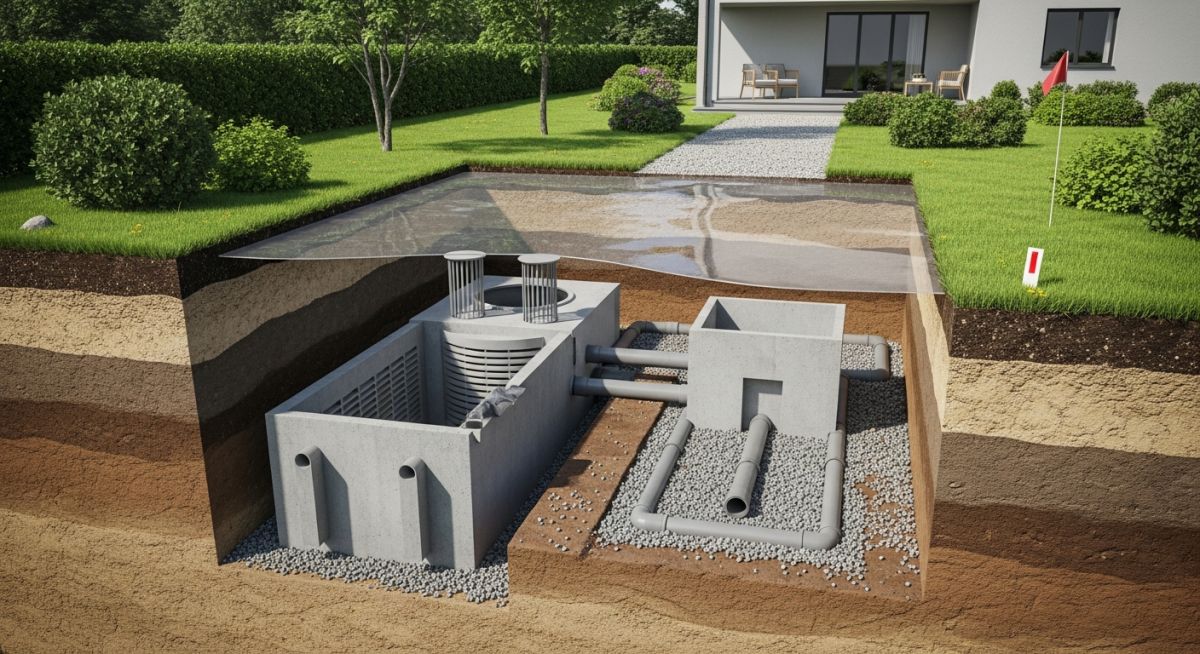
Septic Tank Systems are highly efficient, underground onsite wastewater treatment structures used in areas without centralized sewer systems. They utilize a combination of nature (anaerobic digestion) and mechanical separation to treat household waste, separating solids from liquids before discharging clarified effluent into a soil absorption field for final purification.
“In my two decades of infrastructure auditing, I’ve seen that 90% of Septic Tank Systems failures are not due to design flaws, but a lack of hydraulic discipline. Treat your septic like a living organism, not a trash can.”
— Atul Singla, Founder of Epcland
Table of Contents
Complete Course on
Piping Engineering
Check Now
Key Features
- 125+ Hours Content
- 500+ Recorded Lectures
- 20+ Years Exp.
- Lifetime Access
Coverage
- Codes & Standards
- Layouts & Design
- Material Eng.
- Stress Analysis
Technical Proficiency Check
Validate your knowledge on Septic Tank Systems
1. Which ASTM standard specifically governs the design and manufacture of precast concrete Septic Tank Systems?
What are Septic Tank Systems? (Engineering Definition)
In the realm of environmental engineering, Septic Tank Systems are defined as decentralized, primary treatment infrastructures designed to manage wastewater at the source. Unlike municipal sewage grids that rely on massive lift stations and centralized treatment plants, these systems utilize a combination of settling, flotation, and anaerobic biological degradation. A standard system consists of a watertight vessel—the septic tank—and a subsurface soil absorption area, commonly referred to as a drainfield or leach field.
The engineering integrity of Septic Tank Systems is governed by specific material standards, such as ASTM C1227 for precast concrete tanks. These standards ensure that the vessel can withstand soil overburden loads, hydrostatic pressure from groundwater, and the corrosive internal environment caused by hydrogen sulfide (H2S) gas. From a functional perspective, the system acts as a biological reactor where complex organic compounds are broken down into simpler organic acids and eventually into methane and carbon dioxide.
The Physics and Biology: How Septic Tank Systems Work
The operation of Septic Tank Systems relies on a fundamental principle of fluid mechanics: Retention Time. As wastewater enters the tank, the flow velocity is dramatically reduced, allowing gravity to perform its primary function. This quiescent state facilitates the separation of waste into three distinct horizontal zones based on density and buoyancy.
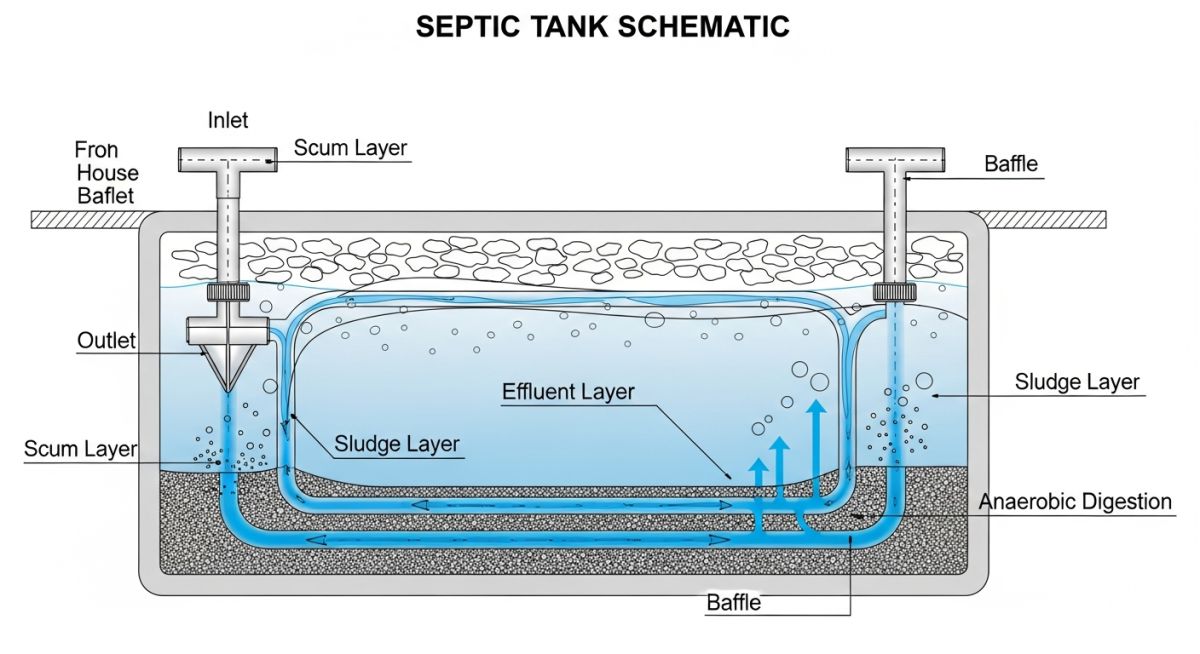
Within Septic Tank Systems, the separation occurs as follows:
- The Scum Layer (Top): Composed of fats, oils, grease (FOG), and light buoyant solids. This layer floats at the surface and undergoes limited aerobic decomposition at the air-liquid interface.
- The Effluent Layer (Middle): Also known as the "clarified zone," this is the relatively clear liquid that contains dissolved organic matter, suspended solids, and nitrogen/phosphorus compounds. In a healthy system, only this layer is permitted to exit the tank.
- The Sludge Layer (Bottom): Consists of heavy solids and un-decomposed organic matter. This is where anaerobic bacteria (bacteria that thrive in oxygen-free environments) reside, performing a process called liquefaction to reduce the total volume of solids.
The biological "engine" of Septic Tank Systems is a complex colony of microbes. These organisms consume the organic carbon in the waste, but because they operate without oxygen, the process is slower than aerobic treatment. This is why Septic Tank Systems must be sized correctly to allow enough time—typically 24 to 48 hours—for the solids to settle and for the bacteria to begin their work before the liquid moves to the soil for final filtration.
Primary Types of Septic Tank Systems and Materials
Material selection is critical when specifying Septic Tank Systems for different geographical terrains. The three most prevalent materials in 2026 include:
1. Concrete Septic Systems
The industry benchmark. High structural mass prevents "tank floatation" in high-water tables. However, they are susceptible to sulfate attack if the concrete mix design does not include Type II or Type V Portland cement.
2. Fiberglass/Composite Septic Systems
Extremely resistant to chemical corrosion and significantly lighter than concrete. These are ideal for remote sites where heavy crane access for concrete delivery is restricted.
3. Polyethylene (Plastic) Septic Systems
The most cost-effective solution for residential use. While easy to install, they require precise backfilling with gravel or sand to prevent structural deformation or "egging" under soil pressure.
Sizing and Capacity Calculations for Septic Tank Systems
The engineering design of Septic Tank Systems is never arbitrary; it is a function of the peak daily flow and the required Hydraulic Retention Time (HRT). In 2026, regulatory frameworks typically mandate a minimum 24-hour retention period, though 48 hours is preferred for optimal sludge digestion. Sizing is usually calculated based on the number of bedrooms in a residential dwelling, assuming a standard occupancy of two persons per bedroom and a flow rate of 75 to 110 gallons per person per day.
| Number of Bedrooms | Estimated Daily Flow (GPD) | Min. Tank Capacity (Gallons) | Standard Material |
|---|---|---|---|
| 1 - 3 Bedrooms | 200 - 450 | 1,000 Gallons | Precast Concrete / Poly |
| 4 Bedrooms | 450 - 600 | 1,250 Gallons | Reinforced Concrete |
| 5+ Bedrooms | 600 - 750+ | 1,500+ Gallons | ASTM C1227 Concrete |
Critical Septic Tank Systems Maintenance and Inspection Protocols
Preventative maintenance is the only safeguard against the premature failure of the Soil Treatment Area (STA). Within Septic Tank Systems, the "Accumulation Rate" determines the pumping frequency. As sludge builds up, the effective volume of the tank decreases, which in turn reduces the retention time. When the retention time drops below the critical threshold, solids begin to wash out into the drainfield—a phenomenon known as "carryover"—which causes irreversible soil clogging.
Official Standards & Compliance
Modern Septic Tank Systems must adhere to ASTM C1227 for structural integrity and NSF/ANSI 40 for residential wastewater treatment systems if secondary aerobic treatment is integrated.
Soil Treatment Area (STA) Integration in Septic Tank Systems
While the tank performs the primary separation, the true purification happens in the soil. The effluent discharged from Septic Tank Systems contains pathogens and nutrients that the soil's natural microbial community must process. The Percolation Rate (Perc Rate)—the speed at which water moves through the soil—determines the size of the drainfield.
In 2026, many jurisdictions now require "Pressure Distribution" systems in Septic Tank Systems. Instead of relying on gravity, which can saturate the beginning of a trench (leading to a "biomat" clog), a small pump doses the entire field evenly, ensuring the full soil volume is utilized for treatment.
Common Failure Modes in Septic Tank Systems
Hydraulic Overloading
Excessive water use (e.g., doing 5 loads of laundry in one day) pushes waste through the Septic Tank System too fast, preventing solids from settling and flooding the drainfield.
Biomat Encroachment
A thick slime layer of anaerobic bacteria that forms at the soil interface. If the Septic Tank System effluent is too high in solids, this layer becomes impermeable, causing surface breakout.
Chemical Poisoning
Flushing bleach, solvents, or paint kills the beneficial bacteria inside Septic Tank Systems, effectively halting the biological treatment process.
Inlet/Outlet Baffle Failure
In older Septic Tank Systems, concrete baffles can erode. If the outlet baffle falls, the scum layer (grease) flows directly into the soil, causing immediate and permanent failure.
EPCLand YouTube Channel
2,500+ Videos • Daily Updates
Septic Tank Systems: Capacity & Sizing Calculator
Estimate the required tank volume and pumping frequency based on 2026 engineering standards.
Recommended Specifications
Note: Calculations based on 75 GPD/person and ASTM C1227 safety factors. Actual local codes may vary.
Septic Tank Systems Failure Case Study: The 2026 Biomat Catastrophe
Project Overview
In early 2026, a high-occupancy residential complex featuring dual 2,500-gallon Septic Tank Systems reported persistent surface ponding and severe odors. Despite a relatively recent installation, the drainage field had reached total hydraulic refusal.
The Forensic Investigation
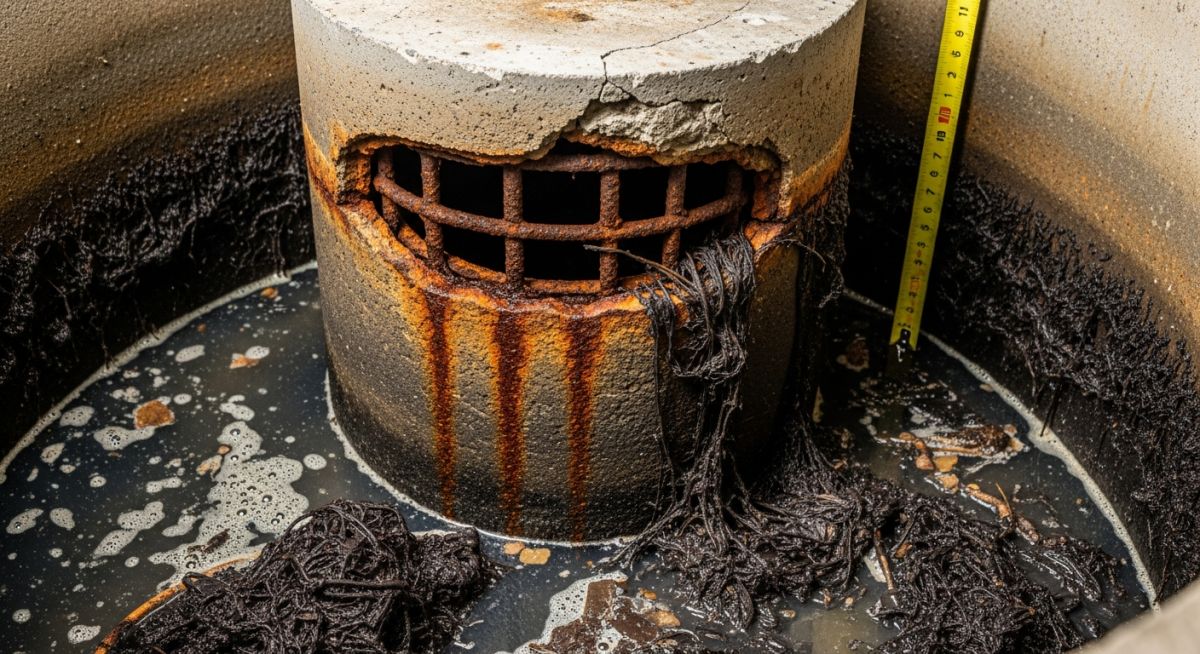
A forensic engineering audit revealed that the outlet baffles had experienced structural failure due to sulfuric acid corrosion (MIC - Microbiologically Induced Corrosion). This failure allowed the floating scum layer to bypass the tank and enter the perforated distribution pipes. Over an 18-month period, these fats and solids created an impermeable "Biomat" at the soil interface, effectively sealing the absorption trenches.
Technical Breakdown
- • Root Cause: Premature baffle degradation and lack of effluent filters.
- • System Age: 4.5 Years (Failure occurred 15 years early).
- • Remediation Cost: $22,500 for total field replacement.
The Engineering Verdict
"This failure highlights why 2026 standards now emphasize the installation of secondary effluent filters within Septic Tank Systems. A simple $100 filter would have captured the escaping solids, saving the owner a five-figure replacement cost."
Expert Insights: Lessons from 20 years in the field
Reflecting on two decades of wastewater infrastructure management, the longevity of Septic Tank Systems is rarely about the initial cost and almost always about operational discipline. In 2026, we see a shift toward "Smart Septics," but the fundamentals remain unchanged.
-
01
The "Flushable" Myth: Modern marketing claims many wipes are flushable. From an engineering standpoint, they do not degrade anaerobically and are the leading cause of inlet blockages in Septic Tank Systems.
-
02
Hydraulic Surging: Spreading water usage throughout the week is superior to "marathon" cleaning days. High-volume surges reduce the retention time to minutes, carrying raw solids into the drainfield.
-
03
Effluent Filtration: If your system was installed before 2020, retrofitting an effluent filter on the outlet baffle is the single most cost-effective insurance policy you can buy for your Septic Tank Systems.
