Sample Cooler: Engineering Design, Applications, and Performance Standards
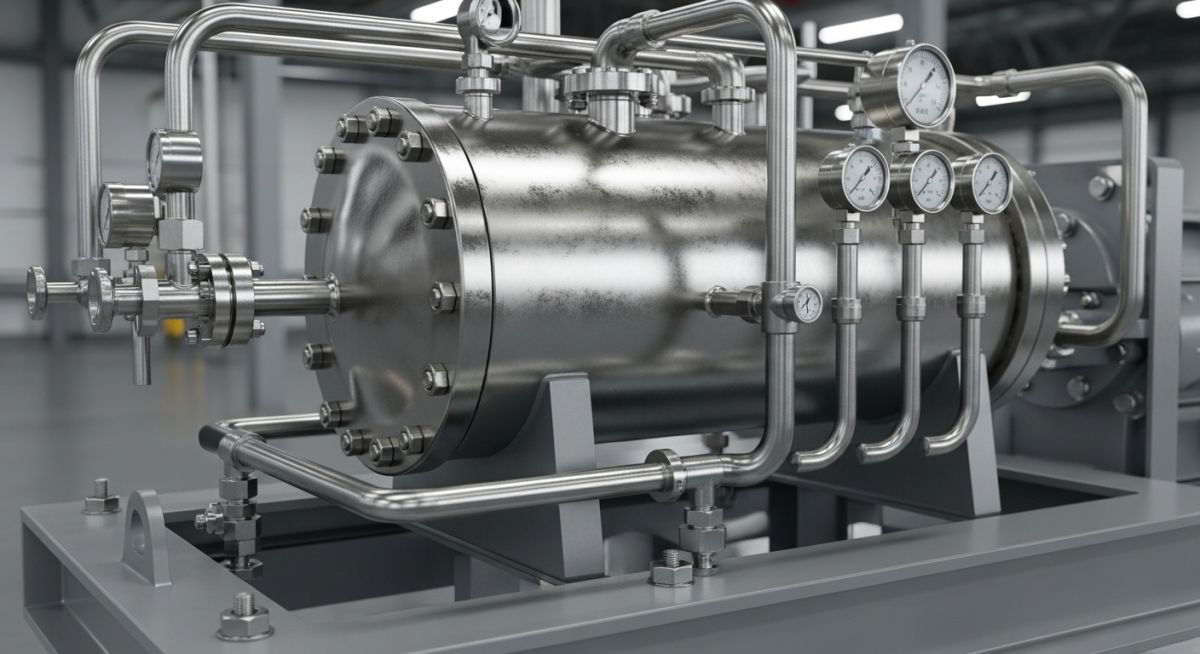
Imagine a high-pressure steam line at 540°C rupturing a plastic sample bottle or, worse, causing a flash-steam injury to a technician during a routine water chemistry check. Without a high-performance Sample Cooler, obtaining a representative fluid sample from a boiler or process line is not just inaccurate—it is life-threatening.
This guide breaks down the critical mechanics of heat transfer within a sample conditioning system, ensuring your facility meets strict environmental and safety compliance protocols while protecting sensitive analytical instruments.
Key Takeaways
- Safety First: Learn how the Sample Cooler prevents flashing and operator injury in high-temperature environments.
- Standard Compliance: Understanding the role of ASME and ASTM standards in shell-and-tube sample cooling design.
- System Integration: How to optimize cooling water flow to achieve precise temperature control for SWAS analyzers.
What is a Sample Cooler?
A Sample Cooler is a specialized miniature shell-and-tube heat exchanger designed to reduce the temperature of high-pressure liquid or steam samples. By circulating a cooling medium (usually water) through the shell and the process sample through a helical coil, it ensures safe, representative sampling for laboratory analysis.
“In my 20 years of plant commissioning, I’ve seen many engineers overlook the cooling water scale factor. A fouled Sample Cooler isn’t just inefficient; it leads to ‘sample lag’ that can result in incorrect chemical dosing and millions in boiler tube damage.”
— Atul Singla, Founder of EPCLand
Complete Course on
Piping Engineering
Check Now
Key Features
- 125+ Hours Content
- 500+ Recorded Lectures
- 20+ Years Exp.
- Lifetime Access
Coverage
- Codes & Standards
- Layouts & Design
- Material Eng.
- Stress Analysis
Sample Cooler Knowledge Check
Question 1 of 5Which flow configuration is most commonly used in a Sample Cooler to maximize heat transfer efficiency?
Why the Sample Cooler is Critical for Industrial Safety
The primary function of a Sample Cooler extends far beyond simple temperature reduction; it is a critical safety barrier in high-energy piping systems. When sampling boiler blowdown or high-pressure steam, the fluid exists at temperatures well above its atmospheric boiling point. Without a Sample Cooler, the sudden pressure drop during sampling triggers "flashing," where the liquid instantly turns to steam, expanding its volume by over 1,600 times. This explosive expansion can cause severe thermal burns to personnel and lead to "representative sampling" errors due to the loss of volatile components. Engineering a reliable Sample Cooler ensures that the sample remains in a sub-cooled liquid phase, maintaining the chemical integrity required for accurate lab analysis.
Diverse Applications of a Sample Cooler in Power and Process Plants
A Sample Cooler is a staple in any facility utilizing a Steam and Water Analysis System (SWAS). In thermal power plants, these units are installed to monitor feedwater quality, protecting turbines from silica carryover and preventing boiler tube corrosion. Beyond power generation, the Sample Cooler is vital in hydrocarbon processing for cooling hot oil samples and in the pharmaceutical industry for validating Clean-in-Place (CIP) cycles. By reducing sample temperatures to a standard reference of 25°C (77°F), the Sample Cooler allows for precise measurement of pH, conductivity, and dissolved oxygen—parameters that are highly temperature-dependent.
Engineering the Basic Design of a Sample Cooler (ASME PTB-4)
The architectural integrity of a Sample Cooler typically follows a helical coil-in-shell configuration. This design is preferred for its ability to handle high thermal expansion stresses without leaking. According to ASME Standards, the sample fluid flows through a continuous, heavy-wall stainless steel tube (the coil), while the cooling water circulates through the outer shell. This counter-current flow ensures the highest possible log mean temperature difference (LMTD), resulting in a compact yet highly efficient heat exchanger. The use of a single-piece coil without internal welds is a non-negotiable requirement for high-pressure service to eliminate potential points of fatigue failure.
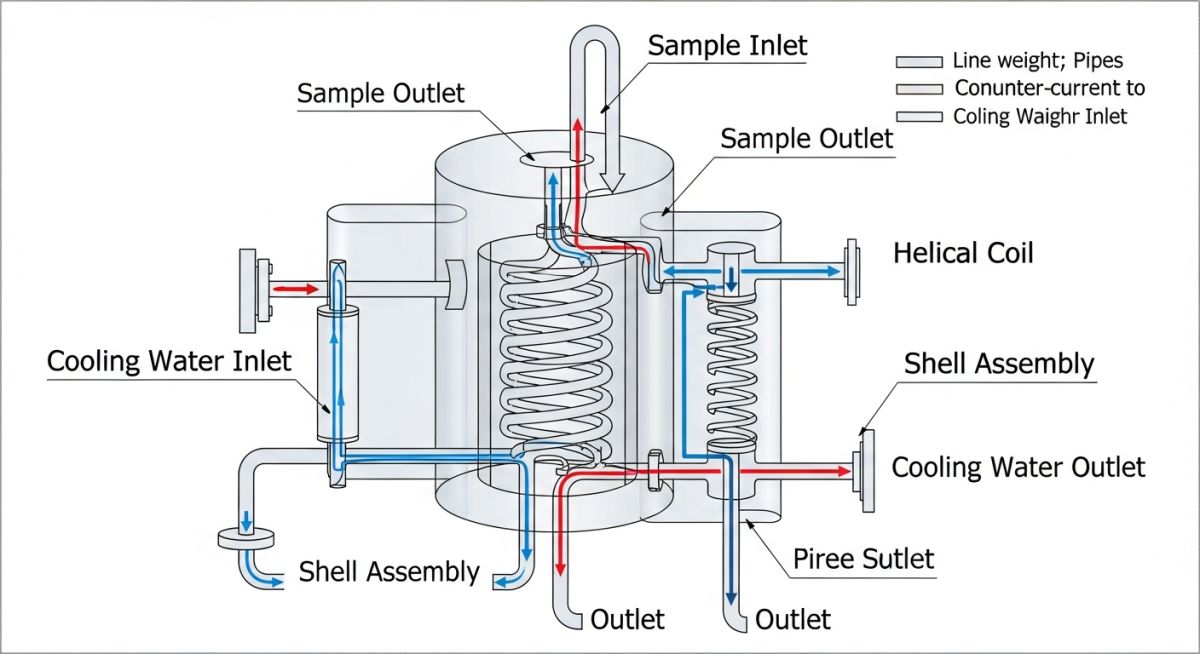
Key Performance Characteristics of a Sample Cooler
When evaluating a Sample Cooler, engineers must prioritize the "Approach Temperature"—the difference between the cooling water inlet and the sample outlet. A high-performance Sample Cooler should achieve an approach temperature of less than 5°C under full load. Other critical characteristics include the pressure drop across the coil, which must be minimized to ensure sufficient flow for online analyzers, and the "Heat Transfer Coefficient," which is maximized through high-velocity turbulence within the helical path. Material selection is equally paramount; 316L Stainless Steel is the industry standard, though Inconel 625 is often specified for Sample Cooler applications involving high chloride concentrations to prevent Stress Corrosion Cracking (SCC).
Essential Sample Cooler Ordering Information & Specifications
Specifying a Sample Cooler requires precise data to ensure the heat exchanger is sized correctly for the thermal load. Procurement teams must provide the "Sample Inlet Temperature" and "Maximum Operating Pressure" to ensure the coil wall thickness complies with ASME B31.1 or ASME B31.3 piping codes. Additionally, the cooling water source temperature and available flow rate are critical; an undersized Sample Cooler will fail to bring the sample to the 25°C baseline required by most ISO 5814 compliant dissolved oxygen sensors.
Comparative Analysis: Common Types of Sample Coolers
While the helical shell-and-tube Sample Cooler is the workhorse of the industry, specific applications may require varied geometries. For instance, "Double Tube" (Tube-in-Tube) designs are utilized when samples contain high levels of suspended solids that might clog a standard helical coil. Below is a technical comparison of standard Sample Cooler configurations used in modern EPC projects.
| Feature | Standard Helical Coil | Double Tube (Tube-in-Tube) |
|---|---|---|
| Typical Application | Steam, Feedwater, Condensate | Slurries, High Viscosity Fluids |
| Heat Transfer Area | High (Compact Design) | Moderate |
| Maintenance | Low (Self-cleaning at high velocity) | Easy to mechanically clean |
| Pressure Rating | Up to 5000 PSIG (345 bar) | Up to 2000 PSIG (138 bar) |
Best Practices for Sample Cooler Installation
A Sample Cooler is only as effective as its installation environment. To prevent air binding and ensure maximum cooling efficiency, the unit should be mounted vertically. The cooling water must always enter from the bottom and exit from the top; this "bottom-up" flow ensures the shell remains completely flooded, eliminating air pockets that create "hot spots." It is also mandatory to install a "Thermal Shut-off Valve" (TSV) downstream of the Sample Cooler. If the cooling water supply fails, the TSV automatically trips, preventing high-temperature steam from reaching and destroying expensive online analyzers or causing operator injury.
Troubleshooting Your Sample Cooler System
If your Sample Cooler is producing samples that are too hot, the first check should be the cooling water flow rate. Over time, calcium carbonate scales can build up on the shell side, significantly reducing the heat transfer coefficient. A chemical descale or increasing the cooling water velocity can often restore performance. Conversely, if the sample flow is restricted, the internal helical coil may be plugged with magnetite or pipe scale, requiring a high-pressure back-flush or coil replacement.
Sample Cooler Heat Duty Calculator
Estimate the cooling water flow rate required to achieve your target sample temperature.
Calculated assuming Cp of 4.18 kJ/kgK and 15°C cooling water rise.
EPCLand YouTube Channel
2,500+ Videos • Daily Updates
Case Study: Solving "Sample Flashing" in a 500MW Thermal Power Plant
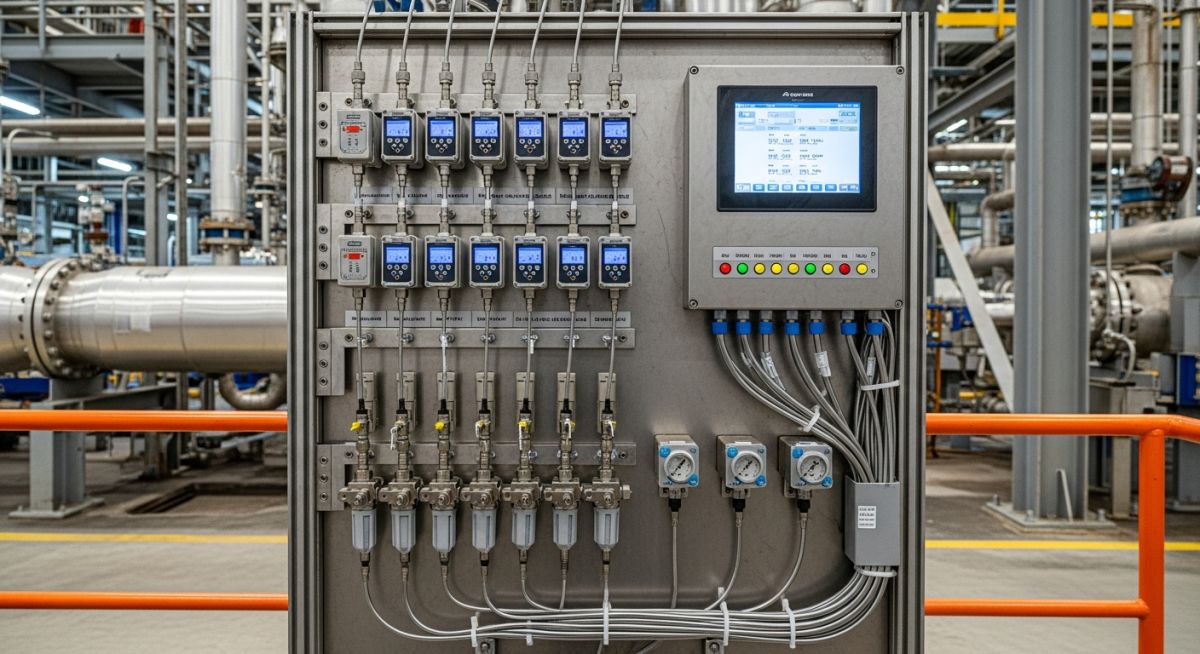
Erratic silica readings caused by sample flashing in high-pressure steam lines.
Retrofitting high-efficiency Sample Cooler units with Inconel 625 coils.
Stabilized sample temperature at 25°C ± 0.5°C, reducing analyzer downtime by 40%.
The Problem: Thermal Instability
A major utility provider reported frequent failures of their online silica analyzers. The root cause was identified as insufficient cooling from an aging Sample Cooler system. During peak loads, the sample temperature exceeded 45°C, causing the silica to precipitate before reaching the sensor, resulting in false low readings that risked turbine blade scaling.
The Engineering Intervention
The EPC team replaced the existing units with high-surface-area helical Sample Cooler models designed for counter-current flow. These new units featured a 1.5 m2 heat transfer area within a compact 6-inch shell. We also integrated a secondary chilled water loop to handle extreme ambient summer conditions.
"By precisely controlling the 'Approach Temperature' within the Sample Cooler, we achieved a level of chemical data reliability that allowed the plant to extend their boiler blowdown intervals, saving approximately $12,000 in treated water costs per month."
Don't miss this video related to Cooling tower

Summary: Master Piping Engineering with our complete 125+ hour Certification Course: ......
Expert Insights: Lessons from 20 years in the field
-
•
Prioritize Velocity over Volume: To prevent the Sample Cooler from fouling, maintain a sample velocity of at least 1.5 to 2.0 meters per second. This ensures a self-cleaning action that keeps magnetite from settling in the helical coil.
-
•
The "Dead Leg" Trap: Always install the Sample Cooler as close to the take-off point as possible. Long horizontal runs before the cooler lead to stagnant "dead legs" that skew oxygen and conductivity readings.
-
•
Thermal Stress Management: When dealing with superheated steam, ensure the Sample Cooler shell is not rigidly fixed. Helical coils naturally expand, but the shell should allow for minor thermal movements to prevent nozzle cracking.
-
•
Cooling Water Chemistry: Don't use untreated raw water in your Sample Cooler shell. Scale build-up on the outside of the coil acts as an insulator, rapidly deteriorating the heat transfer efficiency.
References & Standards
- ASME B31.1: Power Piping Criteria for sample line pressure and temperature limits.
- ASTM D3370-18 Standard practices for sampling water from closed conduits.
- ISO 5667-7 Guidance on sampling of water and steam in boiler plants.
- ASME PTB-4 Section VIII Div 1 Design Examples for Heat Exchangers.


