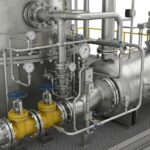
What is a Pre Insulated Pipe? Its Applications and Advantages
Pre Insulated Pipe systems represent the pinnacle of modern thermal fluid transport, integrating high-performance insulation and protective jacketing into a single factory-bonded unit. In 2026, these systems are essential for minimizing heat loss in district heating networks and maintaining cryogenic stability in industrial gas transport.

What is a Pre Insulated Pipe?
A Pre Insulated Pipe is a specialized piping system consisting of a core carrier pipe, a layer of high-density polyurethane (PU) foam insulation, and a protective outer jacket (typically HDPE). It is engineered to maintain fluid temperatures by providing a continuous thermal barrier that reduces heat loss or gain by up to 90 percent compared to field-insulated pipes.
Engineering Knowledge Check: Pre Insulated Pipe
Test your understanding of thermal insulation and pipe design standards.
Quiz Complete!
Complete Course on
Piping Engineering
Check Now
Key Features
- 125+ Hours Content
- 500+ Recorded Lectures
- 20+ Years Exp.
- Lifetime Access
Coverage
- Codes & Standards
- Layouts & Design
- Material Eng.
- Stress Analysis
Core Components of a High-Performance Pre Insulated Pipe System
The structural integrity and thermal efficiency of a Pre Insulated Pipe rely on a sandwich-style construction. In 2026, engineering specifications favor a fully bonded system where the three primary layers act as a single monolithic unit to handle thermal expansion and mechanical stress.

The Carrier Pipe Selection for Pre Insulated Pipe
The internal carrier pipe is the conduit for the fluid. Depending on the application, materials include:
- Carbon Steel: Typically API 5L or ASTM A106 Grade B, used for high-pressure steam and District Heating Systems.
- Stainless Steel: Grade 304 or 316, essential for corrosive fluids or food-grade transport.
- PEX and HDPE: Utilized in lower temperature, flexible Pre Insulated Pipe configurations for residential heating.
Polyurethane Foam Insulation and Thermal Conductivity
The middle layer consists of rigid Polyurethane Foam Insulation (PUR). This material is chosen for its superior Thermal Conductivity (K-Value), typically ranging from 0.022 to 0.027 W/mK at 20 degrees Celsius. In 2026, manufacturers utilize cyclopentane as a blowing agent to ensure the foam is 100 percent CFC-free while maintaining a density of 60 to 80 kg/m3.
HDPE Outer Jacket for Mechanical Protection
The HDPE Outer Jacket serves as the first line of defense against environmental factors. High-Density Polyethylene provides high impact resistance and UV protection. It ensures Heat Loss Prevention by preventing water from saturating the PU foam, which would otherwise lead to a catastrophic loss of thermal efficiency and external corrosion of the carrier pipe (CUI).
Technical Advantages of Pre Insulated Pipe in Thermal Management
Transitioning to Pre Insulated Pipe technology offers quantifiable benefits over traditional field-applied insulation methods, especially in complex industrial environments.
Superior Heat Loss Prevention
Because the insulation is factory-applied under controlled conditions, there are no air gaps or thermal bridges. This results in up to 40 percent less energy loss compared to mineral wool insulation installed on-site.
Corrosion Under Insulation (CUI) Mitigation
The bonded nature of Pre Insulated Pipe prevents moisture from reaching the steel surface. By eliminating the "chimney effect" found in traditional lagging, the lifespan of the infrastructure is extended to 30 to 50 years.
Engineering Codes and Standards for Pre Insulated Pipe Design
To ensure safety and performance, Pre Insulated Pipe systems must adhere to rigorous international standards. Compliance ensures that the thermal expansion forces generated by the carrier pipe are safely absorbed by the soil or the pipe's own structural layers.
| Standard ID | Description | Critical Focus |
|---|---|---|
| EN 253 | Bonded Single Pipe Systems | Factory-made pipe for buried hot water networks. |
| ASME B31.3 | Process Piping | Design limits for temperature and pressure in chemical plants. |
| EN 448 | Fitting Assemblies | Standardizing elbows, tees, and valve assemblies for Pre Insulated Pipe. |
| ISO 21338 | District Heating Pipes | Specific requirements for Cryogenic Piping Solutions and vacuum insulation. |
Industrial Applications of Pre Insulated Pipe Networks
In 2026, the versatility of Pre Insulated Pipe technology has expanded beyond traditional municipal heating into high-stakes industrial environments. These systems are now engineered to handle extreme temperature gradients from cryogenic liquids to high-pressure steam.
District Heating Systems using Pre Insulated Pipe
Modern District Heating Systems rely on Pre Insulated Pipe to transport hot water from central energy centers to residential hubs. The use of bonded PUR foam ensures that heat loss is minimized over distances exceeding 20 kilometers, maintaining water temperatures above 80 degrees Celsius even in arctic conditions.
Cryogenic Piping Solutions for LNG and Industrial Gases
For Cryogenic Piping Solutions, the Pre Insulated Pipe must manage temperatures as low as -162 degrees Celsius (for LNG). In these cases, a specialized multi-layer insulation system, often incorporating vacuum barriers or modified polyisocyanurate (PIR) foam, is used to prevent the ambient air from boiling off the liquid product.
Critical Specifications for Selecting a Pre Insulated Pipe
Selecting the correct Pre Insulated Pipe requires a deep understanding of material interactions and environmental stressors. The following table compares standard engineering specifications for industrial-grade systems.
| Parameter | Heating Grade | Cryogenic Grade |
|---|---|---|
| Service Temperature | Up to 140 degrees Celsius | Down to -200 degrees Celsius |
| Insulation Density | 60 kg/m3 | 80-120 kg/m3 |
| Casing Material | HDPE (PE100) | Stainless Steel or GRP |
| Thermal Conductivity | 0.024 W/mK | 0.019 W/mK |
Material Grades and Density in Pre Insulated Pipe Systems
To calculate the heat loss (Q) per meter for a Pre Insulated Pipe, engineers utilize the following steady-state heat transfer formula:
Where k is the thermal conductivity, Ti is the internal fluid temperature, Ta is the ambient temperature, Do is the outer diameter of the insulation, and Di is the inner diameter of the insulation.
Advanced Installation Techniques for Pre Insulated Pipe Joints
The weakest point of any Pre Insulated Pipe network is the field joint. In 2026, failing to properly seal a joint leads to insulation saturation and eventual system failure.
Electro-fusion and Heat-shrinkable Sleeves in Pre Insulated Pipe
Modern joints use cross-linked heat-shrinkable sleeves or electro-fusion couplings. Electro-fusion provides a molecular bond between the pipe casing and the joint sleeve, ensuring the HDPE Outer Jacket remains 100 percent watertight even under high soil pressure. Once the sleeve is tested, liquid PU foam is injected into the void to provide continuous Heat Loss Prevention.
Leak Detection and Monitoring in Pre Insulated Pipe Systems
Sensor Technology for Pre Insulated Pipe Integrity
Integrity monitoring is non-negotiable for buried Pre Insulated Pipe. Most systems incorporate a pair of copper alarm wires embedded in the insulation. Using Pulse Reflection Method (TDR), operators can locate moisture ingress within a 1-meter accuracy over several kilometers of piping. This proactive approach prevents the total degradation of the Polyurethane Foam Insulation.
Global Pre Insulated Pipe Manufacturers and Procurement Trends 2026
The procurement of Pre Insulated Pipe is dominated by specialized manufacturers who provide end-to-end design support. Key global players in 2026 include LOGSTOR (Kingspan), Perma-Pipe, and Uponor. Pricing is typically quoted in USD per meter, influenced heavily by the fluctuating cost of raw steel and chemical polyols used for the PUR foam.
Pre Insulated Pipe Heat Loss Calculator
Estimate the steady-state heat loss (Watts per meter) for your Pre Insulated Pipe network using 2026 engineering standard benchmarks.
Estimated Heat Loss
Note: Calculation based on Fourier's Law of heat conduction for cylindrical Pre Insulated Pipe geometries. Final project values should be verified by a licensed Mechanical Engineer.
Case Study: Implementing Pre Insulated Pipe in High-Salinity Coastal Environments

Project Data (Fiscal Year 2026)
- Location: North Sea Coastal District
- Scope: 12.5 km Thermal Network
- Budget: 4.2 Million USD
- Material: Carbon Steel Carrier with Pre Insulated Pipe PU Foam
Failure Analysis of Legacy Systems
The previous infrastructure utilized traditional field-applied mineral wool lagging. Within 8 years, the system experienced a 35 percent increase in thermal energy loss. Engineering inspections revealed extensive Corrosion Under Insulation (CUI) caused by the "chimney effect," where salt-laden moisture was pulled into the air gaps between the insulation and the pipe wall.
The Engineering Fix
The engineering team specified a Pre Insulated Pipe solution with a 100 percent bonded interface. By utilizing factory-applied PU foam, the possibility of air gaps was eliminated. To combat the high-salinity environment, the HDPE Outer Jacket was increased to a SDR 11 rating for enhanced mechanical toughness during backfilling.
Furthermore, an integrated Copper Alarm Wire system was installed to provide real-time monitoring of the insulation's dry state, ensuring any jacket breach could be repaired before corrosion initiated.
Lessons Learned
"The primary takeaway from this 2026 deployment is that the initial higher capital cost of Pre Insulated Pipe is offset within 4.5 years through energy savings and the complete elimination of CUI-related maintenance cycles."
EPCLand YouTube Channel
2,500+ Videos • Daily Updates
Frequently Asked Questions about Pre Insulated Pipe
How long does a Pre Insulated Pipe system typically last?
In 2026, standard industrial Pre Insulated Pipe networks are designed for a service life of 30 to 50 years. This longevity is achieved through the hermetic seal provided by the HDPE jacket, which prevents the oxidation and moisture ingress that typically degrades insulation performance in traditional systems.
Can Pre Insulated Pipe be used for District Cooling as well as heating?
Yes. While often associated with heating, Pre Insulated Pipe is highly effective for district cooling. The Polyurethane Foam Insulation provides a critical moisture barrier that prevents condensation (sweating) on the pipe surface, which is a major concern when transporting chilled water through humid underground environments.
What is the typical Thermal Conductivity (K-Value) in 2026?
Most high-performance Pre Insulated Pipe systems utilize PU foam with a thermal conductivity (k) value between 0.022 and 0.027 W/mK. Advanced formulations using specialized blowing agents can achieve even lower values, directly contributing to superior Heat Loss Prevention over long-distance industrial runs.
Are these pipes suitable for above-ground installation?
While Pre Insulated Pipe is commonly buried, it can be used above ground if the outer jacket is UV-stabilized. Manufacturers often add carbon black to the HDPE or provide an additional aluminum or stainless steel cladding to protect the system from solar radiation and mechanical impact in industrial plants.
📚 Recommended Resources: Insulated Pipe
Read these Guides
🎥 Watch Tutorials


Related posts:
![High-grade industrial Wing Nut Types and Applications for mechanical assemblies.]()
Wing Nut Types and Applications: The 2026 Engineering Guide
![Industrial Monorail Crane Systems installed in a modern manufacturing plant 2026.]()
Monorail Crane Systems: Design, Types & 2026 Standards Guide
![Lead engineer performing a Factory Acceptance Test FAT on an industrial skid system 2026]()
Factory Acceptance Test FAT: The 2026 Engineering Guide to Zero-Defect Delivery
![Professional engineering workspace showing a Basis of Design document layout for a 2026 project.]()
Basis of Design: How to Write a BOD for Engineering Projects in 2026
![Industrial Flare Knockout Drum Sizing and installation in a refinery relief system.]()
Flare Knockout Drum Sizing: Design & API 521 Standards (2026 Guide)
![Advanced Reboiler Control Systems in a modern petrochemical refinery 2026.]()
Reboiler Control Systems: Engineering Guide to Precision Control 2026