Advanced Pipeline Integrity Management Systems: The 2026 Engineering Framework
Pipeline Integrity Management Systems (PIMS) represent the primary structural framework used by modern midstream operators to ensure the continued safety, reliability, and regulatory compliance of energy infrastructure. As we move through 2026, these systems have evolved from reactive maintenance schedules into data-driven ecosystems that integrate real-time sensor feedback with high-fidelity predictive modeling to mitigate catastrophic failures.
“A Pipeline Integrity Management System is a comprehensive, documented program that provides the necessary processes to assess risks, perform inspections, and implement remediation strategies to prevent pipeline leaks or ruptures throughout the asset lifecycle.”
Integrity Engineering Knowledge Check
Complete Course on
Piping Engineering
Check Now
Key Features
- 125+ Hours Content
- 500+ Recorded Lectures
- 20+ Years Exp.
- Lifetime Access
Coverage
- Codes & Standards
- Layouts & Design
- Material Eng.
- Stress Analysis
Engineering Fundamentals of Pipeline Integrity Management Systems
The core of any robust Pipeline Integrity Management System is rooted in the ASME B31.8S integrity standards. This standard provides the technical roadmap for managing gas pipelines, emphasizing a continuous cycle of data collection, threat identification, and assessment. By 2026, the integration of digital twins has allowed engineers to simulate hydrostatic tests and operational stresses with unprecedented accuracy.

Figure 1: Digital asset monitoring in 2026 PIMS environments.
Core Physics and Integrity Equations
Calculating the remaining strength of a corroded pipeline is a fundamental task. Using modified B31G or RSTRENG methodologies, engineers determine the Safe Operating Pressure (P) based on the measured flaw dimensions.
// Calculation for Burst Pressure (Pb) of Corroded Pipe
Pb = 1.1 * SMYS * (t / D) * [ (1 – d/t) / (1 – (d/t) / M) ]
SMYS = Specified Minimum Yield Strength
t = Nominal Wall Thickness
D = Outside Diameter
d = Maximum Depth of Corrosion
M = Folias Bulge Factor
Pipeline Risk Assessment Methodologies
Modern pipeline risk assessment methodologies have transitioned from simple qualitative matrices to quantitative Bayesian networks. These models evaluate the Probability of Failure (PoF) and the Consequence of Failure (CoF) to prioritize in-line inspection data analysis. For segments where internal pigging is physically impossible, engineers utilize external corrosion direct assessment (ECDA) to identify potential coating holidays and metal loss.
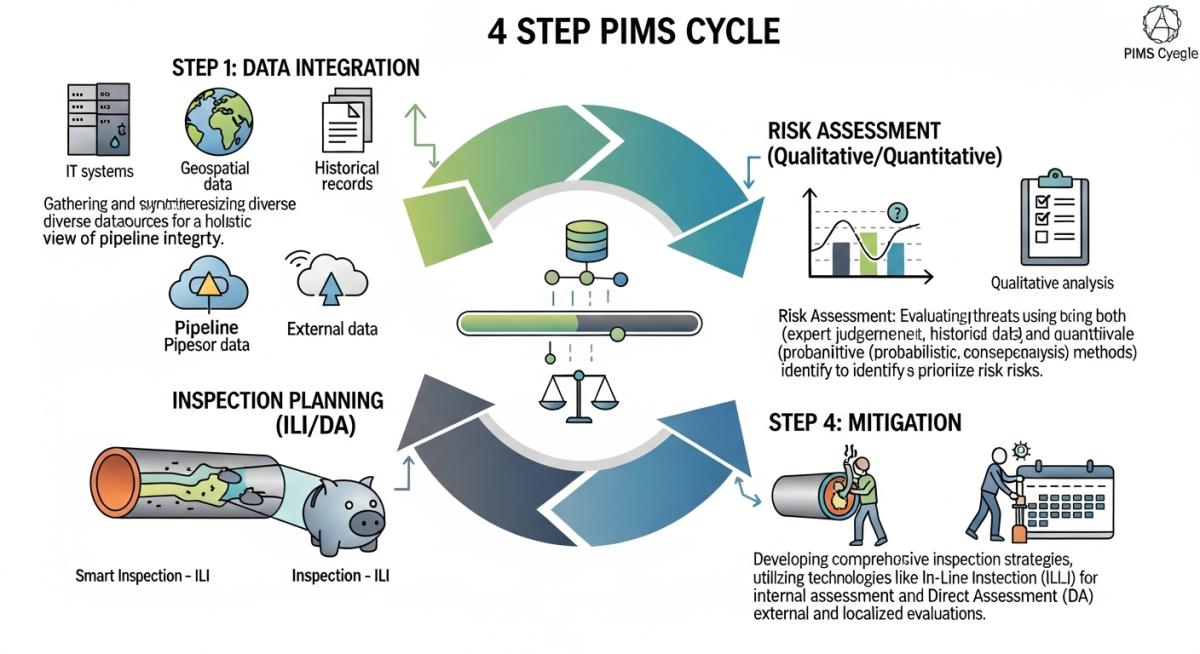
Figure 2: The iterative PIMS lifecycle according to 2026 best practices.
Inspection Technology Comparison
| Inspection Method | Primary Detection Focus | Accuracy (2026) | Operational Constraint |
|---|---|---|---|
| MFL (Magnetic Flux Leakage) | Metal Loss / Corrosion | +/- 10% Wall Thickness | Pipe must be piggable |
| UT (Ultrasonic Testing) | Wall Thinning / Cracking | +/- 0.1 mm | Requires liquid couplant |
| EMAT (Electro-Magnetic) | Stress Corrosion Cracking | High (Non-contact) | Lower travel speeds |
| ECDA Indirect Survey | Coating Damage / CP Health | Qualitative/Inferential | Surface access required |
By leveraging predictive maintenance for pipeline safety, operators can now identify “at-risk” segments months before a threshold is exceeded. This is achieved through the fusion of cathodic protection (CP) telemetry and historical ILI trends, creating a proactive integrity management plan for gas pipelines.
Part I: Detection and Inspection
The Cornerstone Technology: In-Line Inspection (ILI)
In-Line Inspection is the foundation of modern Pipeline Integrity Management Systems. It enables non-destructive examination of internal and external pipeline conditions without interrupting service—a critical advantage for operational reliability in 2026.
ILI utilizes autonomous robotic devices, colloquially known as “smart pigs,” equipped with advanced sensor systems. Unlike time-consuming manual inspections with limited coverage, in-line inspection data analysis provides continuous assessment across extensive pipeline systems, from small-diameter lines to those exceeding 56 inches.
The Three Core Questions of Any Integrity Program
Every integrity program must answer three fundamental questions to maintain safety and compliance:
Is it damaged?
Geometry Focus
Are there dents, restrictions, or other deformations that compromise the pipe’s structure? Mechanical damage remains a leading cause of pipeline failures.
Where is it?
Mapping Focus
What is the pipeline’s precise 3D location? Ground movement and soil instability can shift the pipe, inducing dangerous stress and strain.
Is it corroding?
Metal Loss Focus
Is the pipe wall thinning? Even small defects can grow into critical threats without a proper integrity management plan for gas pipelines.
Note: Addressing these questions through predictive maintenance for pipeline safety ensures that operators can mitigate risks before they escalate into structural failures.
The Inspection Process: A Systematic Three-Stage Approach
In 2026, the ILI process follows a precision-engineered sequence designed to maximize data integrity while minimizing operational downtime. This lifecycle ensures that the in-line inspection data analysis captured by “smart pigs” is accurate, repeatable, and verifiable.
The Launch Phase
Mechanical Loading and Equalization
The ILI tool is introduced into the pipeline via a specialized launcher station. This high-pressure vessel allows the tool to be inserted into a “dead” chamber, which is then pressurized to match the mainline flow. According to 2026 safety protocols, launchers must feature Quick Opening Closures (QOC) and mechanical interlocking to prevent accidental depressurization during insertion.
Traverse & Inspect
Dynamic Data Acquisition
Upstream pressure propels the device along the pipeline as onboard sensors continuously acquire high-resolution data. A speed control system is often utilized to maintain optimal velocity for sensor performance:
The Receive Phase
Retrieval and Data Verification
At the pipeline terminus, a receiver station (or “pig catcher”) safely captures and extracts the tool. Once retrieved, the onboard odometer data and sensor logs are synchronized with external GPS markers. This immediate 2026 data-quality check ensures the run was “successful” before the tool is decommissioned for deeper cloud-based processing.
Operational Insight (2026):
Modern Pipeline Integrity Management Systems prioritize “first-time success” by using real-time tracking via low-frequency (LF) transmitters and satellite-linked geophone stations to monitor the pig’s progress throughout all three stages.
EPCLand YouTube Channel
2,500+ Videos • Daily Updates
Case Study: Pipeline Integrity Management Systems Failure Analysis
In early 2026, a 20-year-old interstate natural gas transmission line underwent a rigorous review following an unexpected drop in cathodic protection (CP) potential. The objective was to apply modern pipeline risk assessment methodologies to a segment suspected of developing Stress Corrosion Cracking (SCC) due to its age and the presence of high-pH soil environments.
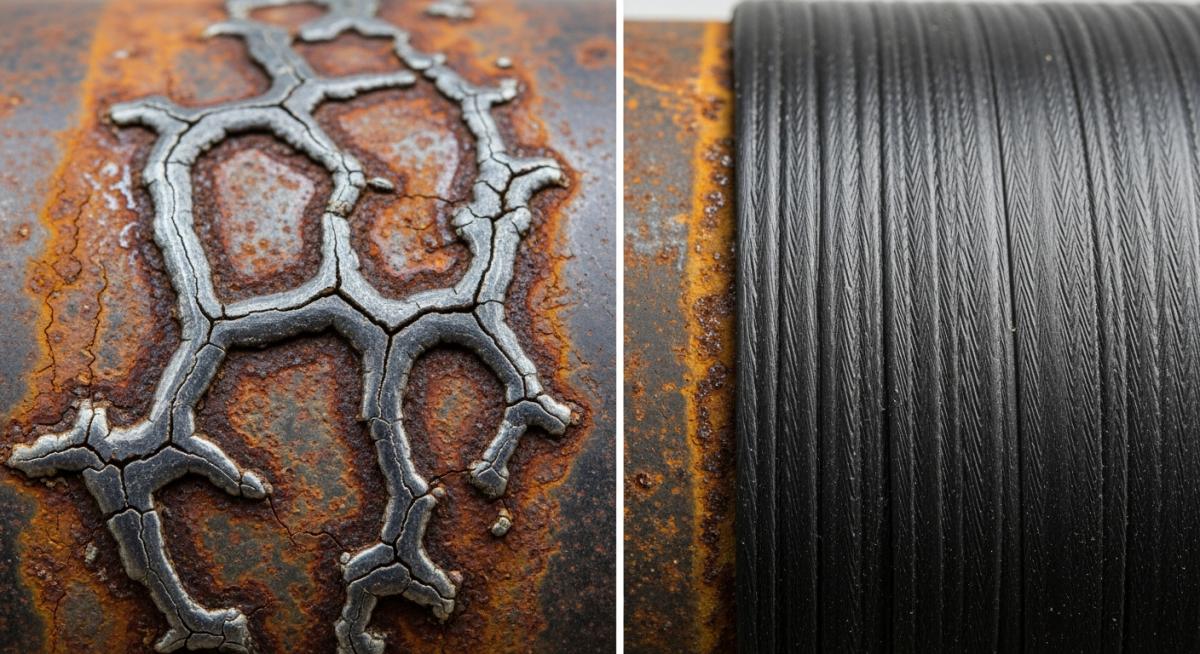
Figure 3: Macro-analysis of Stress Corrosion Cracking (SCC) colonies vs. composite remediation.
Project Technical Profile
The Problem & Technical Analysis
The primary challenge was the detection of “near-neutral pH” Stress Corrosion Cracking that had bypassed traditional visual inspections. Initial in-line inspection data analysis using standard MFL tools failed to identify the longitudinal tight cracks characteristic of SCC. The integrity team shifted to an EMAT (Electromagnetic Acoustic Transducer) pigging run to gain higher resolution data on axial flaws.
Analysis revealed a cluster of SCC colonies exceeding 25% of the wall thickness in a high-consequence area (HCA). The failure to implement a proactive integrity management plan for gas pipelines in previous decades had allowed moisture to penetrate the disbonded coal tar coating, creating a perfect environment for crack propagation under cyclic loading.
Solution & ROI Results
The engineering team implemented a two-fold solution:
- Immediate Remediation: Installation of Type B pressure-containing sleeves and high-modulus composite wraps on the identified SCC colonies.
- Systemic Upgrade: Integration of the segment into the centralized Pipeline Integrity Management System with real-time CP monitoring and semi-annual direct assessments.
2026 Outcome Metrics:
- Safety: Zero loss of containment during high-pressure winter peaking.
- Cost Savings: Avoidance of a full segment replacement, saving an estimated 4.2 million USD.
- Compliance: Fully met PHMSA and ASME B31.8S integrity standards for HCA reporting.
Engineering FAQ: Pipeline Integrity Management
How do ASME B31.8S integrity standards apply to 2026 hydrogen-blended pipelines? ▼
In 2026, ASME B31.8S is used alongside Supplement S to address hydrogen embrittlement. Pipeline Integrity Management Systems now incorporate specific material fracture toughness assessments to ensure that existing gas infrastructure can safely transport hydrogen blends without risking crack acceleration.
Why is external corrosion direct assessment (ECDA) used instead of ILI? ▼
ECDA is primarily utilized for “unpiggable” pipelines—lines with tight bends, low flow, or no launcher/receiver facilities. It provides a structured 4-step process (Pre-assessment, Indirect Inspection, Direct Examination, and Post-assessment) to ensure safety where in-line inspection tools cannot travel.
What role does predictive maintenance for pipeline safety play in ESG reporting? ▼
Predictive maintenance is a cornerstone of 2026 ESG (Environmental, Social, and Governance) goals. By identifying potential leak sites before they occur, operators significantly reduce methane emissions and environmental impact, which is a key metric for regulatory compliance and investor relations.
How often should a pipeline risk assessment methodology be updated? ▼
Under modern PIMS frameworks, risk assessments are “living documents.” While statutory reviews occur annually, the methodology should be updated immediately following any major ILI run, change in operating pressure, or significant land-use changes in the pipeline right-of-way (ROW).
The Future of Pipeline Reliability
Implementing a sophisticated Pipeline Integrity Management System is no longer just a regulatory hurdle; it is a vital operational strategy for 2026. By combining ASME B31.8S integrity standards with advanced in-line inspection data analysis, engineering firms can extend the lifecycle of critical assets while maintaining the highest safety margins. As we look forward, the shift toward autonomous monitoring and AI-driven risk modeling will continue to redefine the boundaries of pipeline engineering.
