Oil Refinery Process: A Complete Engineering Guide
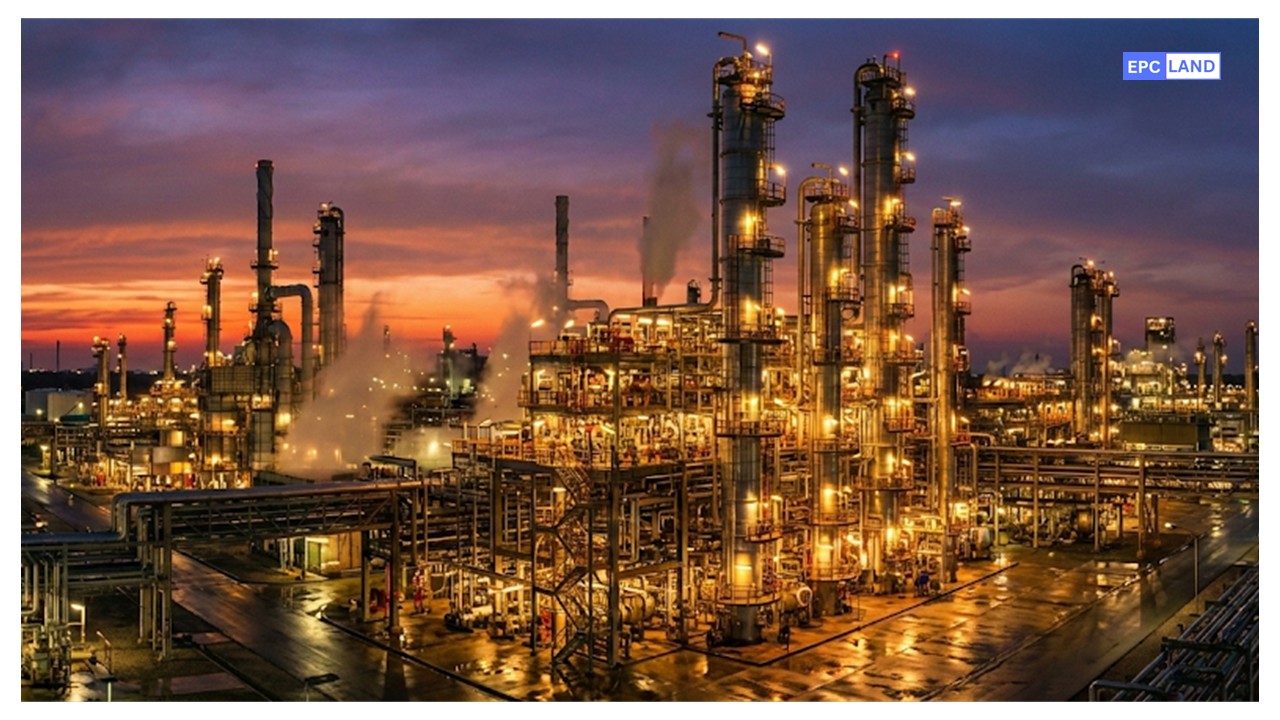
The Oil Refinery Process is the thermodynamic backbone of the modern energy infrastructure, transforming raw crude oil into high-value fuels and petrochemical feedstocks. In 2026, the engineering focus has shifted beyond simple separation; it now demands rigorous optimization of the **Crude Distillation Unit (CDU)** and advanced conversion units to meet tightening environmental regulations and margin pressures. This guide deconstructs the physics, chemistry, and equipment that drive these massive facilities.
What is the Oil Refinery Process?
It is a series of chemical engineering unit operations used to convert crude oil into usable products like LPG, gasoline, kerosene, diesel, and asphalt. The process relies on differences in boiling points (distillation), molecular restructuring (cracking/reforming), and impurity removal (hydrotreating) to meet specific product specifications.
Test Your Refinery Knowledge
Question 1 of 51. What is the primary function of the Desalter unit located before the CDU?
Complete Course on
Piping Engineering
Check Now
Key Features
- 125+ Hours Content
- 500+ Recorded Lectures
- 20+ Years Exp.
- Lifetime Access
Coverage
- Codes & Standards
- Layouts & Design
- Material Eng.
- Stress Analysis
1. Fundamentals of the Oil Refinery Process
The Oil Refinery Process is not merely about heating oil; it is a sophisticated exercise in molecular management. At its core, a refinery operates on the principle that crude oil is a mixture of thousands of distinct hydrocarbons, each with a specific boiling point, density, and molecular structure. The engineering objective is to separate these components and then chemically restructure them to match market demand—typically shifting heavy, low-value molecules into lighter, high-octane fuels.
In 2026, the efficiency of this transformation is often benchmarked using the Nelson Complexity Index. A simple "topping" refinery (which only separates) has a low index, while a complex deep-conversion refinery (capable of cracking heavy residues) commands a higher index, signifying greater flexibility and profitability.
The Refinery Flow Scheme Diagram
To understand the plant integration, engineers rely on the Refinery Flow Scheme Diagram. This "road map" illustrates the sequential routing of feedstocks from the tank farm through separation, conversion, and treating units.

Figure 2: Simplified Block Flow Diagram (BFD) of a Complex Refinery.
2. Key Unit Operations Breakdown
Crude Distillation Unit (CDU)
The Crude Distillation Unit (CDU) is the first major processing step. Here, desalted crude is heated to approximately 350°C to 400°C in a fired heater. It enters the fractionation column as a mixed-phase feed (liquid and vapor). Inside the column, distinct "cuts" or fractions separate based on their boiling points. The lighter components (Naphtha, LPG) rise to the top, while heavier components (Atmospheric Residue) sink to the bottom.
Crucially, the CDU operates slightly above atmospheric pressure. If temperatures are raised too high (above 400°C) to recover more product, thermal cracking (coking) occurs, fouling the equipment. This thermal limit necessitates the next stage: Vacuum Distillation.
Hydrotreating Process Description
Environmental regulations (Euro VI / BS VI) strictly limit sulfur content in fuels (often < 10 ppm). The Hydrotreating Process Description involves reacting hydrocarbon streams with high-pressure hydrogen gas over a catalyst (typically Cobalt-Molybdenum or Nickel-Molybdenum) at temperatures between 300°C and 400°C.
This process, known as Hydrodesulfurization (HDS), converts organic sulfur into Hydrogen Sulfide (H2S), which is then stripped away. Hydrotreating also removes Nitrogen and saturates olefins, stabilizing the fuel and protecting downstream catalysts in the Reformer units from poisoning.
Fluid Catalytic Cracking (FCC)
Often called the "money maker" of the Oil Refinery Process, the Fluid Catalytic Cracking (FCC) unit converts heavy, low-value gas oils from the vacuum unit into high-octane gasoline and light cycle oils.
The process uses a microspheroidal zeolite catalyst that behaves like a fluid when aerated with vapor. The reaction breaks large hydrocarbon chains (cracking). A byproduct of this reaction is "coke" (carbon), which deposits on the catalyst, deactivating it. The catalyst is continuously circulated to a Regenerator, where the coke is burned off, restoring activity and providing the heat necessary for the cracking reaction.
Sulfur Recovery Unit (SRU)
The H2S gas generated in the hydrotreaters cannot be vented. The Sulfur Recovery Unit (SRU), typically using the Claus Process, converts this toxic gas into elemental liquid sulfur. This not only ensures environmental compliance but produces a saleable byproduct for fertilizer and chemical industries.
Typical Distillation Cuts & Boiling Ranges
| Fraction Name | Boiling Range (°C) | Carbon Atoms | Primary Application |
|---|---|---|---|
| LPG (Liquefied Petroleum Gas) | < 25°C | C3 - C4 | Domestic Fuel, Petrochemical Feed |
| Naphtha (Light/Heavy) | 35°C - 180°C | C5 - C10 | Gasoline Blending, Steam Cracking |
| Kerosene / Jet Fuel | 180°C - 240°C | C11 - C12 | Aviation Fuel, Heating |
| Diesel / Gas Oil | 240°C - 360°C | C13 - C25 | Transportation Fuel |
| Atmospheric Residue | > 360°C | > C25 | Feed for Vacuum Unit or FCC |
Engineering Insight: The Reflux Ratio
In the Crude Distillation Unit (CDU), the efficiency of separation between two cuts (e.g., separating Naphtha from Kerosene) is governed by the Reflux Ratio (R). This determines how much liquid is returned to the column versus how much is withdrawn as product.
- L = Molar flow rate of liquid returned to the column (Reflux).
- D = Molar flow rate of the distillate product withdrawn.
Note: A higher Reflux Ratio improves product purity (sharper separation) but consumes more energy in the Reboiler and Condenser duties. Optimizing this balance is a daily task for process engineers.
Case Study: Oil Refinery Process Failure Analysis Topic: Hydraulic Limit & Preheat Train Fouling in a CDU
Efficiency in the Oil Refinery Process is heavily dependent on heat integration. The Crude Preheat Train (PHT) is a network of heat exchangers designed to recover energy from hot product streams (like Diesel or Residue) to heat the incoming cold crude before it enters the main fired heater. When these exchangers foul, the furnace must fire harder, consuming more fuel and creating a bottleneck in the **Crude Distillation Unit (CDU)**.

Figure 3: Severe asphaltene fouling in a Shell & Tube Exchanger Bundle.
Site Data
- Location: 200,000 BPD Refinery, Coastal Zone
- Unit: Crude Distillation Unit (CDU)
- Equipment: High-Temp Preheat Exchangers (E-101 Series)
Operational Parameters
- Furnace Inlet Temp (FIT): Dropped from 215°C to 198°C
- Pressure Drop: Increased by 1.5 bar
- Fuel Gas Usage: +4.2% Increase
Root Cause Analysis
The refinery had recently switched to processing "Opportunity Crudes"—cheaper, heavier feedstocks with higher Asphaltene content—to improve margins. However, the engineering team failed to account for Crude Compatibility.
When the heavy asphaltic crude was blended with a light paraffinic crude, the solvent power of the mixture dropped. This caused the asphaltenes (which are typically suspended in the oil) to precipitate out of the solution. These sticky solids deposited on the hot tube surfaces of the preheat exchangers, forming a "coke" layer. This layer acts as an insulator, drastically reducing the Heat Transfer Coefficient (U) and restricting hydraulic flow.
Implemented Solution
To restore the integrity of the **Refinery Flow Scheme Diagram** and recover the lost efficiency, a three-phase approach was executed:
- Immediate: An online chemical cleaning injection (anti-foulant dispersant) was initiated to soften the existing deposits without shutting down the unit.
- Mechanical: During the planned turnaround, the bundles were pulled and hydro-blasted (as seen in Figure 3) to return the tubes to bare metal conditions.
- Systemic: A new crude compatibility testing protocol (Spot Test) was mandated. The blending ratios were adjusted to ensure the S_bn (Solubility Blending Number) remained above the precipitation threshold.
Operational ROI & Results
Post-intervention, the Furnace Inlet Temperature (FIT) was restored to 216°C.
- Energy Savings: Reduced furnace fuel gas consumption by approximately $1.2M USD/year.
- Capacity: Hydraulic bottleneck removed, allowing the unit to return to 100% nameplate capacity.
- Reliability: Extended the run-length of the preheat train by 18 months.
EPCLand YouTube Channel
2,500+ Videos • Daily Updates
Frequently Asked Questions (FAQ)
Why is the Nelson Complexity Index important for investors?
How does the Sulfur Recovery Unit (SRU) impact plant safety?
What distinguishes the Fluid Catalytic Cracking (FCC) unit?
How is the Oil Refinery Process changing for 2026?
Final Thoughts on Refinery Engineering
Mastering the Oil Refinery Process requires a deep appreciation for the interplay between thermodynamics, fluid mechanics, and reaction kinetics. From the initial separation in the Crude Distillation Unit (CDU) to the complex molecular restructuring in the conversion units, every step offers an opportunity for optimization.
As we move through 2026, the successful engineer will be one who understands not just the individual equipment, but the holistic Refinery Flow Scheme Diagram—balancing yield, energy efficiency (like our preheat train case study), and environmental stewardship to power the future.

Related posts:
![High-grade industrial Wing Nut Types and Applications for mechanical assemblies.]()
Wing Nut Types and Applications: The 2026 Engineering Guide
![Industrial Monorail Crane Systems installed in a modern manufacturing plant 2026.]()
Monorail Crane Systems: Design, Types & 2026 Standards Guide
![Lead engineer performing a Factory Acceptance Test FAT on an industrial skid system 2026]()
Factory Acceptance Test FAT: The 2026 Engineering Guide to Zero-Defect Delivery
![Professional engineering workspace showing a Basis of Design document layout for a 2026 project.]()
Basis of Design: How to Write a BOD for Engineering Projects in 2026
![Industrial Flare Knockout Drum Sizing and installation in a refinery relief system.]()
Flare Knockout Drum Sizing: Design & API 521 Standards (2026 Guide)
![Advanced Reboiler Control Systems in a modern petrochemical refinery 2026.]()
Reboiler Control Systems: Engineering Guide to Precision Control 2026