The Ultimate Guide to Materials for Water Piping
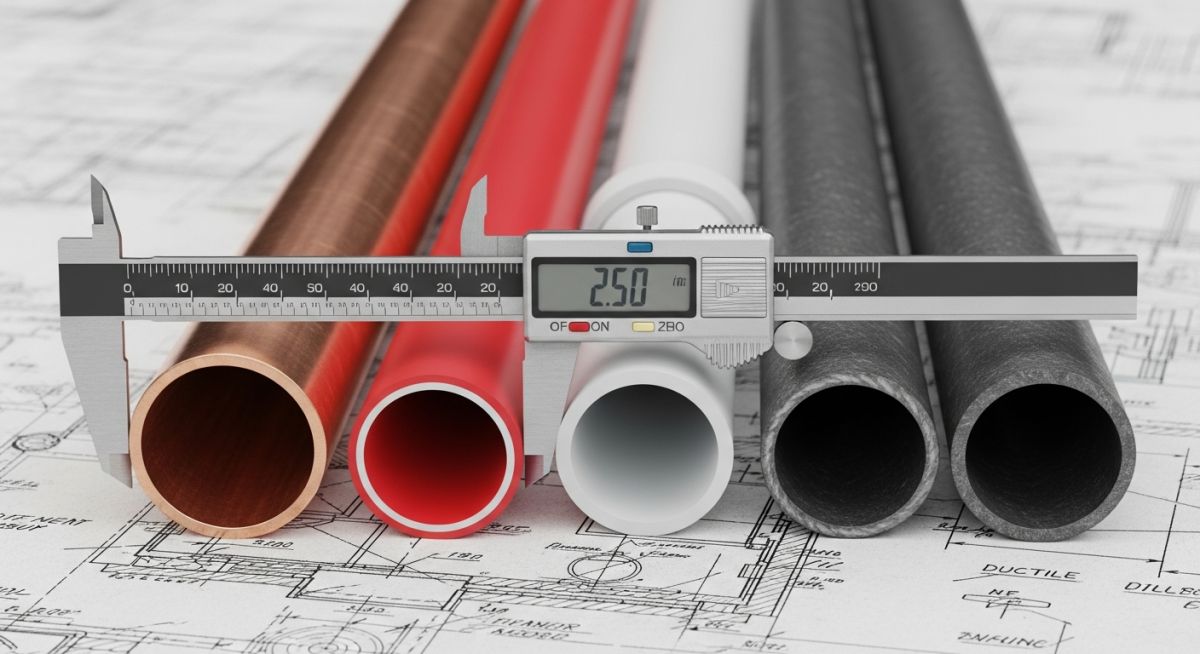
You are 48 hours into a municipal water main replacement when the soil analysis reveals high sulfate concentrations that would shred standard galvanized steel in less than a decade. The wrong choice in Materials for Water Piping doesn’t just lead to leaks; it leads to catastrophic system failure, litigation, and massive budget overruns.
This guide provides the technical breakdown of modern and legacy piping materials, ensuring your next specification meets both ASME B31.3 standards and long-term durability goals.
Key Engineering Takeaways
- Material Versatility: Plastic polymers like PEX and CPVC are dominating residential sectors due to scale resistance, while Ductile Iron remains the king of high-pressure municipal mains.
- Longevity Factors: Corrosion remains the #1 killer of metal Materials for Water Piping, necessitating cathodic protection or specialized linings in aggressive soils.
- Sustainability: 2026 standards prioritize lead-free alloys and recyclable thermoplastics to meet evolving environmental regulations.
What are the best Materials for Water Piping?
The best Materials for Water Piping depend on application: Copper and PEX are preferred for internal potable water due to flexibility and bacterial resistance. For external mains, Ductile Iron and HDPE offer superior strength and soil-load capacity, while CPVC is the standard for high-temperature industrial water transport.
“In my 20 years of field inspections, I’ve seen more failures from ‘material mismatch’ than from actual pipe defects. Always cross-reference your soil pH and fluid temperature before finalizing your bill of materials. A cheap choice today is an expensive excavation tomorrow.”
– Atul Singla, Founder of EPCLand
Complete Course on
Piping Engineering
Check Now
Key Features
- 125+ Hours Content
- 500+ Recorded Lectures
- 20+ Years Exp.
- Lifetime Access
Coverage
- Codes & Standards
- Layouts & Design
- Material Eng.
- Stress Analysis
Knowledge Check: Materials for Water Piping
Test your engineering expertise on piping standards and applications.
Question 1 of 5
Which material is generally preferred for hot water distribution due to its high temperature rating and low thermal expansion compared to standard PVC?
Critical Criteria for Selecting Materials for Water Piping
Selecting the appropriate Materials for Water Piping is a multidimensional engineering challenge that balances hydraulic efficiency, mechanical structural integrity, and chemical compatibility. According to the ASME B31.3 Process Piping Standard, engineers must account for the "Fluid Service" category, which dictates the allowable stress and safety factors for the entire network. In 2026, the focus has shifted toward Total Cost of Ownership (TCO), where the initial material cost is weighed against the 50-year maintenance forecast and cathodic protection requirements.
Mechanical & Chemical Factors
- Internal Pressure & Surge: Capacity to handle steady-state pressure and transient "water hammer" events without brittle failure.
- Corrosion Resistance: Ability to withstand aggressive soil (external) and varying water chemistry (internal) without wall thinning.
- Thermal Expansion: Critical for long-run plastic systems like PVC/CPVC which expand significantly more than metallic alternatives.
Environmental & Regulatory Factors
- Leaching & Potability: Compliance with lead-free mandates and resistance to bacterial biofilm formation.
- Permeability: Resistance of polymer pipes to hydrocarbon permeation when buried in contaminated brownfield sites.
- Soil Loading: The "Ductility" requirement for buried pipes to withstand shifting earth and heavy surface traffic.
Carbon Steel and Galvanized Iron Materials for Water Piping
Historically, metallic Materials for Water Piping were the industry default due to their unmatched hoop strength. However, the rise of specialized alloys and internal linings has redefined their application in 2026. Galvanized Steel, once common in residential plumbing, is now largely relegated to temporary lines or specific industrial fire loops due to its propensity for "tuberculation"—the internal buildup of rust and minerals that chokes flow.
Steel and Cast Iron Evolution
Modern Ductile Iron (DI) has almost entirely replaced gray cast iron in municipal water mains. As highlighted by the Ductile Iron Pipe Research Association (DIPRA), DI provides the durability of cast iron with the strength and ductility of steel. It is frequently specified for its "K-class" thickness (e.g., K7 or K9), offering superior resistance to external crushing forces. For highly corrosive industrial water, Stainless Steel (Grade 304/316) remains the premier choice, governed by ASME B36.19, ensuring zero contamination for high-purity processes.
Modern Polymers: PVC, CPVC, and PEX
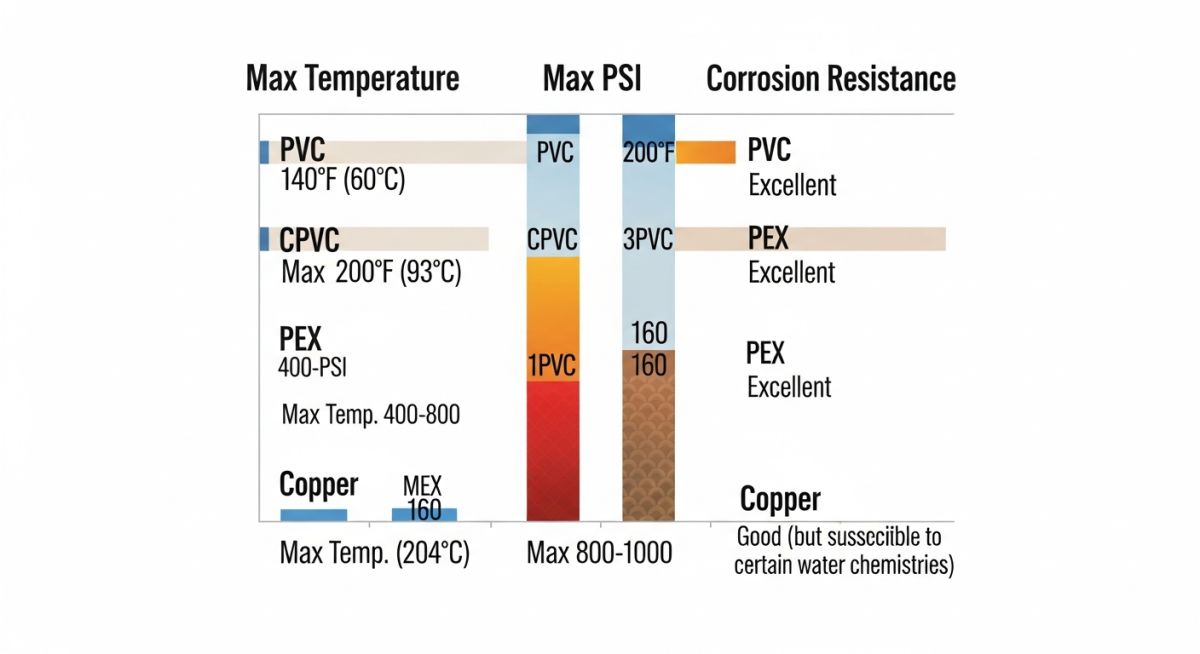
Thermoplastic Materials for Water Piping have revolutionized the 2026 landscape by eliminating the corrosion variable entirely. PVC (Polyvinyl Chloride), specifically Schedule 40 and 80, is the standard for cold-water distribution, while its chlorinated sibling, CPVC, extends this utility to hot-water applications up to 200°F. The most disruptive entry, PEX (Cross-linked Polyethylene), has become the dominant residential interior material due to its extreme flexibility, which allows for "manifold" style installations that minimize leak-prone joints.
Engineers must remain vigilant regarding the SDR (Standard Dimension Ratio) of these plastics. A lower SDR indicates a thicker wall and higher pressure capacity. In buried applications, HDPE (High-Density Polyethylene) is often preferred over PVC because its fused joints are leak-proof and can withstand the seismic shifts common in unstable terrains.
Cost and Installation Depth for Materials for Water Piping
In 2026, the Total Installed Cost (TIC) for Materials for Water Piping is heavily influenced by labor and excavation rather than just the commodity price of the pipe. While PEX and HDPE offer lower material costs, Copper remains high due to global market fluctuations. Engineering specifications must also strictly adhere to ASME B31.3 for pressure testing and AWWA C600 for installation procedures.
How Deep Should You Bury Water Lines?
The burial depth is governed by the local Frost Line. Typically, water lines must be buried at least 12 inches below the maximum recorded frost depth to prevent bursting. For heavy-traffic areas, engineers specify a minimum cover of 36 inches to distribute surface live loads, particularly when using flexible Materials for Water Piping like PVC or HDPE, which rely on soil side-support for structural integrity.
| Pipe Material | Standard | Max Temp (°F) | Longevity (Years) | Corrosion Risk |
|---|---|---|---|---|
| Ductile Iron | AWWA C151 | 212 | 100+ | Moderate (External) |
| Copper (Type L) | ASTM B88 | 400 | 50-70 | Low |
| CPVC (Sch 80) | ASTM F441 | 200 | 50+ | Zero |
| PEX-a | ASTM F876 | 200 | 40-50 | Zero |
Water Piping in Sewage Networks
In combined systems, Materials for Water Piping must be selected based on their resistance to Hydrogen Sulfide (H2S) gas. While potable lines are pressurized, proximity to sewage lines requires strict separation distances (usually 10 feet horizontally) per EPA Drinking Water Regulations to prevent cross-contamination during pressure drops.
Fire Protection Systems: High-Pressure Materials
Fire protection requires Materials for Water Piping that can withstand extreme surge pressures. Black Steel (governed by NFPA 13 standards) remains the primary choice for indoor sprinklers, while C900 PVC or Ductile Iron are preferred for underground fire loops due to their high burst-pressure ratings and reliability during seismic events.
Expert Comparison: 50+ Year Longevity
For long-term infrastructure, Ductile Iron with polyethylene encasement provides the best lifecycle value for external mains. For internal systems, Copper remains the premium choice due to its antimicrobial properties, though PEX is the 2026 leader in cost-efficiency and ease of replacement in residential retrofits.
Pipe Material Thermal Expansion Calculator
Estimate the linear expansion of your Materials for Water Piping based on temperature fluctuations to determine if expansion loops are required.
Estimated Expansion
Inches
Engineering Note: Plastic Materials for Water Piping expand up to 10x more than metals. Ensure your ASME B31.3 compliant design includes sufficient guides and anchors.
Case Study: Coastal Municipal Water Main Failure
Topic: Material Mismatch in Corrosive Environments
The Challenge
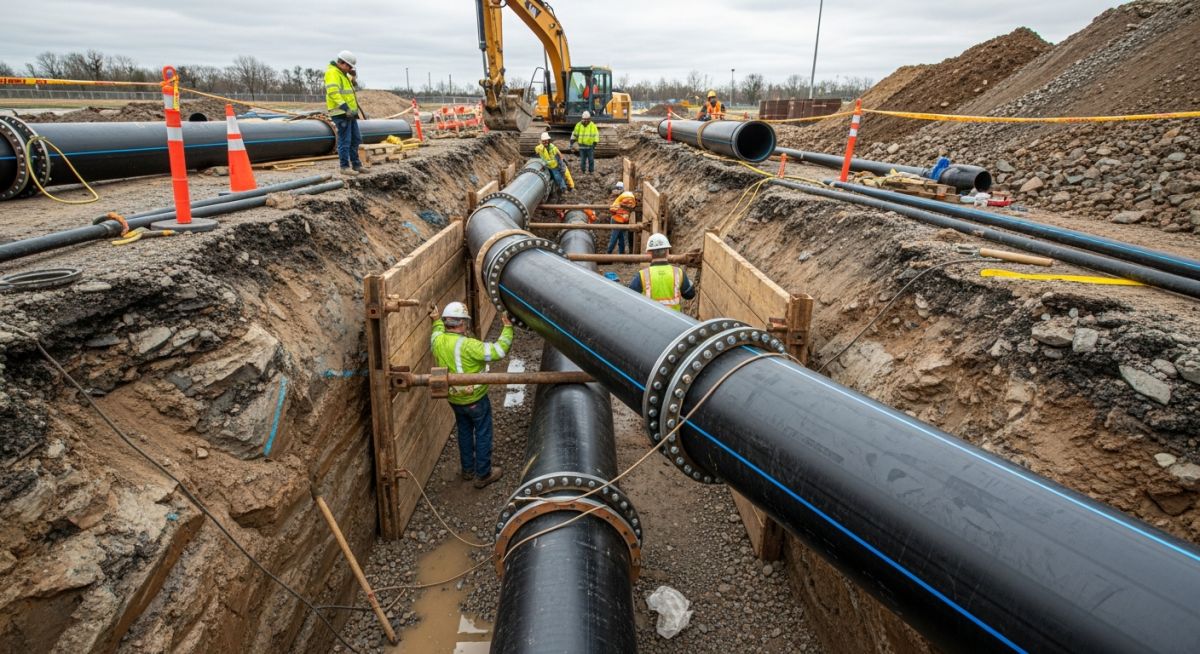
A coastal city experienced 14 major breaks in 18 months along their primary 24-inch water main. The existing Materials for Water Piping (standard Ductile Iron) were failing due to high chloride concentrations in the brackish groundwater.
The Solution
Engineers pivoted from metallic options to High-Density Polyethylene (HDPE). The butt-fused joints created a monolithic leak-proof system, and the inert polymer properties eliminated the risk of galvanic corrosion.
The Result
Since the 2026 retrofit, the city has recorded zero failures. The lifecycle cost analysis suggests a 100-year service life, reducing long-term maintenance expenditure by an estimated 42% compared to the previous system.
Engineering Lessons Learned
-
1
Soil Resistivity Matters: Always perform a soil analysis before selecting metallic Materials for Water Piping to determine the necessity of polyethylene encasement or cathodic protection.
-
2
Joint Integrity: Mechanical joints are the weakest point in any network. In high-vibration or seismic zones, fused polymer joints or restrained DI joints are mandatory.
EPCLand YouTube Channel
2,500+ Videos • Daily Updates
Expert Insights: Lessons from 20 years in the field
Beware of Velocity-Induced Erosion
In 2026, we still see premature failure in Copper Materials for Water Piping due to excessive flow velocity. Keep cold water below 8 fps and hot water below 5 fps to prevent internal wall thinning and "pinhole" leaks.
Surge Pressure (Water Hammer) is Material Blind
While PVC is cost-effective, its surge pressure allowance is lower than Ductile Iron. Always specify SDR 14 or lower for plastic mains subject to pump cycling to ensure the material doesn't reach its fatigue limit within the first 10 years.
UV Protection for Thermoplastics
Never store polymer Materials for Water Piping in direct sunlight for more than 30 days without coverage. UV radiation creates micro-cracks that compromise the material's long-term tensile strength, regardless of its 2026 rating.
