Isolation Philosophy: Equipment, Instruments, and Utilities Isolation Methods
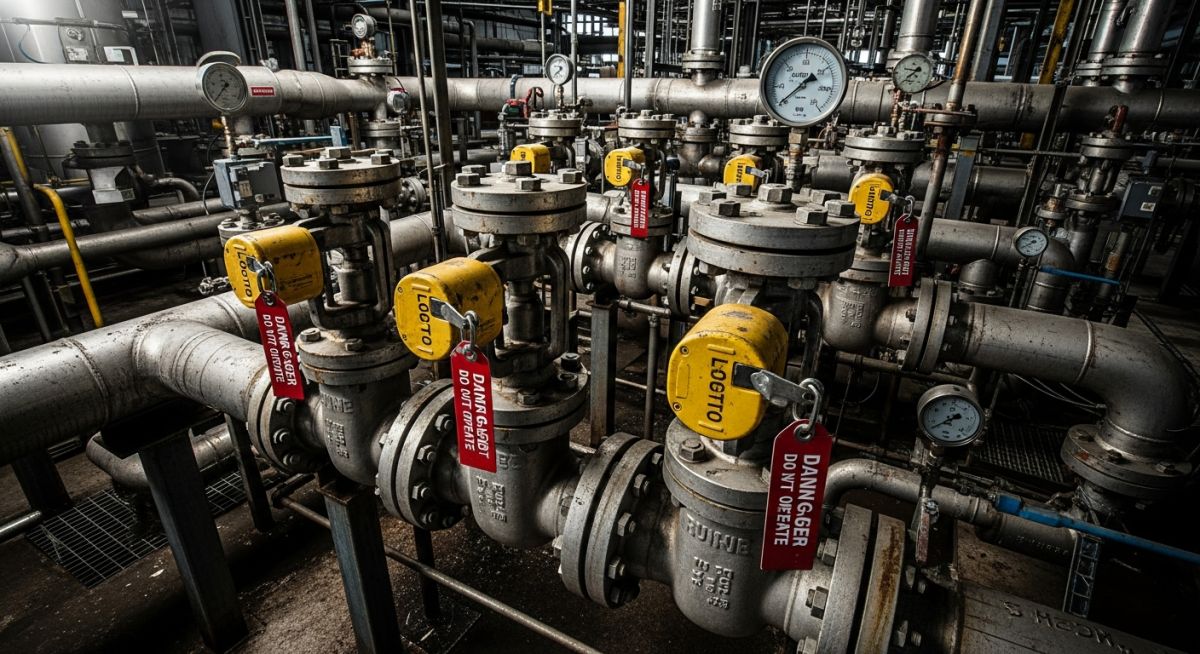
Imagine a maintenance crew preparing to enter a high-pressure hydrocarbon vessel, only to discover a slight “hiss” coming from a supposedly closed valve. In the high-stakes world of oil and gas, a single valve failure isn’t just a technical glitch—it is a catastrophic safety risk. This guide breaks down the rigorous Isolation Philosophy required to transform hazardous process environments into safe work zones, ensuring that every flange break and vessel entry is backed by fail-safe engineering.
Key Engineering Takeaways
- Understanding the hierarchy of Positive Isolation from single valves to physical spading.
- Critical configurations for Double Block and Bleed (DBB) in high-pressure instrument and process lines.
- Standardized protocols for Battery Limit (BL) and utility system isolation during brownfield TIE-INs.
What is Isolation Philosophy?
Isolation Philosophy is a structured engineering framework that defines the mandatory methods for isolating equipment, instruments, and utilities from hazardous energy. It ensures personnel safety during maintenance by utilizing mechanical barriers like Double Block and Bleed (DBB), spectacle blinds, and spades to achieve Positive Isolation.
Founder’s Insight
“In my 20 years of field inspections, I’ve seen that a ‘closed valve’ is never a guarantee. A true Isolation Philosophy must assume valve seat leakage is inevitable; therefore, the bleed and the spade are your only real friends when it comes to life safety.”
– Atul Singla
Complete Course on
Piping Engineering
Check Now
Key Features
- 125+ Hours Content
- 500+ Recorded Lectures
- 20+ Years Exp.
- Lifetime Access
Coverage
- Codes & Standards
- Layouts & Design
- Material Eng.
- Stress Analysis
Knowledge Check: Isolation Philosophy
Core Positive Isolation Philosophy and Safety Standards
The Isolation Philosophy is the bedrock of process safety management (PSM). At its core, it differentiates between “process isolation”—used for short-term operational changes—and “positive isolation,” which is mandatory for invasive maintenance. In 2026, engineering standards increasingly lean towards mechanical integrity that removes the possibility of human error. Positive isolation is achieved only when there is a physical barrier or a monitored air gap between the hazardous energy source and the work location. This is typically governed by international standards such as ASME B31.3 for Process Piping and OSHA LOTO regulations.
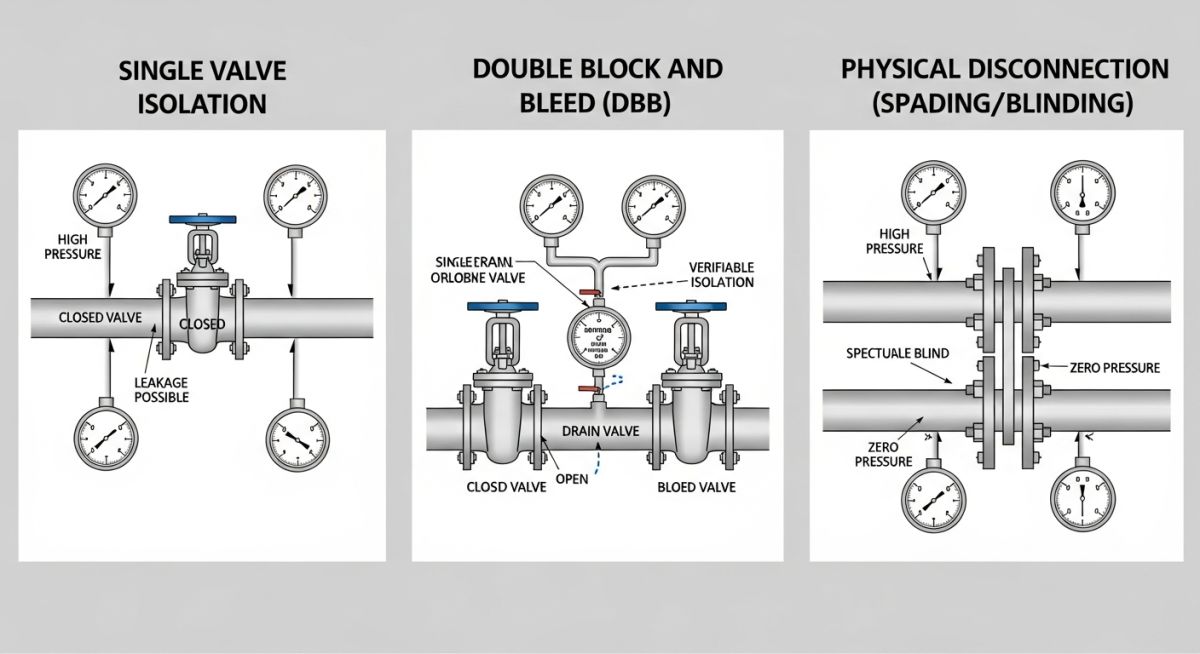
Determining the required level of isolation depends on the fluid’s toxicity, pressure, and temperature. For non-hazardous fluids at low pressure, a single valve may suffice. However, for lethal services or high-pressure steam, the Isolation Philosophy dictates a Double Block and Bleed (DBB) arrangement at minimum, often followed by the insertion of a spade or spectacle blind to ensure zero-leakage conditions during vessel entry.
Equipment Isolation Method for Critical Process Systems
The Equipment Isolation Method must be tailored to the specific mechanical design of the vessel or machinery. When isolating heavy equipment like centrifugal compressors or large pressure vessels, the configuration usually involves a series of valves and vent points. The primary goal is to depressurize, drain, and purge the equipment before any flange is loosened.
For personnel protection, the Isolation Philosophy requires that the isolation points be as close to the equipment as possible to minimize the volume of trapped hazardous material. Standard configurations include:
- Single Block and Bleed (SBB): Used for low-risk, non-toxic utility services.
- Double Block and Bleed (DBB): The industrial standard for hydrocarbon and high-pressure steam isolation.
- Double Block and Spaded: The highest tier of the Isolation Philosophy, mandatory for confined space entry.
Battery Limit and TIE-IN Isolation Philosophy
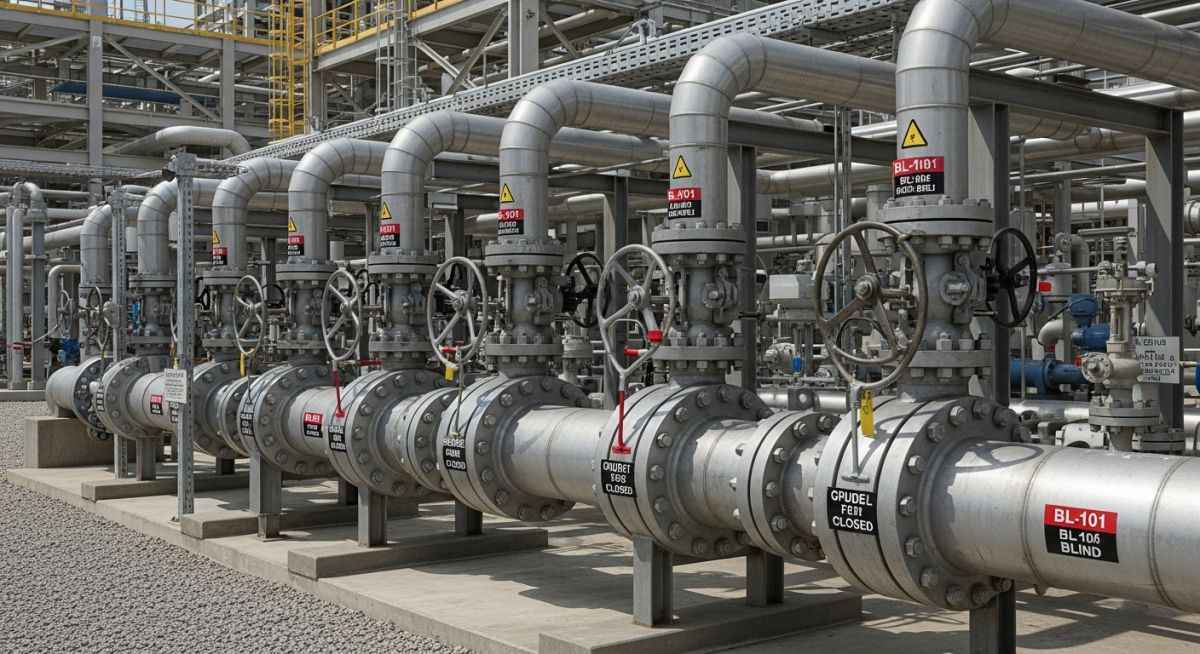
Battery Limit (BL) isolation is unique because it often involves a transfer of custody or a change in jurisdictional responsibility between two different plant units or companies. The Isolation Philosophy for TIE-INs requires the use of spectacle blinds at the boundary to prevent cross-contamination or accidental pressurization from the neighboring unit. These blinds provide a visible “Open” or “Closed” status, which is critical for safety audits and pre-commissioning checklists.
Best Practices for Control Valve Isolation Philosophy
The Isolation Philosophy for control valve stations is designed to allow for valve maintenance without shutting down the entire process line. A standard “Manifold” arrangement is employed, consisting of an upstream isolation valve, a downstream isolation valve, and a globe-style bypass valve. In 2026, many high-integrity systems also require bleeder valves (weep holes) located between the isolation valves and the control valve to ensure the cavity is fully depressurized before removal.
According to API Standards, the bypass valve must be sized to handle the maximum process flow to prevent bottlenecks during maintenance periods. It is critical that the bypass remains locked closed during normal operations to prevent accidental process upsets.
Relief Valve (RV) Isolation Philosophy and Arrangement
Relief valves are the last line of defense against overpressure, and their isolation is strictly regulated. The Isolation Philosophy for RVs often utilizes a “1-out-of-2” or “Dual RV” configuration. This setup allows one RV to be isolated for bench testing while the second remains online to protect the vessel.
Specific RV Configurations:
- Thermal Relief: Often requires only single isolation if the protected volume is small.
- Interlocking: For dual RV setups, mechanical interlocks are mandatory to ensure that at least one relief path is always open to the atmosphere or flare.
- Bonnet Vents: Must be piped to a safe location if the fluid is toxic or flammable, adhering to Isolation Philosophy safety norms.
Instrument Isolation Method and Manifold Selection
Instrument isolation focus is on precision and leak-prevention. For pressure transmitters and gauges, a 2-valve, 3-valve, or 5-valve manifold is the standard Isolation Philosophy application. These manifolds allow the instrument to be isolated, vented to zero, and calibrated in situ.
| Service Type | Required Method | Barrier Type |
|---|---|---|
| Non-Hazardous (Water/Air) | Single Block | Ball or Gate Valve |
| Hazardous Hydrocarbons | Double Block & Bleed | Two Valves + Vent |
| Confined Space Entry | Positive Isolation | Spectacle Blind / Spade |
Engineering Guide for Isolation of Utilities
Utilities like Nitrogen, Plant Air, and Flare systems require a unique Isolation Philosophy to prevent cross-contamination. Nitrogen lines, for instance, must have a removable “spool piece” or a check valve arrangement when connected to process vessels to ensure process gas cannot backflow into the utility header.
Isolation Method Selector Tool 2026
Determine the required Isolation Philosophy based on fluid risk and pressure.
EPCLand YouTube Channel
2,500+ Videos • Daily Updates
Case Study: Brownfield Battery Limit TIE-IN
Implementing Isolation Philosophy in a Live Refinery Expansion
The Challenge
Connecting a new Naphtha Hydrotreater (NHT) to the existing offsite storage unit without shutting down the main refinery header.
The Solution
Utilized Double Block and Bleed valves combined with a Spectacle Blind at the Battery Limit (BL) interface.
The Outcome
Zero-leakage recorded during the hot-tap and flange connection. Project was completed 48 hours ahead of schedule with 100% safety compliance.
During this project, the Isolation Philosophy was tested against variable header pressures. The engineering team insisted on a Positive Isolation protocol where the “Bleed” was monitored 24/7 with a pressure gauge. When a slight pressure buildup was detected, the upstream block valve was adjusted, and a temporary spade was inserted—preventing a potential hydrocarbon release into the new construction zone.
“This case study demonstrates that Isolation Philosophy isn’t just a document; it’s a dynamic safety system that requires real-time monitoring and physical barriers like blinds to protect workers in brownfield environments.”
Expert Insights: Lessons from 20 Years in the Field
The “Weep Hole” Fallacy
Never assume a bleed valve is clear just because no fluid is coming out. In heavy crude or polymerizing services, bleeders frequently plug. Always rod-out the bleeder to confirm a “zero energy” state before breaking a flange.
Spectacle Blind Orientation
Standard Isolation Philosophy requires the “tail” of a spectacle blind to point down when in the ‘Open’ position and up when ‘Closed’ (Blinded). This provides an immediate visual confirmation from the grade level without climbing the rack.
Control Valve Drift
A control valve is not an isolation valve. Even in 2026, high-performance control valves have a leakage class (e.g., FCI 70-2 Class IV). Maintenance must always involve dedicated mechanical block valves, never just “software” isolation.
Thermal Expansion Hazards
When isolating a long liquid-filled line between two closed valves, thermal expansion can rupture the pipe. Ensure your Isolation Philosophy includes a thermal relief path or a managed vent procedure for isolated segments.