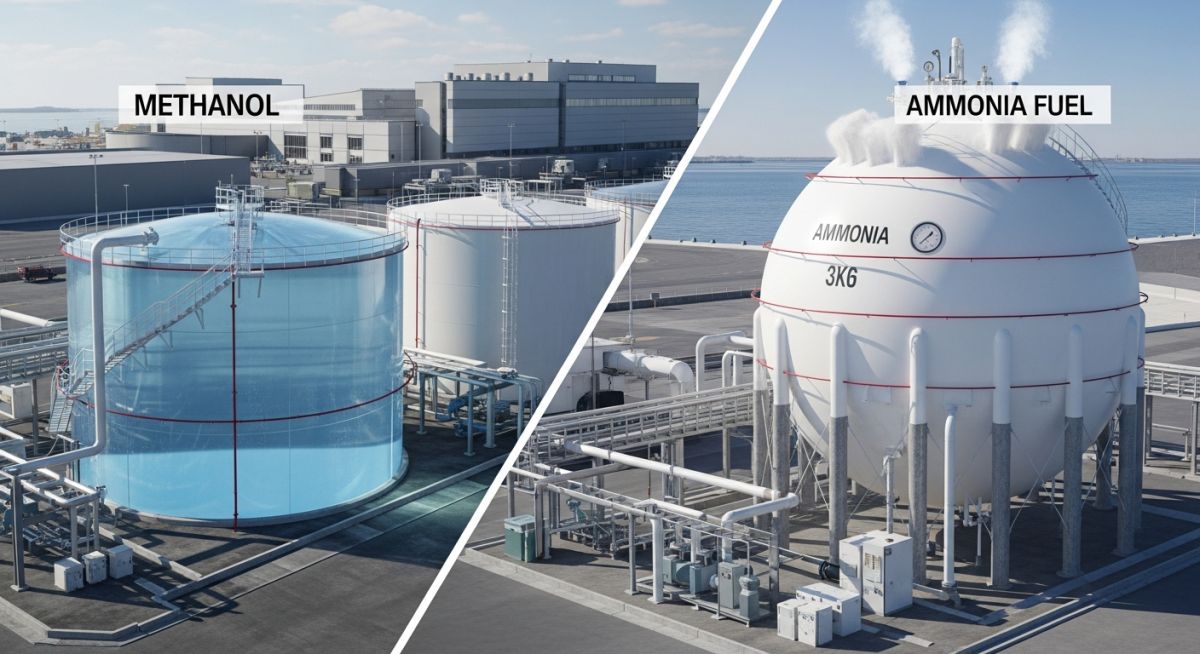
Green Methanol vs Green Ammonia: Engineering Pathways for Marine Decarbonization
In my two decades of piping and process engineering, I have rarely seen a more complex trade-off than the current shift toward alternative marine fuels. When we evaluate Green Methanol vs Green Ammonia, we are not just comparing chemical formulas; we are analyzing two entirely different logistical and safety ecosystems. Methanol offers the advantage of being a liquid at ambient conditions, which simplifies bunkering infrastructure significantly. However, it requires carbon capture integration to be truly “green.”
Conversely, Green Ammonia presents a zero-carbon combustion profile but introduces severe toxicity and material compatibility challenges that keep many safety engineers awake at night. As we move toward large-scale implementation, the choice between these two depends heavily on the specific vessel class, voyage duration, and the availability of regional renewable energy hubs. This article dissects the technical realities of these fuels to help you make informed design decisions.
Key Engineering Takeaways
- Methanol utilizes existing liquid fuel storage technology with minor modifications to seals and gaskets.
- Ammonia requires cryogenic or pressurized storage, necessitating advanced material selection to prevent stress corrosion cracking.
- Energy density comparisons favor methanol for volumetric efficiency, while ammonia excels in carbon-free combustion potential.
- Regulatory compliance under IMO guidelines remains the primary driver for infrastructure investment.
Complete Course on
Piping Engineering
Check Now
Key Features
- 125+ Hours Content
- 500+ Recorded Lectures
- 20+ Years Exp.
- Lifetime Access
Coverage
- Codes & Standards
- Layouts & Design
- Material Eng.
- Stress Analysis
Technical Deep-Dive: Green Methanol vs Green Ammonia Production
Fuel Production Dynamics: The synthesis of green methanol and green ammonia relies on renewable hydrogen electrolysis, with methanol requiring an additional carbon capture and utilization (CCU) step to achieve carbon neutrality.
The production of green methanol involves the catalytic hydrogenation of carbon dioxide. The reaction, typically occurring at pressures between 50 and 100 bar, requires a steady supply of green hydrogen and captured CO2. From a piping perspective, the presence of CO2 and water vapor necessitates high-grade stainless steel (typically 316L or higher) to mitigate carbonic acid corrosion. We must also account for the ASME B31.3 requirements for process piping, ensuring that the synthesis loop is designed for high-pressure hydrogen service, which introduces specific embrittlement risks.
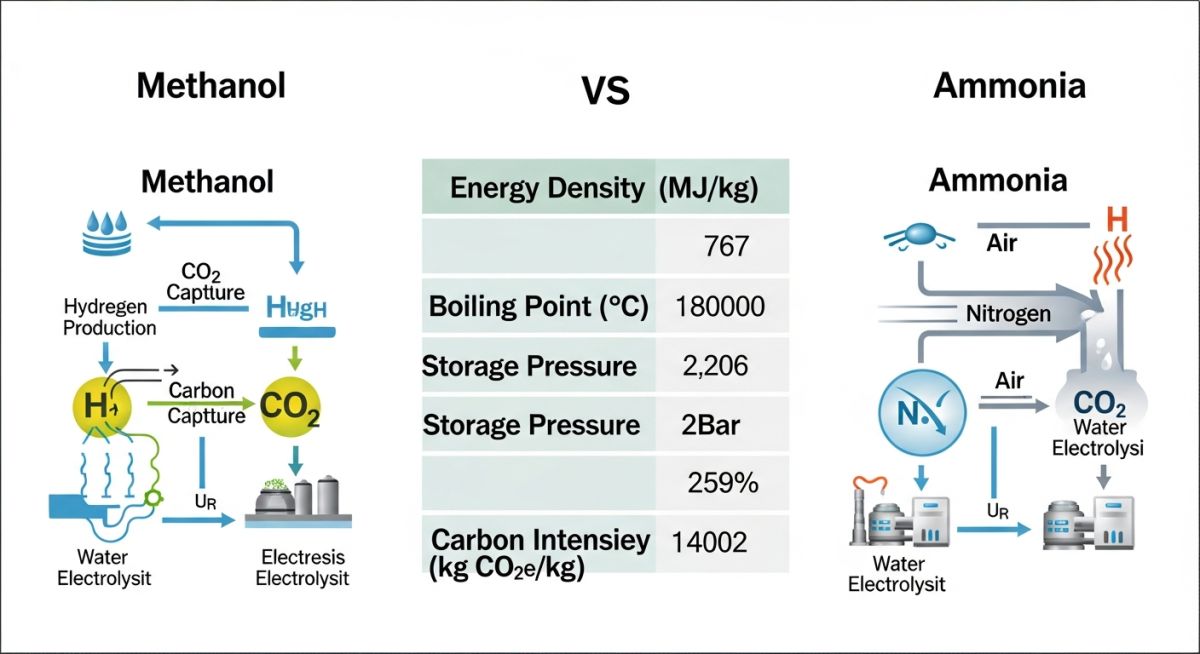
Green ammonia production, by contrast, utilizes the Haber-Bosch process, which is significantly more energy-intensive due to the high temperatures (400-500 degrees Celsius) and pressures (150-250 bar) required for nitrogen fixation. The primary engineering challenge here is the management of high-pressure nitrogen and hydrogen feedstocks. Unlike methanol, ammonia is highly corrosive to copper and copper-based alloys, meaning our material selection must strictly exclude brass or bronze fittings in the entire fuel delivery system.
Field Engineering Warning: Material Compatibility
When designing ammonia bunkering systems, standard carbon steel piping may be susceptible to stress corrosion cracking (SCC) if the ammonia is not properly inhibited or if the temperature fluctuates significantly. Always verify the moisture content of the ammonia, as anhydrous ammonia is less aggressive than aqueous solutions, but even trace amounts of water can trigger severe cracking in high-strength steels.
Energy density is another critical factor. Methanol has a lower volumetric energy density than traditional heavy fuel oil (HFO), requiring roughly 2.5 times the storage volume. Ammonia is even less dense, requiring either cryogenic storage at -33 degrees Celsius or high-pressure vessels. In my experience, the footprint of the fuel storage system often dictates the vessel design, forcing naval architects to prioritize either cargo capacity or fuel range.
Comparative Fuel Performance: An objective assessment of the operational benefits and technical limitations inherent in deploying green methanol and green ammonia within global maritime logistics.
Advantages
- Methanol: Liquid at ambient temperature, allowing for simpler, lower-cost bunkering infrastructure.
- Methanol: High compatibility with existing internal combustion engine designs with minor fuel injection modifications.
- Ammonia: Zero carbon content eliminates the need for complex carbon capture systems on board.
- Ammonia: High energy density per unit of mass compared to hydrogen, facilitating longer range for specific vessel types.
Disadvantages
- Methanol: Requires a sustainable CO2 source, which is currently a bottleneck in the supply chain.
- Methanol: Lower flash point (11-12 degrees Celsius) requires stringent fire suppression and ventilation systems.
- Ammonia: Extremely toxic to humans and marine life, requiring advanced leak detection and containment protocols.
- Ammonia: High susceptibility to stress corrosion cracking in standard piping materials, increasing maintenance costs.
Industrial Fuel Integration: The practical deployment of green methanol and green ammonia across heavy industry and maritime sectors, focusing on infrastructure scalability and safety compliance.
Deep-Sea Container Shipping
Green methanol is currently the preferred choice for large container vessels due to the ease of bunkering at major global ports. The ability to utilize existing liquid fuel storage tanks with minimal retrofitting allows shipping lines to meet immediate emission reduction targets without massive capital expenditure on cryogenic infrastructure.
Ammonia-Fueled Bulk Carriers
Bulk carriers operating on fixed routes are ideal candidates for green ammonia, as they can justify the investment in specialized cryogenic bunkering facilities at dedicated terminals. The zero-carbon combustion profile of ammonia aligns perfectly with the long-term decarbonization strategies of the dry bulk industry, provided that strict safety protocols are maintained.
Industrial Feedstock Decarbonization
Beyond marine use, green ammonia is being integrated into chemical manufacturing plants to replace fossil-based ammonia. This transition requires a complete overhaul of the plant’s piping network to ensure compatibility with green hydrogen-derived feedstocks, emphasizing the need for high-integrity welding and non-destructive testing (NDT) to prevent leaks.
Selecting the optimal fuel for marine decarbonization requires a rigorous evaluation of physical properties and thermodynamic performance. As engineers, we must look beyond simple energy content and analyze the volumetric efficiency, storage pressure requirements, and the specific infrastructure modifications necessary for shipboard integration. The following table provides a side-by-side comparison of the critical engineering parameters that dictate the design of fuel handling systems, bunkering protocols, and engine combustion strategies.
These values represent standard industrial grades. Note that while Green Methanol offers superior ease of handling due to its liquid state at ambient conditions, Green Ammonia presents a higher energy density per unit mass, albeit at the cost of significant toxicity management and cryogenic or high-pressure storage requirements. Understanding these trade-offs is fundamental to selecting the correct fuel for specific vessel classes and operational profiles.
| Parameter | Green Methanol | Green Ammonia |
|---|---|---|
| Chemical Formula | CH3OH | NH3 |
| Lower Heating Value (MJ/kg) | 19.9 | 18.6 |
| Storage State | Liquid (Ambient) | Liquid (-33C or 10 bar) |
| Toxicity Level | Moderate (Toxic) | High (Corrosive/Toxic) |
| Combustion Speed | Moderate | Low |
The transition to sustainable marine fuels involves a complex web of international standards, safety protocols, and chemical engineering requirements. This matrix maps the primary technical entities involved in the lifecycle of Green Methanol and Green Ammonia, linking them to the governing bodies and regulatory frameworks that ensure operational safety and environmental compliance. Engineers must navigate these standards to ensure that fuel bunkering, storage, and combustion systems meet the stringent requirements of the International Maritime Organization (IMO).
By aligning project specifications with these recognized entities, we mitigate the risks associated with fuel handling and ensure interoperability across global ports. This matrix serves as a reference for identifying the relevant codes for pressure vessel design, material compatibility, and hazardous area classification, which are distinct for each fuel type due to their unique chemical reactivity and physical properties.
| Entity/Standard | Methanol Focus | Ammonia Focus |
|---|---|---|
| Storage Code | ASME B31.3 | IGC Code |
| Material Compatibility | Stainless Steel/Carbon Steel | Specialized Alloys (No Copper) |
| Safety Standard | NFPA 30 | ISO 18573 |
Fuel Infrastructure Readiness: Before commissioning any bunkering or storage facility, a comprehensive site verification is mandatory. This checklist ensures that all engineering controls, safety systems, and material specifications align with the unique requirements of the selected fuel. Whether handling the liquid-ambient nature of methanol or the cryogenic demands of ammonia, the following checkpoints are critical for operational integrity.
- Material Compatibility Audit: Verify that all gaskets, seals, and piping components are rated for the specific chemical exposure (e.g., ensuring no copper alloys are present in ammonia systems).
- Hazardous Area Classification: Confirm that all electrical equipment within the bunkering zone meets the required ATEX or IECEx ratings for the specific fuel vapor density.
- Leak Detection Systems: Validate the installation of fuel-specific sensors (e.g., infrared for methanol, electrochemical for ammonia) with redundant alarm logic.
- Pressure Relief Calibration: Ensure that all pressure relief valves (PRVs) are sized and set according to the maximum allowable working pressure (MAWP) defined in ASME Section VIII.
- Emergency Shutdown (ESD) Logic: Perform a full-loop test of the ESD system to ensure automatic isolation of fuel lines within the required response time.
These verification steps are not merely administrative; they are the final line of defense against catastrophic failure. In my experience, the most common point of failure during site commissioning is the oversight of material compatibility in secondary piping systems. Always cross-reference the Material Safety Data Sheet (MSDS) for every component installed in the fuel train.
Problem: Ammonia Bunkering Infrastructure Failure
A pilot project for ammonia bunkering faced significant delays due to unexpected stress corrosion cracking in the stainless steel piping manifold during initial pressure testing.
- Inadequate material selection for high-concentration ammonia exposure.
- Failure to account for thermal contraction during cryogenic cooling cycles.
- Lack of proper stress relief heat treatment on welded joints.
- Inconsistent weld penetration leading to localized stress concentrations.
Outcome: Successful System Remediation
The engineering team successfully remediated the system by implementing a revised material specification and rigorous welding quality control program.
- Replacement of standard stainless steel with ammonia-compatible alloys.
- Implementation of a 100% radiographic testing protocol for all critical welds.
- Introduction of a controlled cool-down procedure to minimize thermal shock.
- Achieved full certification under the IGC Code for safe operation.
My recommendation for future projects is to prioritize early-stage material compatibility testing. Never assume that standard marine-grade materials will suffice for the unique chemical properties of green fuels. Always engage with specialized metallurgical consultants during the FEED (Front-End Engineering Design) phase to avoid costly field retrofits.
Frequently Asked Engineering Questions
What are the primary safety differences between methanol and ammonia?
- Methanol requires explosion-proof electrical equipment and foam-based fire suppression.
- Ammonia requires specialized ventilation, scrubbers, and personal protective equipment (PPE) for all crew members.
- Ammonia’s high toxicity makes it a significant risk in confined spaces, requiring redundant gas detection sensors.
How does energy density impact storage tank design?
- Methanol requires roughly 2.5 times the storage volume of HFO for equivalent energy.
- Ammonia requires approximately 3 times the storage volume of HFO.
- Designers must optimize hull space, often leading to integrated tank designs that impact vessel stability and cargo capacity.
Are there specific material constraints for ammonia piping?
- Use only stainless steel or carbon steel with appropriate corrosion allowances.
- Ensure all gaskets are made of ammonia-compatible materials like PTFE or specialized elastomers.
- Verify that all instrumentation sensors are rated for ammonia service to prevent premature failure.
What is the role of the IGC Code in fuel selection?
- It defines the minimum safety distances between fuel tanks and accommodation spaces.
- It dictates the requirements for secondary containment and leak monitoring.
- Compliance with the IGC Code is mandatory for any vessel utilizing ammonia as a primary fuel source.
How do bunkering procedures differ for these fuels?
- Methanol bunkering requires grounding and bonding to prevent static discharge.
- Ammonia bunkering requires specialized hose connections with dry-break couplings to minimize leakage.
- Both fuels require rigorous pre-bunkering checklists and communication protocols between the vessel and the bunker barge.
What is the future outlook for these fuels?
- Methanol is ideal for short-to-medium range vessels and retrofits.
- Ammonia is the preferred candidate for large, long-haul vessels where carbon-free operation is the primary goal.
- Continued investment in green hydrogen production is the key to scaling the availability of both fuels.

📚 Recommended Resources: Green Methanol vs Green Ammonia
Read these Guides
- 📄 SOEC Electrolyzer Explained: High Temperature Electrolysis for Green Hydrogen Production
- 📄 Designing a Green Hydrogen Plant: A Comprehensive Engineering Overview
- 📄 Green Hydrogen in Shipping: 2026 Engineering & Infrastructure Guide
- 📄 Green Hydrogen and Green Ammonia Energy Carriers: The Engineering Guide (2026)