Complete Guide to Epoxy Pipe Coating: Types, Applications, Pros and Cons, and Repair Methods

Epoxy pipe coating serves as the primary defense mechanism against internal and external corrosion in modern pipeline infrastructure. By creating a high-performance barrier between the pipe substrate and the transported medium, these coatings extend asset life by decades, reduce friction losses, and ensure the purity of potable water and chemical fluids in industrial, municipal, and oil and gas sectors.
What is Epoxy Pipe Coating?
Epoxy pipe coating is a thermosetting polymer system applied to the internal or external surfaces of pipes to provide corrosion resistance and structural rehabilitation. Common types include Fusion Bonded Epoxy (FBE) and liquid epoxies, which are applied via spray, spin casting, or trenchless cured-in-place pipe (CIPP) methods.
Article Contents
- Engineering Overview: What is Epoxy Pipe Coating?
- Primary Types of Epoxy Pipe Coatings for Industrial Use
- Critical Applications of Epoxy Coatings in Pipeline Infrastructure
- Technical Steps for the Proper Application of Epoxy Pipe Coatings
- Advanced Technologies for Internal Epoxy Pipe Coating and Rehab
- Market Analysis: Estimating Epoxy Pipe Coating Price and Costs
- Root Cause Analysis: Common Epoxy Pipe Coating Failures
- Structural Difference Between Epoxy Pipe Coating and Epoxy Pipe Lining
- Pros and Cons of Epoxy Pipe Coating and Rehabilitation
- Top-Tier Epoxy Pipe Coating and Lining Companies
Technical Knowledge Check
Question 1 of 5Quiz Completed!
Complete Course on
Piping Engineering
Check Now
Key Features
- 125+ Hours Content
- 500+ Recorded Lectures
- 20+ Years Exp.
- Lifetime Access
Coverage
- Codes & Standards
- Layouts & Design
- Material Eng.
- Stress Analysis
Engineering Overview: What is Epoxy Pipe Coating?
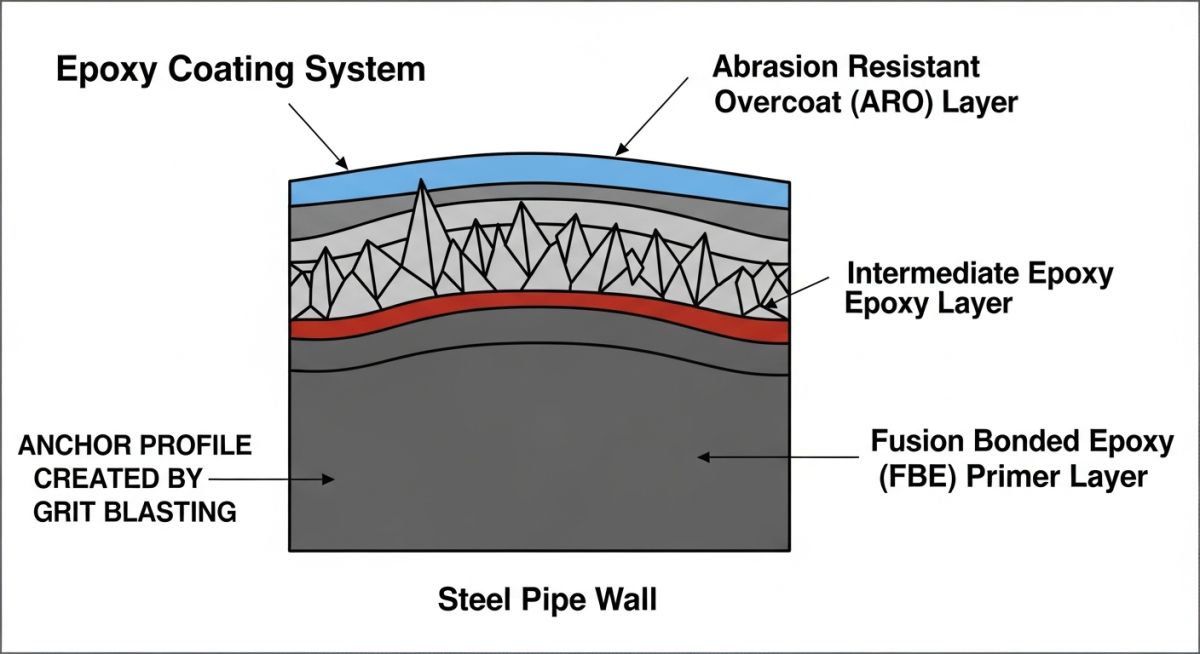
In the field of corrosion engineering, epoxy pipe coating is defined as a thermosetting polymer system that undergoes a chemical reaction known as cross-linking to form a hard, impermeable barrier. Unlike thermoplastic coatings, which can be remelted, epoxies create a permanent molecular bond with the pipe substrate—typically carbon steel, ductile iron, or concrete.
The effectiveness of an epoxy pipe coating depends on its adhesion strength and its resistance to cathodic disbondment. Engineers specify these systems based on the NACE SP0394 standard to ensure the coating can withstand the electrochemical stresses found in buried or submerged environments.
Primary Types of Epoxy Pipe Coatings for Industrial Use
Not all epoxy systems are created equal. The selection of an epoxy pipe coating is dictated by the temperature of the fluid, the soil conditions (for buried lines), and the chemical composition of the transported medium.
Fusion Bonded Epoxy (FBE) Systems
Fusion Bonded Epoxy is a high-performance epoxy pipe coating applied in a factory setting. The pipe is induction-heated to approximately 230 degrees Celsius (446 degrees Fahrenheit), and dry epoxy powder is electrostatically sprayed onto the hot surface. The powder melts and cures instantly, creating a uniform, pinhole-free finish that is widely used for oil and gas transmission lines.
Liquid Epoxy and Solvent-Free Coatings
Liquid epoxy pipe coating is often used for field repairs (girth welds) or for internal lining of potable water pipes. Modern specifications favor 100 percent solids, solvent-free epoxies. These systems eliminate the risk of solvent entrapment, which can cause premature coating failure and impart "off-tastes" in drinking water systems compliant with NSF/ANSI 61.
Glass Flake Reinforced Epoxy
For extreme environments, such as offshore splash zones or high-velocity effluent lines, glass flakes are added to the epoxy matrix. This epoxy pipe coating variant provides superior mechanical toughness and creates a "tortuous path" for moisture, significantly reducing the permeability of the coating.
Critical Applications of Epoxy Coatings in Pipeline Infrastructure
The versatility of epoxy pipe coating allows it to solve diverse engineering challenges across multiple sectors:
| Sector | Primary Function | Common Standards |
|---|---|---|
| Potable Water | Biofilm reduction & Leak prevention | AWWA C210 / NSF 61 |
| Oil and Gas | External corrosion protection | API 5L / CSA Z245.20 |
| Wastewater | Hydrogen Sulfide (H2S) resistance | NACE SP0106 |
In the wastewater sector specifically, epoxy pipe coating is critical for protecting concrete and metal pipes from microbial induced corrosion (MIC). Without this protective barrier, acidic byproducts from bacteria can dissolve a standard concrete pipe wall within a few years of service.
Technical Steps for the Proper Application of Epoxy Pipe Coatings
The longevity of an epoxy pipe coating is determined more by the quality of application than the chemical formulation of the resin. Engineering specifications from NACE and SSPC dictate a strict sequence of operations to ensure a holiday-free finish.
The Standard Application Sequence
- 1. Surface Preparation: The pipe must be cleaned to a "White Metal" finish (SSPC-SP 5/NACE No. 1). This creates an anchor profile of 50 to 100 micrometers (2.0 to 4.0 mils), which is essential for mechanical bonding.
- 2. Pre-heating (For FBE): The substrate is heated using induction coils. Temperature control is critical; if the pipe is too cool, the epoxy pipe coating will not fuse; if too hot, the polymer may degrade.
- 3. Material Application: Liquid epoxy is applied via plural-component spray, while FBE is applied via electrostatic powder deposition.
- 4. Curing and Inspection: The coating must reach its "glass transition temperature" to be fully cured. Post-application tests include Dry Film Thickness (DFT) measurement and High-Voltage Spark Testing to detect pinholes.
Advanced Technologies for Internal Epoxy Pipe Coating and Rehab
Modern engineering allows for the application of epoxy pipe coating systems without the need for extensive excavation, utilizing trenchless technologies to rehabilitate aging infrastructure.
Internal Spray Lining Technology for Epoxy Pipe Coating
Used for pipes larger than 600 mm, robotic spray heads travel through the pipe, applying a uniform layer of 100 percent solids epoxy. This technology is a staple for refurbishing municipal water mains where external digging is prohibited by urban density.
Centrifugal Spin Casting Epoxy Pipe Coating
Spin casting utilizes a high-speed rotating head to sling the epoxy pipe coating onto the internal walls. Centrifugal force ensures a very dense, smooth finish that improves the Hazen-Williams friction coefficient, effectively increasing the flow capacity of the pipeline.
Cured-in-Place Pipe (CIPP) Trenchless Epoxy Pipe Coating
CIPP involves inserting a flexible felt liner saturated with epoxy resin into the host pipe. Once inflated, the resin is cured using steam or UV light. While often categorized as a lining, it relies on the same chemical principles as a structural epoxy pipe coating to restore the pipe's pressure-bearing capacity.
| Technology | Typical Thickness | Design Life |
|---|---|---|
| Fusion Bonded (FBE) | 300 - 500 microns | 30+ Years |
| Spray Lining (Liquid) | 1 - 3 mm | 50 Years |
| CIPP (Structural) | 3 - 15 mm | 50+ Years |
Market Analysis: Estimating Epoxy Pipe Coating Price and Costs
The epoxy pipe coating price is influenced by several variables including pipe diameter, material accessibility, and the specific resin system required. In 2026, market rates for industrial applications typically follow these benchmarks:
- Small Diameter Spray (Internal): USD 50 to USD 85 per linear foot.
- Structural CIPP Lining: USD 150 to USD 300 per linear foot (depending on depth and lateral connections).
- Factory FBE Coating: Calculated per square meter, often ranging from USD 15 to USD 25 for standard transmission pipes.
Root Cause Analysis: Common Epoxy Pipe Coating Failures
Failure in an epoxy pipe coating system usually results in localized corrosion, which can lead to pipe bursts or contamination. Common failure modes include:
Osmotic Blistering
If soluble salts (chlorides) are left on the pipe surface during preparation, they draw moisture through the semi-permeable epoxy pipe coating via osmosis. This creates high-pressure blisters that eventually rupture the coating.
Adhesion Failure and Delamination
This occurs when the chemical bond between the epoxy and the metal is broken. Poor surface profile (lack of "teeth") or applying the coating when the substrate temperature is below the dew point are the primary culprits.
Structural Difference Between Epoxy Pipe Coating and Epoxy Pipe Lining
While the terms are often used interchangeably in casual discussion, engineers distinguish between them based on their structural contribution.
Technical Definition of Epoxy Pipe Coating
An epoxy pipe coating is a thin-film barrier (typically less than 1 mm) designed solely to prevent corrosion. It relies entirely on the host pipe for structural strength.
Technical Definition of Epoxy Pipe Lining
An epoxy pipe lining is a thick-film or composite system (often > 3 mm) that can provide structural reinforcement. In many cases, a fully structural lining is designed to withstand the full internal pressure of the system even if the host pipe completely corrodes away.
Epoxy Pipe Coating Calculator
Estimate the theoretical volume of epoxy resin required for your pipeline project based on surface area and target Dry Film Thickness (DFT).
Engineering Logic:
- Surface Area = π × (Diameter / 1000) × Length
- Theoretical Volume = (Area × DFT) / 1000
- Total Volume = Theoretical Volume × (1 + Waste Factor / 100)
- Calculation assumes 100% solids epoxy content.
Epoxy Pipe Coating Calculator
Estimate the theoretical volume of epoxy resin required for your pipeline project based on surface area and target Dry Film Thickness (DFT).
Engineering Logic:
- Surface Area = π × (Diameter / 1000) × Length
- Theoretical Volume = (Area × DFT) / 1000
- Total Volume = Theoretical Volume × (1 + Waste Factor / 100)
- Calculation assumes 100% solids epoxy content.
Epoxy Pipe Coating Case Study: Rehabilitating Historic Municipal Water Mains
📊 Project Data
- Asset Type: 24-inch (600mm) Cast Iron Potable Water Main
- Project Scope: 1.5 Kilometers of continuous pipeline
- Location: High-density urban historic district
- Standard Applied: AWWA C210 and NSF/ANSI 61
⚠️ Failure Analysis
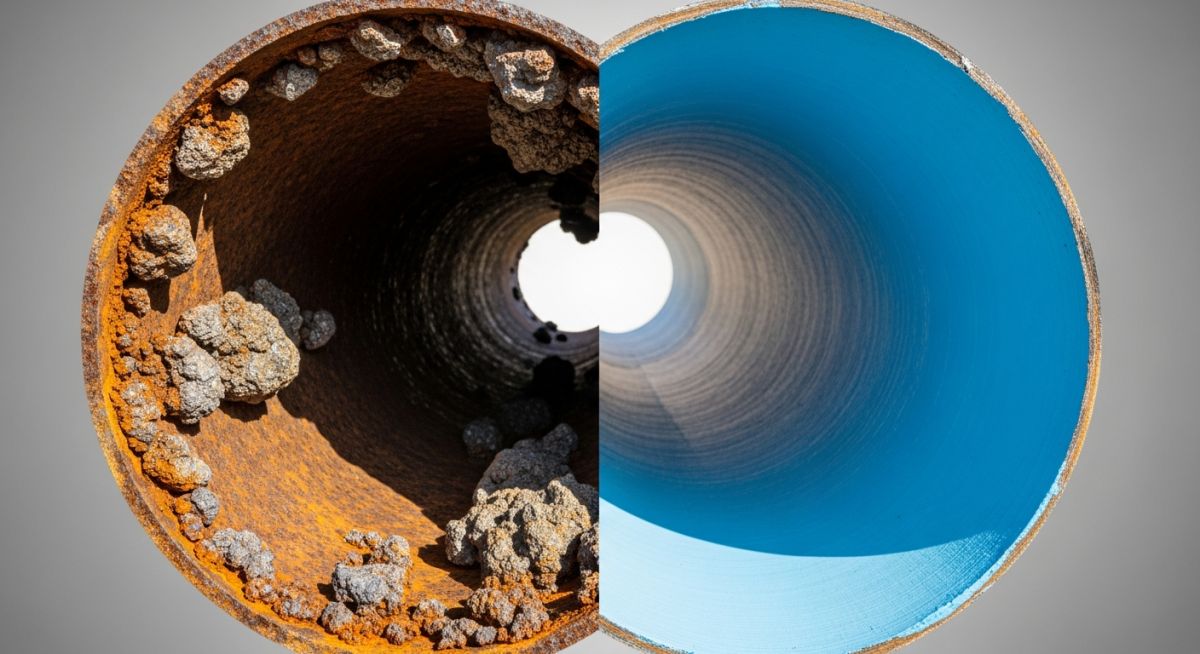
The aging cast iron main suffered from advanced tuberculation—the buildup of iron oxide mounds that restricted flow by 35 percent. Excavation was ruled out due to the proximity of historic buildings and the high cost of utility relocation, necessitating a trenchless epoxy pipe coating solution.
The Engineering Fix
The pipeline was first cleaned using mechanical drag-scraping and high-pressure water jetting to remove all tubercles. After drying the pipe with heated air, a robotic spray head was deployed to apply a 100 percent solids, solvent-free epoxy pipe coating. A target thickness of 1.5 mm was maintained, monitored in real-time by an onboard camera system and tethered flow meters to ensure uniform coverage.
💡 Lessons Learned
Conclusion: The application of internal epoxy pipe coating successfully restored the structural integrity and hydraulic performance of the asset without the environmental or financial burden of traditional "open-cut" construction.
Frequently Asked Questions about Epoxy Pipe Coating
What are the primary advantages of Fusion Bonded Epoxy Pipe Coating?
Fusion Bonded Epoxy Pipe Coating (FBE) offers exceptional adhesion to the steel substrate and provides a rugged, chemically resistant barrier. It is particularly effective in preventing cathodic disbondment and is the industry standard for protecting buried high-pressure oil and gas transmission lines from soil-side corrosion.
Can Epoxy Pipe Coating be used for hot water systems in industrial plants?
Yes, but the specific Epoxy Pipe Coating resin must be engineered for high-temperature service. Standard epoxies typically have a glass transition temperature (Tg) that limits their use to below 60 degrees Celsius. However, specialty novolac epoxies can withstand temperatures up to 150 degrees Celsius (302 degrees Fahrenheit) while maintaining structural integrity.
How long does a typical Epoxy Pipe Coating repair take to cure before being put back into service?
Cure times vary based on the application method. 100 percent solids liquid Epoxy Pipe Coating can reach a "dry-to-touch" state in 2 to 4 hours and return to service for potable water within 24 hours. Trenchless CIPP liners cured with steam or UV light can be fully structural and ready for pressure testing in as little as 6 to 12 hours.
What is the difference between a structural lining and a non-structural Epoxy Pipe Coating?
A non-structural Epoxy Pipe Coating acts as a corrosion barrier and relies on the host pipe for mechanical strength. A structural lining is designed as a "pipe-within-a-pipe" that can withstand internal hydrostatic pressure and external soil loads even if the original host pipe fails completely.
Summary of Engineering Best Practices
Implementing a high-performance Epoxy Pipe Coating is an investment in the long-term reliability of a pipeline network. Success in these projects requires a rigorous approach to surface preparation, environmental control during application, and comprehensive post-application inspection.
As global infrastructure ages, trenchless technologies and factory-applied FBE systems will continue to play a pivotal role in maintaining the flow of water, energy, and chemicals while minimizing environmental risk and operational downtime.