The Future of e-Methanol Production: 2026 Technical Framework
e-Methanol Production has emerged as a cornerstone of the 2026 global energy transition, providing a carbon-neutral liquid carrier for the maritime and chemical sectors. By combining captured carbon dioxide with green hydrogen derived from water electrolysis, this synthetic fuel bypasses the limitations of traditional fossil-based methanol. As industries race toward net-zero, understanding the thermodynamics and economic scaling of this Power-to-X pathway is essential for modern EPC projects.
Quick Navigation
Engineering Knowledge Check
Test your expertise on e-Methanol synthesis and 2026 standards.
1. What is the primary chemical reaction involved in e-Methanol production?
Complete Course on
Piping Engineering
Check Now
Key Features
- 125+ Hours Content
- 500+ Recorded Lectures
- 20+ Years Exp.
- Lifetime Access
Coverage
- Codes & Standards
- Layouts & Design
- Material Eng.
- Stress Analysis
Technical Theory: The Physics of e-Methanol Production
The engineering foundation of e-Methanol Production relies on the catalytic reduction of carbon dioxide using green hydrogen. Unlike traditional methanol synthesis from syngas (CO + H2), the use of CO2 involves a different thermodynamic profile and produces significant water as a byproduct. In 2026, the industry has standardized on the CO2 hydrogenation to methanol process as the most efficient pathway for large-scale carbon utilization.

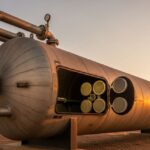
Figure 1: Scaled e-Methanol Production facility utilizing offshore wind and direct air capture.
Chemical Equilibrium and Reaction Kinetics
The synthesis reaction is exothermic and results in a reduction of molar volume, meaning high pressures and low temperatures theoretically favor methanol formation. However, to achieve viable reaction rates in 2026, commercial plants operate between 200°C and 300°C.
// Primary Reaction Equation
CO2 + 3H2 ⇌ CH3OH + H2O | ΔH = -49.5 kJ/mol
// Equilibrium Constant (Kp) Logic
In 2026 engineering: ln(Kp) = (A / T) + B
Where T is absolute temperature and A/B are catalyst-specific coefficients.
Process Integration & Scaling
One of the primary e-methanol plant scaling challenges identified in 2026 is the management of exothermic heat. Advanced reactor designs, such as isothermal or multi-stage adiabatic reactors with inter-stage cooling, are required to prevent catalyst sintering. Furthermore, sourcing renewable energy for e-fuel synthesis requires a highly flexible plant design to handle the intermittent nature of wind and solar inputs.

Figure 2: Simplified Process Flow Diagram (PFD) for Power-to-Methanol synthesis.
When analyzing green methanol vs e-methanol, the differentiation lies in the carbon source. While green methanol may come from biomass, e-Methanol specifically utilizes electrolysis and captured CO2. To achieve commercial viability, the e-methanol production cost per ton 2026 must be optimized through high-efficiency PEM electrolyzers and heat integration between the synthesis loop and the distillation columns.
| Parameter | 2024 Reference | 2026 Standard | Efficiency Gain |
|---|---|---|---|
| Electrolyzer Efficiency | 62% – 65% | 72% – 78% (High-Temp SOEC) | +10% – 13% |
| Catalyst Selectivity (CH3OH) | 94% | 98.5% | +4.5% |
| Production Pressure (Bar) | 50 – 100 | 35 – 70 (Low Pressure Tech) | OpEx Reduction |
| CO2 Source Technology | Point Source Only | Direct Air Capture (DAC) / Flue | Feedstock Flexibility |
Foundational Chemistry: What is Methanol?
Methanol is a colorless, water-soluble liquid that serves as an essential organic feedstock for the global chemical industry. In 2026, it is no longer viewed merely as a solvent but as a critical energy carrier. To ensure precision in e-Methanol Production, engineers must adhere to the following physical constants:
With global demand reaching 98 million metric tons (Mt) and a production capacity of 150 Mt, the surplus provides a strategic buffer for emerging 2026 applications in the transportation and energy sectors.
Energy Versatility & Fuel Applications
Approximately 31% of global consumption is now dedicated to fuel-related uses. Beyond simple combustion, methanol acts as a chemical “Swiss Army Knife” in 2026:
-
⛽
Gasoline Blending Enhances octane rating and improves combustion efficiency (MTBE production).
-
🚢
Marine Fuel M85 and M100 blends for large-scale maritime decarbonization.
-
🔥
DME Production A clean-burning substitute for LPG in cooking and heating.
-
⚡
Fuel Cells Serves as a high-density hydrogen carrier for mobile fuel cell units.
2026 Key OEMs in e-Methanol Production
| Manufacturer | Proprietary Technology | Specialization |
|---|---|---|
| Thyssenkrupp | Swiss Liquid Future | Large-scale industrial integration |
| Topsoe | eMethanol / UDTR | High-efficiency catalytic synthesis |
| Johnson Matthey | LCH Pathway | Advanced catalyst formulations |
| Siemens Energy | Power-to-X | Electrolyzer and grid synchronization |
🧪 Methanol Property Check
1. What is Dimethyl Ether (DME) derived from methanol primarily used for in 2026?
EPCLand YouTube Channel
2,500+ Videos • Daily Updates
Advantages and Barriers in 2026 e-Methanol Production
👍 Key Benefits
- ✔ Reduced Carbon Footprint: Utilizes captured CO₂ and green hydrogen for lower lifecycle emissions.
- ✔ Renewable Energy Integration: Provides energy storage and conversion for intermittent wind/solar.
- ✔ Transportation Fuel Alternative: Cleaner burning alternative for modified engines (M85, M100).
⚠️ Challenges & Barriers
- ❌ Cost Competitiveness: Needs OpEx reduction to compete with established fossil fuels.
- ❌ Infrastructure Development: Requires dedicated storage and refueling stations for scalability.
- ❌ Policy Frameworks: Requires clear regulations and incentives to promote investment in e-Methanol Production.
Potential Applications of e-Methanol in 2026
Energy & Fuel
- → Electricity Generation
- → Heavy-duty Transport (Marine/Trucks)
- → Fuel Cells (H2 carrier)
Industrial Uses
- → Chemical Synthesis (Formaldehyde)
- → Manufacturing (Plastics, resins)
Environmental
- → CO₂ Utilization (CCU)
- → Waste-to-Energy Initiatives
Comparison: Conventional Fuels vs. e-Methanol
| Parameter | Conventional Gasoline | Conventional Diesel | e-Methanol (2026 Std) |
|---|---|---|---|
| Carbon Footprint (gCO₂e/MJ) | 90+ (Well-to-Tank) | 95+ (Well-to-Tank) | ~15 (Near Zero) |
| Octane Rating (RON) | 91 – 98 | Not Applicable (Cetane) | >100 (High Efficiency) |
| Energy Density (MJ/L) | 34.2 | 38.6 | 15.8 (Lower) |
| Production Source | Fossil Fuels | Crude Oil Refining | Renewable H₂ & Captured CO₂ |
Case Study: e-Methanol Production Failure Analysis & Retrofit
This 2026 analysis examines the integration of a 50,000 TPY (tons per year) e-fuel unit into a legacy coal-to-chemical complex in Northern Europe. The primary engineering objective was to utilize Direct Air Capture for e-methanol feedstock to offset unavoidable process emissions. However, early commissioning revealed significant catalyst poisoning and thermal instability within the synthesis loop.
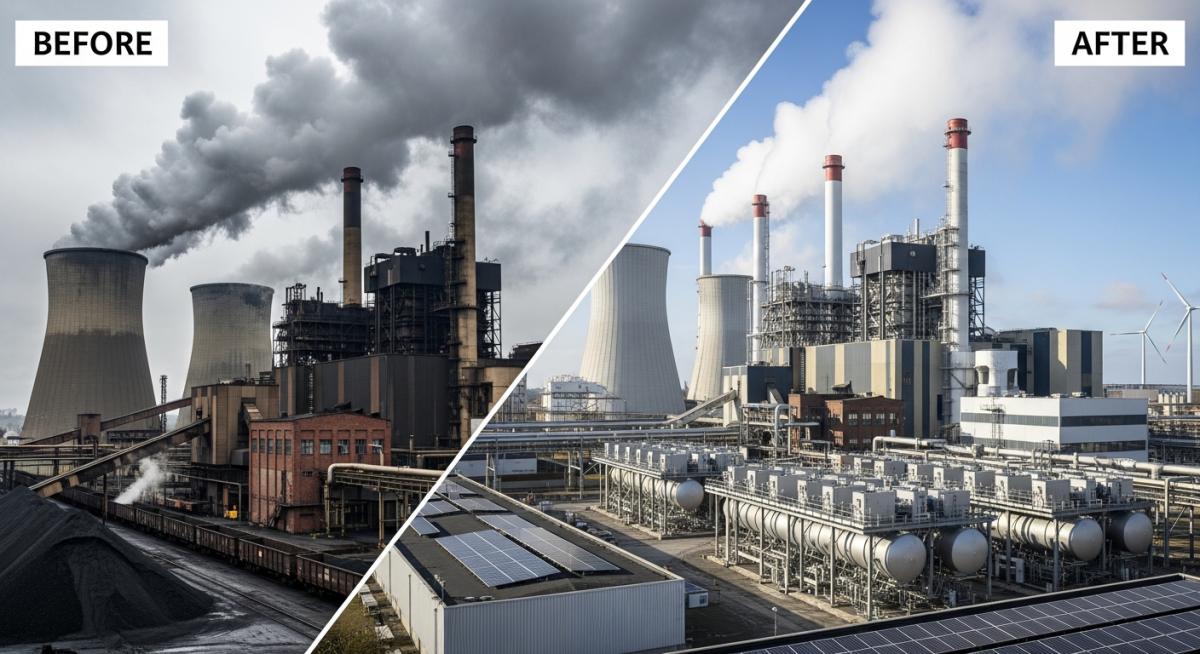
Figure 3: Site layout showing the transition from coal-based syngas to renewable H2/CO2 injection.
Problem & Root Cause Analysis
During the initial 1,000 hours of operation, the reactor exhibited a 15% drop in conversion efficiency. Analysis confirmed that residual trace sulfur from the legacy coal-gasification infrastructure was bypassing the new filtration membranes. Additionally, the intermittent nature of the wind-powered electrolyzers caused rapid temperature fluctuations, leading to thermal stress fractures in the CuO/ZnO catalyst pellets.
The 2026 Solution & ROI
The EPC team implemented a dual-stage polishing unit using advanced metal-organic frameworks (MOFs) to ensure 99.99% purity of the CO2 stream. To solve the thermal instability, a “Thermal Flywheel” molten salt storage system was integrated to maintain constant reactor temperatures during wind lulls.
Retrofit Performance Metrics:
- Carbon Footprint Reduction: 88% vs Baseline
- Catalyst Lifespan Extension: 14,000 Hours (Projected)
- Annual OPEX Savings: €4.2 Million (2026 Prices)
Comparative Analysis: Conventional Fuels vs. e-Methanol (2026 Metrics)
Transitioning to e-Methanol Production requires a clear understanding of how synthetic fuels perform against established fossil benchmarks. The following table summarizes the key engineering and economic differentiators as of 2026.
| Parameter | Conventional Fuels | e-Methanol |
|---|---|---|
| Carbon Emissions | High Lifecycle Impact | Low to Net-Zero |
| Feedstock | Fossil Resources (Crude/Gas) | Renewable H2 / CO2-based |
| Production Cost | Currently Lower | Higher (Rapidly declining in 2026) |
| Infrastructure | Globally Established | Requires Development/Retrofitting |
| Scalability | High (Mature Market) | Developing (Scaling toward 2030) |
| Applications | Transportation & Industrial Heat | Versatile (Fuel, Feedstock, Storage) |
e-Methanol Engineering FAQ
What is the current e-methanol production cost per ton 2026? ▼
As of 2026, the e-methanol production cost per ton ranges between €650 and €900, depending heavily on the cost of renewable electricity and the efficiency of the electrolyzer stack. Economies of scale in large-scale EPC projects are steadily driving these costs down toward parity with fossil-based alternatives enhanced by carbon taxes.
How does the CO2 hydrogenation to methanol process handle impurities? ▼
The CO2 hydrogenation to methanol process is highly sensitive to sulfur, chlorine, and heavy metal contaminants which can poison the copper-based catalysts. Modern 2026 facilities utilize multi-stage scrubbing and specialized guard beds to ensure the feedstock meets the 99.9% purity threshold required for long-term stability.
What are the primary e-methanol plant scaling challenges today? ▼
The most critical e-methanol plant scaling challenges in 2026 include the synchronization of intermittent renewable power with steady-state chemical reactors and the logistics of sourcing massive volumes of biogenic or atmospheric CO2. Modular electrolyzer designs are the current industry standard to mitigate these integration risks.
Which renewable energy for e-fuel synthesis is most efficient? ▼
While solar and wind are dominant, the most efficient renewable energy for e-fuel synthesis in 2026 involves hybrid systems paired with short-term battery storage or thermal energy management. This setup ensures the electrolyzers operate at a high capacity factor, maximizing the return on capital investment for the synthesis loop.
Final Engineering Summary
In 2026, e-Methanol Production represents the pinnacle of carbon-utilization technology. By mastering the CO2 hydrogenation to methanol process and overcoming e-methanol plant scaling challenges, the industry has successfully bridged the gap between volatile renewable energy and stable, transportable liquid fuels. For EPC professionals, the focus remains on optimizing the heat integration and catalyst longevity to ensure these facilities remain the backbone of the net-zero economy.

Related posts:
![High-grade industrial Wing Nut Types and Applications for mechanical assemblies.]()
Wing Nut Types and Applications: The 2026 Engineering Guide
![Industrial Monorail Crane Systems installed in a modern manufacturing plant 2026.]()
Monorail Crane Systems: Design, Types & 2026 Standards Guide
![Lead engineer performing a Factory Acceptance Test FAT on an industrial skid system 2026]()
Factory Acceptance Test FAT: The 2026 Engineering Guide to Zero-Defect Delivery
![Professional engineering workspace showing a Basis of Design document layout for a 2026 project.]()
Basis of Design: How to Write a BOD for Engineering Projects in 2026
![Industrial Flare Knockout Drum Sizing and installation in a refinery relief system.]()
Flare Knockout Drum Sizing: Design & API 521 Standards (2026 Guide)
![Advanced Reboiler Control Systems in a modern petrochemical refinery 2026.]()
Reboiler Control Systems: Engineering Guide to Precision Control 2026