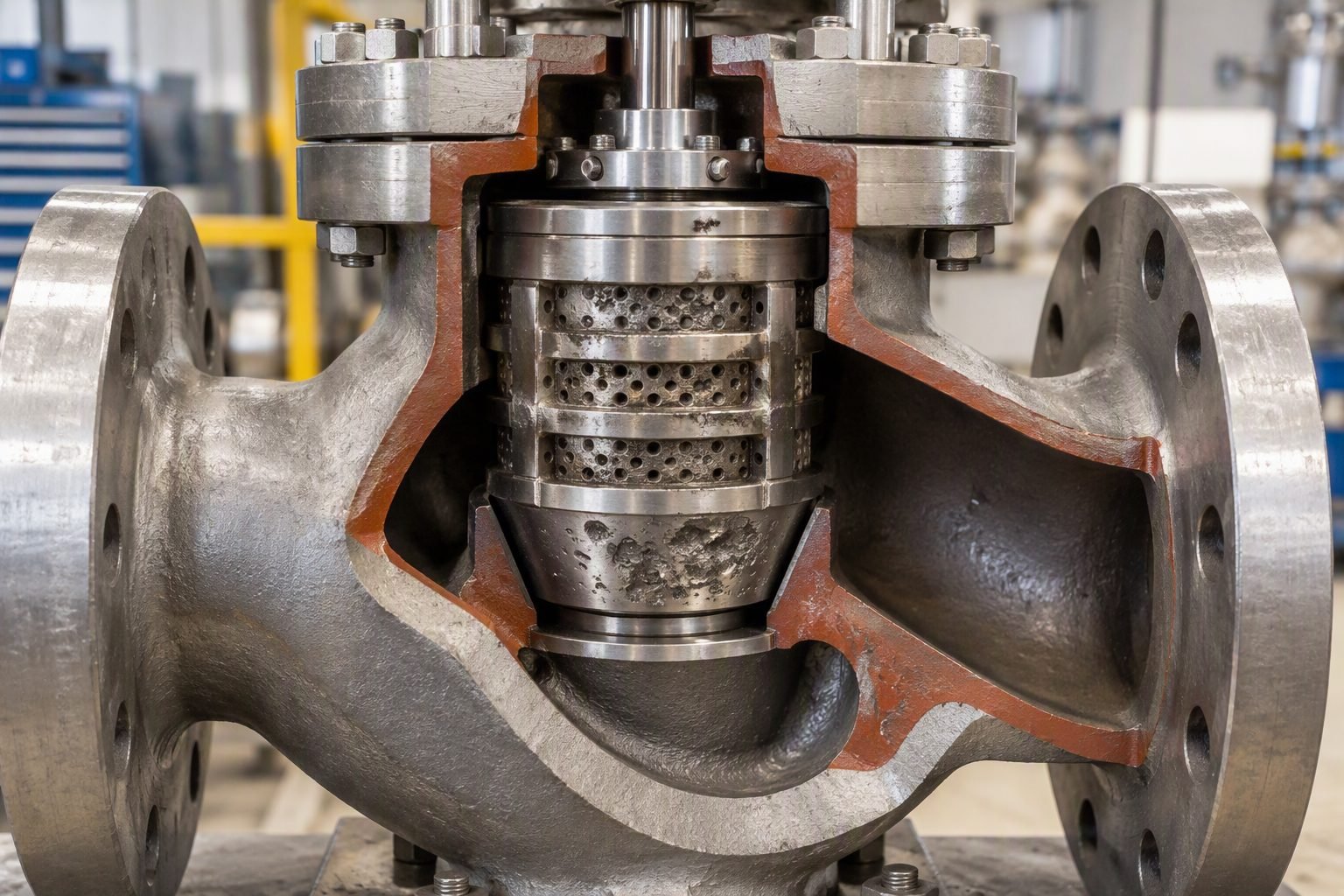
API 600 Trim Selection: A Piping Engineer’s Field Guide
In my 20 years of commissioning high-pressure steam and hydrocarbon lines, I have seen many gate valves fail prematurely simply because someone overlooked the trim chart. A valve body might last for decades, but the internal sealing surfaces—the wedge, seat rings, and stem—are where the real battle against erosion, thermal expansion, and galling is fought. Selecting the right trim is not just a matter of copying old datasheets; it requires a deep understanding of metallurgy and operating temperatures.
When we lay out valve internals on a workshop bench, the importance of hardfaced overlay bands becomes immediately clear. These specialized coatings protect the base metal from high-velocity wear and thermal binding. In this guide, I will share my practical field experience to help you navigate the complexities of standard trim configurations.
Key Engineering Takeaways
- Understand the 14 standard API trim configurations and their temperature limits.
- Identify why hardfacing like Stellite 6 is mandatory for high-pressure steam.
- Learn how to prevent galling between the wedge and seat rings.
Mastering API 600 Trim Selection for High Temperatures
Under the API 600 standard, the “trim” of a gate valve comprises four primary components: the stem, the wedge seating surfaces, the seat ring seating surfaces, and the backseat bushing. Because these parts are exposed directly to the process fluid, they experience the highest velocity, turbulence, and mechanical wear. Selecting the correct trim material is the single most important factor in determining the service life of a heavy-duty gate valve.
The baseline material for many utility services is 13% Chromium (13Cr), commonly designated as Trim 1. While 13Cr offers decent corrosion resistance and mechanical strength up to 371°C (700°F), it is highly susceptible to adhesive wear, or galling, when two identical 13Cr surfaces slide against each other under high contact pressure. To prevent this, engineers specify hardfaced trims like Trim 5 (full hardfacing on both wedge and seat) or Trim 8 (half hardfacing, where only the seat ring is hardfaced and the wedge is 13Cr).
The most common hardfacing material used in the industry is Cobalt-Chromium-A alloy, widely known as Stellite 6. This alloy contains cobalt for high-temperature strength, chromium for corrosion and oxidation resistance, and tungsten for carbide formation. This unique microstructure maintains its hardness even at red-hot temperatures, making it the industry standard for high-pressure steam and severe hydrocarbon cracking units.
Calculating Seat Contact Stress and Stem Force
To ensure a tight seal without damaging the seating surfaces, we must calculate the seat contact stress. The total axial stem force (Fa) required to close the valve against line pressure is calculated using the following engineering formula:
Fa = Fp + Fs + Ff
Where:
- Fp is the pressure thrust force acting on the stem cross-sectional area.
- Fs is the seat contact force required to overcome line pressure across the wedge area.
- Ff is the packing friction force.
The resulting seat contact stress (Sc) is calculated as:
Sc = Fs / Ac
Where Ac is the projected contact area of the seat rings. For standard 13Cr seating surfaces, the maximum allowable bearing stress at 300°C is limited to 150 MPa to prevent plastic deformation. By contrast, Stellite 6 hardfaced surfaces can safely withstand contact stresses exceeding 300 MPa at temperatures up to 538°C without showing signs of wear or galling.
Another critical factor is thermal expansion. When a gate valve is closed hot and allowed to cool, the valve body contracts faster than the wedge. This causes a phenomenon known as “thermal binding” or “wedge trapping.” To mitigate this, we use flexible wedges and proper trim selection. A flexible wedge has a cut around its perimeter, allowing it to flex slightly under thermal loads. Matching this with a hardfaced Trim 5 ensures that even if high contact forces occur during thermal contraction, the seating surfaces will not gall or seize.
Finally, we must consider code compliance. All selected trims must undergo rigorous testing under API Standard 598. This includes high-pressure closure tests to verify that the hardfaced overlays have been ground and lapped to a mirror finish, ensuring zero leakage at the specified operating pressures.
Advantages & Disadvantages of API 600 Trim Selection
Technical Advantages
- Stellited surfaces (Trim 5) offer exceptional resistance to adhesive wear (galling) under high-velocity flow.
- 13Cr trims provide excellent atmospheric corrosion resistance and resistance to mild organic acids.
- Hardfaced trims maintain mechanical hardness up to 538°C (1000°F), preventing thermal softening.
- Standardized API trim numbers simplify procurement and ensure interchangeability of spare parts.
- Combination trims (like Trim 8) offer a cost-effective compromise by hardfacing only the high-wear seat ring.
Technical Disadvantages
- Full hardfaced trims (Trim 5) significantly increase initial valve manufacturing costs due to the welding and grinding processes required.
- Cobalt-based hardfacing (Stellite) is susceptible to leaching in specific chemical environments, such as high-concentration nitric acid.
- 13Cr trims (Trim 1) are highly prone to galling if operated frequently under high differential pressures.
- Improperly applied hardfacing overlays can suffer from micro-cracking or delamination due to thermal shock.
- Repairing damaged hardfaced seats in the field requires specialized grinding equipment and highly skilled technicians.
In utility power plants, main steam isolation valves operate under extreme pressures and temperatures exceeding 500°C. I always specify Trim 5 (full Stellite 6) for these gate valves because the high-velocity steam would quickly erode softer materials. The cobalt-base alloy prevents wire-drawing and ensures tight shutoff during emergency isolation events.
For standard refinery process lines handling crude oil, diesel, or gasoline at moderate temperatures, Trim 8 (13Cr wedge and Stellited seat) is the industry workhorse. This configuration provides the perfect balance of cost and durability, as the hardfaced seat ring resists the erosive effects of particulate matter while the 13Cr wedge keeps the valve affordable.
In upstream oil and gas facilities handling sour gas (H2S), materials must comply with NACE MR0175 standards to prevent sulfide stress cracking. Trim 12 utilizes a 316 stainless steel base with a Stellite hardfacing overlay, offering superior resistance to hydrogen embrittlement and localized pitting corrosion in wet, sour environments.
For liquefied natural gas (LNG) and cryogenic utility lines operating down to -196°C, standard carbon steel and 13Cr trims become brittle and fail. Trim 10, which features 316 stainless steel on both the wedge and seat rings, maintains its impact toughness at sub-zero temperatures while preventing thermal binding during rapid cool-down cycles.
API 600 Trim Material Specifications and Hardfacing Requirements
Selecting the correct API 600 gate valve trim requires a thorough understanding of material compatibility, temperature limits, and mechanical wear characteristics. In my two decades of reviewing piping material specifications on heavy refinery and petrochemical projects, I have seen premature seat failure occur repeatedly when designers default to generic stainless steel configurations without evaluating base metal galling tendencies. The American Petroleum Institute defines specific trim numbers under API 600 and API 6D to govern these metallurgical pairings.
The engineering data table below outlines the standard API trim designations, detailing the exact stem, seat ring, and wedge seating surface metallurgy. Special attention must be paid to the hardfacing overlay specifications, such as cobalt-based alloys required for high-velocity and abrasive hydrocarbon services governed by ASME B16.34 pressure-temperature ratings.
| API Trim No. | Stem Material | Seat Ring Surface | Wedge Seating Surface | Max Temp (°F / °C) |
|---|---|---|---|---|
| Trim 1 | 13Cr (Type 410) | 13Cr (Type 410) | 13Cr (Type 410) | 850°F (454°C) |
| Trim 5 | Type 316 SS | Cobalt Base (Stellite 6) | Cobalt Base (Stellite 6) | 1000°F (538°C) |
| Trim 8 | 13Cr (Type 410) | Cobalt Base (Stellite 6) | Cobalt Base (Stellite 6) | 1000°F (538°C) |
| Trim 10 | Type 316 SS | Type 316 SS | Type 316 SS | 500°F (260°C) |
| Trim 12 | Type 316 SS | Ni-Cr (Alloy 60/80) | Ni-Cr (Alloy 60/80) | 850°F (454°C) |
Table Note: Hardfaced overlays must maintain a minimum deposited thickness of 1.6 mm after final machining to prevent base metal dilution during high-temperature thermal cycling.
Technical Mapping & Specifications Matrix
To maintain absolute structural integrity across severe industrial service environments, piping engineers must cross-reference mechanical parameters with recognized international codes. The entity mapping matrix below correlates critical valve internals, structural acronyms, and governing design standards. Every component highlighted in this matrix undergoes strict metallurgical examination to satisfy ASME Section II material property criteria.
Reviewing these parameters ensures that wedge guidance systems, stem packing arrangements, and body-bonnet joints do not experience catastrophic thermal binding or pressure boundary failure during upset plant operating conditions.
| Entity / Component | Structural Acronym | Governing Standard | Primary Failure Mode |
|---|---|---|---|
| Gate Valve Stem | GVS-01 | API 600 / ASME B16.34 | Torsional Shear & Packing Wear |
| Wedge Seating Surface | WSS-02 | AWS D1.1 / API 600 | Galling, Spalling & Erosion |
| Threaded Seat Ring | TSR-03 | ASME B1.20.1 | Thread Loosening & Leakage |
| Hardfaced Overlay | HFO-04 | ASTM A216 / API 600 | Thermal Fatigue Cracking |
Matrix Insight: Proper alignment between entity acronyms and quality control documentation guarantees full traceability during third-party inspection audits.
Site Verification Checklist for Gate Valve Trims
Gate valve trim verification requires meticulous inspection on the workshop bench prior to line installation. Based on my field commissioning experience across major hydrocracker and crude distillation units, failing to verify hardfaced overlay thickness and wedge guide clearance frequently leads to catastrophic valve sticking.
Use the structured verification framework below to ensure all mechanical components comply with API 598 valve inspection and testing standards before issuing equipment for service.
Pre-Installation & Workshop Bench Inspection Protocol
- Visual Hardfacing Check: Inspect wedge and seat ring overlay bands for porosity, slag inclusions, or shrinkage cracks using dye penetrant testing (ASTM E165).
- Dimensional Clearance Verification: Measure wedge guide slots against body guide ribs to confirm lateral clearance prevents galling during thermal expansion.
- Stem Straightness & Finish: Check stem runout using dial indicators and verify surface finish parameters (Ra le 0.8\ μtext{m}) across the packing stuffing box zone.
- Seat Ring Torque Verification: Ensure threaded seat rings are installed with proper thread-locking compound and torqued to manufacturer specifications to prevent back-off.
- Backseat Leakage Test: Perform hydrostatic shell and backseat testing per API 598 to validate back-seating integrity under pressure.
Adhering strictly to these site verification milestones eliminates costly plant shutdowns, ensures regulatory compliance, and extends the operational lifecycle of critical isolation valves.
Field Case Study: High-Temperature Gate Valve Seating Failure
During a major refinery turnaround in the Middle East, a 16-inch Class 900 gate valve handling vacuum gas oil at 880°F experienced severe seat leakage and wedge binding within three weeks of initial startup.
Problem Analysis
Investigation on the workshop bench revealed severe galling across the wedge and seat ring sealing surfaces due to an improper trim selection.
- Unsuitable base material pairing without cobalt-based hardfacing overlays.
- Inadequate thermal expansion clearance between the flexible wedge and body guide ribs.
- Excessive actuator thrust causing micro-welding of mating 13Cr surfaces under high temperature.
- Absence of liquid penetrant examination prior to dispatch from the valve modification shop.
Remedial Outcome
The valve internals were completely replaced with API 600 Trim 8 specifications featuring Stellite 6 hardfaced overlay bands on both wedge and seat rings.
- Eliminated surface galling entirely through optimized cobalt-alloy hardness differentials.
- Resisted high-temperature thermal creep and particle erosion in heavy hydrocarbon service.
- Passed rigorous API 598 seat leakage testing with zero visible bubble formation.
- Achieved continuous, trouble-free operation exceeding three multi-year turnaround cycles.
Engineering Recommendation: For any hydrocarbon application exceeding 750°F, always specify API 600 Trim 8 or Trim 5 with cobalt-based hardfaced overlays to prevent catastrophic galling and ensure reliable emergency isolation.
Frequently Asked Engineering Questions
What is the primary operational difference between Trim 5 and Trim 8?
- Trim 5 (Full Hardfacing): Both the wedge and the seat rings are overlaid with cobalt-chromium alloy, making it suitable for severe high-pressure services.
- Trim 8 (Half Hardfacing): Only the seat ring is hardfaced, while the wedge uses standard 13Cr, offering a cost-effective solution for medium-severity utility lines.
When should I specify Trim 12 instead of Trim 5 for high-temperature valves?
- Base Metal: Trim 12 utilizes 316 stainless steel as the base material, whereas Trim 5 relies on 13Cr martensitic stainless steel.
- Corrosion Resistance: Trim 12 provides superior resistance to pitting and sulfide stress cracking in sour gas or organic acid environments.
Why does API 600 require hardfacing on at least one seating surface?
- Galling Prevention: Dissimilar hardness between sliding surfaces prevents micro-welding under high seating forces.
- Erosion Resistance: The cobalt-base alloy maintains its mechanical strength at elevated temperatures, resisting high-velocity fluid erosion during opening.
Can I use Trim 1 for high-pressure steam service above 370°C?
- Temperature Limits: Standard 13Cr without hardfacing loses its sliding wear resistance rapidly above 370°C (700°F).
- Alternative Choice: Upgrade to Trim 5 or Trim 8 to ensure the seating surfaces do not seize or leak prematurely.
What does the “HF” suffix signify in API 600 trim tables?
- Overlay Material: Typically refers to Stellite 6 or an equivalent cobalt-chromium alloy with a minimum hardness of 350 HB.
- Application Scope: It ensures that the base carbon or low-alloy steel is protected against severe erosive wear.
How does wedge design affect the selection of hardfaced trims?
- Thermal Flexing: Flexible wedges bend slightly to seal, which can crack brittle, overly thick hardfacing deposits.
- Deposition Control: Ensure the welding procedure specification (WPS) limits the dilution of the hardfacing chemistry to maintain ductility.
Based on my 20 years of piping engineering experience, selecting the correct valve trim requires balancing process severity with long-term maintenance costs. I recommend implementing the following field-proven guidelines during your next design cycle:
- If your process operating temperature exceeds 315°C (600°F) in high-pressure utility steam, bypass half-hardfaced options entirely and specify Trim 5 (full Stellite) to prevent thermal binding and seat galling.
- When dealing with corrosive hydrocarbon streams containing trace wet hydrogen sulfide, I recommend selecting Trim 12 over Trim 8 because the 316 stainless steel base metal prevents localized pitting around the hardfaced seat ring.
- For low-pressure utility water or air lines under 150°C, stick to Trim 1 (13Cr) to optimize your procurement budget without sacrificing mechanical reliability.
- Always verify that the valve manufacturer’s welding procedure specification (WPS) guarantees a minimum of 1.6 mm of finished hardfacing thickness after final machining to ensure long-term erosion resistance.
Complete Course on
Piping Engineering
Check Now
Key Features
- 125+ Hours Content
- 500+ Recorded Lectures
- 20+ Years Exp.
- Lifetime Access
Coverage
- Codes & Standards
- Layouts & Design
- Material Eng.
- Stress Analysis
