What is API 5L Pipe? Its Grades, Specification, and Schedule Chart
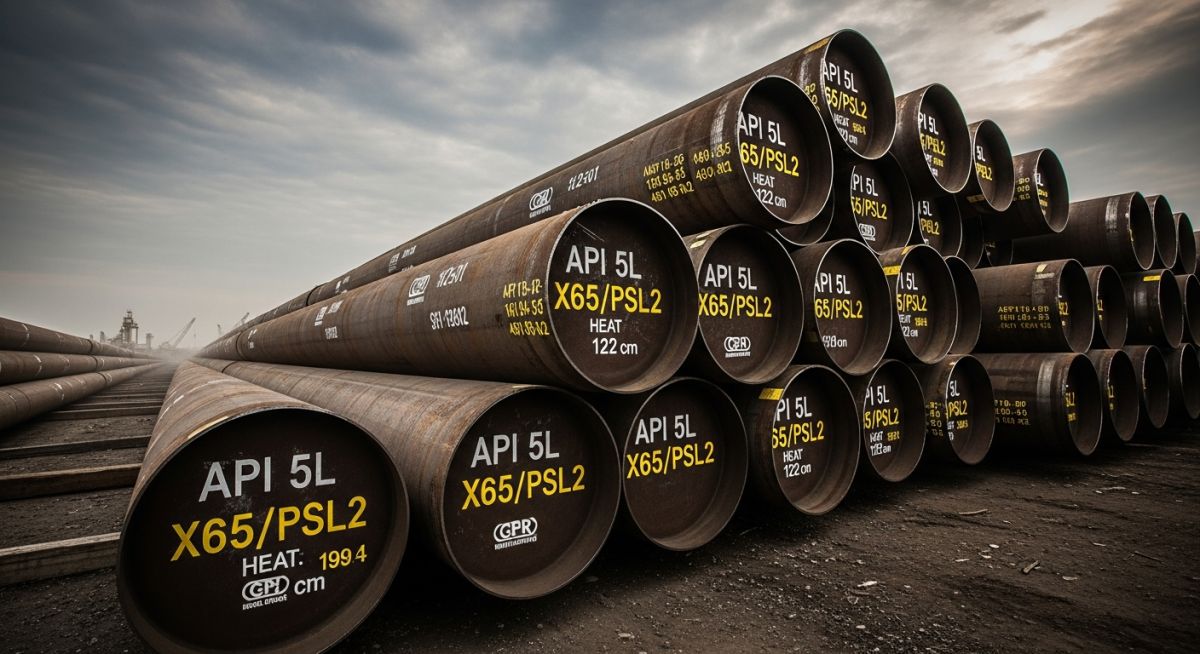
Imagine you are overseeing a multi-million dollar offshore pipeline project and the material shipment arrives without the mandatory Charpy V-Notch impact testing reports required for subsea durability. In the world of high-pressure hydrocarbon transport, using the wrong API 5L Pipe specification isn’t just a logistical error—it is a catastrophic safety risk. Whether you are dealing with sour service environments or arctic temperatures, understanding the nuances of line pipe metallurgy is your first line of defense against pipeline failure.
This guide provides an exhaustive breakdown of the API 5L standard, ensuring you select the correct Grade and Product Specification Level (PSL) to maintain structural integrity and regulatory compliance.
Key Takeaways
- Standard Scope: API 5L covers seamless and welded steel line pipes for pipeline transportation systems in the petroleum and natural gas industries.
- PSL Differences: PSL2 introduces mandatory toughness testing and stricter chemical limits compared to the basic PSL1 requirements.
- Grade Logic: Grades like X42, X52, and X65 denote the minimum yield strength in kilopounds per square inch (ksi).
Definition: What is API 5L Pipe?
API 5L Pipe is a carbon steel pipe manufactured according to the American Petroleum Institute (API) 5L specification. It is designed specifically for transporting gas, water, and oil. The standard categorizes pipes into two Product Specification Levels (PSL1 and PSL2) and various grades based on yield strength, ranging from Grade B to X100.
Expert Insight
“In my 20 years of EPC project management, I have seen many procurement leads confuse PSL1 and PSL2. Always remember: PSL2 is mandatory for offshore and sour service. Never settle for PSL1 when fatigue and fracture toughness are critical to your pipeline’s design life.”
— Atul Singla
Complete Course on
Piping Engineering
Check Now
Key Features
- 125+ Hours Content
- 500+ Recorded Lectures
- 20+ Years Exp.
- Lifetime Access
Coverage
- Codes & Standards
- Layouts & Design
- Material Eng.
- Stress Analysis
API 5L Engineering Proficiency Quiz
Test your knowledge on 2026 Line Pipe Standards
1. Which Product Specification Level (PSL) is mandatory for pipelines operating in Sour Service environments?
Understanding the API 5L Pipe Manufacturing Standards (PSL1 vs PSL2)
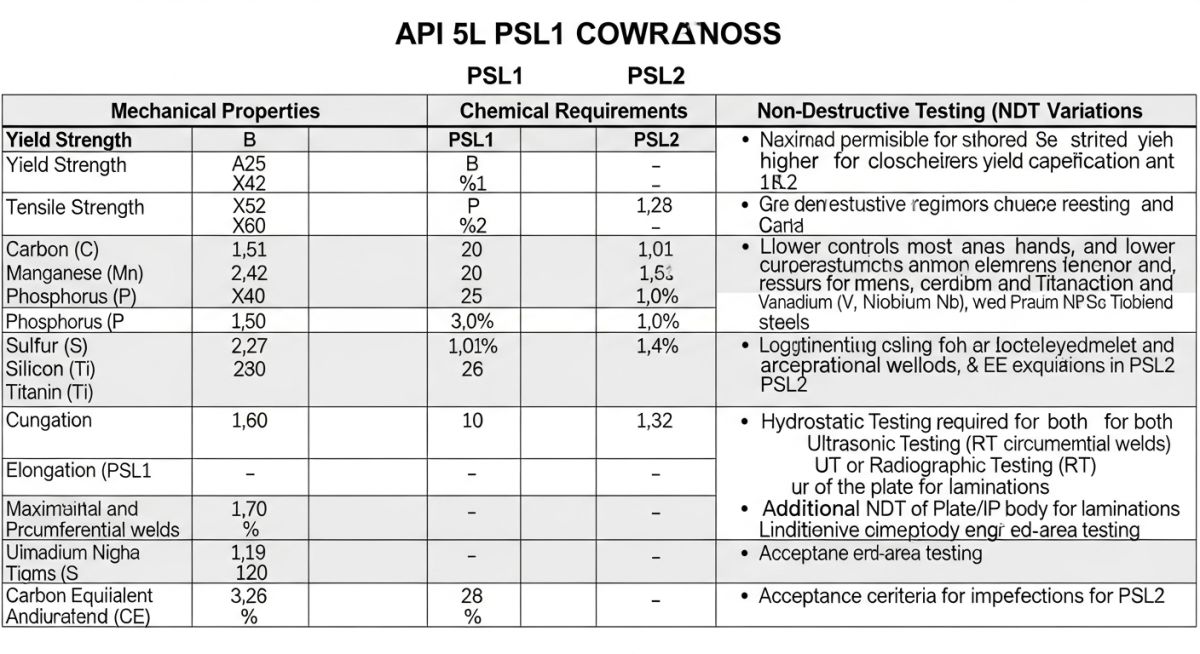
The manufacturing of API 5L Pipe is governed by rigorous protocols established by the American Petroleum Institute (API) to ensure reliability under extreme pressure. The most critical distinction in the 2026 engineering landscape remains the choice between Product Specification Level 1 (PSL1) and Product Specification Level 2 (PSL2). PSL1 is essentially a standard quality grade for general line pipe use, whereas PSL2 introduces additional mandatory requirements for chemical composition, notch toughness, and mechanical properties.
When specifying API 5L Pipe, engineers must note that PSL2 pipes require mandatory Charpy V-notch impact testing to ensure the steel does not exhibit brittle fracture at low operating temperatures. Furthermore, the carbon equivalent limits are significantly tighter for PSL2 to enhance weldability in the field. For most high-pressure midstream assets, PSL2 is the default choice, while PSL1 might be reserved for low-stress gathering lines or water transport where the risk profile is lower.
Analysis of Chemical and Mechanical API 5L Pipe Grades
The grading system of API 5L Pipe is a direct reflection of its mechanical strength and metallurgical makeup. Basic grades like Grade A and Grade B have been the workhorses of the industry for decades, but modern infrastructure demands the high-yield performance of the “X” series. The “X” followed by a number (e.g., X42, X52, X65, X70) indicates the minimum yield strength of the pipe material in kilopounds per square inch (ksi).
As we move higher up the grade scale, the chemistry of the API 5L Pipe becomes more complex, often utilizing micro-alloying elements like Niobium, Vanadium, and Titanium. These elements allow for high strength without increasing carbon content, which preserves the pipe’s toughness and ease of welding. For instance, an X65 pipe provides a minimum yield strength of 65,000 psi, allowing for thinner wall thicknesses and reduced overall project weight compared to Grade B, which only offers 35,000 psi.
Critical Purchasing Information for API 5L Pipe Procurement
Successful procurement of API 5L Pipe requires more than just specifying a grade; it demands a comprehensive Material Purchase Description (MPD). Procurement managers must clearly state the quantity, PSL level, type of pipe (Seamless, ERW, LSAW, or SSAW), and any additional requirements from the API 5L Annexes. For example, if the project involves sour service, the purchase order must explicitly reference Annex H.
Furthermore, the “delivery condition” is a vital aspect of API 5L Pipe purchasing. Whether the pipe is as-rolled, normalizing rolled, thermomechanical rolled, or quenched and tempered (Q&T) affects both the price and the lead time. Always ensure that the Mill Test Certificate (MTC) aligns with the specific heat numbers of the delivered batch to maintain full traceability, a non-negotiable requirement for 2026 regulatory audits.
Detailed API 5L Pipe Specification and Testing Requirements
The integrity of an API 5L Pipe is verified through a rigorous battery of tests defined by the ISO 3183 equivalent standards. For 2026 projects, non-destructive examination (NDE) has become more sophisticated, utilizing phased-array ultrasonic testing (PAUT) to detect even the most minute laminar defects in the pipe body or weld seam. While PSL1 requires basic hydrostatic testing and dimensional checks, PSL2 demands comprehensive testing including fracture toughness (Charpy V-notch) and, in many cases, drop-weight tear tests (DWTT) to ensure the material can arrest a running fracture.
Standardization under API 5L Pipe specifications also mandates strict tolerances on diameter, wall thickness, and straightness. For instance, the out-of-roundness tolerance is critical for field welding; a pipe that is too “oval” will lead to high “hi-lo” misalignment at the joints, compromising the integrity of the girth weld. Chemical analysis is performed on every heat to ensure that elements like Phosphorus and Sulfur are kept to ultra-low levels (often <0.003% for S in sour service), preventing hydrogen-induced cracking (HIC).
Master API 5L Pipe Schedule Chart and Dimensions
To properly design a pipeline, engineers must cross-reference the API 5L Pipe grade with the correct schedule. The “Schedule” (SCH) refers to the wall thickness, which determines the internal pressure rating of the line. Below is a summarized engineering table for common Nominal Pipe Sizes (NPS) used in 2026 hydrocarbon transport systems.
| NPS (Inches) | OD (mm) | Schedule | Wall Thickness (mm) | Weight (kg/m) |
|---|---|---|---|---|
| 6″ | 168.3 | SCH 40 | 7.11 | 28.26 |
| 8″ | 219.1 | SCH 80 | 12.70 | 64.64 |
| 12″ | 323.8 | SCH STD | 9.53 | 73.84 |
| 24″ | 609.6 | SCH XS | 12.70 | 187.06 |
| 36″ | 914.4 | SCH 40 | 19.05 | 420.50 |
It is important to remember that while the API 5L Pipe specification provides the framework, the wall thickness must be calculated based on the Design Pressure, Location Class, and Joint Efficiency as per ASME B31.8 or B31.4 codes.
⚙️ API 5L Internal Pressure & Weight Calculator
Max Design Pressure (P)
— PSI
Based on Barlow’s Formula: P = (2 * S * t * F) / D
Approx. Pipe Weight
— lb/ft
EPCLand YouTube Channel
2,500+ Videos • Daily Updates
Engineering Case Study: Arctic Gas Transmission
The Challenge: Sub-Zero Ductility
In 2026, a major midstream operator faced a critical material selection hurdle for a 48-inch natural gas pipeline crossing permafrost regions. The primary risk was brittle fracture due to extreme ambient temperatures reaching -45°C. Standard Grade B line pipe lacked the necessary crack-arrest properties required for such a high-consequence area.
The engineering team had to balance high yield strength to minimize wall thickness (and logistics costs) with extreme notch toughness to prevent catastrophic longitudinal tearing.
Project Specifications:
- Material: API 5L PSL2 X70MS (Sour Service)
- Diameter: 1219mm (48″)
- Testing: CVN at -45°C & DWTT mandatory
- Environment: Arctic/Permafrost (Non-corrosive internal)
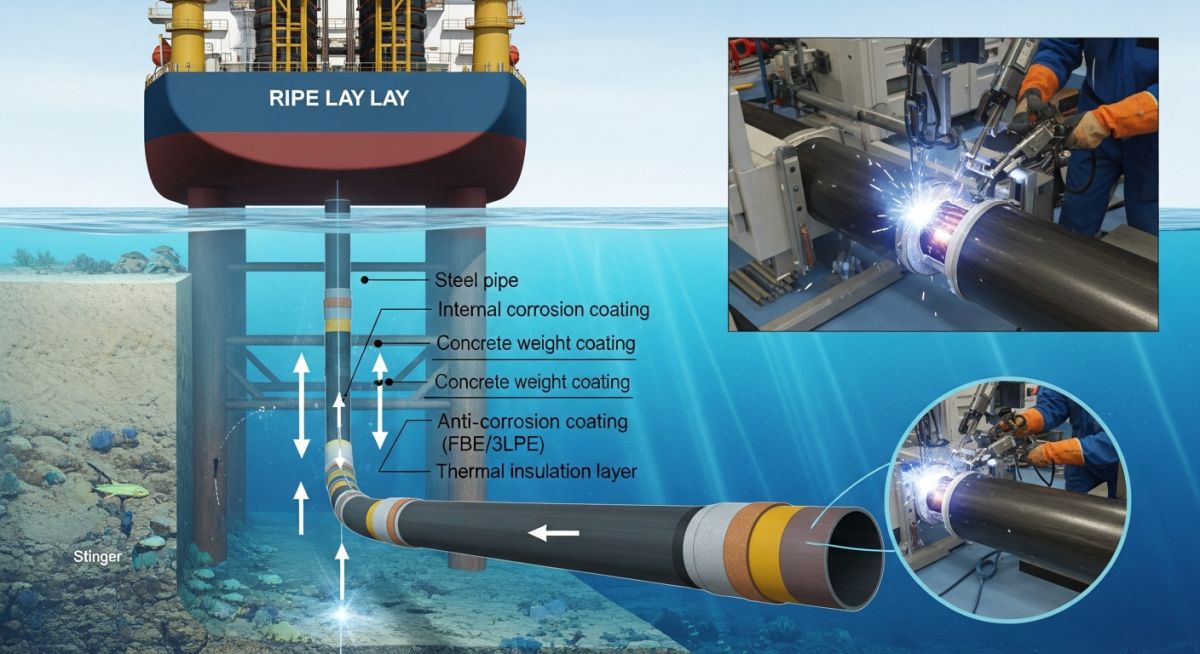
1. Selection
Specified API 5L Pipe X70 PSL2 to utilize high yield strength while ensuring mandatory Charpy impact testing for low-temp toughness.
2. Implementation
Advanced automatic welding was used. Tight carbon equivalent (CEq) limits in the PSL2 spec ensured a low heat-affected zone (HAZ) hardness.
3. Outcome
The pipeline achieved a 15% reduction in steel weight compared to X65, saving $12M in material and freight costs while exceeding safety factors.
Don’t miss this video related to API 5L Pipe
Summary: Master Piping Engineering with our complete 125+ hour Certification Course: ……
Expert Insights: Lessons from 20 years in the field
-
●
Beware of “Grade B” Ambiguity: In modern 2026 procurement, “Grade B” is often supplied as dual-certified with ASTM A106 or A53. However, if your project demands API 5L Pipe compliance for high-pressure gas, ensure the MTC explicitly states the API 5L monogram and PSL level, as ASTM standards do not meet the stringent fracture toughness requirements of API.
-
●
The “S” Suffix Criticality: When dealing with H2S (Sour Service), simply asking for X60 is a mistake. You must specify X60QS or X60MS. The “S” suffix indicates the pipe has undergone HIC (Hydrogen Induced Cracking) and SSC (Sulfide Stress Cracking) testing. Without this, the pipe is susceptible to internal blistering and sudden failure.
-
●
Field Weldability vs. Strength: As you move toward X80 and X100 grades, the carbon equivalent (CEq) becomes a bottleneck. Even if the API 5L Pipe meets the strength spec, high CEq values require massive pre-heating during field welding, significantly increasing installation man-hours. Always cap the CEq at 0.43 for optimal field productivity.
-
●
Residual Stress in Welded Pipes: For ERW (Electric Resistance Welded) pipes, ensure the manufacturer performs “Full Body Normalizing” or at least “Weld Seam Heat Treatment.” Residual stresses in the bond line are a primary cause of stress corrosion cracking in older pipeline assets.
Critical Questions: Mastering API 5L Pipe Requirements
What is the main difference between PSL1 and PSL2 for API 5L Pipe? ▼
Can API 5L Pipe be used for both gas and liquid transport? ▼
How do I interpret the “X” in grades like X52 or X65? ▼
Why is my pipeline failing during hydro-testing even with Grade B certification? ▼
What “hidden” costs should I expect in API 5L PSL2 procurement? ▼
Can I weld X70 pipe to X60 pipe in the field? ▼
📚 Recommended Resources: API 5L Pipe
Read these Guides
- 📄 Pipeline Girth Welding: The 2026 Engineering Guide to API 1104 Standards
- 📄 What is FRP Pipe Made Of? The Science of FRP Pipe Material Composition (2026)
- 📄 Complete Guide to Epoxy Pipe Coating: Types, Applications, Pros and Cons
- 📄 What is a Pre Insulated Pipe? Applications, Standards, and Advantages 2026


