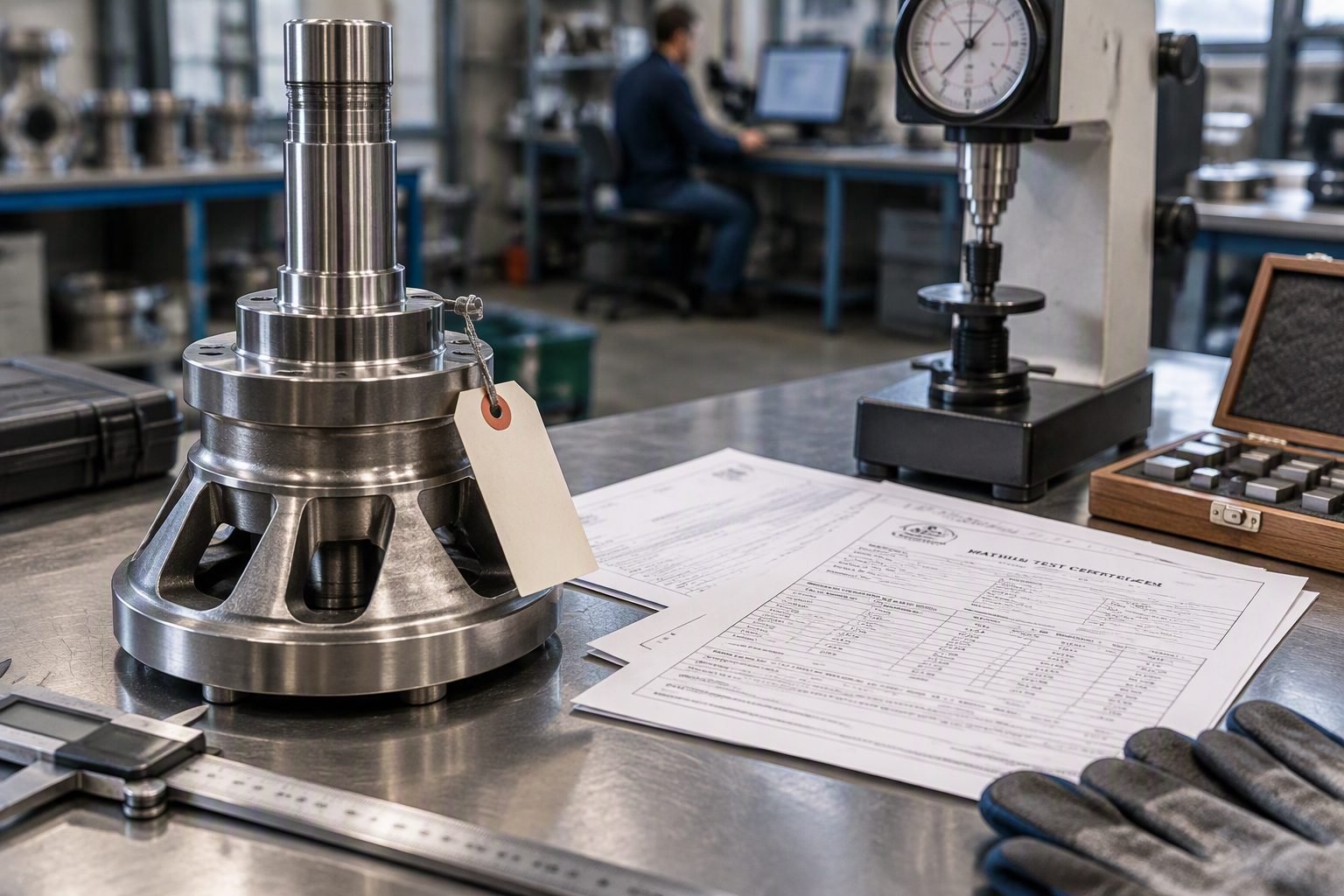
How API 607 Fire Test Certifies Quarter-Turn Valves
In my 20-plus years of commissioning piping systems in high-hazard petrochemical plants, I have seen what happens when a standard valve fails under thermal stress. It is not a slow leak; it is a sudden, violent release of pressurized hydrocarbons that turns a localized incident into an uncontrollable inferno. That is why the API 607 fire test is the absolute benchmark we rely on to verify that quarter-turn valves can survive the worst-case operating scenarios.
Key Takeaways
- Understand the exact 30-minute burn parameters and temperature profiles required for certification.
- Analyze the allowable internal and external leakage rates during and after the burn period.
- Compare the distinct testing scopes of API 607 versus API 6FA for different valve types.
Understanding the API 607 Fire Test Parameters
The physical setup of the test is highly demanding. The valve is mounted inside a specialized furnace rig, completely surrounded by burners that deliver a uniform thermal load. Thermocouples are attached directly to the valve body, stem, and adjacent piping to monitor the temperature profile in real time. This ensures that the valve is not just exposed to flame, but actually reaches the extreme temperatures required to simulate a fully developed refinery fire.
During the 30-minute burn period, the flame temperature must be maintained between 750 and 1000 degrees Celsius. The valve body temperature must reach at least 650 degrees Celsius within the first 15 minutes and remain at or above this level for the remainder of the test. This rapid thermal ramp-up is designed to destroy the soft seats, such as PTFE or Devlon, forcing the valve to rely entirely on its secondary metal-to-metal sealing surfaces.
Why the API 607 Fire Test Matters
Pressure management during the test is another critical factor. The valve is pressurized to a high level, typically 75 percent of the maximum cold working pressure for Class 150 and Class 300 valves. This pressure must remain stable throughout the burn. Any sudden drop in pressure indicates a major structural failure or excessive leakage, which immediately disqualifies the valve from certification.
Leakage is measured in two distinct pathways: through-seat (internal) and external (stem and body joints). The allowable through-seat leakage during the burn is calculated using a standard formula based on nominal valve size. For API 607, the limit is 400 milliliters per inch of nominal valve size per minute. For example, a 4-inch ball valve is allowed a maximum through-seat leakage of 1600 milliliters per minute during the 30-minute burn.
External leakage is even more strictly controlled, as escaping hydrocarbons directly fuel the external fire. The allowable external leakage during the burn is limited to 100 milliliters per inch of nominal valve size per minute. This requires highly advanced stem packing designs, often utilizing graphite rings that expand under heat to maintain a tight seal even after the primary packing material has degraded.
Once the 30-minute burn is complete, the burners are extinguished, and the valve is cooled to below 100 degrees Celsius. This cool-down phase is followed by a low-pressure hydrostatic test at 2 bar (30 psi) to measure through-seat leakage. Finally, the valve must be operated—cycled from the fully closed to the fully open position against the test pressure—and the external leakage in the open position is measured for 5 minutes to ensure the valve remains functional for emergency operations.
It is important to distinguish between API 607 and API 6FA. While API 607 is specifically tailored for quarter-turn valves with soft seats, API 6FA is designed for gate, globe, and check valves. API 6FA has different operational requirements and does not mandate the same post-burn cycling test as API 607, making the latter much more stringent for ball and butterfly valves.
Key Advantages
- Provides independent, third-party verification of valve performance under extreme thermal conditions.
- Reduces the risk of catastrophic fuel feeding during refinery or chemical plant fires.
- Ensures compliance with strict environmental and safety regulations, such as OSHA and EPA mandates.
- Lowers insurance premiums for industrial facilities by demonstrating robust risk-mitigation designs.
- Enhances operator confidence during emergency shutdown procedures in volatile process units.
Key Disadvantages
- Significantly increases the initial procurement cost of the valve due to specialized testing and materials.
- Requires more complex maintenance procedures to ensure the secondary metal seats remain undamaged.
- Limits the selection of soft seat materials to those that can withstand the high-temperature testing profile.
- Adds weight and bulk to the valve body to accommodate the necessary thermal expansion tolerances.
- Demands rigorous documentation and traceability, increasing the administrative burden on project teams.
API 607 Test Parameters and Operating Thresholds
API 607 testing parameters govern the thermal and mechanical loads applied to quarter-turn soft-seated valves during certification trials. In my experience reviewing qualification test records, failing to maintain precise temperature uniformity across the valve body and line connections is the single most frequent cause of fugitive emission failures. The test environment requires maintaining an average flame temperature between 750 degrees Celsius and 1000 degrees Celsius for the entirety of the 30-minute burn period, while thermocouples placed on the test fixture monitor critical thermal gradients.
The table below outlines the core operational limits, pressure classes, and allowable leakage metrics mandated by ASME and API standards during both the burn phase and the subsequent cool-down and operational testing cycles. Every parameter listed must be verified by an independent third-party inspector before fire-safe certification is granted.
| Parameter Category | Test Requirement | Reference Standard | Acceptance Criteria |
|---|---|---|---|
| Flame Temperature | 750 degrees Celsius to 1000 degrees Celsius | API 607 / API 6FA | Average of 2 thermocouples within range |
| Burn Duration | 30 continuous minutes under flame | API 607 Section 6 | No structural rupture of pressure boundary |
| Test Pressure | 75 percent of maximum rated working pressure | ASME B16.34 | Constant pressure held throughout burn |
| Through-Valve Leakage | Measured during burn and cool-down | API 607 Table 1 | Less than 30 mL per inch of nominal size per minute |
| External Leakage | Measured at stem and body joints | API 607 Table 2 | Less than 15 mL per inch of nominal size per minute |
Adhering strictly to these threshold limits guarantees that hydrocarbon process valves will maintain emergency containment capabilities during a plant fire event.
Technical Mapping & Specifications Matrix
Navigating fire-safe valve engineering requires a thorough understanding of the specialized metallurgical components, secondary sealing mechanisms, and governing industrial standards. When soft polymeric seats like PTFE or PEEK thermally degrade during a fire exposure test, secondary metal-to-metal backup seals must instantly engage to prevent catastrophic release of volatile process media.
The matrix below systematically details the primary structural entities, acronym definitions, physical design parameters, and governing compliance codes associated with fire-safe ball valve assemblies. This mapping serves as a quick-reference guide for piping design engineers and QA/QC inspection specialists.
| Entity Term | Structural Acronym | Physical Parameter | Governing Standard |
|---|---|---|---|
| Fire-Safe Test Protocol | API 607 | Quarter-turn soft-seated valve qualification | API Standard 607 |
| Graphite Stem Packing | RGS | Flexible expanded graphite ring set | ASME B16.34 |
| Body Joint Gasket | SWG | Spiral wound stainless steel with graphite filler | ASME B16.20 |
| Secondary Metal Seat | SMS | CoCr-A alloy hardfaced contact angle | ISO 10497 |
| Blowout Proof Stem | BPS | Internal shoulder retention design | ASME B16.34 |
Specifying these exact material entities ensures complete traceability and compliance across high-pressure hydrocarbon processing units.
Fire-Safe Valve Site Verification Checklist
Before installing any quarter-turn valve in a hazardous hydrocarbon service requiring API 607 compliance, an exhaustive site verification protocol must be executed. In my project engineering assignments, I enforce a rigid inspection checklist to confirm that manufacturing documentation matches physical nameplate data and that internal sealing mechanisms have not been compromised during shipping or rigging.
Review each validation rule below to ensure your piping installation meets all safety, quality, and regulatory requirements before system pressurization.
Mandatory Site Inspection Checkpoints
- Nameplate Verification: Confirm that the valve body tag explicitly references API 607 or API 6FA design certification along with the correct pressure class rating per ASME B16.34.
- Packing Integrity Check: Inspect the stem packing gland nuts to ensure flexible graphite rings are torqued evenly without visible extrusion or thread binding.
- Secondary Metal Seat Inspection: Verify through manufacturer data sheets that backup metal-to-metal sealing faces are free of machining burrs or particulate contamination.
- Anti-Static Grounding Continuity: Test electrical resistance between the valve stem, ball, and body to confirm anti-static spring devices comply with API 6D requirements.
- Actuator Mounting Rigidity: Ensure mounting brackets and couplings are constructed from carbon or stainless steel without flammable composite spacers that could fail in a fire.
- Hydrostatic Shell Testing: Witness shell pressure test at 1.5 times the rated working pressure in accordance with ASME B16.34 standards.
Completing this verification protocol safeguards facility assets and ensures total compliance with plant insurance underwriters and local regulatory authorities.
Field Case Study: Real-World Application
During the commissioning phase of a grassroots refinery crude distillation unit, our piping engineering team investigated an unexpected qualification failure involving 4-inch trunnion-mounted ball valves subjected to mandatory API 607 fire testing.
Problem Analysis
The prototype valve experienced excessive external stem leakage during the 30-minute burn test cycle, exceeding allowable API 607 limits by nearly 400 percent.
- Thermocouple data indicated uneven flame impingement directly beneath the packing box area.
- The standard PTFE stem packing degraded faster than anticipated without adequate thermal shielding.
- Gland flange bolting lost preload due to thermal expansion mismatch between carbon steel studs and stainless steel stems.
- Live-loading Belleville washers were omitted from the stem assembly design.
Engineering Outcome
Implementing a redesigned stem assembly with live-loaded expanded graphite packing and Inconel Belleville washers successfully reduced fugitive emissions to zero during re-testing.
- External leakage measured 1.2 mL per minute, well below the 15 mL per inch API 607 maximum threshold.
- Burn test temperature uniformity was maintained perfectly across all four monitoring thermocouples.
- Valve successfully passed subsequent cool-down operational torque and seat leakage tests.
- Final design received full third-party API 607 certification for all project hydrocarbon services.
Recommendation: Always mandate live-loaded stem packing and high-temperature graphite seals for all quarter-turn valves destined for severe hydrocarbon service environments.
Frequently Asked Engineering Questions
What is the exact temperature and duration required during an API 607 fire test?
- Maintain an average calorimeter temperature between 750 degrees Celsius and 1000 degrees Celsius for the entire duration.
- Expose the test valve to a direct flame burn period lasting exactly 30 minutes under pressurized conditions.
- Ensure thermocouple placements record flame temperatures accurately without direct flame impingement skewing the sensors.
How does API 607 differ from API 6FA regarding valve qualification scopes?
- API 607 specifically targets soft-seated, quarter-turn valves such as ball valves and high-performance butterfly valves.
- API 6FA covers general valve types including gate, globe, and check valves used across upstream and downstream facilities.
- Testing protocols share similar thermal profiles, but specimen preparation and operational sizing rules reflect distinct design geometries.
What are the allowable through-seat and external leakage limits during the burn phase?
- External leakage through stem seals and body joints must not exceed specified volumetric rates per nominal inch of valve size.
- Through-seat leakage during the burn and subsequent cooldown is strictly limited to prevent catastrophic upstream bypass.
- Total allowable leakage is calculated as a fraction of the rated valve flow coefficient to ensure practical safety margins.
Why is operational testing required immediately after the cooldown phase?
- The technician must cycle the valve from the closed position to the fully open position under test pressure.
- Operating torque during this post-test cycle must not exceed maximum allowable actuator output limits established by design.
- Thermal expansion and graphite packing degradation must not cause stem seizure or permanent mechanical binding.
How do secondary metal-to-metal seats function after primary soft seats melt?
- The ball makes direct contact with a secondary metal sealing lip machined into the body or seat retainer.
- Line pressure helps energize the ball against the metal backup surface, maintaining tight shutoff despite thermal distortion.
- Precision machining tolerances ensure this metal-to-metal backup engages smoothly without excessive wedging or galling.
In my professional piping design practice, selecting and verifying fire-safe valves requires looking beyond simple catalog compliance. When specifying quarter-turn isolation valves for hazardous hydrocarbon service, make the following engineering decisions:
- If your facility handles severe cyclic thermal duties alongside fire-risk zones, choose valves with flexible graphite stem packing and dual-guided metal backup seats because standard PTFE will decompose and create fugitive emissions pathways.
- If specifying valves for high-pressure cryogenic or ultra-clean hydrocarbon transfer lines, demand certified API 607 test reports from an independent accredited laboratory rather than relying strictly on manufacturer self-declarations.
- If sizing pneumatic actuators for fire-safe ball valves, apply a minimum 1.5 safety factor to breakaway torque calculations to account for increased friction following potential graphite consolidation during a fire event.
- If conducting plant piping audits, verify that all existing valve data sheets explicitly match ASME B16.34 pressure-temperature ratings to prevent premature body failure under emergency thermal exposure.
Complete Course on
Piping Engineering
Check Now
Key Features
- 125+ Hours Content
- 500+ Recorded Lectures
- 20+ Years Exp.
- Lifetime Access
Coverage
- Codes & Standards
- Layouts & Design
- Material Eng.
- Stress Analysis
