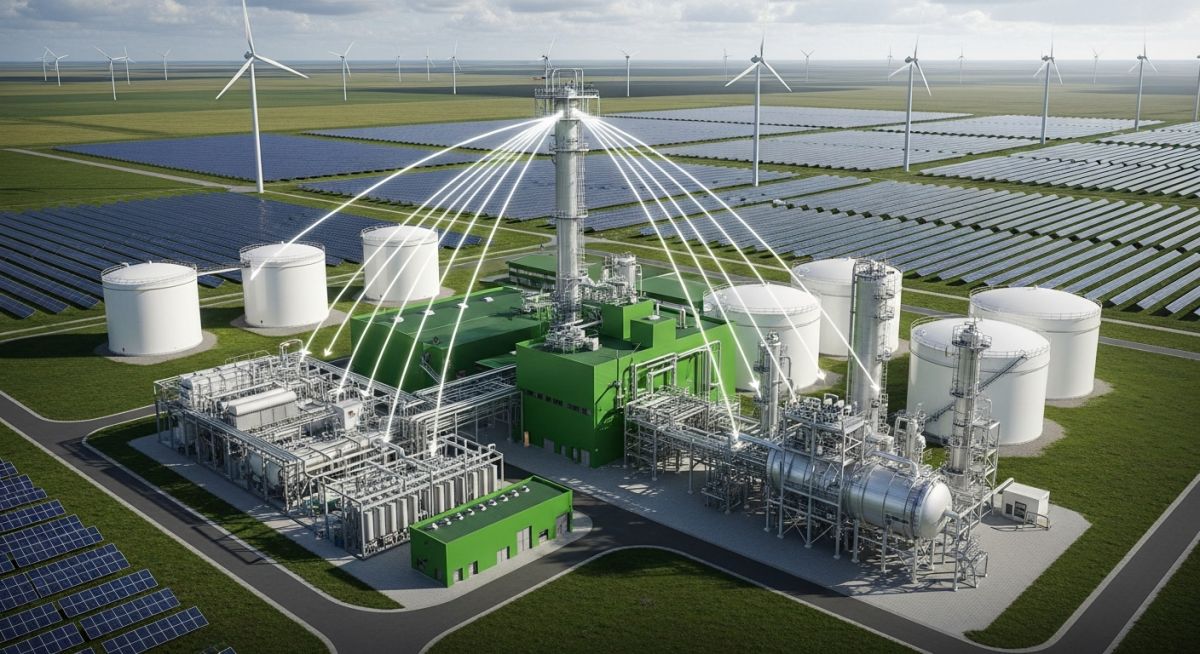
RFNBO Requirements for Green Ammonia Projects: A Technical Guide
In my two decades of experience designing high-pressure synthesis loops, I have observed that the transition to green ammonia is no longer just a chemical engineering challenge; it is a rigorous regulatory exercise. Navigating the complex landscape of RFNBO requirements for green ammonia projects requires a deep understanding of how renewable electricity inputs are tracked and verified against the final product output.
Engineers must now treat the power purchase agreement (PPA) as a critical piping component. If your hydrogen source does not meet the strict hourly matching and additionality standards, your entire downstream ammonia synthesis plant risks failing the certification process, rendering the product ineligible for green subsidies or export premiums. This guide breaks down the technical thresholds you must hit to ensure your facility remains compliant.
Key Takeaways for Project Success:
- Strict adherence to hourly temporal correlation for renewable electricity inputs.
- Geographical correlation requirements between the electrolyzer and the renewable energy source.
- Mandatory greenhouse gas (GHG) emission savings of at least 70% compared to fossil-based ammonia.
- Integration of robust mass-balance accounting for hydrogen and nitrogen feedstocks.
Complete Course on
Piping Engineering
Check Now
Key Features
- 125+ Hours Content
- 500+ Recorded Lectures
- 20+ Years Exp.
- Lifetime Access
Coverage
- Codes & Standards
- Layouts & Design
- Material Eng.
- Stress Analysis
Technical Deep-Dive: RFNBO Requirements for Green Ammonia
RFNBO Compliance Engineering: The technical integration of renewable hydrogen into ammonia synthesis requires precise mass and energy balance accounting to satisfy the Delegated Acts of the EU Renewable Energy Directive.
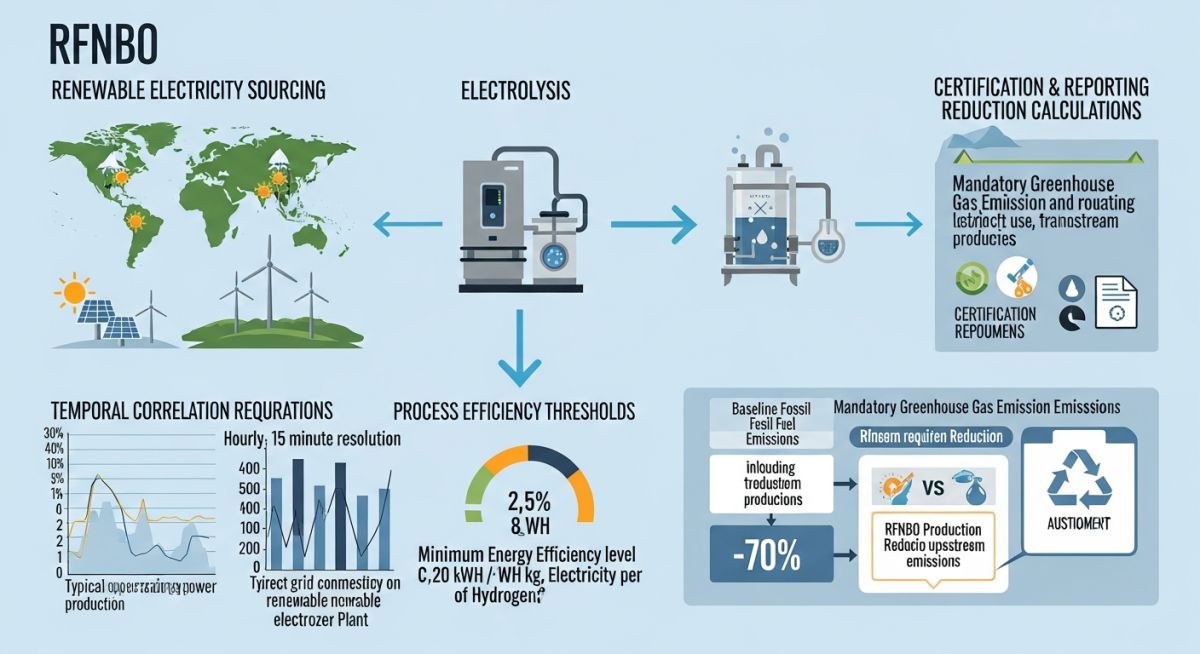
To achieve RFNBO status, the hydrogen used in the Haber-Bosch process must be produced via electrolysis using electricity that meets three primary criteria: additionality, temporal correlation, and geographical correlation. From a piping and process engineering perspective, this means your control systems must be capable of real-time data logging that links the electrolyzer power draw to the specific renewable generation source.
Temporal Correlation and Hourly Matching
The European Commission mandates that by 2030, hydrogen production must be matched with renewable electricity on an hourly basis. This is a significant shift from previous annual or monthly netting. For an ammonia plant, this requires a sophisticated energy management system (EMS) that can throttle electrolyzer output based on the availability of wind or solar power, or utilize large-scale battery storage to buffer the supply.
Engineering Warning: The “Grid-Connected” Trap
Connecting to the public grid without a dedicated, verified PPA that satisfies additionality criteria will result in the hydrogen being classified as “grid-average,” which fails the RFNBO threshold. You must ensure that the renewable energy source is not older than 36 months and is not subject to support schemes that would otherwise distort the market.
GHG Accounting and System Boundaries
The GHG accounting for green ammonia must include the entire lifecycle, from the electricity generation to the final ammonia synthesis and compression. The ISO 14067 standard provides the framework for carbon footprinting, but for RFNBO, you must specifically follow the methodology in the EU Delegated Regulation 2023/1184. The threshold is set at 3.384 kg CO2eq per kg of hydrogen, which is a strict limit that leaves little room for inefficiencies in the synthesis loop.
In my experience, the most common failure point is the nitrogen production unit (ASU). If the ASU is powered by grid electricity that is not renewable, the carbon intensity of the nitrogen feed can push the final ammonia product over the allowable threshold. Engineers must ensure that the entire facility, including auxiliary systems like cooling towers and compressors, is powered by renewable energy to maintain the certification.
RFNBO Certification Impact: Adopting the RFNBO framework provides a clear pathway for market access in the European Union but introduces significant operational and capital expenditure complexities for project developers.
Advantages
- Access to premium green ammonia markets in the EU.
- Future-proofing against tightening carbon border adjustment mechanisms (CBAM).
- Enhanced eligibility for low-interest green financing and government subsidies.
- Clear regulatory certainty for long-term off-take agreements.
- Reduction in long-term operational risk related to carbon taxation.
Disadvantages
- High capital cost for dedicated renewable energy infrastructure.
- Operational complexity of hourly temporal matching requirements.
- Increased administrative burden for continuous GHG reporting and auditing.
- Sensitivity to renewable energy intermittency affecting synthesis loop stability.
- Stringent supply chain requirements for electrolyzer and ASU components.
Industrial Decarbonization Pathways: RFNBO-compliant green ammonia serves as the primary vector for decarbonizing heavy industries that rely on high-energy chemical feedstocks and long-distance energy transport.
Maritime Fuel Bunkering
Green ammonia is emerging as the leading zero-carbon fuel for long-haul shipping. By meeting RFNBO standards, producers can supply the maritime sector with fuel that qualifies for EU maritime emissions trading system (ETS) credits, significantly lowering the total cost of ownership for vessel operators.
Fertilizer Production Decarbonization
The agricultural sector is under pressure to reduce the carbon footprint of nitrogen-based fertilizers. RFNBO-compliant ammonia allows fertilizer manufacturers to produce “green urea” and “green ammonium nitrate,” which are increasingly demanded by food retailers seeking to lower their Scope 3 emissions.
Energy Vector Export Projects
Countries with abundant renewable resources, such as Chile, Australia, and Oman, are utilizing RFNBO standards to design export-oriented ammonia plants. These projects act as a bridge, converting stranded renewable energy into a transportable liquid chemical that can be cracked back into hydrogen at the destination port.
Industrial Feedstock Substitution
Chemical plants currently using steam methane reforming (SMR) for ammonia production are retrofitting their facilities to integrate green hydrogen. By replacing fossil-based feedstocks with RFNBO-certified hydrogen, these plants can maintain existing infrastructure while drastically reducing their carbon intensity to meet corporate sustainability targets.
To achieve compliance under the Renewable Energy Directive (RED II/III) and the associated Delegated Acts, green ammonia projects must strictly adhere to specific technical thresholds. These parameters define the boundary between conventional fossil-based ammonia and renewable fuels of non-biological origin (RFNBO). As an engineer, I emphasize that the primary challenge lies in the temporal and geographical correlation of renewable electricity procurement, which directly impacts the carbon intensity of the final product.
The following table outlines the critical technical thresholds required for certification. These values are not merely guidelines; they are regulatory requirements that dictate the eligibility of your ammonia for European market entry. Failure to meet the greenhouse gas (GHG) emission savings threshold—typically set at 70% compared to a fossil fuel comparator—will disqualify the product from being classified as an RFNBO, regardless of the source of the hydrogen.
| Parameter | Requirement/Threshold | Standard Reference |
|---|---|---|
| GHG Emission Savings | Minimum 70% vs Fossil Comparator | EU RED II/III |
| Temporal Correlation | Hourly Matching (by 2030) | Delegated Act 2023/1185 |
| Additionality | Direct Line or PPA (Non-subsidized) | Delegated Act 2023/1184 |
| Geographical Correlation | Same Bidding Zone or Interconnected | Delegated Act 2023/1184 |
Engineers must ensure that the electrolyzer control systems are integrated with real-time grid data to verify these correlations. The documentation of these inputs is the foundation of the audit trail required for certification bodies to issue the necessary Proof of Sustainability (PoS) certificates.
Navigating the regulatory landscape for green ammonia requires a clear understanding of the interplay between various technical entities and their respective standards. In my experience, the complexity arises when trying to map physical plant operations to the abstract requirements of GHG accounting. This matrix serves as a bridge between your process flow diagrams and the compliance documentation required by EU authorities.
Each entity listed below represents a critical node in the certification process. By aligning your project’s technical specifications with these entities, you ensure that your data collection methods are robust enough to withstand the scrutiny of third-party verifiers. This mapping is essential for project developers who need to demonstrate that their hydrogen production is truly renewable and compliant with the stringent RFNBO requirements.
| Entity | Acronym | Standard/Reference |
|---|---|---|
| Renewable Fuels of Non-Biological Origin | RFNBO | RED II |
| Greenhouse Gas Protocol | GHG | ISO 14064 |
| Power Purchase Agreement | PPA | DA 2023/1184 |
| Proof of Sustainability | PoS | ISCC EU |
Maintaining this matrix throughout the project lifecycle—from FEED to commissioning—allows for seamless reporting. It is a living document that should be updated whenever there is a change in the energy procurement strategy or the electrolyzer operational profile.
Verification of RFNBO compliance is a rigorous process that demands meticulous attention to detail. As a lead engineer, I have found that establishing a site-specific verification checklist early in the project phase is the most effective way to avoid costly compliance gaps. This checklist focuses on the intersection of physical plant data and the regulatory requirements for renewable hydrogen production.
-
Additionality Validation: Confirm that the renewable energy source (wind/solar) was commissioned no more than 36 months prior to the electrolyzer. -
Temporal Correlation: Verify that the electrolyzer operational logs match the renewable energy generation profiles on an hourly basis. -
Geographical Correlation: Ensure the renewable energy plant is located within the same bidding zone as the electrolyzer or in an interconnected zone. -
GHG Intensity Calculation: Perform a full lifecycle assessment (LCA) including upstream emissions, transport, and conversion losses. -
Certification Audit Trail: Maintain a secure, immutable database of all energy procurement certificates and electrolyzer performance data.
Each item on this list must be signed off by a qualified third-party auditor before the ammonia can be certified for export to the European market. I recommend performing internal “mock audits” every quarter to ensure that your data collection systems are functioning correctly and that no gaps have emerged in your compliance documentation. Remember, the burden of proof lies entirely with the producer.
The Challenge: Temporal Mismatch in Off-Grid Electrolysis
A green ammonia project in North Africa faced significant hurdles in meeting the hourly temporal correlation requirements for RFNBO certification due to the variability of local solar generation.
- Inconsistent solar output leading to frequent electrolyzer shutdowns.
- Lack of grid interconnection to balance the energy supply.
- Difficulty in proving that hydrogen produced during low-light periods met the renewable criteria.
The Outcome: Integrated Hybrid Energy Storage Solution
By implementing a hybrid energy storage system (BESS) and optimizing the electrolyzer control logic, the project successfully achieved continuous operation while maintaining compliance.
- Achieved 98% compliance with hourly temporal correlation requirements.
- Reduced the carbon intensity of the produced ammonia by 85% compared to the baseline.
- Successfully secured ISCC EU certification for the entire production volume.
My recommendation for similar projects is to prioritize the integration of energy storage and advanced control systems during the design phase. Relying solely on direct renewable generation without storage often leads to significant operational inefficiencies and compliance risks in the current regulatory environment.
Frequently Asked Engineering Questions
What is the primary difference between RFNBO and conventional green hydrogen?
- It requires proof that the electricity used is sourced from new, non-subsidized renewable capacity.
- It mandates that the production must be matched with renewable generation on an hourly basis.
- It requires a rigorous GHG lifecycle assessment to ensure the 70% emission reduction threshold is met.
How does temporal correlation affect electrolyzer design?
- Electrolyzer stacks must be capable of rapid ramping to follow the intermittent renewable energy supply.
- Balance-of-plant components, such as pumps and compressors, must be sized for a wider operating range.
- Advanced control systems are required to manage the start-stop cycles without compromising the longevity of the membrane or catalyst.
What are the implications of the 70% GHG reduction threshold?
- This requires a comprehensive LCA that includes the carbon footprint of the renewable energy infrastructure itself.
- Upstream emissions from water treatment and nitrogen production must also be accounted for.
- Any leakage of hydrogen or ammonia during production and transport must be minimized to maintain the carbon intensity below the limit.
Why is geographical correlation a critical project constraint?
- Projects must be located within the same bidding zone as the renewable energy source.
- If the project is in a different zone, it must be proven that there is no congestion on the interconnectors.
- This constraint often dictates the site selection for large-scale green ammonia projects, favoring locations with abundant, dedicated renewable resources.
How is the certification process managed for international exports?
- The process begins with a pre-audit to identify potential compliance gaps in the production chain.
- A third-party auditor then verifies the data collection systems and the energy procurement contracts.
- Once certified, the producer receives a Proof of Sustainability (PoS) certificate for each batch of ammonia, which is required for customs clearance in the EU.
What role does nitrogen production play in RFNBO compliance?
- Air separation units (ASUs) are energy-intensive and must be powered by renewable energy to maintain the low carbon footprint.
- The integration of the ASU with the electrolyzer system is a key design consideration for optimizing energy efficiency.
- Engineers must ensure that the entire ammonia synthesis loop is optimized to minimize energy losses and maximize the renewable energy utilization rate.
