
RFNBO Certification Explained: Navigating RED III Compliance for Hydrogen
In my two decades of experience navigating complex industrial piping and energy infrastructure projects, I have rarely encountered a regulatory shift as transformative as the Renewable Fuels of Non-Biological Origin (RFNBO) mandate. As we transition toward a decarbonized industrial base, the technical rigor required to prove the “green” credentials of hydrogen is no longer optional—it is the baseline for project viability.
Achieving compliance is not merely a paperwork exercise; it requires a fundamental redesign of how we integrate renewable power purchase agreements (PPAs) with electrolyzer operations. From my perspective, engineers must now treat the electrical grid as a dynamic, constrained component of the piping system itself. This article breaks down the technical hurdles of RED III, providing the clarity needed to move from conceptual design to certified production.
Key Takeaways for Project Success
- Mastering the “Additionality” requirement to prevent grid cannibalization.
- Implementing real-time temporal correlation to match production with renewable generation.
- Navigating the geographic constraints that dictate where your electrolyzer can be sited.
- Understanding the lifecycle greenhouse gas accounting methodologies required for certification.
Complete Course on
Piping Engineering
Check Now
Key Features
- 125+ Hours Content
- 500+ Recorded Lectures
- 20+ Years Exp.
- Lifetime Access
Coverage
- Codes & Standards
- Layouts & Design
- Material Eng.
- Stress Analysis
RFNBO Certification Technical Depth and RED III Compliance
RFNBO Certification Technical Depth: The rigorous engineering and administrative verification process required to validate that hydrogen production meets the specific RED III delegated acts regarding renewable energy sourcing, temporal matching, and carbon intensity thresholds.
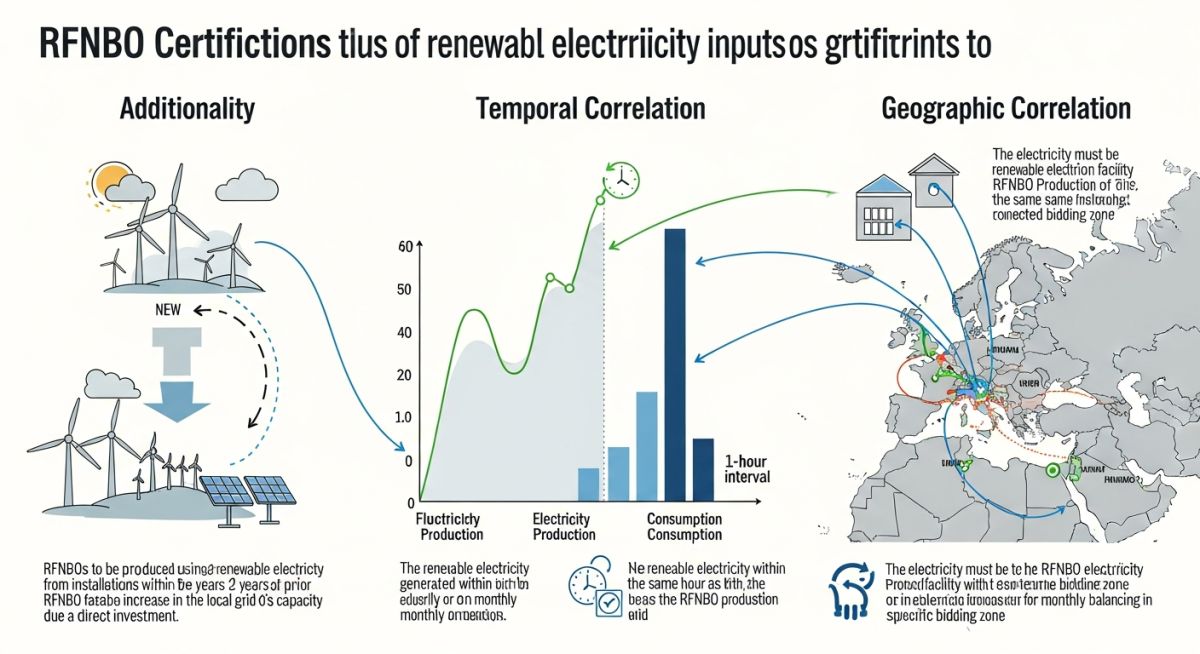
To achieve RFNBO status, the electrolyzer must be powered by electricity that is demonstrably renewable. The European Commission has established a hierarchy of compliance, starting with direct lines from renewable installations to the electrolyzer. When direct lines are not feasible, we must utilize grid-connected power, which triggers the “Additionality” requirement. This ensures that the renewable energy used for hydrogen production is “new” capacity, preventing the diversion of existing renewable power from the general grid, which would otherwise increase the carbon intensity of the remaining grid mix.
The Additionality Calculation Framework
Additionality is defined by the commissioning of new renewable installations that are not supported by other financial incentives. From a project engineering standpoint, this requires a detailed audit of the PPA structure. We must verify that the renewable asset was commissioned no more than 36 months prior to the electrolyzer. If the asset is older, it must have undergone a repowering process that increases its capacity by at least 25 percent.
Field Warning: The 36-Month Rule
Failure to align the commissioning dates of your renewable PPA source and your electrolyzer facility will result in immediate disqualification. I have seen projects stall because the PPA was signed with a wind farm that reached its commercial operation date (COD) outside the mandatory window. Always verify the COD of the renewable asset against the EU RED III Delegated Acts before finalizing your procurement strategy.
Temporal and Geographic Correlation
Temporal correlation is the most challenging operational constraint. Initially, the regulation allows for monthly matching, but this transitions to hourly matching by 2030. This means the electrolyzer must only consume electricity during hours when the renewable source is generating. If the wind isn’t blowing or the sun isn’t shining, the electrolyzer must be curtailed or powered by an on-site storage system.
Geographic correlation requires that the renewable installation and the electrolyzer be located within the same bidding zone. If they are in different zones, the price of electricity in the zone of the electrolyzer must be equal to or higher than the price in the zone of the renewable installation. This forces engineers to perform complex nodal price analysis during the feasibility phase to ensure that the project remains economically viable while meeting the strict geographic constraints of the directive.
RFNBO Certification Impact: A balanced assessment of the operational, financial, and regulatory implications of adhering to the stringent RED III certification requirements for green hydrogen production.
Advantages
- Market Access: Enables entry into the premium EU market for green hydrogen and derivatives.
- Regulatory Future-Proofing: Aligns infrastructure with long-term EU decarbonization trajectories.
- Carbon Credit Eligibility: Facilitates the generation of high-value carbon credits under various national schemes.
- Investor Confidence: Provides a transparent, auditable framework that attracts ESG-focused capital.
Disadvantages
- High Operational Complexity: Requires sophisticated energy management systems for hourly matching.
- Increased CAPEX: Necessity for on-site storage or over-dimensioned renewable assets to ensure uptime.
- Strict Compliance Costs: Significant administrative burden for ongoing monitoring and third-party verification.
- Supply Chain Rigidity: Limits the flexibility of PPA sourcing to specific geographic and temporal windows.
RFNBO Certification Deployment: Strategic implementation of certified hydrogen production across heavy industry, transport, and chemical sectors to meet net-zero targets.
Green Steel Manufacturing
Integrated steel mills are utilizing RFNBO-certified hydrogen for direct reduced iron (DRI) processes to replace coking coal. This application requires massive, consistent hydrogen volumes, necessitating large-scale electrolyzer arrays coupled with dedicated offshore wind farms to satisfy the additionality and temporal matching requirements.
Sustainable Aviation Fuel (SAF) Production
The production of e-kerosene via the Fischer-Tropsch process requires certified green hydrogen as a primary feedstock. By ensuring the hydrogen meets RFNBO standards, refineries can claim the necessary carbon intensity reductions to meet the ReFuelEU Aviation mandates, effectively decarbonizing long-haul flight operations.
Chemical Feedstock Decarbonization
Ammonia and methanol producers are transitioning to green hydrogen to eliminate the carbon footprint of their synthesis gas. RFNBO certification allows these facilities to market their products as “green” or “low-carbon,” providing a competitive advantage in the global chemical market where downstream manufacturers are increasingly demanding sustainable raw materials.
To achieve compliance under the Renewable Energy Directive (RED III), hydrogen producers must navigate a complex landscape of technical thresholds. These parameters dictate the eligibility of hydrogen as a Renewable Fuel of Non-Biological Origin (RFNBO). The following table outlines the critical performance indicators that define whether a production facility meets the stringent EU sustainability criteria for greenhouse gas emission savings.
Engineers must verify these values against the specific carbon intensity of the local grid and the efficiency of the electrolyzer stack. Failure to maintain these thresholds results in the disqualification of the hydrogen output, rendering it ineligible for renewable energy quotas or financial incentives. These metrics are derived from the Delegated Acts supplementing Directive (EU) 2018/2001, which mandate a lifecycle greenhouse gas emission saving of at least 70% compared to the fossil fuel comparator.
| Parameter | Requirement/Threshold | Standard Reference |
|---|---|---|
| GHG Emission Saving | Minimum 70% vs Fossil Comparator | RED III Annex V |
| Additionality | Non-subsidized renewable capacity | Delegated Act 2023/1184 |
| Temporal Correlation | Hourly matching (from 2030) | Delegated Act 2023/1184 |
| Geographic Correlation | Same bidding zone or interconnected | Delegated Act 2023/1184 |
The data presented above serves as the foundational baseline for any feasibility study. I strongly advise project managers to conduct a sensitivity analysis on the temporal correlation requirement, as the transition from monthly to hourly matching significantly impacts the required battery storage capacity and grid-balancing infrastructure.
The technical architecture of an RFNBO-compliant facility requires the integration of multiple data streams, ranging from power purchase agreements (PPAs) to real-time electrolyzer performance monitoring. This matrix maps the core entities involved in the certification process, providing a clear view of the regulatory and physical components that must be synchronized for successful audit outcomes.
By aligning these entities, operators can ensure that their digital monitoring systems capture the necessary evidence for third-party verification. Each entity listed below represents a critical node in the chain of custody for renewable energy, ensuring that the hydrogen produced is truly “green” according to the latest European regulatory standards. This mapping is essential for developing the internal control frameworks required for long-term compliance.
| Entity/Component | Function | Regulatory Link |
|---|---|---|
| PPA (Power Purchase Agreement) | Direct renewable energy procurement | RED III Art. 27 |
| Electrolyzer Stack | Hydrogen conversion unit | ISO 22734 |
| Bidding Zone | Geographic market boundary | ACER Guidelines |
| Certification Body | Independent audit verification | EU Voluntary Schemes |
Maintaining this matrix as a living document allows for rapid adjustments when regulatory updates occur. As an engineer, I find that keeping these links transparent simplifies the audit process significantly, as auditors can trace the compliance of every kilogram of hydrogen back to the specific renewable energy source and time-stamped generation record.
RFNBO Compliance Verification: Ensuring your facility meets the rigorous standards of the Renewable Energy Directive requires a systematic approach to site verification. This checklist serves as a primary tool for project engineers to validate that all physical and contractual requirements are met before commissioning.
-
Additionality Validation: Confirm that the renewable energy source was commissioned no more than 36 months before the electrolyzer. -
Temporal Matching: Verify that the energy procurement system supports hourly time-stamping for all renewable inputs. -
Geographic Constraint: Ensure the renewable generation site and the electrolyzer are located within the same bidding zone. -
GHG Calculation: Perform a full lifecycle assessment (LCA) using the RED III methodology to confirm 70% savings. -
Metering Accuracy: Calibrate all flow meters and electricity sub-meters to meet the precision requirements of the certification body.
During my site visits, I emphasize that documentation is as important as the hardware itself. You must maintain a robust data management system that logs every MWh of renewable energy consumed against the hydrogen output. If the data is not auditable, the hydrogen is not compliant. Always ensure that your PPA contracts explicitly state the renewable nature of the energy and the absence of double-counting, as this is a common point of failure during third-party audits. Regularly review your grid connection agreements to ensure that the bidding zone definitions remain consistent with current regulatory maps, as these can change due to market restructuring.
The Challenge: Grid-Connected Electrolyzer Compliance
A mid-sized hydrogen production facility faced significant hurdles in meeting the temporal correlation requirements during peak grid demand periods.
- Inconsistent renewable energy availability leading to grid-power reliance.
- Lack of real-time data integration between the PPA provider and the plant.
- High costs associated with battery storage to bridge the temporal gap.
- Regulatory uncertainty regarding the definition of “same bidding zone” during grid maintenance.
The Outcome: Successful Certification and Operational Optimization
By implementing a digital twin and an automated energy management system, the facility achieved full RFNBO compliance within six months.
- Achieved 98% hourly matching accuracy through predictive load shifting.
- Reduced operational expenditure by optimizing electrolyzer runtime with wind-peak forecasts.
- Successfully passed the third-party audit with zero non-conformity reports.
- Secured long-term off-take agreements based on certified green hydrogen status.
My recommendation for similar projects is to prioritize the integration of the energy management system at the design phase. Do not treat the compliance software as an add-on; it must be the central nervous system of your production facility. By automating the matching process, you remove human error and ensure that every unit of hydrogen produced is backed by verifiable, time-stamped renewable energy data.
Frequently Asked Engineering Questions
What is the primary purpose of the additionality requirement?
- Prevents the diversion of existing renewable energy from the grid.
- Stimulates investment in new wind and solar infrastructure.
- Ensures that hydrogen production contributes to net-zero goals.
- Complies with Delegated Act 2023/1184.
How does hourly temporal correlation affect plant design?
- Requires larger buffer storage for hydrogen to manage production gaps.
- Demands sophisticated energy management systems for real-time grid monitoring.
- Increases the importance of electrolyzer flexibility and ramp-up speeds.
- Reduces the reliance on grid-balancing services during non-renewable hours.
What defines a bidding zone for geographic correlation?
- Prevents the use of renewable energy from congested or distant grids.
- Aligns with the European Union Agency for the Cooperation of Energy Regulators (ACER) maps.
- Ensures that the renewable energy is not subject to cross-border transmission constraints.
- Simplifies the verification of energy origin for auditors.
Can I use grid electricity for RFNBO hydrogen production?
- Grid electricity must be matched with hourly renewable generation.
- The PPA must be legally binding and verifiable.
- The carbon intensity of the grid must be accounted for if the matching fails.
- Direct lines are often preferred to avoid grid-related compliance complexities.
How is the greenhouse gas saving calculated?
- Includes upstream emissions from renewable energy infrastructure.
- Accounts for fugitive emissions during hydrogen compression and storage.
- Must demonstrate a 70% reduction to be compliant.
- Uses standardized methodologies defined in RED III Annex V.
What happens if I fail an RFNBO audit?
- Loss of eligibility for renewable energy credits.
- Potential breach of off-take contracts requiring certified green hydrogen.
- Requirement to implement corrective actions before re-certification.
- Reputational risk within the sustainable energy market.
