Separation in The Oil & Gas Industry: Oil and Gas Separator Working Principle and Classification
The Oil and Gas Separator Working Principle is the backbone of upstream processing, ensuring that raw wellhead fluids are efficiently split into transportable streams of gas, oil, and water.
Quick Summary
The Oil and Gas Separator Working Principle relies on three main mechanisms: momentum, gravity settling, and coalescing. Fluids enter a vessel where an inlet diverter reduces momentum. Gravity then separates heavy liquids from light gases, while internal mist extractors capture fine droplets, ensuring high-purity phase discharge.
“In 2026, efficient separation is no longer just about volume; it is about maximizing the purity of the hydrocarbon stream to meet stringent environmental and transport standards.”
— Atul Singla, Founder, Epcland
Table of Contents
Process Engineering Knowledge Check
Question 1 of 5Which law primarily governs the gravity settling of droplets in a separator?
Complete Course on
Piping Engineering
Check Now
Key Features
- 125+ Hours Content
- 500+ Recorded Lectures
- 20+ Years Exp.
- Lifetime Access
Coverage
- Codes & Standards
- Layouts & Design
- Material Eng.
- Stress Analysis
Classification of Separators: Choosing the Right Oil and Gas Separator Working Principle
Understanding the classification of vessels is the first step in mastering the Oil and Gas Separator Working Principle. In a typical 2026 production facility, separators are categorized based on their physical orientation, their specific role in the process flow, and the number of fluid phases they are designed to isolate.
1. Vertical vs Horizontal: Vessel Orientation Selection
The choice between horizontal and vertical vessels is dictated by the Gas-to-Oil Ratio (GOR) and available footprint. Horizontal separators are the industry workhorse for high gas volumes, providing a larger liquid surface area that aids in the Oil and Gas Separator Working Principle by allowing faster gas bubble liberation.
- Horizontal: Best for high-capacity liquid/gas separation and 3-phase applications where interface control is critical.
- Vertical: Ideal for low-to-medium GOR and fluids with high solids (sand) content, as the bottom cone design facilitates easy solids removal.
2. Surface vs Subsea: Installation Location Dynamics
Modern engineering now distinguishes between surface-mounted test separators and subsea separation units. The Oil and Gas Separator Working Principle remains consistent, but subsea units must withstand extreme external pressures and utilize automated, remote level-sensing technologies to ensure continuous operation without manual intervention.
3. 2-Phase vs 3-Phase: Fluid Phase Distribution
A 2-phase separator focuses on the Oil and Gas Separator Working Principle of splitting total liquids from the gas stream. In contrast, a 3-phase separator adds a secondary level of complexity: liquid-liquid separation. This involves isolating the water from the oil, usually requiring chemical demulsifiers and specific internal baffles to manage the retention time.

Figure 1: Cross-sectional view of internal components driving the Oil and Gas Separator Working Principle.
Key Internals and Oil and Gas Separator Working Principle Fundamentals
The efficiency of any vessel is determined by its internals. These components manipulate the physical properties of the incoming stream to accelerate the Oil and Gas Separator Working Principle beyond what simple gravity could achieve alone.
Momentum and Inlet Device Selection Criteria
As the high-velocity wellhead stream enters the vessel, the Oil and Gas Separator Working Principle begins with a “momentum hit.” The Inlet Diverter (such as a splash plate or centrifugal cyclone) forces an immediate change in direction.
Engineering Tip: A centrifugal inlet is preferred for high-momentum flows as it uses “G-force” to spin liquids to the vessel walls, initiating the Oil and Gas Separator Working Principle before the fluid even reaches the settling section.
Mist Eliminator and Coalescing Plate Efficiency
Even after gravity settling, small liquid droplets (less than 100 microns) remain entrained in the gas. The Oil and Gas Separator Working Principle utilizes mist eliminators (wire mesh pads or vane packs) to provide a surface for these droplets to impinge and coalesce into larger drops that eventually fall back into the liquid section.
Retention Time and Weir Plate Functionality
Retention time is the “clock” that governs the Oil and Gas Separator Working Principle. It is the average time a fluid stays inside the vessel. Weir Plates are installed to maintain a specific liquid level, ensuring that the oil has enough time to degas and the water has enough time to settle out before reaching the discharge nozzles.
Detailed Oil and Gas Separator Working Principle (2-Phase Systems)
In a 2-phase system, the primary goal of the Oil and Gas Separator Working Principle is the removal of the liquid mist from the gas and the liberation of solution gas from the oil. This is achieved through a combination of gravity and mechanical impingement.
Gravity Settling Theory and Stokes’ Law Application
The core of the Oil and Gas Separator Working Principle is governed by Stokes’ Law. For a droplet to settle out of the gas stream, its terminal velocity (Vt) must be greater than the upward velocity of the gas. The simplified settling velocity formula used in 2026 engineering calculations is:
Where g is the gravitational constant, dp is the droplet diameter, ρ represents density, and μ is the gas viscosity. By increasing the vessel diameter, we reduce the gas velocity, allowing smaller droplets to settle according to the Oil and Gas Separator Working Principle.
Advanced Oil and Gas Separator Working Principle (3-Phase Systems)
A 3-phase separator must handle gas, oil, and water simultaneously. The Oil and Gas Separator Working Principle here relies heavily on the density difference between hydrocarbons (ρ ≈ 800 kg/m3) and produced water (ρ ≈ 1000 kg/m3).
Liquid-Liquid Separation and Interface Management
To achieve high-purity oil, the Oil and Gas Separator Working Principle utilizes an internal Weir Plate. The oil spills over the weir into a “clean oil compartment,” while the heavier water settles at the bottom and is removed via an interface level controller.
API 12J Standards for Separator Sizing
Engineers must adhere to the [API Spec 12J](https://www.api.org), which defines the standard requirements for the design, fabrication, and testing of oil and gas separators. These standards ensure that the Oil and Gas Separator Working Principle is executed safely under high-pressure conditions.
Comparative Performance: Vertical vs. Horizontal Separators
| Parameter | Horizontal Separator | Vertical Separator |
|---|---|---|
| Gas Handling | Excellent (Large Surface) | Moderate |
| Solids Handling | Poor (Difficult to Drain) | Excellent (Conical Bottom) |
| Liquid Surges | Highly Effective | Limited Capacity |
| Space Footprint | Large | Small / Compact |
Oil and Gas Separator Working Principle: Retention Time Calculator
Retention time is a critical factor in the Oil and Gas Separator Working Principle. Use this tool to estimate the required vessel volume or the time provided for phase separation based on your flow rates.
Result:
Don't miss this video related to Oil and Gas Separator Working Principle
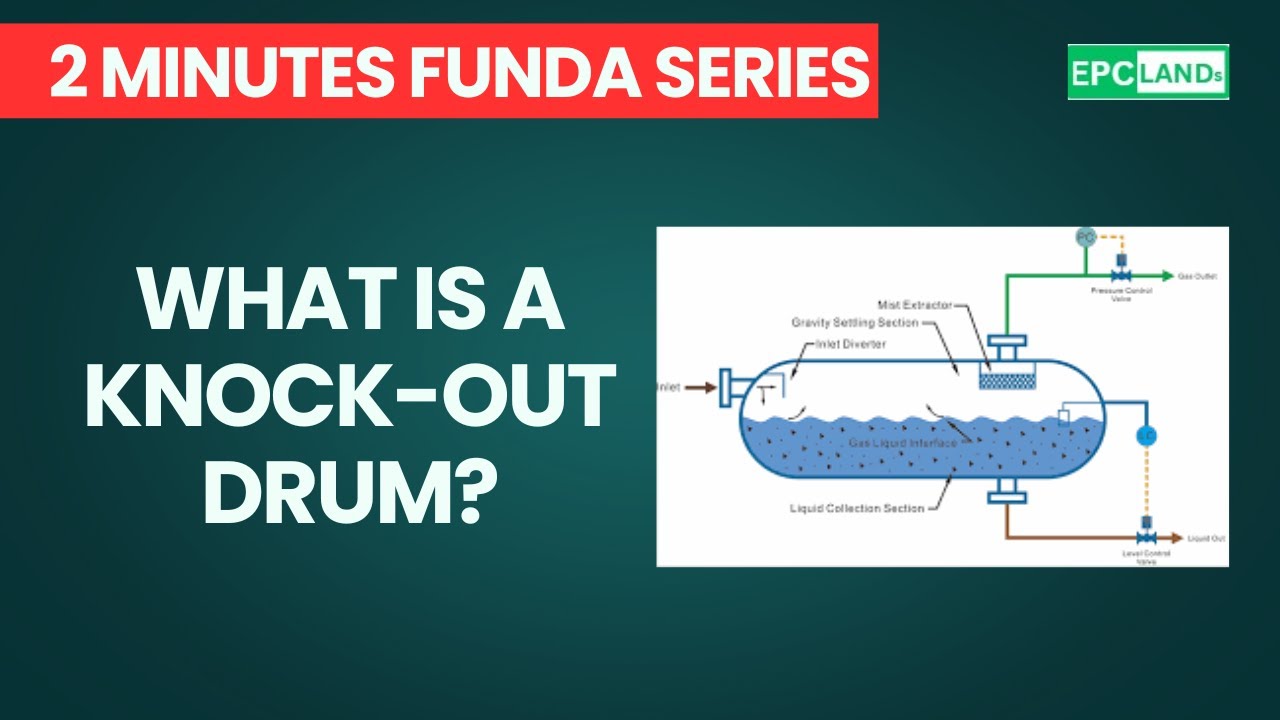
Summary: How do you protect a compressor from damaging liquids? With a Knock-Out Drum! This video explains the simple but effective ......
Oil and Gas Separator Working Principle Failure Case Study
Project Data
- Facility: 2026 Offshore Production Platform
- Equipment: Horizontal 3-Phase High-Pressure Separator
- Problem: Sudden Gas Carry-over and Downstream Compressor Trip
Failure Analysis
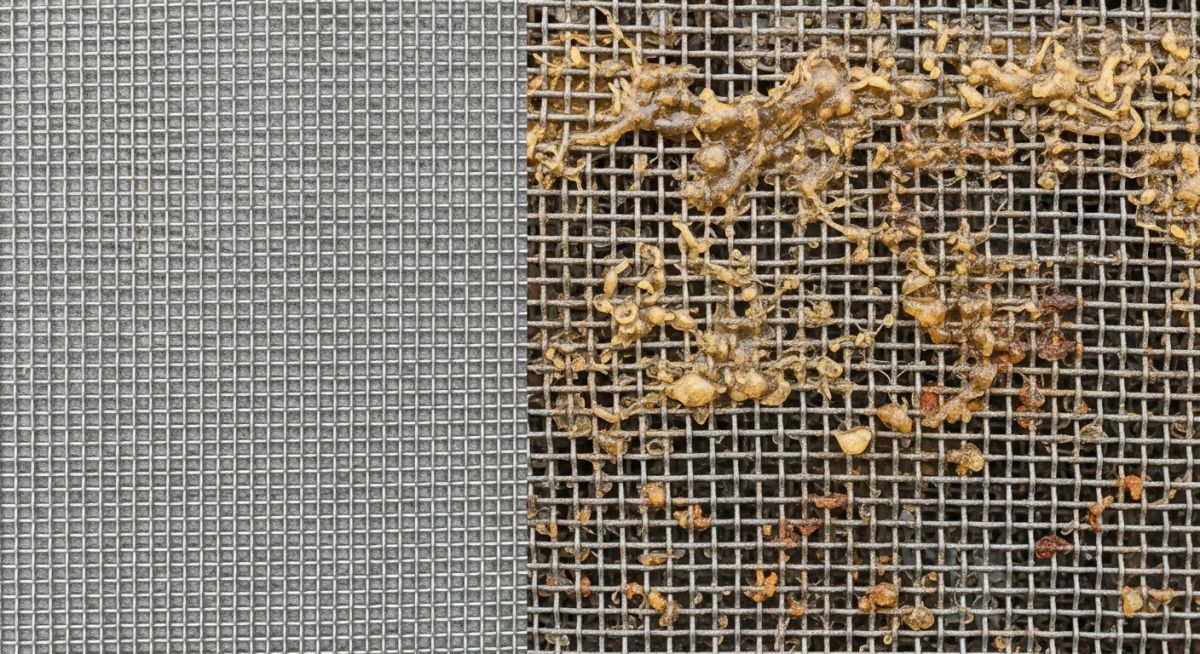
Investigation revealed a breakdown in the Oil and Gas Separator Working Principle due to severe paraffin wax fouling of the wire-mesh mist eliminator. The blockage increased the local gas velocity (breaking Stokes' Law), causing liquid droplets to be sucked into the gas outlet.
Engineering Fix & 2026 Strategy
The maintenance team replaced the fouled mesh pad with a high-capacity Vane-type Mist Extractor, which is less susceptible to fouling from wax or solids. Additionally, a differential pressure (DP) transmitter was installed to monitor the health of the internals in real-time.
Lessons Learned:
- Chemical injection points (demulsifiers) must be positioned upstream of the inlet diverter for maximum contact time.
- Regular monitoring of the separator's "internals health" prevents catastrophic downstream equipment damage.
- Selection of internals must account for fluid chemistry changes over the field's life cycle.
Frequently Asked Questions: Oil and Gas Separator Working Principle
What is the primary gas-liquid separation mechanism in high-pressure vessels? ▼
The primary mechanism for the Oil and Gas Separator Working Principle in high-pressure environments is gravity settling assisted by a sudden reduction in momentum. As the gas velocity drops below the terminal velocity of the liquid droplets, gravity pulls the heavier phases to the vessel bottom.
How does a mist eliminator efficiency impact the final gas quality? ▼
Mist eliminator efficiency is vital for the Oil and Gas Separator Working Principle because it captures sub-micron droplets that gravity cannot. High-efficiency vane packs or mesh pads ensure the gas stream is free of liquid "carry-over," protecting downstream compressors from damage.
Why is separator retention time calculation critical for 3-phase separation? ▼
In 3-phase systems, the Oil and Gas Separator Working Principle requires sufficient time for water droplets to settle out of the oil phase. If the retention time is too short, the oil will contain high BS&W (Basic Sediment and Water), leading to export quality rejection.
Does vessel orientation selection affect the separation of vertical vs horizontal separators? ▼
Yes. Horizontal vessels provide a larger surface area for gas evolution, making them superior for the Oil and Gas Separator Working Principle in high-gas applications. Vertical vessels are better for handling solids and take up less floor space.
Conclusion
Mastering the Oil and Gas Separator Working Principle is essential for any process engineer looking to optimize production and ensure facility longevity in 2026. By balancing gravity settling theory with high-efficiency internals and adherence to API 12J standards, operators can achieve maximum phase purity with minimal downtime.
Ready to dive deeper? Explore our advanced [Process Design Courses](https://epcland.com) for more engineering insights.
📚 Recommended Resources: Oil and Gas Separator Working Principle
Read these Guides


