Double Wall Ammonia Tank Design: Standards and Safety for 2026
Double Wall Ammonia Tank Design represents the gold standard for the bulk storage of anhydrous ammonia, particularly in large-scale refrigerated terminals operating at temperatures near -33 degrees Celsius. As global demand for “Green Ammonia” as a hydrogen carrier surges in 2026, the engineering focus has shifted toward high-integrity containment systems that mitigate the risks of catastrophic vapor release. This design utilizes a “tank-within-a-tank” philosophy, ensuring that the primary liquid container is shielded and supported by an outer secondary shell capable of managing leaks and thermal loads.
What is a Double Wall Ammonia Tank?
A double wall ammonia tank is a specialized storage vessel consisting of an inner tank for liquid ammonia containment and an outer tank that provides insulation and secondary containment. This setup is primarily designed to maintain the product in a liquid state at atmospheric pressure via refrigeration while preventing atmospheric moisture ingress and providing a safety barrier against primary leaks.
Quick Navigation
Technical Knowledge Check
Question 1 of 51. Which API standard is the primary reference for the design of large, low-pressure refrigerated ammonia tanks?
Complete Course on
Piping Engineering
Check Now
Key Features
- 125+ Hours Content
- 500+ Recorded Lectures
- 20+ Years Exp.
- Lifetime Access
Coverage
- Codes & Standards
- Layouts & Design
- Material Eng.
- Stress Analysis

Figure 1: Typical 30,000-ton Double Wall Ammonia Tank facility utilizing full containment architecture.
Engineering Theory & Regulatory Codes
The core philosophy of Double Wall Ammonia Tank Design is centered on the containment of a hazardous, pressurized, or refrigerated liquid within a multi-barrier system. For industrial applications in 2026, the primary governing standard is API 620, specifically API 620 Appendix R requirements. This appendix provides the technical framework for “Large, Welded, Low-Pressure Storage Tanks” operating at refrigerated temperatures.
Designers must account for the unique thermodynamic properties of anhydrous ammonia. Ammonia is typically stored at -33 degrees Celsius (-28 degrees Fahrenheit). At this temperature, standard structural steels are susceptible to brittle fracture. Therefore, the selection of low-temperature carbon steel for ammonia tanks, such as ASTM A537 Class 2 or A516 Grade 70 (normalized), is mandatory to ensure toughness and ductility.
Structural Integrity and Design Pressure
Unlike atmospheric water tanks, an ammonia tank must manage internal vapor pressure generated by heat ingress (Boil-Off Gas or BOG). The design pressure typically ranges from 1.0 to 1.5 psig (70 to 100 mbar). The hydrostatic pressure calculation for the inner tank shell thickness follows the standard formula:
t = (2.6 * D * (H – 1) * G) / (S * E) + CA
t = Required Shell Thickness (inches)
D = Tank Diameter (feet)
H = Design Liquid Level (feet)
G = Specific Gravity of Liquid Ammonia (approx. 0.68 at -33C)
S = Allowable Stress (psi)
E = Joint Efficiency
CA = Corrosion Allowance
Ammonia Tank Insulation Systems

Figure 2: Cross-sectional architecture of a double-wall refrigerated system.
Thermal management is the second pillar of design. Modern ammonia tank insulation systems utilize the annular space between the inner and outer shells. This space is typically filled with Expanded Perlite, a lightweight volcanic glass with excellent thermal resistance (R-value).
To prevent the perlite from settling and creating thermal bridges, a resilient blanket (usually fiberglass or mineral wool) is wrapped around the exterior of the inner tank. This blanket acts as a cushion, absorbing the radial expansion and contraction of the inner tank during filling and emptying cycles. Furthermore, the annular space is often purged with dry nitrogen to maintain a positive pressure, preventing the ingress of atmospheric moisture which could lead to ice formation and structural damage.
Comparing Containment Strategies
When evaluating full containment vs double integrity tanks, the decision usually rests on the proximity to populated areas and environmental risk assessments:
| Feature | Single Integrity | Double Integrity | Full Containment |
|---|---|---|---|
| Primary Barrier | Steel Tank | Steel Tank | Steel Tank |
| Secondary Barrier | Dike/Bund Wall | Outer Steel Shell | Outer Concrete/Steel Wall |
| Liquid Catchment | Open Air | Closed (Annular) | Closed (Vapor Tight) |
| Vapor Containment | No | No (Vents to Atm) | Yes (Primary Safety) |
| Safety Rating | Low | Medium | High (Industry Best) |
Material Properties for Cryogenic Service
The inner shell plates are subjected to Charpy V-Notch (CVN) impact testing to ensure they do not become brittle at -33 degrees Celsius. Typical impact energy requirements according to API 620 are 20 to 27 Joules at the design metal temperature.
Material Selection Matrix for 2026
- Inner Shell: Low-temperature carbon steel (e.g., A537 Cl. 2) or 9% Nickel steel for hydrogen-ammonia hybrid systems.
- Outer Shell: Carbon steel (A36 or A516-70) if not used for liquid containment, or Concrete for Full Containment.
- Piping: Stainless Steel 304/316L to mitigate external corrosion in coastal environments.
- Floor: Reinforced concrete foundation with heating coils to prevent soil frost heave.
Finalizing the Double Wall Ammonia Tank Design requires a holistic approach that integrates civil, mechanical, and process safety engineering. The focus on refrigerated ammonia storage safety has never been higher, leading to the implementation of automated ammonia leak detection systems within the annular space. These sensors detect even trace amounts of ammonia vapor, providing early warning long before a catastrophic failure of the inner tank occurs.
Case Study: Double Wall Ammonia Tank Design Failure Analysis
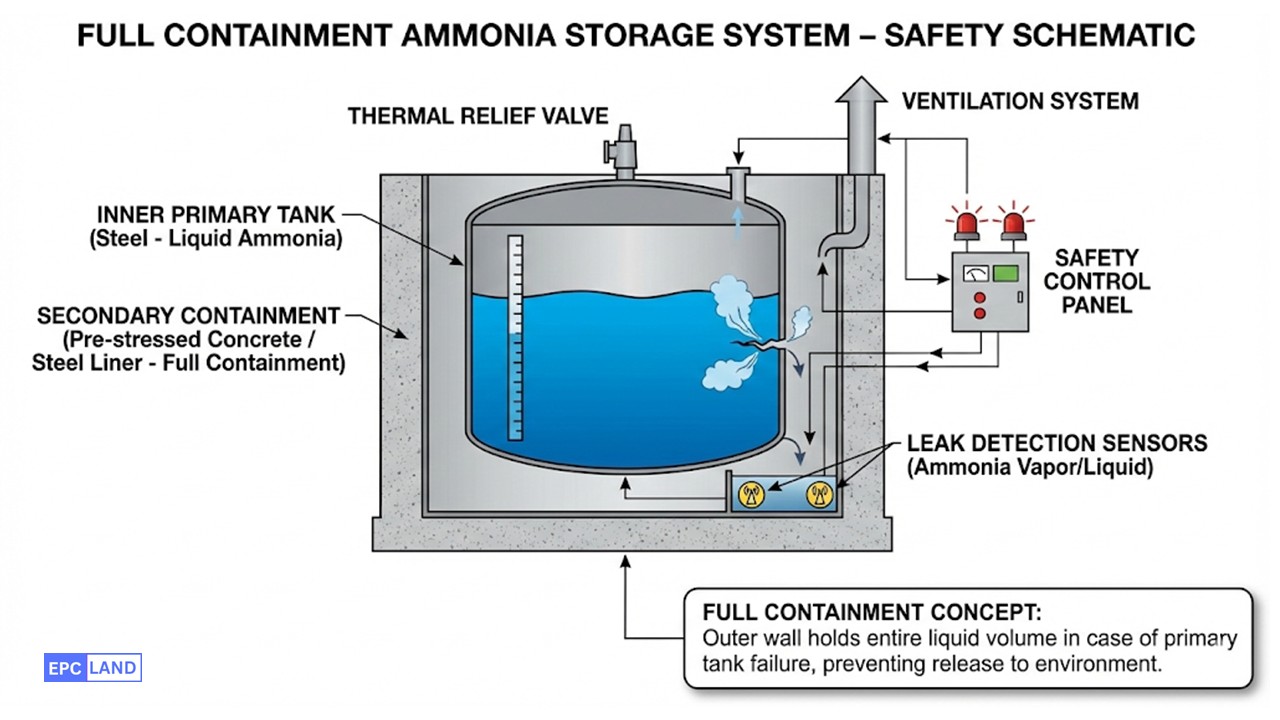
Figure 3: Thermal imaging and sensor mapping for a full containment ammonia leak scenario.
Project Location
Rotterdam Industrial Hub, 2024-2026
Equipment Type
45,000 m3 Full Containment Tank
Operating Temp
-33.3 Celsius (Atmospheric Refrigerated)
Design Standard
API 620 Appendix R / API 625
Problem Statement: Inner Shell Integrity Loss
During a routine inspection of a major ammonia terminal in late 2024, engineers identified a slight increase in nitrogen consumption within the annular space of “Tank-04,” a refrigerated double-wall unit. While the primary shell showed no visible exterior damage, the thermal monitoring system indicated a localized “cold spot” on the outer shell’s base. This suggested that liquid ammonia had breached the inner tank and was saturating the perlite insulation.
The challenge was significant: a catastrophic failure of a single-wall tank in this location would have required the evacuation of a 5-mile radius due to the toxic nature of ammonia vapor. However, the Double Wall Ammonia Tank Design was specifically implemented here to manage such “hidden” failures without atmospheric exposure.
Technical Analysis & Detection
The failure was traced to a hairline crack in the floor-to-shell weld (the “T-joint”) of the inner tank. This was likely caused by cyclic thermal loading during rapid filling operations that exceeded the recommended temperature gradients. Because this was a “Full Containment” system, the primary liquid was successfully caught by the outer reinforced concrete wall, which was lined with a thermal protection layer.
A critical factor in preventing a major disaster was the integration of advanced ammonia leak detection systems. These systems utilize electrochemical sensors and laser-based gas analyzers installed at multiple elevations within the perlite-filled annular space. In this specific case, the sensors detected ammonia concentrations exceeding 50 ppm (parts per million) within seconds of the breach, triggering an automated shutdown of all inlet pumps and activating the Boil-Off Gas (BOG) compressors to maximum capacity to lower internal pressure.
Solution & Engineered Result
The repair strategy involved a controlled decommissioning of the tank. First, the remaining liquid ammonia was transferred to a neighboring “sister tank.” The inner tank was then purged with nitrogen and warmed to ambient temperature. Because the outer wall had successfully contained the leak, there was zero liquid release to the environment and zero vapor exposure to the surrounding community.
Project Outcome & ROI
- Safety: 100% containment of 45,000 m3 of hazardous product.
- Community Impact: No evacuation required; facility remained 80% operational.
- Economic Recovery: The cost of the “Full Containment” design (approx. 30% higher than single-wall) was recovered 4x over by avoiding the fines, cleanup costs, and legal liabilities of a toxic release.
- 2026 Strategy: The facility has now retrofitted all remaining single-integrity tanks with enhanced refrigerated ammonia storage safety protocols, including real-time acoustic emission monitoring for the inner shell welds.
This case study demonstrates that Double Wall Ammonia Tank Design is not just a regulatory hurdle but a critical financial and environmental insurance policy for the modern energy landscape.
EPCLand YouTube Channel
2,500+ Videos • Daily Updates
Frequently Asked Questions
What are the specific API 620 Appendix R requirements for these tanks?
How do full containment vs double integrity tanks differ in safety?
What role do ammonia leak detection systems play in maintenance?
Why is low-temperature carbon steel for ammonia tanks mandatory?
Summary: The 2026 Engineering Outlook
As the global energy transition accelerates, Double Wall Ammonia Tank Design has evolved from a niche chemical storage requirement into a critical pillar of the hydrogen economy. By adhering to API 620 Appendix R standards and prioritizing high-integrity containment, engineers are ensuring that “Green Ammonia” can be safely stored and transported at scale.
The integration of advanced ammonia tank insulation systems and real-time monitoring technology has shifted the industry focus from “Reaction” to “Prevention.” Investing in full-containment architecture remains the most robust strategy for mitigating environmental risks and ensuring long-term operational viability in the refrigerated storage sector.
