DN vs NPS vs PN Piping Standards: The Definitive 2026 Engineering Guide
Understanding the core differences between DN vs NPS vs PN Piping Standards is critical for ensuring mechanical integrity and procurement accuracy in modern industrial projects. As global supply chains integrate imperial and metric components, engineers must bridge the gap between North American and European sizing conventions to prevent catastrophic site misalignments.
Direct Answer: NPS (Nominal Pipe Size) is the North American standard based on inches, while DN (Diamètre Nominal) is the international metric equivalent defined by ISO 6708. PN (Pressure Nominal) indicates the pressure rating in bars. While they often correspond (e.g., NPS 4 is roughly DN 100), their physical dimensions and bolt patterns differ significantly.
Quick Navigation

Engineering Sizing Quiz
1. Which international standard defines the ‘Nominal Diameter’ (DN) system?
Complete Course on
Piping Engineering
Check Now
Key Features
- 125+ Hours Content
- 500+ Recorded Lectures
- 20+ Years Exp.
- Lifetime Access
Coverage
- Codes & Standards
- Layouts & Design
- Material Eng.
- Stress Analysis
Piping Nomenclature: DN vs PN vs NPS
To accurately specify PN in HDPE Pipes, engineers must distinguish between pressure ratings and dimensional sizing. In international 2026 standards, three primary acronyms dominate the landscape: DN, PN, and NPS. Understanding the DN meaning and how it correlates to pressure is vital for interference-free installation.
Dimensional Standard: DN
The DN full form is Diametre Nominal (Nominal Diameter). It is a metric-based alphanumeric designation used in Europe and internationally (ISO) to indicate the approximate internal diameter of a pipe.
- • Example: DN 110 (110mm OD)
- • Reference: ISO 6708
Pressure Standard: PN
The PN full form is Pressure Nominal. As established, the PN meaning defines the maximum pressure in bar at 20°C. Note that DN and PN are always used together in a bill of materials (e.g., DN 110 PN 16).
- • Example: PN 16 (16 Bar)
- • Reference: ISO 7268
Comparing Metric (DN) vs Imperial (NPS)
While the DN meaning governs metric regions, North American projects utilize NPS (Nominal Pipe Size). In 2026, many global procurement teams use conversion tables to ensure ISO 4427 piping standards align with ANSI/ASME components.
| Metric (DN) | Imperial (NPS) | Common Application |
|---|---|---|
| DN 50 | 2″ (Two Inch) | Secondary Service Lines |
| DN 100 | 4″ (Four Inch) | Main Distribution lines |
| DN 200 | 8″ (Eight Inch) | Industrial Intake Headers |
⚠️ Engineering Warning:
A common mistake in 2026 is assuming the DN meaning is identical to the Inner Diameter (ID). For HDPE, the DN refers to the Outside Diameter (OD). As the PN in HDPE Pipes increases, the wall becomes thicker and the internal diameter decreases, even if the DN remains the same.
Defining the Core Metrics: DN, PN, and NPS
What is DN?
DN (Diameter Nominal) is a metric-based system used to standardize the internal diameter of pipes. Widely used in Europe and metric-compliant regions, it provides a reference number in millimeters. It is important to note that DN does not represent an exact physical measurement but serves as a simplified reference for matching ISO 6708 Nominal Diameter components.
What is PN?
PN (Pressure Nominal) is a numerical rating indicating the maximum pressure a pipe can withstand at 20°C. Expressed in “bar,” it is the cornerstone of European and Asian safety specs. In piping standards for 2026 projects, PN ensures that equipment operates within safe elastic limits under high-stress conditions.
What is NPS?
NPS (Nominal Pipe Size) is the North American standard based on inches. Unlike DN, NPS refers primarily to the outside diameter for pipes under 14 inches. It is strictly governed by ASME B36.10 and B36.19, forming the basis for most Western pipe schedule wall thickness calculation protocols.
Technical Comparison: DN vs. PN
| Aspect | DN (Diameter Nominal) | PN (Pressure Nominal) |
|---|---|---|
| Primary Focus | Size of the pipe (approx. internal diameter) | Pressure capacity (maximum allowable bar) |
| Unit of Measure | Millimeters (mm) | Bars (1 bar ≈ 14.5 psi) |
| Application | Selecting correct fittings and valves | Ensuring safety under operational pressure |
| Example | DN 50 (≈ 2 inch internal profile) | PN 16 (16 bar maximum pressure) |
Quick Metric-to-Imperial Reference
For engineers performing Nominal Pipe Size to DN conversion, use this 2026 standardized lookup table for rapid identification:
*Note: These values are approximations for planning. Always verify against specific material schedules and flange bolt hole compatibility charts before procurement.
Engineering Theory: DN vs NPS vs PN Piping Standards
To master high-pressure system design in 2026, engineers must differentiate between dimensionless designators and actual physical measurements. The DN vs NPS vs PN Piping Standards framework relies on the ISO 6708 Nominal Diameter definition, which provides a metric reference for pipe sizing. While NPS is based on inches (ASME B36.10), DN provides a rounded millimeter equivalent that does not exactly match the Outside Diameter (OD) until sizes exceed 12 inches.
Pressure Ratings (PN)
The PN rating (Pressure Nominal) is a metric pressure class. Unlike the ASME Class system, PN is measured in bars at 20°C. For example, ASME Class vs PN rating comparisons show that PN 20 is roughly equivalent to Class 150, though temperature de-rating curves differ between API and DIN standards.
Sizing Logic
For pipes smaller than NPS 12, the nominal size is neither the ID nor the OD. Pipe schedule wall thickness calculation is required to determine the actual internal flow area. In piping standards for 2026 projects, precision in calculating the Schedule (Sch) 40 vs Sch 80 variance is vital for pump head calculations.
Pressure Stress Formula
S = (P * D) / (2 * t)
Figure 1.2: Dimensional Relationship Chart

Mastering Nominal Pipe Size to DN Conversion
The table below provides the essential Nominal Pipe Size to DN conversion data required for international procurement. Note that as the size increases, the correlation becomes more linear. However, flange bolt hole compatibility remains a high-risk factor because even if sizes convert, the Pitch Circle Diameter (PCD) often remains standard-specific.
| NPS (Inches) | DN (Metric) | OD (mm) | Common PN Rating |
|---|---|---|---|
| NPS 1/2 | DN 15 | 21.3 mm | PN 10/16 |
| NPS 1 | DN 25 | 33.4 mm | PN 16/40 |
| NPS 2 | DN 50 | 60.3 mm | PN 16/40 |
| NPS 4 | DN 100 | 114.3 mm | PN 16/40 |
| NPS 8 | DN 200 | 219.1 mm | PN 10/16 |
Expert Note: While NPS 4 and DN 100 are technically equivalent for sizing, the actual Outside Diameter is 114.3mm. Ensure that thermal insulation jackets are sized for the OD, not the nominal designator.
EPCLand YouTube Channel
2,500+ Videos • Daily Updates
CASE STUDY DN vs NPS vs PN Piping Standards Failure Analysis
In a high-profile hydrogen facility commissioned in early 2026, a critical interface failure occurred during the installation of a high-pressure feed pump. The incident serves as a primary example of why flange bolt hole compatibility must be verified beyond nominal sizing.
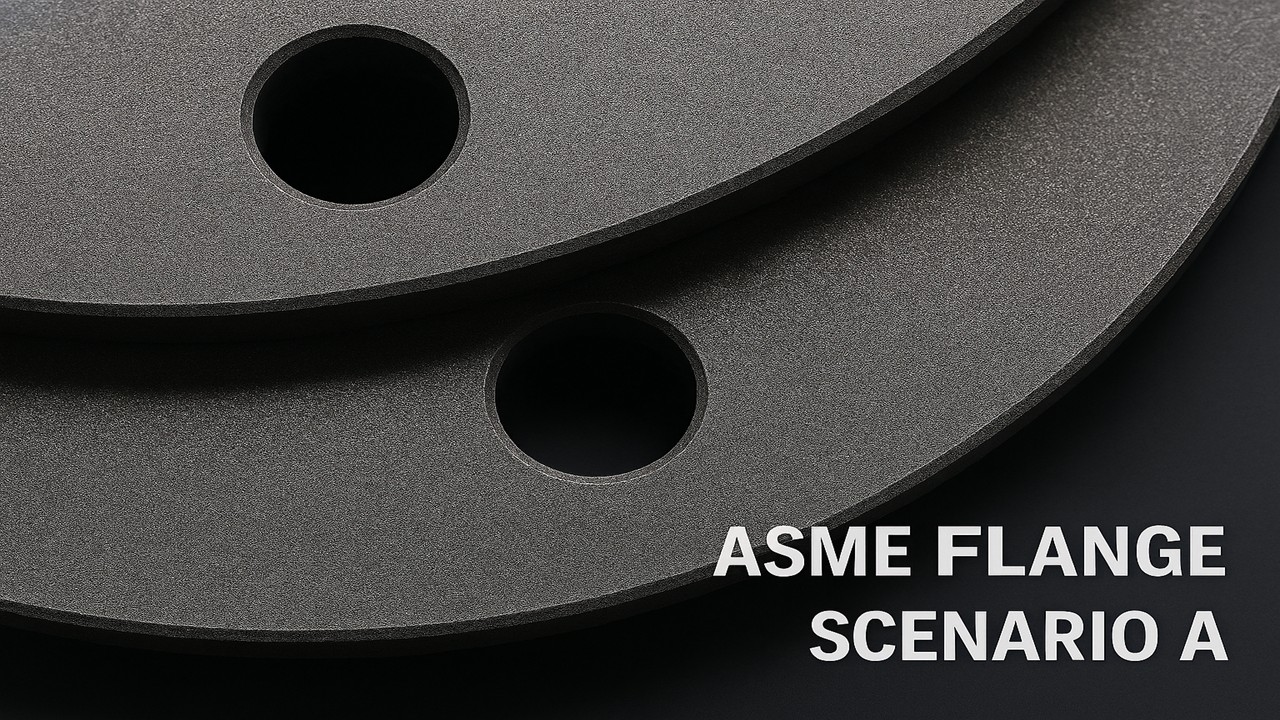
Figure 2.1: Misalignment of Pitch Circle Diameter (PCD) in 2026 site inspection.
Location
Bremen Industrial Complex, Germany
Equipment
Centrifugal Feed Pump (NPS 4) to Control Valve (DN 100)
Design Pressure
PN 40 / ASME Class 300
Root Cause
PCD Mismatch (Metric vs Imperial)
The Problem: The “Close But No Match” Trap
The procurement team ordered a German-manufactured control valve specified as DN 100 (PN 40) to match a US-imported pump nozzle rated at NPS 4 (Class 300). While the Nominal Pipe Size to DN conversion suggested a perfect match in diameter, the physical installation revealed that the 8-bolt pattern of the ASME flange had a Pitch Circle Diameter (PCD) of 200 mm, whereas the EN 1092-1 (DN 100) flange required a 190 mm PCD. The bolts could not be inserted, stalling the 2026 project timeline by 14 days.
Technical Analysis & Solution
The engineering team performed a pipe schedule wall thickness calculation to ensure that any adaptors used would not create a flow restriction or turbulence near the pump suction. The analysis showed that simply “drilling out” holes would violate the pressure-retaining integrity of the PN 40 rating.
The Resolution:
- Custom fabrication of a “Transition Spool” with an ASME Class 300 flange on the pump side and an EN PN 40 flange on the valve side.
- Implementation of a 2026 digital twin check for all trans-Atlantic equipment interfaces.
- Result: Leak-free operation and a 20% reduction in future procurement errors by mandating dual-standard verification.
Piping Standards 2026: Frequently Asked Questions
How do I ensure flange bolt hole compatibility between different standards?
Is ASME Class vs PN rating interchangeable for high-pressure design?
What are the latest piping standards for 2026 projects regarding hydrogen?
Does ISO 6708 Nominal Diameter apply to all piping materials?
Final Engineering Summary
In the 2026 industrial landscape, the successful integration of DN vs NPS vs PN Piping Standards is the hallmark of a meticulous engineer. By moving beyond simple Nominal Pipe Size to DN conversion and performing deep-dive pipe schedule wall thickness calculations, you eliminate the risks of flange misalignment and hydraulic inefficiency. Always prioritize physical dimension verification over nominal designators to ensure project safety and longevity.
End of Technical Report
