What is Instrumentation Engineering? Systems, Components, and Industrial Examples
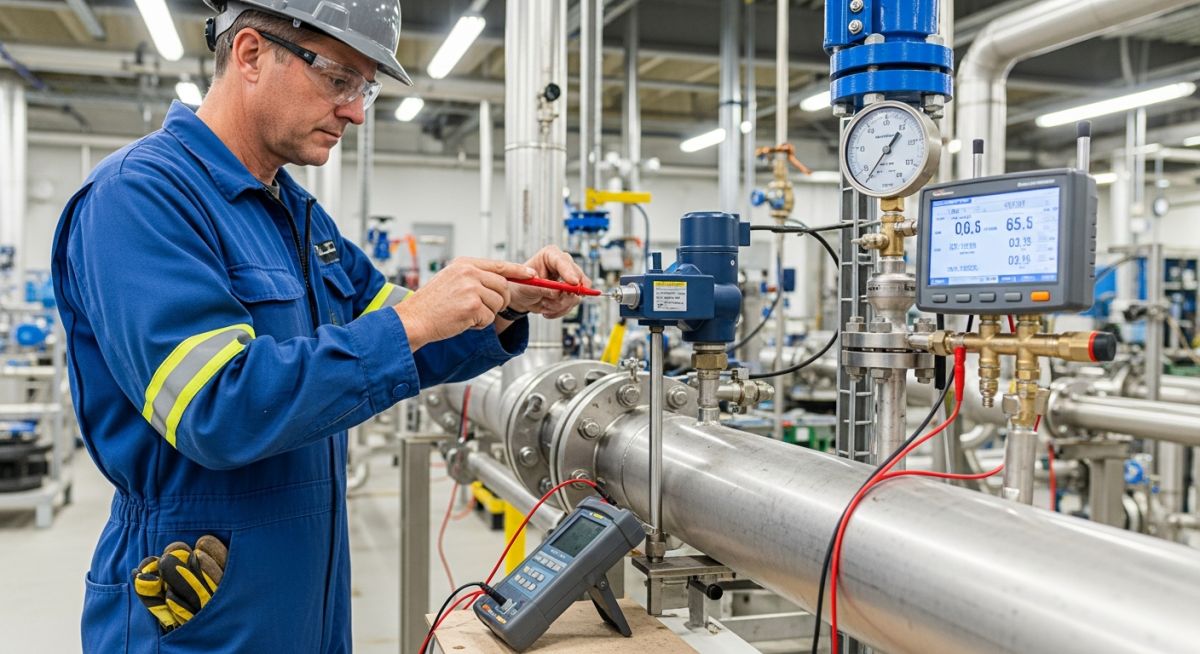
Imagine a massive petrochemical refinery operating at 400°C and 150 bar. Now, imagine trying to manage that process manually with nothing but a hand-turn valve and a prayer.
Why is your separator still showing carryover despite the level setpoint being reached? Why do your control valves oscillate during simple throughput changes? These aren’t just mechanical glitches—they are failures in Instrumentation Engineering. This guide moves beyond basic definitions to show you how modern automation keeps the industrial world from quite literally exploding, providing you with the technical depth needed to master process control in 2026.
Key Takeaways
- The Feedback Loop: Understanding how sensors, controllers, and actuators work in unison to maintain process stability.
- Component Synergy: Why selecting the right transmitter is useless without proper signal conditioning and final control element sizing.
- 2026 Standards: Integrating IIoT and smart diagnostic instrumentation into traditional ISA-S5.1 frameworks.
What is Instrumentation Engineering?
Instrumentation Engineering is a specialized branch of engineering focused on the measurement and control of process variables within a production or manufacturing area. It utilizes sensors to monitor parameters like pressure, temperature, and flow, transmitting data to controllers that adjust final control elements to ensure safe, efficient, and automated operations.
“In my two decades on the field, I’ve seen that the best Instrumentation Engineering isn’t about the most expensive sensors; it’s about the precision of the loop tuning. A smart transmitter is only as smart as the engineer who understands its vibration and thermal limits.”
— Atul Singla, Founder of Epcland
Table of Contents
- 1. The Core Pillars of Instrumentation Engineering (Standard ISA-S5.1)
- 2. Key Components of Instrumentation Engineering Systems
- 3. Real-World Example of Instrumentation Engineering in Oil & Gas
- 4. How Instrumentation Engineering Drives Industrial Automation
- 5. Future Trends in Instrumentation Engineering (2026)
- 6. Instrumentation Engineering Failure Case Study
- 7. Expert Insights: Lessons from 20 Years
- 8. Frequently Asked Questions
Complete Course on
Piping Engineering
Check Now
Key Features
- 125+ Hours Content
- 500+ Recorded Lectures
- 20+ Years Exp.
- Lifetime Access
Coverage
- Codes & Standards
- Layouts & Design
- Material Eng.
- Stress Analysis
Instrumentation Engineering Mastery Quiz
Test your knowledge of process control and ISA standards (2026 Edition).
Question 1 of 5
In Instrumentation Engineering, what is the primary function of a “Transducer”?
The Core Pillars of Instrumentation Engineering (Standard ISA-S5.1)
At its fundamental level, Instrumentation Engineering is the science of automated observation and response. While a mechanical engineer focuses on the physical integrity of a vessel and a chemical engineer on the reaction kinetics, the instrumentation engineer is responsible for the “nervous system” of the plant. This discipline is governed globally by the International Society of Automation (ISA), specifically the ISA-S5.1 standard, which provides the universal language for P&ID (Piping and Instrumentation Diagram) symbols and identification.
Every instrumented system must perform four critical functions to ensure process stability: Measurement, Comparison, Calculation, and Correction. Without accurate measurement, the comparison is flawed; without precise calculation (logic), the correction is erratic. In 2026, these pillars have evolved from simple pneumatic bellows to high-speed digital fieldbus systems that transmit not just the process variable, but also the “health” of the instrument itself.
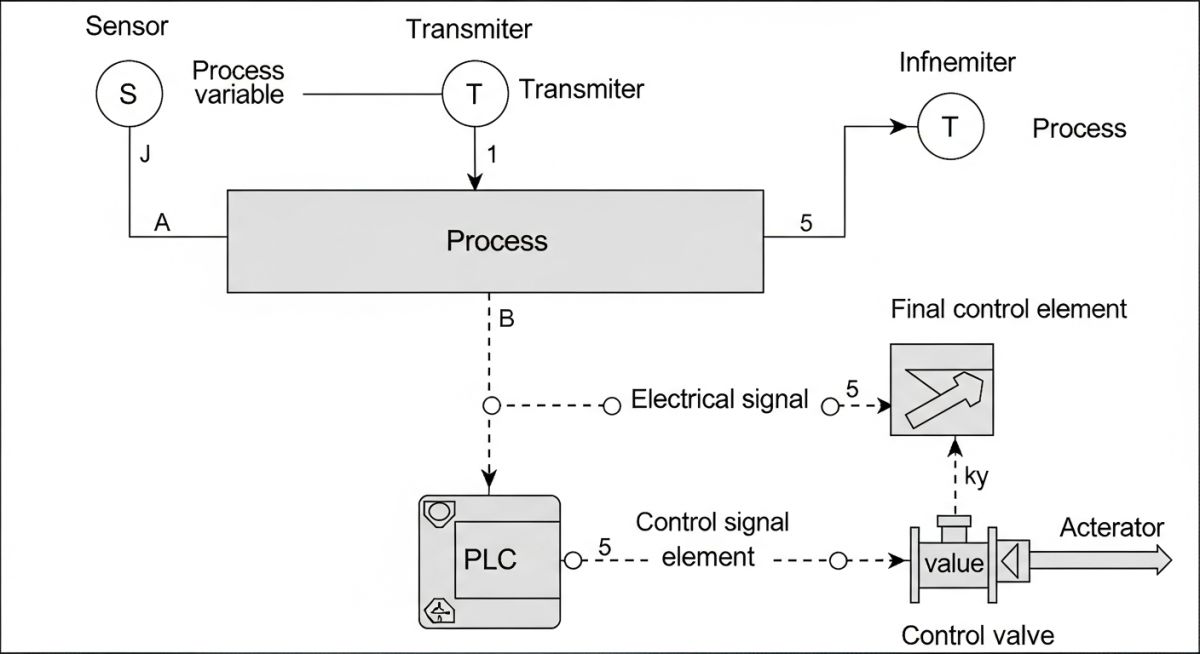
Figure 1: The Closed-Loop Feedback Architecture in Industrial Process Control.
Key Components of Instrumentation Engineering Systems
To understand how a system functions, we must deconstruct it into its physical hardware. In Instrumentation Engineering, components are categorized by their position in the control loop.
1. Primary Sensing Elements (Sensors and Transducers)
The sensor is the interface between the physical process and the electronic system. Whether it is an RTD (Resistance Temperature Detector) for heat measurement or a Coriolis meter for mass flow, the Instrumentation Engineering requirement is the same: linearity, repeatability, and low hysteresis. Transducers then take this physical change (like a change in resistance) and convert it into a standardized energy form.
2. Signal Conditioning and Transmitters
Raw sensor signals are often weak and prone to electromagnetic interference. Transmitters serve the vital role of “conditioning” this signal—amplifying it, filtering out noise, and converting it into a standard industrial signal, traditionally 4-20mA, or modern digital protocols like HART, Foundation Fieldbus, or Profibus. In 2026, “Smart Transmitters” dominate the field, allowing engineers to perform remote ranging and diagnostics without ever entering a hazardous zone.
3. Controllers and Final Control Elements
The Controller (PLC, DCS, or PID controller) is where the “comparison” and “calculation” occur. It receives the signal, compares it to a setpoint, and calculates the required output. This output is then sent to the Final Control Element—usually a control valve or a Variable Frequency Drive (VFD). In Instrumentation Engineering, the final control element is the “muscle” that physically alters the process to bring it back to the desired state.
Real-World Example of Instrumentation Engineering in Oil & Gas
To visualize Instrumentation Engineering in action, consider a 3-Phase Separator in an upstream oil production facility. The goal is to separate crude oil, produced water, and natural gas. This requires three distinct control loops working in high-speed synchronicity. A Guided Wave Radar (GWR) level transmitter measures the interface between oil and water, sending a 4-20mA HART signal to the Distributed Control System (DCS).
Simultaneously, a Pressure Transmitter (PT) monitors the gas blanket pressure. If the pressure exceeds the setpoint defined by ASME Section VIII safety margins, the DCS logic triggers a “Correction” phase. It modulates a pneumatic globe valve (the final control element) to flare the excess gas. This integration of sensing, logic, and mechanical action is the hallmark of professional Instrumentation Engineering.
Engineering Standards & Protocol Comparison
Modern Instrumentation Engineering is dictated by strict adherence to international standards to ensure interoperability and safety. Below is a data-driven comparison of the communication protocols utilized in 2026 industrial environments.
| Protocol Type | Physical Layer | Data Speed | Primary Use Case |
|---|---|---|---|
| Conventional Analog | 4-20 mA Loop | Real-time (N/A) | Legacy plants / Simple loops |
| HART 7.0 | Analog + Digital | 1.2 kbps | Smart diagnostics over existing wiring |
| Foundation Fieldbus | Twisted Pair (H1) | 31.25 kbps | Complex multi-variable control loops |
| Ethernet-APL (2026) | Two-Wire Ethernet | 10 Mbps | High-speed IIoT & Big Data analytics |
Pro Tip: When designing systems in 2026, always reference IEC 61511 for Functional Safety. Instrumentation Engineering isn’t just about control; it’s about the Safety Instrumented System (SIS) that prevents catastrophic failures.
Interactive Instrumentation Engineering: 4-20mA Signal Converter
In the field, an Instrumentation Engineering professional must constantly verify the relationship between a physical process variable (PV) and its corresponding electrical signal. Use this calculator to simulate how a transmitter scales a process range into a standard 4-20mA current loop.
Process value at 4mA (e.g., 0 Bar)
Process value at 20mA (e.g., 100 Bar)
Calculated Process Variable
Calculation based on linear scaling (2026 Logic)
EPCLand YouTube Channel
2,500+ Videos • Daily Updates
Don’t miss this video related to Instrumentation Engineering
Summary: A Process & Instrumentation Diagram (P&ID) (Also known as PEFS, Process Engineering Flow Scheme) is a fundamental ……
Instrumentation Engineering Failure Case Study
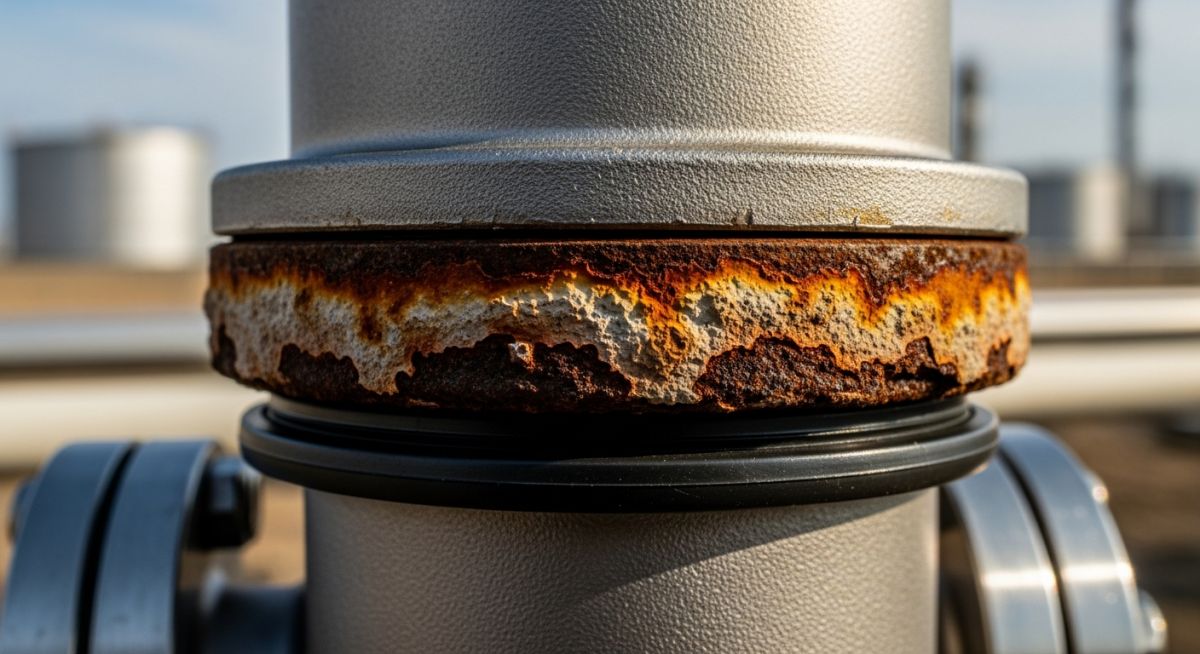
The Scenario: False High-Level Trip in a Refinery Flash Drum
In a major refinery operation in early 2026, an automated emergency shutdown (ESD) was triggered by a high-level alarm on a critical flash drum. However, physical manual gauging revealed the vessel was only at 45% capacity. The shutdown resulted in 12 hours of lost production, costing the facility approximately $450,000.
The Root Cause Analysis (RCA)
The Instrumentation Engineering team performed a forensic audit of the Differential Pressure (DP) Level Transmitter. The investigation found:
- Diaphragm Corrosion: As shown in the visual above, the chemical compatibility of the Hastelloy-C diaphragm was compromised by an undocumented change in the process fluid’s acidity.
- Hydrogen Permeation: Hydrogen atoms had permeated the metal diaphragm, causing a “build-up” of pressure in the fill-fluid, which shifted the transmitter’s zero-point.
- Impulse Line Blockage: The low-pressure reference leg was partially plugged with paraffin waxes, creating a false differential pressure reading.
Lessons Learned:
“This failure highlights why Instrumentation Engineering is not a ‘set and forget’ discipline. Material selection must be audited whenever process chemistry changes, and impulse line maintenance remains the Achilles’ heel of DP-based level measurement.”
The Solution
The engineering team replaced the DP transmitter with a Non-Contacting Radar (NCR) sensor. By moving to a technology that does not rely on physical contact or impulse lines, the facility eliminated the risk of corrosion and plugging, ensuring 99.9% uptime for the remainder of 2026.
Expert Insights: Lessons from 20 years in the field
Trust the Physics, Not the Screen
In modern Instrumentation Engineering, it is easy to trust a digital readout. Always verify your loop with a secondary manual gauge or a Fluke calibrator before making process-wide changes.
Redundancy is Not Optional
For Safety Instrumented Functions (SIF), always implement 2oo3 (two-out-of-three) voting logic. A single sensor failure should never lead to a total plant blackout.
Documentation is Part of the Loop
An instrument without a calibration certificate or a Loop Sheet is a liability. Maintain your 2026 digital asset registers religiously for regulatory compliance.
Frequently Asked Questions
What is the difference between Control and Instrumentation?
Why is 4-20mA still used in 2026?
Do I need a license for Instrumentation Engineering?
How do I troubleshoot a noisy instrument signal?
What is the “Live Zero” in instrumentation?
Is AI replacing Instrumentation Engineers in 2026?
References & Standards
📚 Recommended Resources: Instrumentation Engineering
Read these Guides



Related posts:
![High-grade industrial Wing Nut Types and Applications for mechanical assemblies.]()
Wing Nut Types and Applications: The 2026 Engineering Guide
![Industrial Monorail Crane Systems installed in a modern manufacturing plant 2026.]()
Monorail Crane Systems: Design, Types & 2026 Standards Guide
![Lead engineer performing a Factory Acceptance Test FAT on an industrial skid system 2026]()
Factory Acceptance Test FAT: The 2026 Engineering Guide to Zero-Defect Delivery
![Professional engineering workspace showing a Basis of Design document layout for a 2026 project.]()
Basis of Design: How to Write a BOD for Engineering Projects in 2026
![Industrial Flare Knockout Drum Sizing and installation in a refinery relief system.]()
Flare Knockout Drum Sizing: Design & API 521 Standards (2026 Guide)
![Advanced Reboiler Control Systems in a modern petrochemical refinery 2026.]()
Reboiler Control Systems: Engineering Guide to Precision Control 2026