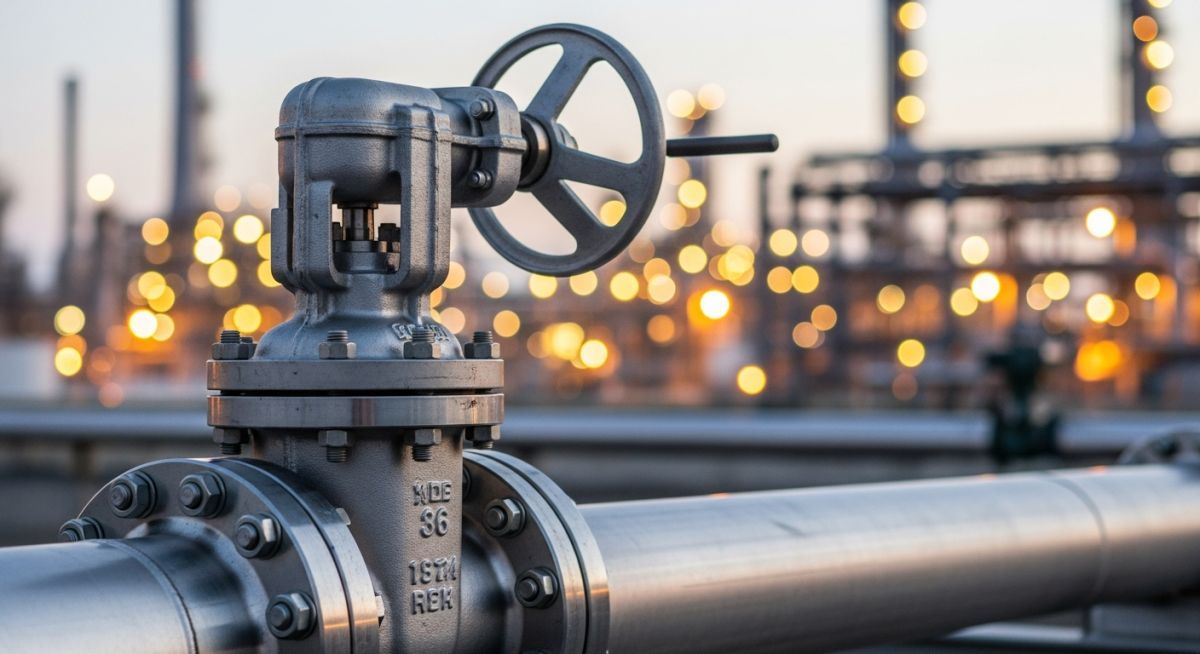
Throttling Valve Guide: Types, Working Principles & Selection (2026)
Have you ever tried to regulate flow by slightly “cracking” a Gate Valve?
If you have, you likely returned a few weeks later to find the valve seat destroyed by “wire drawing” and the packing leaking due to severe vibration. This is the most common rookie mistake in piping design: confusing isolation with regulation.
While isolation valves are designed to be binary (fully open or fully closed), they fail catastrophically when forced to modulate. To control pressure, temperature, or flow rate precisely, you need a dedicated Throttling Valve.
In this guide, I’ll show you exactly how these valves handle high pressure drops, which types fit your specific piping class, and the critical math required to prevent cavitation from eating your valve trim.
Key Takeaways
- Core Function: Throttling valves create a variable restriction to manage flow and pressure.
- Top Selections: Globe and Needle valves offer the most linear and precise control.
- Failure Prevention: Proper Cv calculation is non-negotiable to avoid cavitation and noise.
What is a Throttling Valve?
A Throttling Valve is a mechanical device used to regulate the flow rate, pressure, or temperature of a fluid by providing a variable restriction. Unlike on/off valves, a throttling valve can operate at any intermediate position. It works by creating a calculated pressure drop (ΔP) to control the process output according to system demands.
“In 20 years of field engineering, I’ve seen more damage from ‘partially open’ gate valves than almost any other operator error. If you aren’t using a Globe or specialized Butterfly for throttling, you’re just waiting for a shutdown.”
— Atul Singla, Principal Engineer
Table of Contents
Throttling Mastery Quiz
Question 1 of 5
Complete Course on
Piping Engineering
Check Now
Key Features
- 125+ Hours Content
- 500+ Recorded Lectures
- 20+ Years Exp.
- Lifetime Access
Coverage
- Codes & Standards
- Layouts & Design
- Material Eng.
- Stress Analysis
What is a Throttling Valve? (Fundamentals & Physics)
In process engineering, a Throttling Valve is defined by its ability to modulate flow rather than simply stopping it. Unlike an isolation valve, which is binary in nature, a throttling valve creates a deliberate, controlled restriction. This restriction forces the fluid through a narrowed orifice, converting potential energy (static pressure) into kinetic energy (velocity).
The physics behind a Throttling Valve is governed by Bernoulli’s Principle. As the fluid passes through the valve’s “Vena Contracta” (the point of minimum cross-sectional area), the velocity reaches its maximum and the static pressure reaches its minimum. Once the fluid exits the restriction, some pressure is recovered, but a significant portion is lost as heat and turbulence. This permanent pressure loss, represented as ΔP, is the primary mechanism used to control the flow rate in a piping system.
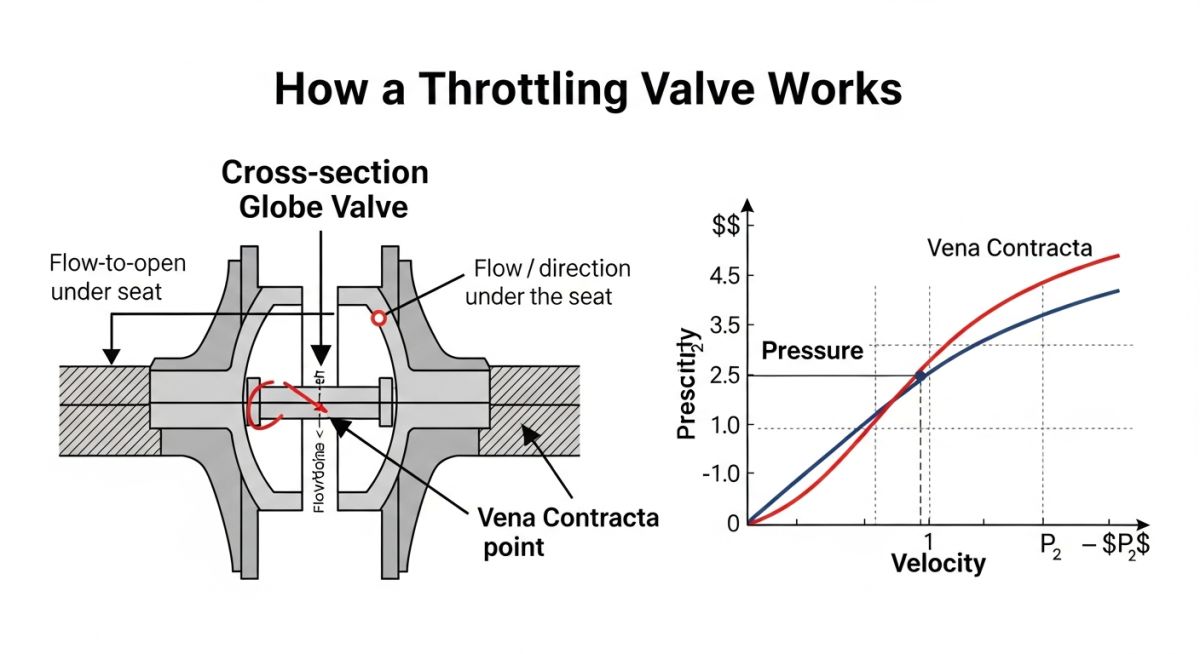
Figure 1: The relationship between pressure drop (ΔP) and velocity profile within a Throttling Valve.
Engineers must distinguish between “Throttling” and “Regulation.” While they are often used interchangeably, throttling specifically refers to the mechanical act of restricting flow, whereas regulation refers to the automated process of maintaining a specific setpoint (like pressure or temperature) using a throttling valve as the final control element.
How a Throttling Valve Works: Flow Characteristics
The performance of a Throttling Valve is not just about the size of the opening; it is about the “Valve Trim” design. The trim consists of the plug, seat, and stem. The shape of the plug determines the Flow Characteristic—the relationship between the valve stem’s position (percentage of stroke) and the flow rate through the valve.
1. Equal Percentage Characteristic
This is the most common profile for a Throttling Valve in process control. For equal increments of stem travel, the flow changes by an equal percentage of the existing flow. This is ideal for systems where the pressure drop across the valve decreases as the flow increases, providing highly sensitive control at low flow rates.
2. Linear Characteristic
In a Throttling Valve with linear trim, the flow rate is directly proportional to the valve stroke. If the valve is 50% open, the flow is 50% of the maximum Cv. This characteristic is typically used in liquid level control and systems where the pressure drop across the valve remains relatively constant.
3. Quick Opening Characteristic
Quick opening trims provide large changes in flow for very small changes in stem travel. While technically a “throttling” design, they are rarely used for fine modulation and are instead found in safety relief systems or rapid-response on/off applications.
Top 6 Types of Throttling Valves for Process Control
Selection of a Throttling Valve depends on the fluid state (gas vs. liquid), the required pressure drop, and the cleanliness of the media. Below are the industry-standard choices:
Globe Valves: The Throttling Standard
The Globe Valve is the gold standard for throttling. Its design forces fluid to change direction twice, creating a natural resistance that allows for high-precision modulation. Because the plug moves perpendicular to the seat, it minimizes seat wear and allows for “characterized” trims (Equal % or Linear) to be easily swapped.
Needle Valves: Precision Instrumentation
Essentially a miniature globe valve with a long, tapered needle-like plug. These are used for Throttling Valve applications in 1/4″ to 1″ lines where extremely small, incremental flow adjustments are required, such as in laboratory sampling or chemical injection.
Butterfly Valves: High-Volume Throttling
While traditionally used for isolation, high-performance Butterfly Valves can be used for throttling in large-diameter cooling water lines. However, they are generally limited to the 20-degree to 70-degree opening range; throttling too close to the seat causes high-velocity “jetting” that can lead to cavitation and disc flutter.
Pinch & Diaphragm Valves: Slurry Handling
In mining or wastewater applications, standard metal-seated valves would erode instantly. Pinch valves utilize a flexible elastomer sleeve that is compressed to throttle flow. These are the preferred Throttling Valve type for abrasive slurries and corrosive chemicals.
Expansion Valves: Thermal Throttling
Specific to refrigeration cycles, the Thermostatic Expansion Valve (TXV) is a specialized Throttling Valve that regulates the flow of refrigerant into the evaporator based on the “Superheat” temperature, facilitating the phase change from liquid to gas.
Throttling Valve Selection Guide: Sizing & Cv Calculation
Selecting the correct Throttling Valve is a balance between hydraulic requirements and mechanical longevity. The most critical factor in selection is the Flow Coefficient (Cv). If a valve is oversized, the “effective control range” is compressed into a tiny fraction of the stem travel, leading to “hunting” and rapid seat erosion.
The Core Throttling Equation
To size a Throttling Valve for liquid service, engineers use the standard sizing formula to determine the required Cv:
Once the required Cv is calculated, it is standard practice to select a Throttling Valve where the calculated Cv falls between 60% and 80% of the valve’s maximum rated capacity. This provides enough “headroom” for process upsets while maintaining precise control.
Throttling Valve Comparison Matrix
| Valve Type | Control Precision | Pressure Drop Capacity | Best Application |
|---|---|---|---|
| Globe Valve | Excellent | High | Steam, Water, Feedwater Control |
| Needle Valve | Ultra-High | Moderate | Chemical Injection, Lab Sampling |
| Butterfly Valve | Fair | Low | Large Cooling Water Lines (>8″) |
| Pinch Valve | Good | Low | Abrasive Slurries, Mining |
Engineering Standards for the Throttling Valve
When specifying a Throttling Valve, compliance with international standards ensures safety and interchangeability. The following are the most critical standards utilized in 2026:
- API 623: Specifically covers Steel Globe Valves with flanged or butt-welding ends. This is the primary standard for heavy-duty Throttling Valve design in the oil and gas industry.
- ASME B16.34: Governs pressure-temperature ratings and wall thickness for valves. It is the baseline for ensuring the valve body can withstand the high-velocity turbulence inherent in throttling.
- ISA 75.01.01: The definitive guide for Flow Equations for Sizing Control Valves. This standard provides the math for handling non-Newtonian fluids and choked flow conditions.
- IEC 60534: International standard for industrial-process control valves, specifically focusing on noise prediction and aerodynamic flow.
Material Selection for Throttling Valve Service
Because a Throttling Valve operates in a high-velocity environment, standard carbon steel trims often fail due to impingement erosion. To extend service life, engineers frequently specify “hard-facing.”
Stellite™ (Cobalt-Chrome alloy) is the industry standard for overlaying the seat and plug of a throttling valve. It provides extreme hardness and resistance to thermal cycling. For corrosive services, Monel or Hastelloy trims are used to prevent chemical pitting while the valve is in a partially open (and highly vulnerable) state.
Throttling Valve Cv Calculator
Estimate the required Flow Coefficient (Cv) for liquid service based on process parameters.
Liquid flow in US Gallons/Min
Water = 1.0
Delta P (P1 – P2)
Engineers' Rule of Thumb
Always avoid selecting a Throttling Valve where the required Cv is less than 10% of the valve's capacity. Operating in the "seating zone" causes high-velocity jetting that leads to Seat Wire Drawing, effectively turning your precision valve into a leaky pipe.
Throttling Valve Failure Case Study: Cavitation in High-Pressure Condensate
System Background
A combined-cycle power plant utilized a 4-inch Globe-style Throttling Valve to control the level of a high-pressure condenser. The valve operated with an inlet pressure (P1) of 450 PSI and a discharge pressure (P2) of 50 PSI.
The Problem
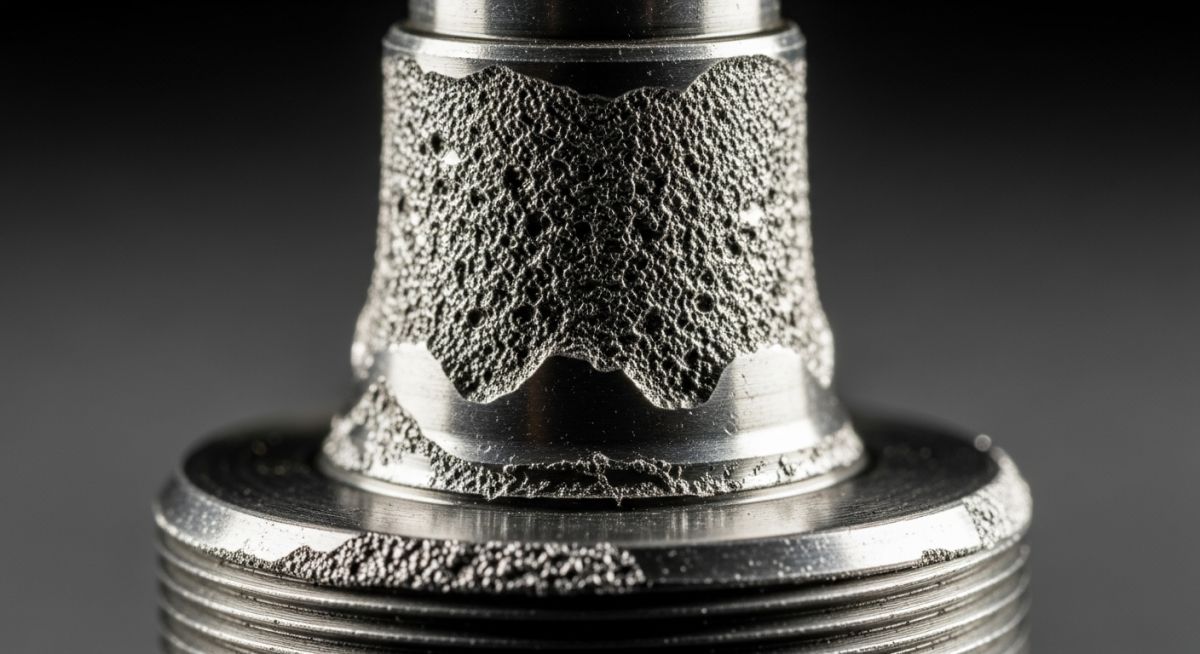
Within 4 months of commissioning, operators reported severe vibration and a "gravel-like" noise emanating from the pipe. During the first shutdown, the valve was found to be leaking 15% of its capacity even when fully closed.
Root Cause Analysis
Upon inspection of the Throttling Valve trim, the plug and seat showed severe "cinder-block" pitting, a hallmark of cavitation. The engineering team discovered that while the valve was sized correctly for the max flow rate, the "Vena Contracta" pressure was dropping below the fluid's vapor pressure.
As the high-velocity liquid passed through the narrow throttling orifice, vapor bubbles formed. As these bubbles moved into the higher-pressure region downstream, they collapsed violently, sending micro-jets of liquid into the metal surface at supersonic speeds, literally "eating" the stainless steel trim.
Engineering Fix & Results (2026 Retrofit)
- ✓ Multi-Stage Trim: Replaced the single-stage plug with a "Drilled Hole" multi-stage cage. This broke the total pressure drop into four smaller, manageable steps, ensuring the pressure never dropped below vapor pressure.
- ✓ Hard Facing: Upgraded the seat and plug material to 316 Stainless Steel with a full Stellite 6 overlay for increased erosion resistance.
- ✓ Outcome: The modified Throttling Valve has now been in continuous service for 24 months with zero leakage and a 12 dB reduction in noise levels.
Expert Insights: Lessons from 20 years in the field
1 Listen to the "Gravel"
If your Throttling Valve sounds like it is passing gravel or marbles, it is not a piping debris issue. It is almost certainly cavitation. Ignoring this sound for even a few days can result in the complete destruction of the valve plug.
2 The 10% Rule
Never specify a Throttling Valve that will operate at less than 10% open for extended periods. At very low lift, the high-velocity "jet" of fluid is concentrated on a tiny area of the seat, causing rapid erosion known as "wire drawing."
3 Flow Direction Matters
In Globe valves, "Flow-to-Open" (under the seat) is standard for throttling to ensure stability. However, for high-pressure steam, "Flow-to-Close" is sometimes used to prevent the plug from "hunting" near the seat. Always check the manufacturer's arrow.
4 Packing Maintenance
Throttling service involves constant stem movement. This creates more wear on the gland packing than isolation service. In 2026, we recommend "Live-Loaded" packing (using Belleville springs) to maintain a constant seal pressure during cycles.
Frequently Asked Questions
What is the primary purpose of a throttling valve?
The primary purpose is to regulate flow rate, pressure, or temperature by introducing a variable restriction that creates a controlled pressure drop in the fluid stream.
What is the difference between an isolation valve and a throttling valve?
An isolation valve (like a Gate or Ball valve) is designed for binary on/off service. A Throttling Valve is designed to operate at any intermediate position to modulate flow without sustaining mechanical damage to the seats.
Can a ball valve be used as a throttling valve?
Standard ball valves are poor throttlers because the seat is exposed to high-velocity flow in the partially open position. However, "V-Port" or "Characterized" ball valves are specifically designed for throttling service.
How do I prevent cavitation in my throttling valve?
Cavitation can be prevented by using multi-stage trim (to drop pressure gradually), increasing the downstream pressure, or selecting materials with Stellite hard-facing to resist the impact of bubble collapse.
When should I choose a needle valve over a globe valve?
Choose a needle valve for small diameter lines (usually under 1 inch) where ultra-fine, precise adjustment of flow is required, such as in chemical dosing or instrumentation air systems.
What is "Wire Drawing" in throttling valves?
Wire drawing is a form of erosion where high-velocity fluid cuts small, wire-like grooves into the valve seat. This typically happens when a Throttling Valve is operated too close to the seat for long periods.
Summary
Mastering the application of the Throttling Valve is a cornerstone of process engineering. Whether you are using a Globe valve for high-pressure steam or a Needle valve for precision dosing, understanding the relationship between Cv, pressure drop, and material limits is vital. By following the standards set by API and ASME, and utilizing proper sizing math, you can ensure your system operates efficiently while avoiding the costly pitfalls of cavitation and vibration.
Safe Engineering! — The Epcland Team (2026)
Expert Insights: Lessons from 20 years in the field
-
•
The 10% Kill Zone: Never select a Throttling Valve that will spend 80% of its life at less than 10% lift. This creates a high-velocity "jet" that destroys the seat via wire drawing within weeks. Always size for the 60% to 80% operating range.
-
•
The Gravel Sound Myth: If you hear "marbles" or "gravel" inside your valve, it is NOT debris from the line. It is the sound of vapor bubbles imploding. Cavitation can eat through a 316SS plug in under 48 hours of high-pressure service.
-
•
Live-Loading is Mandatory: For 2026 standards, any Throttling Valve in continuous modulation should have "live-loaded" packing (using Belleville springs). This prevents the gland from loosening due to the constant stem vibration and cycling.
-
•
Stem Stability: In globe valves, always verify that the plug is "top-guided" or "cage-guided" for high-pressure throttling. Stem-only guiding is prone to "plug hunting," which causes erratic control and eventual stem snapping.
