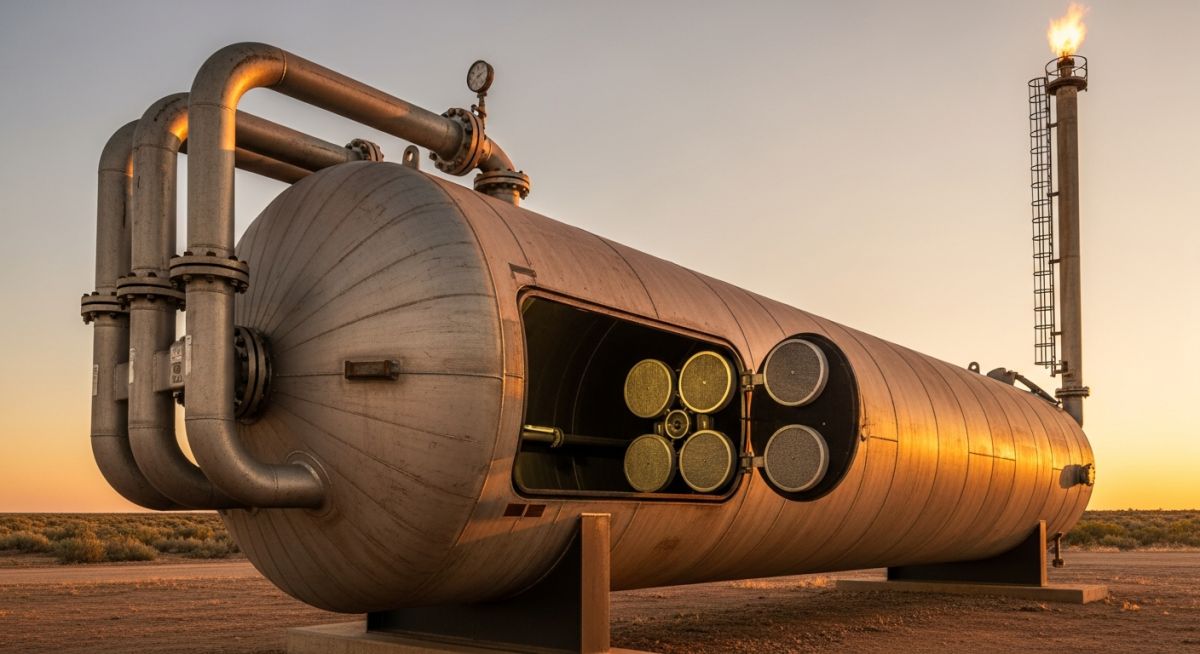
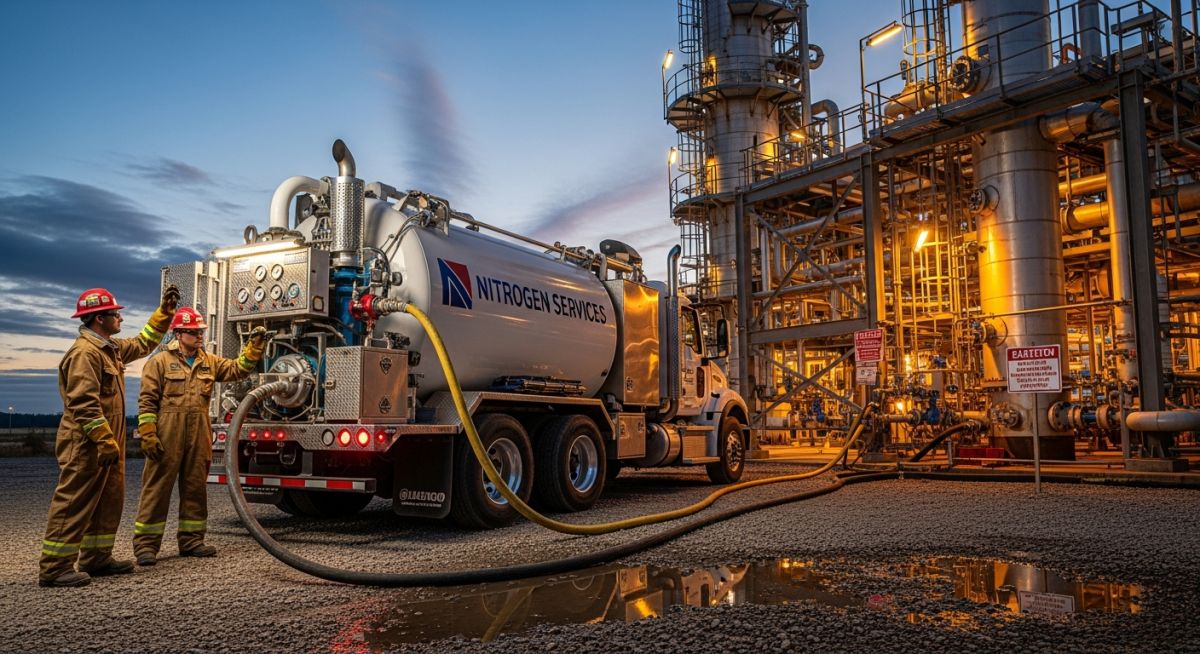
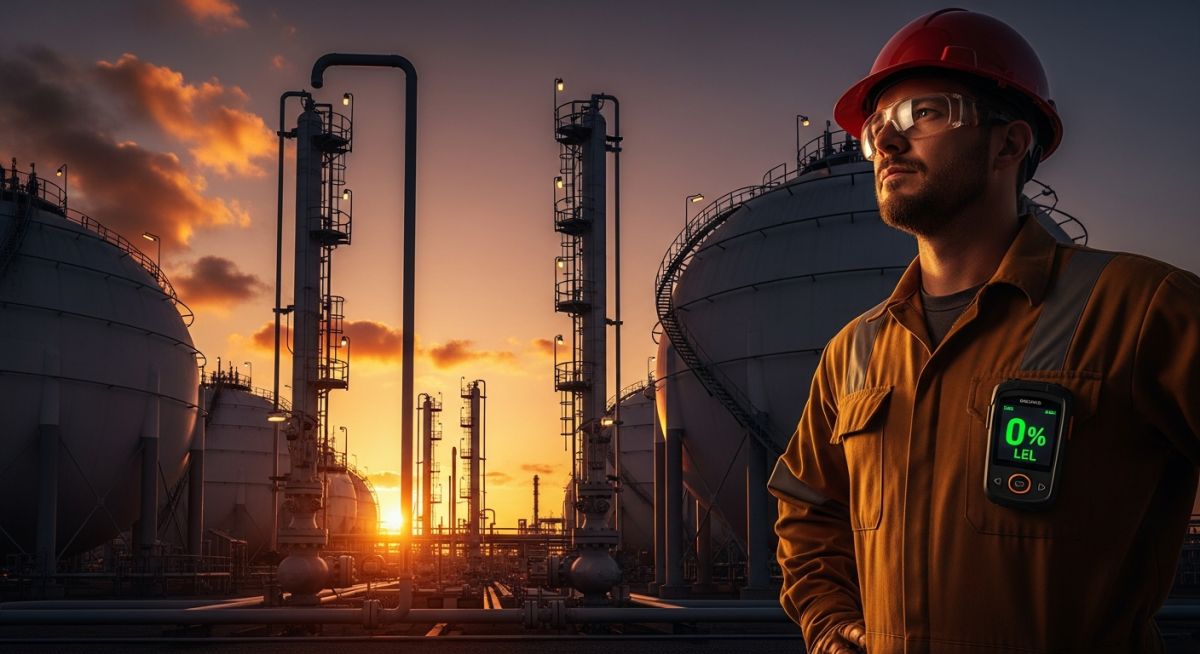
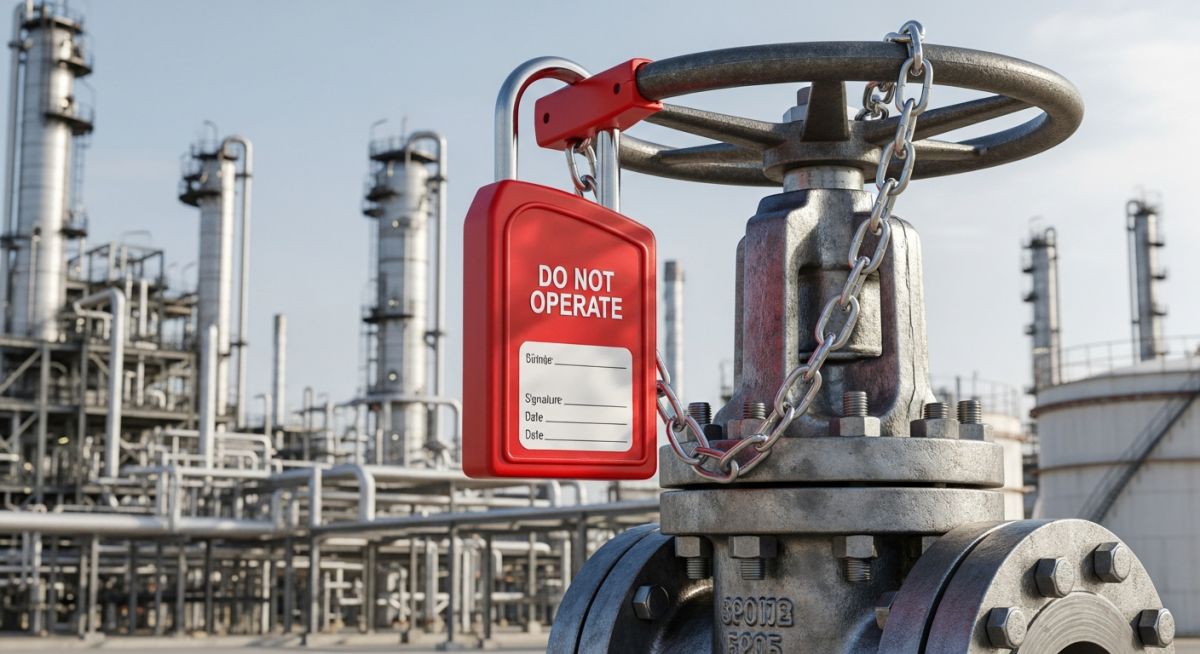
Verified Engineering Standard 2026 What is Inerting in Chemical Industries? Gases Used and Selection Criteria You are charging a flammable solvent into a reactor when a static discharge occurs. Without a properly designed system for Inerting in Chemical Industries, this routine operation becomes a catastrophic explosion. Understanding how to displace oxygen and control the Limiting Oxygen Concentration (LOC) is the difference between a standard shift and a Tier 1 process safety event. This guide provides a deep technical dive into the selection of inert media, the thermodynamics of gas displacement, and the practical application of Inerting in Chemical Industries to ensure your facility remains compliant with modern safety protocols. Key Engineering Takeaways Safety Margin: Always maintain oxygen levels at least 2% below the Limiting Oxygen Concentration (LOC) as per NFPA standards. Gas Selection: Nitrogen is the industry standard, but Argon and Carbon Dioxide offer specific thermodynamic advantages for high-density or high-temperature reactions. Methodology: Choosing between vacuum, pressure, or sweep purging depends entirely on vessel pressure ratings and gas consumption costs. What is Inerting in Chemical Industries? Inerting in Chemical Industries is the process of introducing a non-reactive gas, typically Nitrogen or Argon, into a vessel to reduce the oxygen concentration below the Limiting Oxygen Concentration (LOC). This prevents the formation of ignitable atmospheres, protecting equipment and personnel from fire and explosion risks during volatile chemical processing. "In my two decades of plant commissioning, I've seen that the most common failure in Inerting in Chemical Industries isn't the gas choice, but the failure to account for gas stratification. Never assume a vessel is inert just because the inlet valve is open; always validate with multi-point oxygen sensing." — Atul Singla, Founder Table of Contents The Critical Reason for Inerting Basic Principle of Inerting Common Gases Used for Inerting Engineering Criteria for Selection Primary Objectives of Inerting Different Modes of Application Types: Partial vs. Complete Inerting Safety Standards and Compliance Process Safety Challenge Test your knowledge on Inerting in Chemical Industries 1. What is the standard safety margin for Oxygen concentration below the LOC for a system not continuously monitored? A) 2% of the LOC B) 60% of the LOC (or a 40% margin) C) 10% below the LOC 2. Which gas is preferred for Inerting in Chemical Industries when the process involves extremely high temperatures where Nitrogen might react? A) Nitrogen B) Argon C) Carbon Dioxide 3. What is the primary disadvantage of using Carbon Dioxide (CO2) for inerting in large silos? A) Higher density leading to suffocation risks in pits B) High procurement cost C) Lack of cooling capacity 4. Which inerting method is most efficient for a vessel that cannot withstand high pressure? A) Pressure Purging B) Sweep-through Purging C) Vacuum Purging 5. In the context of Inerting in Chemical Industries, what does LOC stand for? A) Liquid Oxygen Control B) Low Operation Capacity C) Limiting Oxygen Concentration Next Question The Critical Reason for Inerting in Chemical Industries In industrial environments, the primary objective of Inerting in Chemical Industries is the mitigation of fire and explosion hazards. When volatile organic compounds (VOCs) or flammable dusts are processed, they inherently create a potentially explosive atmosphere. By introducing an inert gas, we displace the oxidant (usually atmospheric oxygen) to a level where the chemical chain reaction of combustion can no longer be sustained. This is governed by the Limiting Oxygen Concentration (LOC), a critical safety parameter defined by NFPA 69: Standard on Explosion Prevention Systems. Basic Principle of Inerting in Chemical Industries The fundamental principle relies on the "Fire Triangle" (Fuel, Heat, and Oxygen). While fuel and heat sources are often intrinsic to the process, oxygen is the variable that can be controlled through engineering. Inerting in Chemical Industries functions by diluting the gas phase within a vessel. Thermodynamically, the inert gas acts as a heat sink, absorbing energy from any localized ignition source and preventing the flame front from propagating. Common Gases Used for Inerting in Chemical Industries Selection of the correct medium is vital for both safety and process integrity. While many gases are non-combustible, only a few meet the rigorous requirements for large-scale Inerting in Chemical Industries: Nitrogen (N2): The most widely used gas due to its abundance (78% of air) and relative cost-effectiveness. It is generally produced on-site via Pressure Swing Adsorption (PSA) or Membrane technology. Carbon Dioxide (CO2): Often used for its superior cooling capacity and higher density, which helps in "blanketing" heavy vapors. However, it can be reactive with certain chemicals and presents a cryogenic hazard upon rapid expansion. Argon (Ar): Utilized specifically for high-temperature metallurgy or reactions involving lithium or magnesium, where Nitrogen would react to form nitrides. Flue Gas: In power plants or large boilers, treated flue gas (scrubbed of SOx and NOx) is sometimes used for Inerting in Chemical Industries as a cost-saving measure, provided the residual oxygen is consistently below the safety threshold. Engineering Criteria for Selecting the Inert Gas Selecting a medium for Inerting in Chemical Industries requires a rigorous evaluation of thermodynamic properties and chemical compatibility. Engineers must reference ASME Section VIII for vessel pressure ratings when designing high-pressure purging cycles. Thermodynamic Factors Specific Heat Capacity: Gases with higher heat capacities, such as CO2, are more effective at quenching flames by absorbing thermal energy. Molecular Structure: Diatomic gases like N2 behave differently than monoatomic Argon under high-compression states typical of Inerting in Chemical Industries. Operational Constraints Gas Density: A gas heavier than air (e.g., Argon) is ideal for open-top vessels, whereas a gas with similar density to air (Nitrogen) requires better mixing for Inerting in Chemical Industries. Inert Gas Comparison Matrix (2026 Standards) Property Nitrogen (N2) Carbon Dioxide (CO2) Argon (Ar) Relative Density (Air=1) 0.967 1.527 1.380 Reactivity Risk Low (Reactive with Li, Mg) Moderate (Acidic in water) Zero (Noble Gas) Cost Index Low ($) Medium ($$) High ($$$$) Primary Application General Blanketing Fire Suppression / Cooling Specialty Metals Primary Objectives of Inerting in Chemical Industries Beyond explosion prevention, the objectives of Inerting in Chemical Industries extend to product quality. According to API Standard 2000, maintaining an inert atmosphere prevents: Oxidative Degradation: Preventing the spoilage of polymers, oils, and pharmaceuticals. Moisture Ingress: Using dry inert gas to prevent the hydration of hygroscopic materials. Toxic Emission Control: Reducing the volume of VOCs released to the atmosphere by maintaining a positive pressure blanket. 🧮 Purge Cycle Calculator for Inerting in Chemical Industries Estimate the number of vacuum/pressure cycles required to reach your target oxygen concentration. This tool uses the dilution formula: Cfinal = Cinitial * (Plow / Phigh)n. Initial Oxygen % (Atmospheric = 20.9) Target Oxygen % (LOC Safety Margin) Lower Pressure (Plow) [bara] Upper Pressure (Phigh) [bara] Calculate Required Purge Cycles Required Cycles: 0 Note: This assumes perfect mixing. In real-world Inerting in Chemical Industries, add a 10-20% safety factor for gas stratification. Case Study: Optimizing Inerting in Chemical Industries for Reactor Safety Scenario A pharmaceutical plant batch reactor processing Toluene with a Limiting Oxygen Concentration (LOC) of 9.5%. Challenge High nitrogen consumption during powder charging through an open manway was causing operational bottlenecks. Solution Implementation of a "Sweep Purge" system combined with an automated O2 analyzer for real-time control. Technical Execution & Results The engineering team moved from a static pressure-blanketing approach to a dynamic flow-control strategy. By utilizing high-density Inerting in Chemical Industries principles, the team introduced Argon at the base of the vapor space during the charging cycle. Because Argon is 38% denser than air, it formed a stable "piston" layer that effectively shielded the solvent surface even when the manway was partially open. Impact Analysis (2026 Audit) ✔ Oxygen Stability: O2 levels maintained consistently at 4.5% (well below the 9.5% LOC). ✔ Cost Reduction: 30% reduction in gas consumption by switching from continuous sweep to demand-based pulsing. ✔ Compliance: Fully compliant with ISO 19353: Safety of Machinery regarding fire prevention. Don't miss this video related to Inerting in Chemical Industries Summary: Master Piping Engineering with our complete 125+ hour Certification Course: ...... ✅ 2500+ VIDEOS View Playlists → JOIN EXCLUSIVE EDUCATION SUBSCRIBE Expert Insights: Lessons from 20 years in the field 1 Static Accumulation Risks: When implementing Inerting in Chemical Industries, remember that the high-velocity injection of inert gas can itself generate static electricity. Always use grounded "dip tubes" or diffusers to reduce gas velocity and prevent spark discharge in the vapor space. 2 The Temperature Variable: LOC values are not static; they decrease significantly as process temperatures increase. If your reactor operates at 150°C, the LOC for your solvent is likely much lower than the value listed at ambient temperature in safety handbooks. 3 Redundant Validation: Electronic O2 sensors can fail due to "sensor poisoning" by solvent vapors. For critical Inerting in Chemical Industries applications, always pair a Zirconia-cell sensor with a Paramagnetic sensor to ensure cross-validation of safety data. References & Standards NFPA 69: Standard on Explosion Prevention Systems - The primary authority on limiting oxygen concentrations. API Standard 2000 - Venting Atmospheric and Low-pressure Storage Tanks (Inerting and Blanketing). ASME BPVC Section VIII - Rules for Construction of Pressure Vessels (Vacuum and Pressure Purging Limits). ISO 19353:2026 - Safety of machinery — Fire prevention and fire protection. Frequently Asked Questions: Inerting in Chemical Industries What is the most effective gas for Inerting in Chemical Industries? ▼ Nitrogen is the industry standard for Inerting in Chemical Industries due to its availability and inertness. However, Argon is more effective for high-density "blanketing" in open vessels, while CO2 is preferred for applications requiring additional cooling properties. How is the target oxygen level calculated for safety? ▼ Target levels are based on the Limiting Oxygen Concentration (LOC). For Inerting in Chemical Industries, safety protocols typically require maintaining oxygen levels at 60% of the LOC if the system is not continuously monitored, or 2% below the LOC if high-integrity sensors are used. Can I use compressed air for purging instead of inert gas? ▼ No. Compressed air contains 21% oxygen, which fuels combustion. Inerting in Chemical Industries specifically requires oxygen-free media like Nitrogen to displace the oxidant and render the atmosphere non-flammable. "Help! My oxygen levels keep rising even with the purge valve open." ▼ This "Human Hook" issue is common. Check for gas stratification (where air is trapped in "dead zones") or "short-circuiting" (where gas flows directly from inlet to vent without mixing). In Inerting in Chemical Industries, you must ensure the purge volume is at least 3-5 times the vessel volume for effective displacement. "Is it true that Nitrogen inerting can hide a leak?" ▼ Yes. If you have a pressurized blanket, a small mechanical leak might only leak Nitrogen, masking a failing seal. Advanced Inerting in Chemical Industries setups use flow meters on the supply line; a constant flow during a "static" period indicates a leak in the system. "Why does my Argon consumption cost twice as much as Nitrogen?" ▼ Argon is an atmospheric noble gas (0.93% of air), making it harder to extract than Nitrogen (78% of air). In Inerting in Chemical Industries, Argon is a "luxury" gas reserved for specific density requirements or metallurgy where Nitrogen would react. 📚 Recommended Resources: Inerting in Chemical Industries Read these Guides 📄 The Ultimate Guide to Lower Explosive Limit (LEL) and Upper Explosive Limit (UEL) (2026) 📄 Nitrogen Purging: A Comprehensive Guide 🎥 Watch Tutorials What Caused the 1988 Gas Phase Explosion Inside a Centrifuge? Part 8 of 11 II Reactor Layout in Plant Design | Location, Nozzles & Piping