Pipeline Pigging: The Complete Engineering Guide (2026)
Pipeline Pigging is the critical operational process of propelling a device through a pipeline to perform cleaning, dimensioning, or inspection functions without stopping the product flow. In the realm of pigging oil and gas infrastructure, understanding the mechanics of pigging systems is essential for maintaining asset integrity and ensuring flow assurance across vast transmission networks.
What is Pipeline Pigging?
Pipeline Pigging is a maintenance technique where a “Pig” (Pipeline Inspection Gauge) is inserted into a pigging pipeline via a launcher station. Driven by the differential pressure of the fluid flow, the pig scrapes debris, removes liquids (dewatering), or uses sensors for pigging inspection (Smart Pigging) to detect corrosion and cracks.
⚡ Quick Navigation
🧪 Pre-Reading Knowledge Check
Question 1 of 5
Complete Course on
Piping Engineering
Check Now
Key Features
- 125+ Hours Content
- 500+ Recorded Lectures
- 20+ Years Exp.
- Lifetime Access
Coverage
- Codes & Standards
- Layouts & Design
- Material Eng.
- Stress Analysis
📷 Types of Pigging: Identifying Pig Types
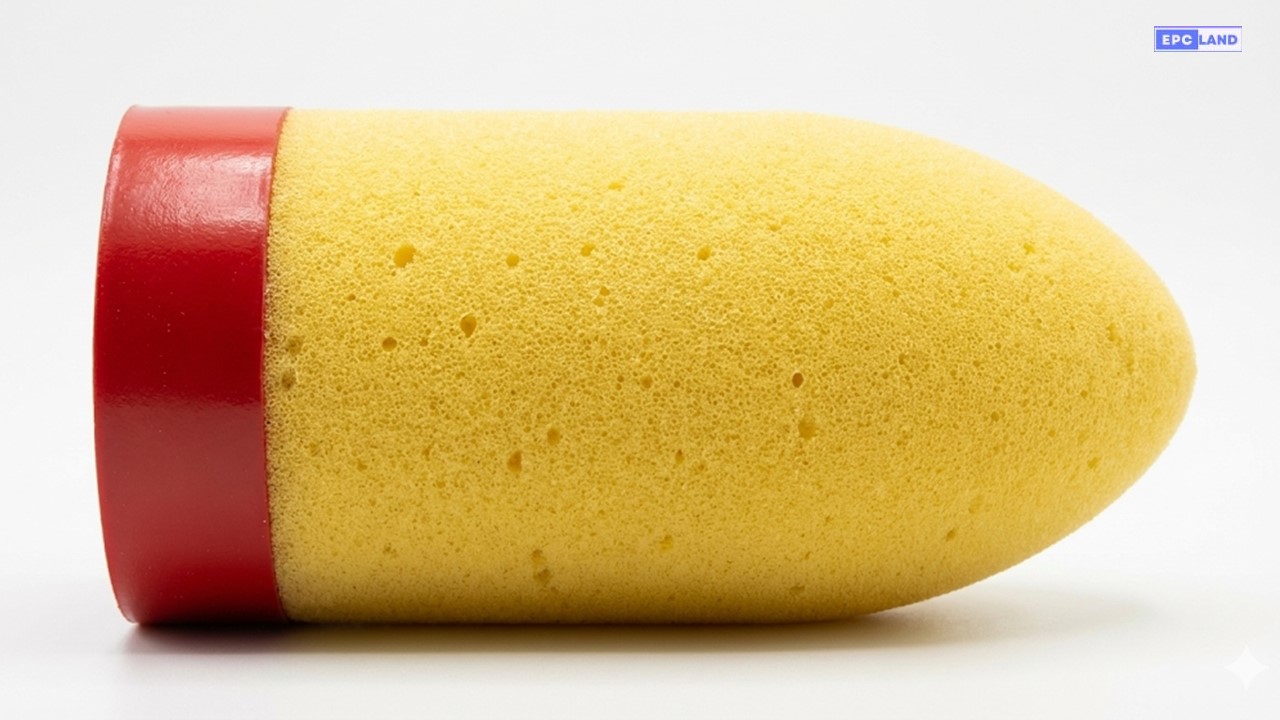
1. Foam Pig (Polly-Pig)
Visual ID: Bullet-shaped, soft polyurethane foam body.
Best For: Dewatering, drying, and navigating 1.5D bends or dents.
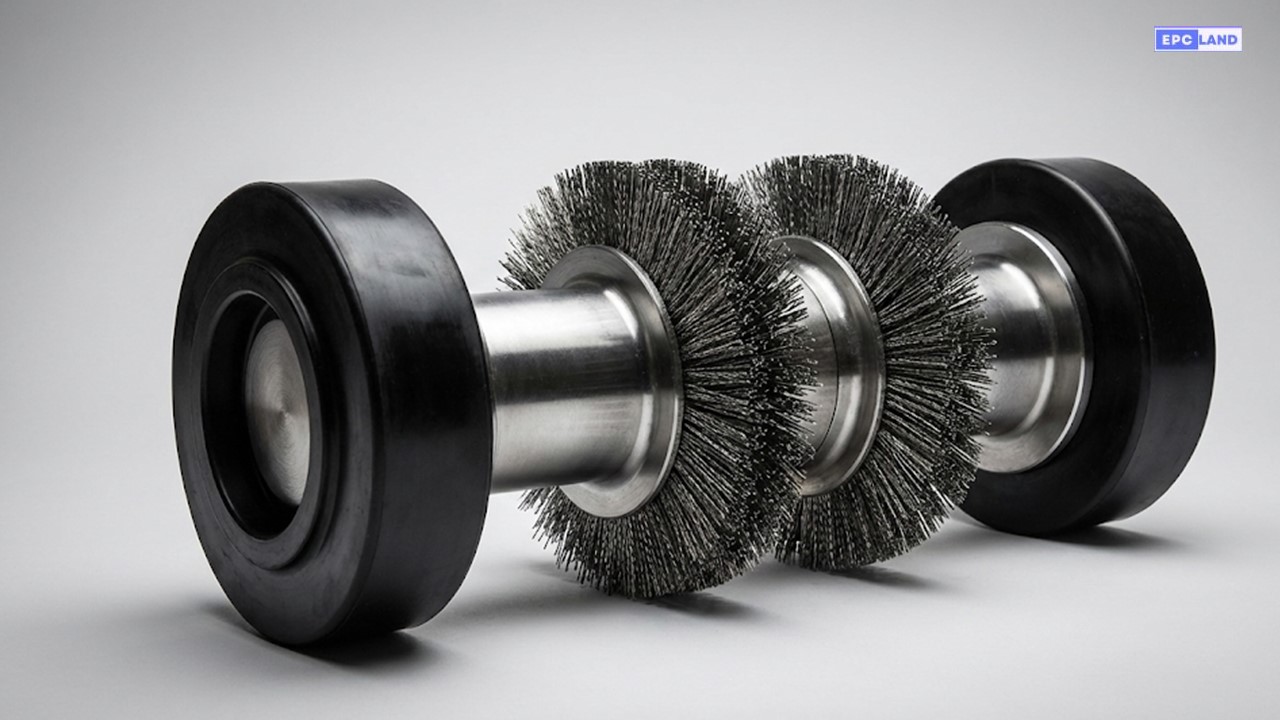
2. Mandrel Pig (Brush)
Visual ID: Steel central body, urethane cups, and wire brushes.
Best For: Scraping hard wax, rust, and scale (Black Powder).
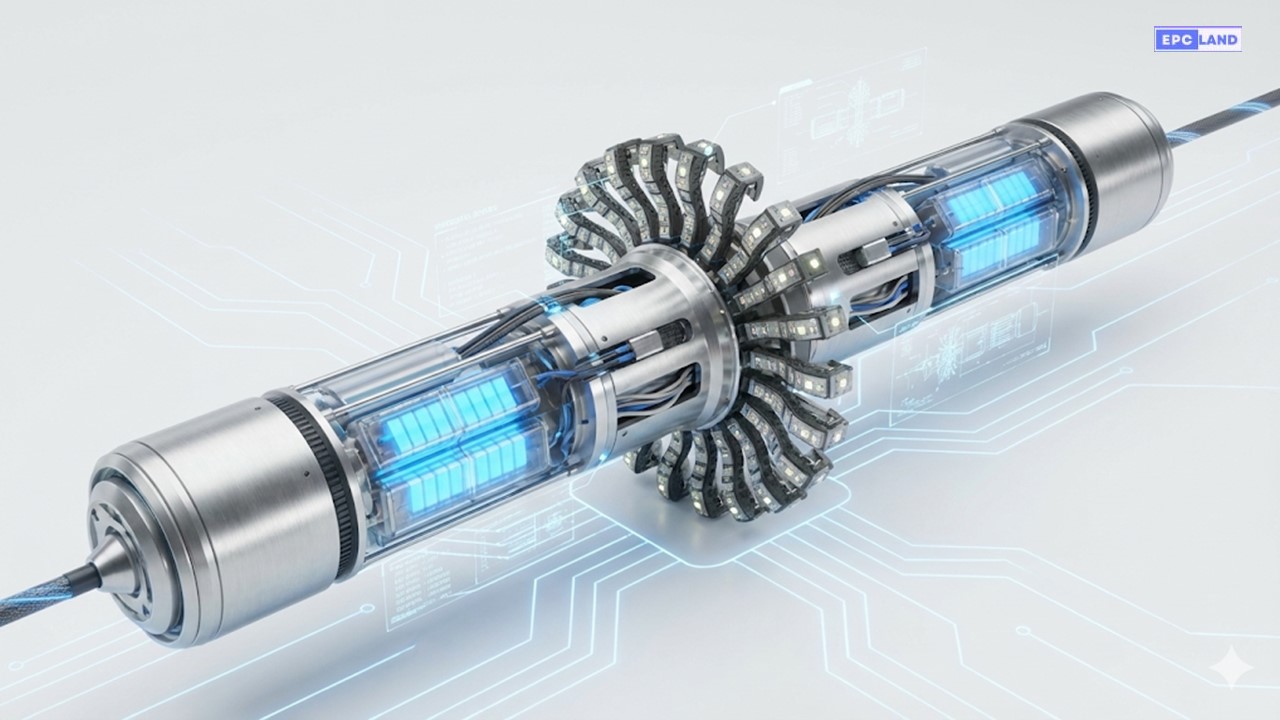
3. Smart Pig (ILI Tool)
Visual ID: Long, multi-section tool with battery packs, wheels, and sensor fingers.
Best For: Pigging inspection (corrosion/crack detection).
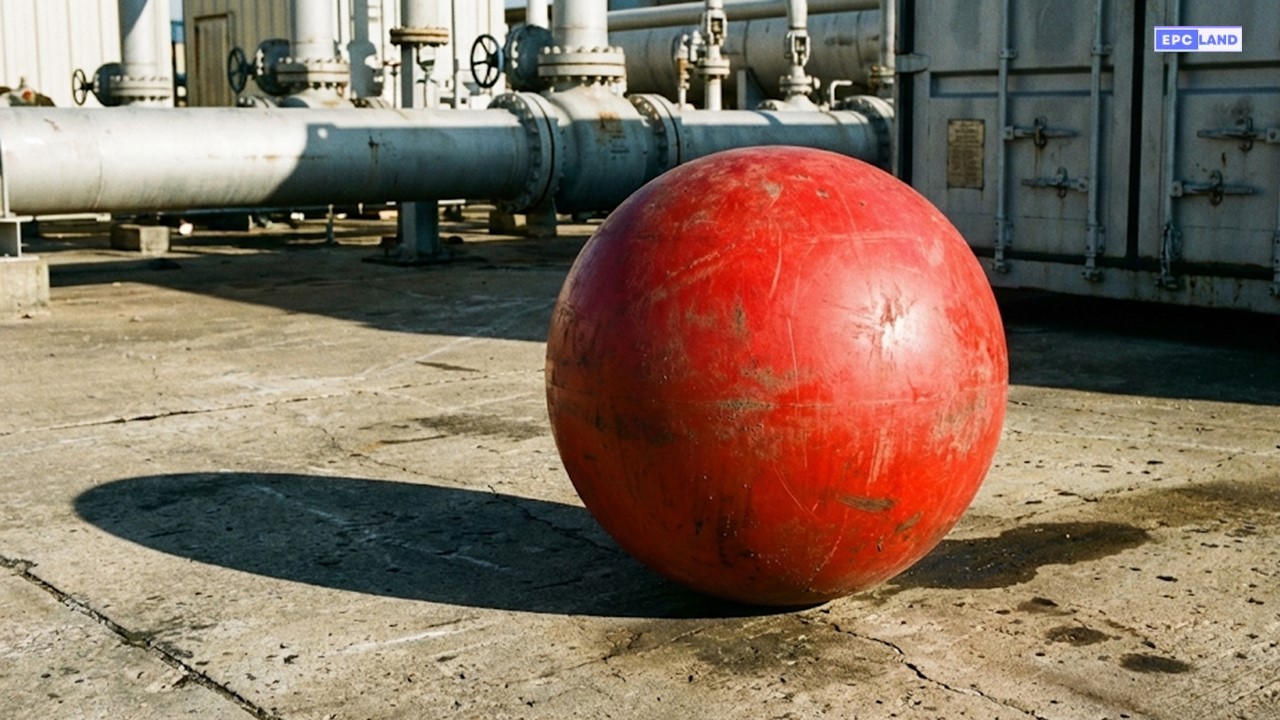
4. Spherical Pig
Visual ID: Perfectly round ball (solid or inflatable).
Best For: Product separation (batching) in multi-product lines.
*Images represent standard configurations in accordance with API 1163 standards.
Pigging Systems & Mechanics: How It Works
At the heart of pigging oil and gas operations lies the concept of differential pressure. A pipeline pigging operation is not merely about inserting a device; it is a synchronized hydraulic or pneumatic event. The “Pigging System” comprises the pipeline itself, the pumping/compression station, and the specialized entry/exit points known as Launchers and Receivers (or Traps).
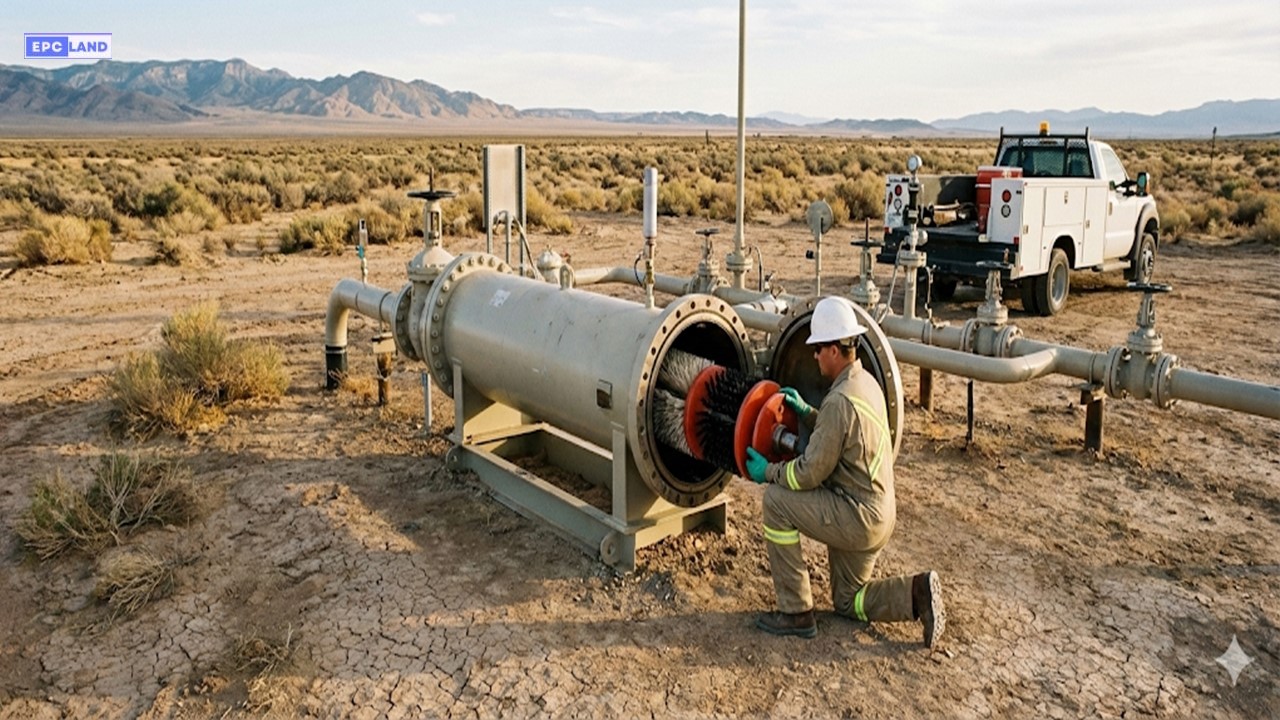
The Physics of Propulsion
For a pig to move, the force applied behind it must overcome the friction against the pipe wall and the static head of the column ahead. In pigging systems, this force is generated by the product flow itself. The sealing discs on the pig create a tight seal against the inner wall, preventing fluid bypass. As pumps or compressors continue to run, pressure builds behind the pig (Tail Pressure) while pressure drops in front (Nose Pressure).
📐 Engineering Calculation: Driving Pressure
The minimum pressure required to move a pig is defined by:
ΔP = (Ffric + Felev) / A
- ΔP = Differential Pressure required (Psi or Bar)
- Ffric = Friction Force (lbs or N)
- Felev = Force due to elevation head (if going uphill)
- A = Cross-sectional Area of the pig (in² or m²)
Note: Smart pigs are heavier and have higher magnetic drag, requiring significantly higher ΔP compared to lightweight foam pigs.
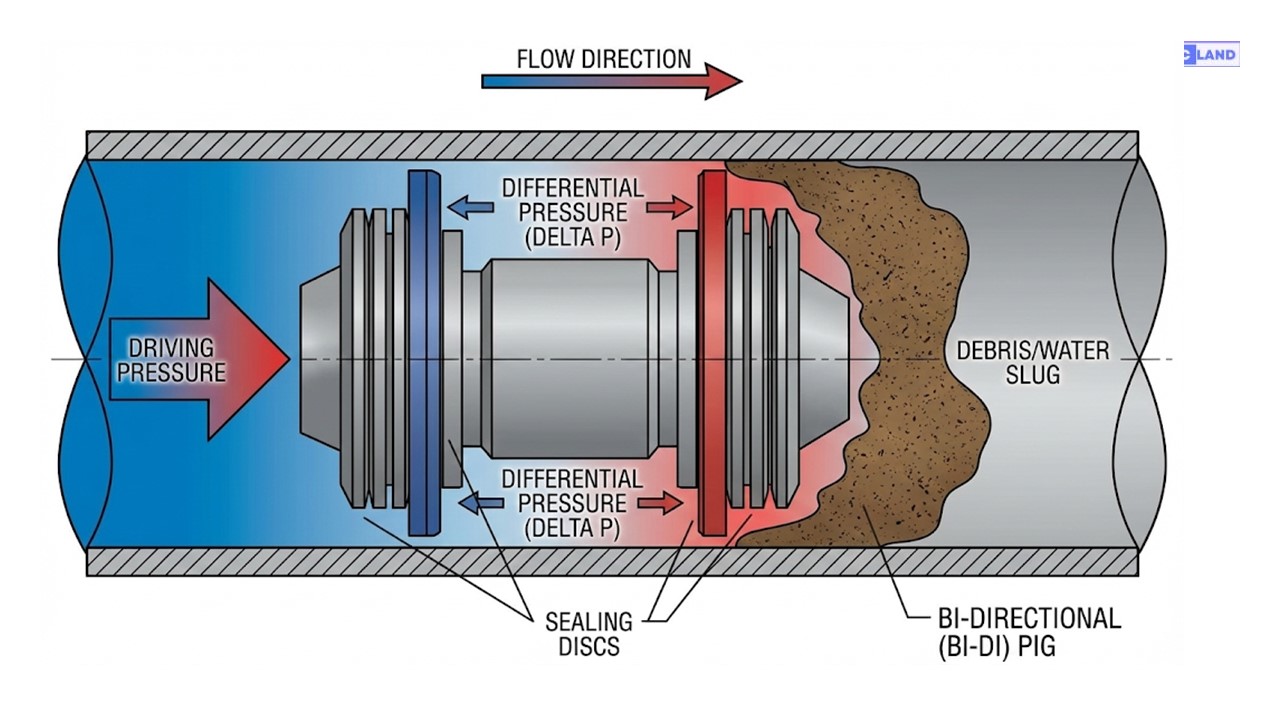
Pigging of Gas Pipelines vs. Liquids
The dynamics change drastically depending on the medium. Pigging of gas pipelines is notoriously difficult due to the compressibility of gas. If a pig encounters an obstruction (like a weld bead or debris), pressure builds up behind it like a compressed spring. Once the pig dislodges, it can accelerate to dangerous speeds (velocity excursion), potentially damaging the pipeline or the pig itself. Conversely, liquid is incompressible, allowing for smooth, controlled pig movement, making pigging oil and gas liquid lines operationally simpler.
Types of Pigging: Utility vs. Smart Inspection
Selecting the correct tool is vital. We categorize tools into two main families: Utility Pigs (for cleaning/sealing) and Intelligent Pigs (for pigging inspection). Understanding these types of pigging ensures you don’t send a sensitive electronic tool into a line full of hard wax.
1. Utility Pigs (Cleaning & Sealing)
These are the workhorses of the industry. They include:
- Foam Pigs (Polly-Pigs): Made of open-cell polyurethane foam. They are flexible and can navigate significant diameter reductions. Primary use: Drying and proving.
- Mandrel Pigs: A steel body with replaceable urethane cups or discs. These are aggressive cleaners equipped with wire brushes to scrape rust and wax.
- Solid Cast Pigs: Molded as a single piece of polyurethane. They offer a balance between flexibility and durability.
2. Smart Pigging (In-Line Inspection – ILI)
Smart pigging represents the advanced diagnostic tier. These tools carry on-board computers, battery packs, and sensor arrays. The most common technology is Magnetic Flux Leakage (MFL), which saturates the pipe wall with a magnetic field. Any leakage in this field indicates metal loss (corrosion).
| Pig Type | Primary Function | Key Advantage | Typical Cost |
|---|---|---|---|
| Foam Pig | Drying, Dewatering, Light Cleaning | High navigability (can pass 50% dents) | $ Low |
| Mandrel Pig | Hard Wax Removal, Black Powder | Replaceable parts; Very aggressive | $$ Medium |
| Smart Pig (MFL) | Pigging Inspection (Corrosion) | Provides exact wall thickness data | $$$ High |
| Smart Pig (UT) | Crack Detection, Wall Thickness | Highly accurate for crack sizing | $$$$ Very High |
When planning a pipeline pigging campaign, operators often run a “progressive pigging” sequence. They start with soft foam pigs to gauge the line’s passability, move to mandrel pigs for cleaning, and finally deploy the smart pigging tool for data collection. Skipping steps can result in a stuck pig—a nightmare scenario costing millions in excavation and downtime.
EPCLand YouTube Channel
2,500+ Videos • Daily Updates
Advanced Equipment: Tracking & Specialty Pigs
Beyond the standard cleaning and inspection tools, pipeline pigging operations often require specialized auxiliary equipment to ensure safety and handle complex geometries. Two critical categories often overlooked are Pig Tracking Systems and chemical Gel Pigs.
📡 Pig Tracking & Location Systems
The fear of a “Lost Pig” drives the industry to use sophisticated location hardware. Since pipelines are often buried meters underground, visual confirmation is impossible. Operators rely on two primary technologies:
1. EM Transmitters
Electromagnetic transmitters emit a low-frequency signal (typically 22Hz) that penetrates the steel pipe wall and soil. A technician walks the line with a handheld receiver (wand) to pinpoint the pig’s exact location.
2. Acoustic Pingers
Used primarily in subsea pigging oil and gas lines. These devices emit a sound pulse (ping) that can be detected by hydrophones on a vessel. They are essential for offshore operations where EM signals fail in saltwater.
Specialty Applications: Gel & Solid Cast
🧪 Gel Pigs (The “Liquid Pig”)
Gel pigs are chemically viscous slugs of gel that can be pumped through a pipeline. Unlike mechanical pigs, they cannot get stuck.
- Debris Pickup: The gel acts as a high-viscosity sweep, picking up loose debris and holding it in suspension.
- Sealing: Often used in conjunction with mechanical pigs to improve the seal in older, pitted pipelines.
- Geometry: Perfect for lines with varying diameters or tight bends where a rigid pig would jam.
🛡️ Solid Cast Pigs
Molded from a single piece of high-grade polyurethane, these pigs lack the metal body of a mandrel pig. This makes them:
- Corrosion Resistant: No metal parts to rust.
- Risk Averse: If they break, the urethane pieces are easier to fish out or flush than a steel mandrel body.
Summary: Why is Pigging Necessary?
Implementing a robust pigging system delivers four measurable operational advantages:
- Flow Assurance: Removes wax, scale, and hydrates to restore 100% flow capacity.
- Corrosion Management: Removes water pools (dewatering) where bacteria and rust form.
- Asset Life Extension: Smart pigging detects thinning early, preventing catastrophic bursts.
- Safety & Compliance: Verifies the line is safe for operation, meeting ASME B31.4/B31.8 codes.
Standard Operating Procedure: How to Launch a Pig
Executing a pipeline pigging procedure requires strict adherence to safety protocols. Whether handling high-pressure gas or crude oil, the sequence of valve operations on the Pig Launcher and Receiver is critical to prevent pressure surges or accidental releases.
Field Safety Checklist: Launch Sequence
Isolation & Venting
Close the isolation valve (mainline) and the kicker valve. Open the vent valve to depressurize the launcher barrel to atmospheric pressure. Verify zero pressure using gauges.
Loading the Pig
Open the closure door (Trap door). Insert the cleaning or smart pig into the barrel. Push it firmly until the first sealing cup passes the kicker line inlet. Close and secure the door.
Equalization
Gradually open the kicker valve to fill the launcher with fluid/gas and equalize pressure with the main pipeline. Check for leaks around the closure door seals.
Launch!
Open the launcher isolation valve fully. Then, slowly close the mainline station valve (downstream) to create differential pressure. The flow is diverted through the kicker, behind the pig, pushing it into the main stream.
Pro Tip for Pigging Gas Pipelines: Always control the “Kicker” flow rate carefully. Gas is compressible; launching too fast can cause the pig to act like a projectile, damaging the receiver at the other end.
Case Study: Commissioning & Dewatering a 36″ Crude Oil Pipeline
Commissioning a large-bore pigging pipeline requires absolute precision. In this 2026 project, Epcland partners were tasked with dewatering, cleaning, and drying a newly constructed 120km transmission line before the introduction of hydrocarbons. Failure to remove hydrotest water results in immediate internal corrosion and off-spec crude oil.
Project Location
Permian Basin, USA
Asset Specs
36-inch API 5L X70 (120km)
Challenge
Dew Point < -20°C Required
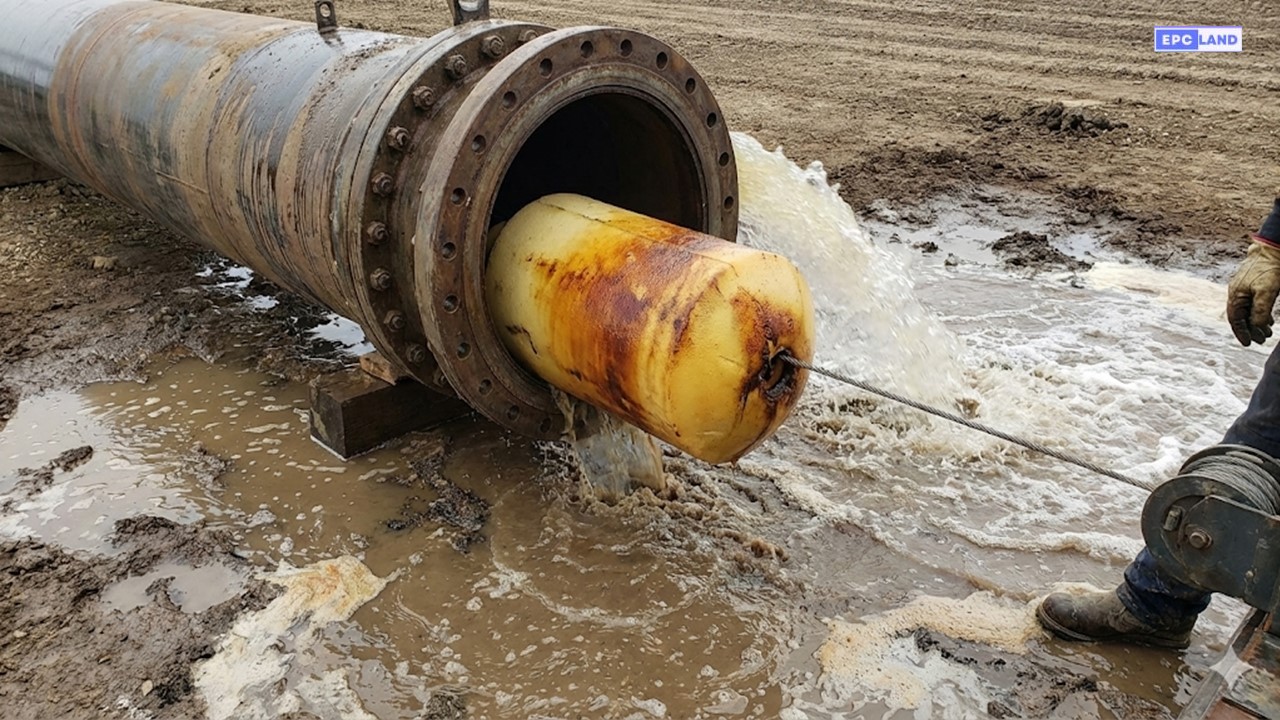
The Challenge: Hydrotest Water Removal
After a successful hydrostatic pressure test, the line remained full of water (approx. 78,000 cubic meters). Simple gravity draining was impossible due to the undulating terrain. The pigging system had to drive this water column out using compressed dry air, without allowing air bypass which would leave water pockets in the low spots (valleys).
Execution Strategy
The engineering team utilized a “Train” approach. A specific sequence of pigs was launched to ensure 99.9% water removal:
- Run 1: Medium Density Foam Pig. Used to displace the bulk water. The foam construction allowed it to seal effectively even if the pipe ovality varied.
- Run 2: Bi-Directional Mechanical Pig. Equipped with 4 sealing discs and 2 guide discs. This run acted as a squeegee, mechanically scraping the remaining film of water from the steel wall.
- Run 3: Caliper Tool (Geometric Pig). Before final drying, a pigging inspection tool checked for dents or buckles caused by construction.
- Run 4: Drying Train. Two low-density foam pigs propelled by super-dry air (Dew Point -40°C) to absorb residual moisture.
Results & ROI
The operation was completed in 72 hours. The final “Air Penetration Test” at the receiver showed a dew point of -24°C, surpassing the client’s specification. By using an optimized pigging pipeline strategy, the operator saved approximately $150,000 in methanol drying costs and ensured the asset was corrosion-free from Day 1.
✅ Engineering Takeaway: Never rely on a single pig run for commissioning. A multi-pig “train” utilizing both foam and mechanical pigs is the only way to guarantee a dry line.
Frequently Asked Questions: Pipeline Pigging
How often should pipeline pigging operations be performed?
▼
Frequency depends on the product. For pigging oil and gas lines carrying waxy crude, operational cleaning may be required weekly to prevent pressure buildup. For clean dry gas, pigging inspection (Smart Pigging) is typically mandated by regulations (like PHMSA in the USA) every 5 to 7 years, though cleaning pigs may run annually to sweep out liquids.
What is the difference between Utility Pigging and Smart Pigging?
▼
Utility pigging focuses on physical tasks: cleaning, dewatering, or batching products. Smart pigging (In-Line Inspection or ILI) focuses on data gathering. A smart pig carries sensors to measure wall thickness, detect cracks, and map the pipeline’s geometry, whereas a utility pig is a passive mechanical tool.
What happens if a pig gets stuck in the pipeline?
▼
A stuck pig is a critical emergency. Operators first try to surge the pressure (pressure pulsing) to dislodge it. If that fails, they use a “Pig Tracker” (transmitter) installed on the pig to locate it from above ground. The final resort is a cut-out operation, where the section of pipe containing the stuck pig is physically excavated and replaced.
Can all pipeline pigging systems handle 1.5D Bends?
▼
Not all. Standard types of pigging tools are designed for 3D bends (radius = 3x diameter). For tight 1.5D bends, specialized articulated pigs or short-body foam pigs must be used. Attempting to force a long rigid smart pig through a 1.5D bend will almost certainly result in a stuck pig.
Conclusion: Ensuring Integrity in 2026
Pipeline Pigging remains the most effective method for maintaining flow assurance and structural integrity in the energy sector. Whether you are running routine pigging systems for wax removal or deploying advanced smart pigging tools for regulatory compliance, the goal is the same: zero leaks, zero downtime.

Related posts:
![Piping Engineering Courses]()
45+ Piping Engineering Courses on Sale | EPCLAND – Just $1 to $8
![refinery catalyst safety quiz]()
Test Your Knowledge: Refinery Catalyst Safety & CRU Operations Quiz
![CRU catalyst runaway reaction]()
Refinery Rescue: How We Quelled a CRU Catalyst Runaway Reaction and Lessons Learned
![refinery furnace quiz]()
Interactive Refinery Furnace Quiz: Test Your Coking & Downtime Troubleshooting Skills!
![furnace coking downtime]()
Real-World Fix: How We Overcame Unexpected Furnace Coking Downtime in Our Preheat Unit
![hydrotest troubleshooting quiz]()
Interactive Hydrotest Troubleshooting Quiz: Master Leak Detection Skills


