Hydrogen Storage Spacing Requirements: Global Standards for Bullets and Spheres
Adhering to strict Hydrogen Storage Spacing Requirements is the most critical factor in the safe design of 2026 green energy infrastructure. Whether engineering a bulk terminal with large-scale spheres or a modular refueling station utilizing high-pressure bullets, the separation distances defined by NFPA, API, and PESO standards ensure that potential leak or fire incidents are contained without cascading into catastrophic failures.
Key 2026 Metric: For gaseous hydrogen, separation distances are primarily determined by the “Source of Release.” Under NFPA 2, property line setbacks range from 15 to 100 feet based on pipe diameter, while Indian SMPV Rules mandate a 15-meter minimum for large-capacity vessels.
Compliance Competency Quiz
Question 1 of 5Which code is the primary authority for hydrogen separation distances in the USA for 2026?
Regulatory Frameworks: Siting Hydrogen Storage Spacing Requirements
The transition to a hydrogen-based economy in 2026 has necessitated a radical shift in how we approach Hydrogen Storage Spacing Requirements. Unlike traditional hydrocarbons, hydrogen’s high buoyancy and wide flammability limits require a “consequence-based” siting logic. Engineers must navigate the intersection of international codes like the NFPA 2 2026 separation distances and regional statutory mandates such as the PESO SMPV Rules for hydrogen tanks in India.
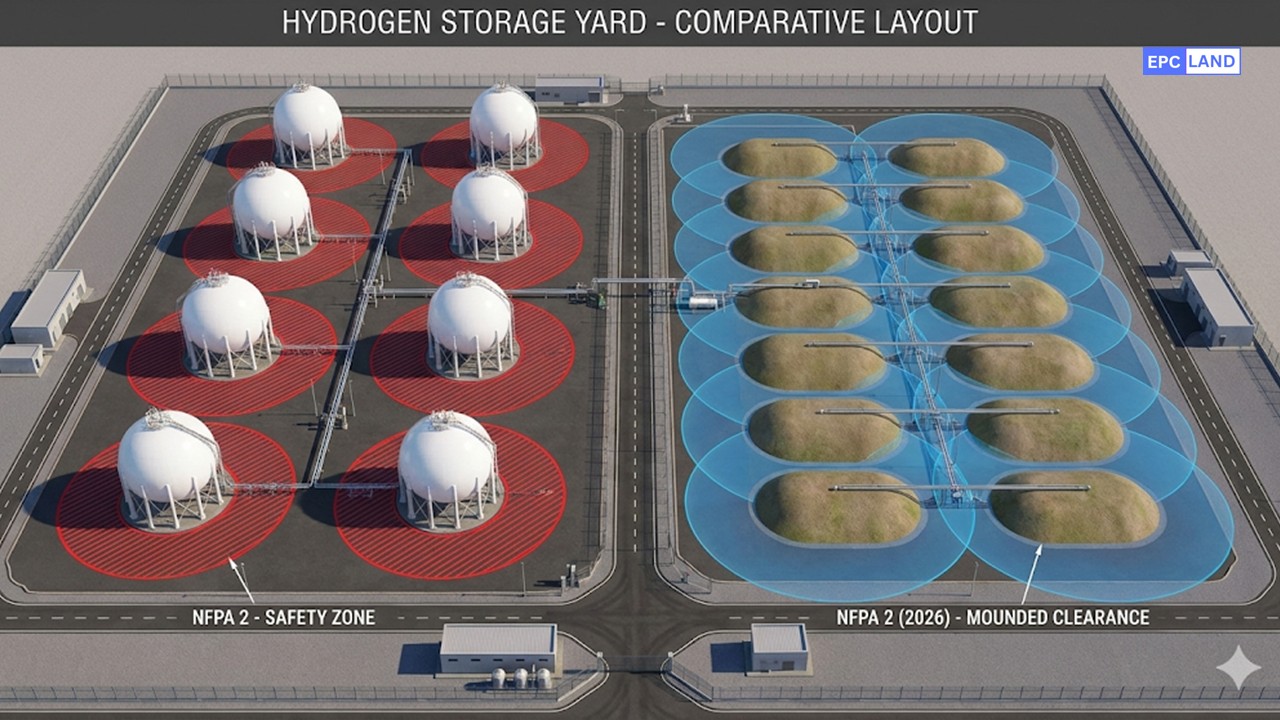
For gaseous pressurized hydrogen, the spacing is not merely a fixed distance from a tank’s center. Instead, it is a calculated radius originating from potential “leak points,” such as valves, flanges, and compressor connections. This makes the distinction between mounded bullet vs sphere safety clearance critical during the Front-End Engineering Design (FEED) phase.
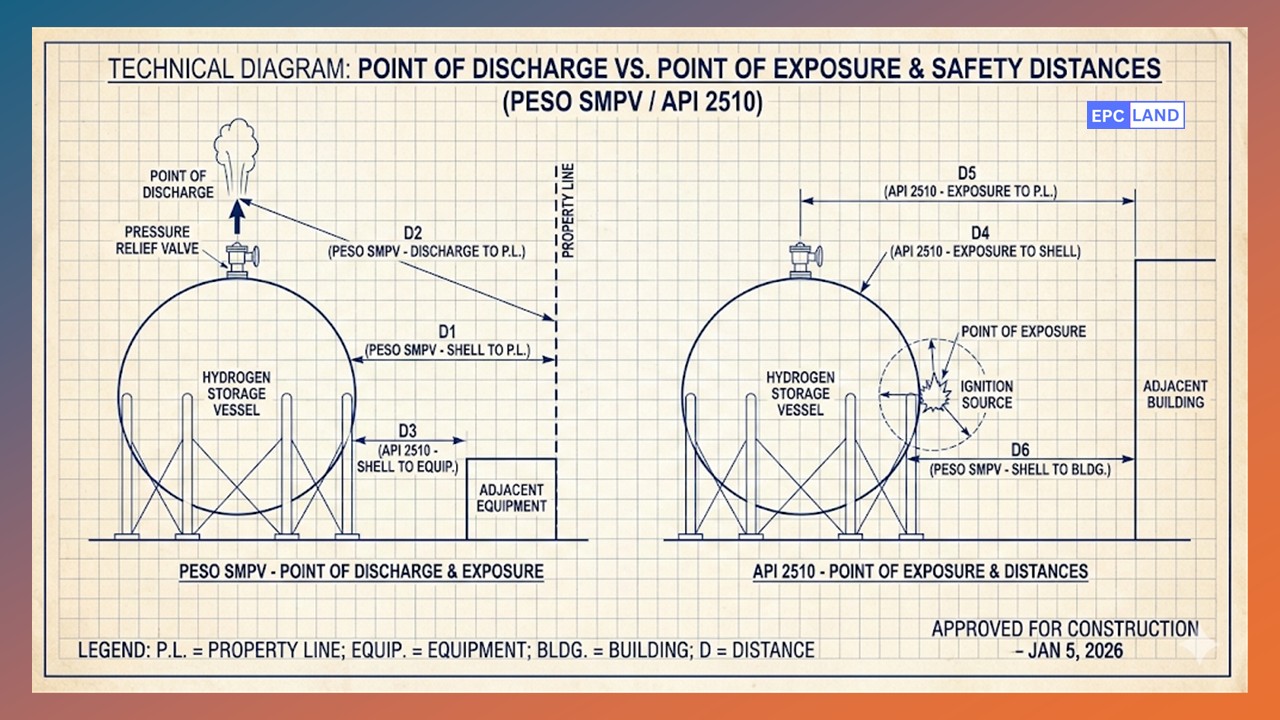
Figure 1: 2026 Schematic representing the Source of Release (SoR) and the resulting impact zone for property line setbacks.
NFPA 2 (2026) vs. API 2510: Inter-Vessel Mechanics
In North America and Europe, the 2026 edition of NFPA 2 provides specific tables based on pressure and orifice diameter. For bulk installations, the API 2510 inter-vessel spacing criteria are often cross-referenced to ensure that a thermal event at one sphere does not result in the failure of an adjacent vessel through radiative heat transfer.
Engineering Calculation: Minimum Sphere Spacing
As per API 2510, the distance (S) between two adjacent spherical vessels is calculated as follows:
Where D represents the diameter of the larger vessel. For high-pressure gaseous hydrogen spheres in 2026, many jurisdictions now suggest S = 0.75 * D to account for thermal radiation intensities exceeding 12.5 kW/m2.
India Compliance: PESO SMPV Rules 2016 (Amended 2026)
In India, the Petroleum and Explosives Safety Organisation (PESO) enforces the Static and Mobile Pressure Vessels (Unfired) Rules. These rules differentiate significantly between elevated storage and mounded installations. When designing high-pressure gaseous hydrogen safety zones, Rule 22 and Table 4 define the mandatory “clear zone” between the vessel shell and the property boundary.
| Storage Geometry | Regulatory Code | Inter-Vessel Spacing | Property Line Setback |
|---|---|---|---|
| Above-ground Bullet | PESO SMPV (Table 4) | MAX(2m, (D1+D2)/4) | 15m (for cap > 450k L) |
| Mounded Bullet | PESO SMPV (Rule 22) | 1 meter clear | 5m to 10m (Mound edge) |
| Spherical Tank | API 2510 / NFPA 2 | 0.5 * Diameter | 50ft to 100ft (Variable) |
| Vent Stacks | CGA G-5.5 | N/A | Per hydrogen vent stack setback standards |
Vent Stacks and Safety Setbacks
One of the most overlooked aspects of Hydrogen Storage Spacing Requirements is the positioning of the pressure relief valve (PRV) discharge. Adhering to hydrogen vent stack setback standards (primarily CGA G-5.5) is mandatory. The vent must terminate in a location where the dispersion of hydrogen will not reach an ignition source or building intake at concentrations above 4 percent by volume (the Lower Flammability Limit).
Case Study: Hydrogen Storage Spacing Requirements Failure Analysis
In early 2026, an industrial green hydrogen facility in Gujarat, India, underwent a mandatory safety audit to verify compliance with the updated PESO SMPV Rules for hydrogen tanks. The facility utilized a hybrid storage architecture consisting of four horizontal high-pressure bullets and two large spherical vessels. During the 2026 audit, engineers identified a significant risk regarding mounded bullet vs sphere safety clearance that necessitated a rapid reconfiguration of the site’s layout.
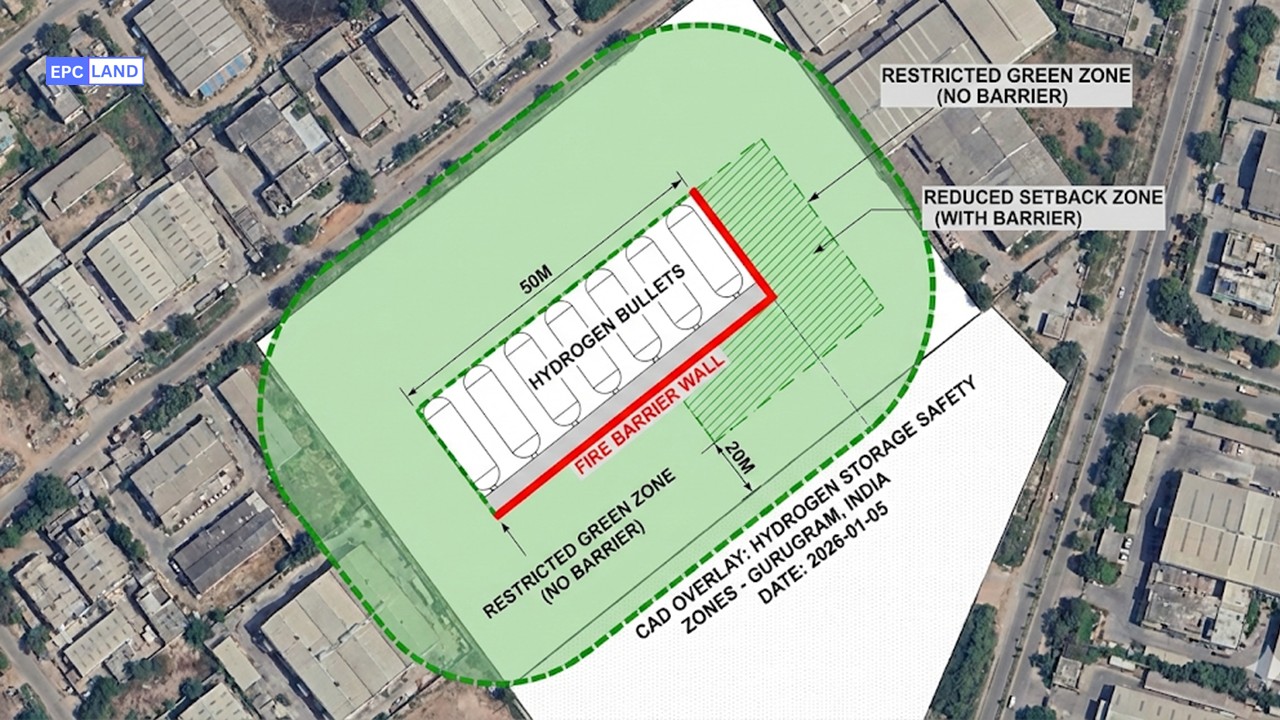
Figure 2: Site plan showing the remedial safety zones and the implementation of fire barriers in the 2026 audit.
Project Data: Gujarat H2 Hub (2026)
Location: Dahej Industrial Estate, Gujarat, India
Storage Type: 4x 200m3 Bullets | 2x 1000m3 Spheres
Operating Pressure: 350 Bar (Gaseous H2)
Regulating Authority: PESO (Petroleum & Explosives Safety Org)
Problem & Technical Analysis
The facility was originally designed under older 2016 norms, but the 2026 expansion of an adjacent chemical unit pushed the “Point of Exposure” (a public internal road) within 9 meters of the hydrogen spheres. Under the 2026 Hydrogen Storage Spacing Requirements, a 15-meter minimum setback was required for the above-ground spherical tanks.
Furthermore, a thermal radiation analysis revealed that the API 2510 inter-vessel spacing criteria had been met geometrically (0.5 * Diameter), but the lack of a water deluge system meant that a fire on “Sphere A” would lead to a catastrophic pressure rise on “Sphere B” within 12 minutes. The bullet tanks, while having adequate inter-tank spacing, were found to have a vent stack located too close to the compressor air intake, violating the 2026 hydrogen vent stack setback standards.
Solution & 2026 Result
To avoid relocating the multi-million dollar vessels, the engineering team implemented a two-fold mitigation strategy. First, they constructed a 2-hour fire-rated RCC wall between the spheres and the new chemical unit, allowing for a 40 percent reduction in the required NFPA 2 2026 separation distances.
Technical Fixes
- Relocated Vent Stacks to 15m elevation per CGA G-5.5.
- Installed automated deluge systems on both spheres.
- Mounded the bullet tanks to eliminate fire exposure risks.
Outcome & ROI
- Full PESO license renewal achieved in April 2026.
- Safety radius reduced by 6 meters via fire wall.
- Avoided 2.4 million USD in vessel relocation costs.
“By prioritizing mounded configurations for the 2026 expansion, the facility successfully optimized its land use while maintaining the highest safety tier in the region.” – Lead Architect, Epcland.
Utility-Scale Deployment: 2026 Global Trends in Hydrogen Storage Spacing Requirements
As of 2026, a paradigm shift is occurring in utility-scale infrastructure. While modular bullets remain the standard for localized fueling, massive Hydrogen Storage Spacing Requirements at national-scale hubs are being met through clusters of large-scale spherical tanks. Leading the 2026 market, China has pioneered the “Sphere Farm” architecture to manage high-pressure gaseous hydrogen before conversion into green ammonia or methanol.
China: Global Leader in Spherical Storage Hubs
Chinese engineering firms have adopted spherical tanks for their superior volume-to-footprint ratio. Key 2026 projects include:
- Sinopec Kuqa Project (Xinjiang): Currently the world’s largest operational green hydrogen plant (260MW). It utilizes a storage farm of large spherical tanks with a massive combined capacity of 210,000 standard cubic meters.
- Ningxia Taiyangshan Project: A 290 million dollar integrated project entering 2026 operations. This site features a dedicated storage field of 17 spherical tanks, each engineered for 1,875 cubic meters of volume.
- Inner Mongolia Hubs: New wind-solar-hydrogen systems in Ordos are deploying spheres to manage high-pressure surges from fluctuating renewable energy inputs.
ACME Group: Ammonia-Centric Storage (Oman & India)
In contrast to the gaseous sphere clusters in China, the ACME Group’s 2026 portfolio emphasizes Green Ammonia as the primary energy carrier. This shifts the high-pressure gaseous hydrogen safety zones toward liquid chemical storage requirements:
- Oman (Duqm) Project: Over 50 percent complete by early 2026, this flagship project uses massive refrigerated tanks for Liquid Ammonia rather than gaseous spheres.
- Rajasthan (Bikaner) Project: ACME’s Indian pilot facility utilizes smaller-scale PESO SMPV Rules for hydrogen tanks, focusing on integrated loop stability for its 5 metric tonnes per day (MTPD) capacity.
| Technical Feature | Spherical Tanks (Spheres) | Horizontal Tanks (Bullets) |
|---|---|---|
| Storage Capacity | Large (10,000 to 75,000 barrels equivalent) | Moderate (up to 120,000 gallons per tank) |
| Land Footprint | Smaller; Ideal for land-constrained hubs | Larger; Requires significant linear space |
| Construction Cycle | Field-fabricated (12 to 18 months) | Shop-fabricated (8 to 12 weeks) |
| 2026 Application | Utility-scale (Sinopec, Ningxia) | Fueling stations & Backup power |
| Structural Integrity | Uniform stress; Thinner walls possible | Easier isolation of individual units |
Note: As NFPA 2 2026 separation distances evolve, the choice between these two geometries is increasingly driven by the required discharge capacity of hydrogen vent stack setback standards, which often favor spheres for high-volume relief scenarios.
2026 Regulatory Compliance: OSHA, NFPA, & Global Hydrogen Storage Spacing Requirements
The fundamental rules for **Hydrogen Storage Spacing Requirements** are governed by a handful of core regulatory documents in 2026. The primary references are NFPA 2 2026 separation distances (the industry standard) and OSHA 1910.103 (the mandatory legal minimum in the USA). While specific spacing between two vessels (spheres or bullets) is often driven by maintenance access (typically a 5-foot minimum), the larger requirement is the separation distance from the vessel to surrounding exposures.
The following table summarizes these requirements as per current 2026 codes, applicable to both spheres and bullets based on total aggregate volume.
| Exposure Type | Bulk Storage (>15,000 CF) [OSHA/NFPA] | Systems (3,000–15,000 CF) [OSHA] |
|---|---|---|
| Inter-Vessel Spacing | 5 feet (1.5 m) minimum for access | 5 feet (1.5 m) minimum |
| Wood Frame Structures | 50 feet (15.2 m) | 25 feet (7.6 m) |
| Noncombustible Construction | 25 feet (7.6 m) | 10 feet (3.0 m) |
| Air Compressor Intakes | 50 feet (15.2 m) | 50 feet (15.2 m) |
| Concentrations of People | 50 feet (15.2 m) | 50 feet (15.2 m) |
| Open Flames/Ignition Sources | 25 feet (7.6 m) | 25 feet (7.6 m) |
Key 2026 Code Distinctions & Global Context
- NFPA 2 (2026 Edition) Update: NFPA 2 is transitioning from a fixed-distance table to a “risk-informed” model using Table 7.3.2.3.1.1(a). For ultra-high pressure bullets (350+ bar), distances for high-pressure gaseous hydrogen safety zones can easily exceed 100 feet unless fire barriers are used as mitigation.
- OSHA 1910.103: This remains the static minimum legal requirement in the US, using total volume rather than the more advanced pressure/diameter/exposure model preferred by NFPA 2.
- Fire Barrier Reductions: A crucial engineering strategy: Under NFPA 2, the use of a 2-hour fire-rated wall can reduce the required separation distances to lot lines or buildings by up to 50 percent, essential for optimizing mounded bullet vs sphere safety clearance in constrained sites.
- Global Codes Reference (India/Europe):
- India (PESO/PNGRB): Follows the Gas Cylinders (Amendment) Rules, 2024, which align closely with ISO 19880-1 for high-pressure storage and general 10-meter (33 ft) separation for bulk spheres.
- Europe (EIGA IGC Doc 15/06): Emphasizes that large spherical tanks must have a clear zone of at least 15 meters from site boundaries.
Strategic Selection: Decision Matrix for 2026 Projects
Choosing between Spherical Tanks (Spheres) and Horizontal Vessels (Bullets) for hydrogen storage in 2026 depends primarily on your project’s scale, available land, and the required pressure. While the geometric efficiency of a sphere is unmatched, high-pressure gaseous hydrogen safety zones and manufacturing constraints often dictate a modular bullet approach for industrial high-density applications.
| Feature | Spherical Tanks (Spheres) | Horizontal Tanks (Bullets) |
|---|---|---|
| Best For | Massive utility-scale storage (e.g., China’s 210k m3 hubs). | Industrial plants, fueling stations, and phase-1 pilots. |
| Pressure Range | Typically low to mid (up to ~50-60 bar). | High pressure (up to 150-300+ bar). |
| Lead Time | Long (12–18 months) | Short (8–12 weeks) |
| Footprint | Compact. Lowest surface-area-to-volume ratio. | Large. Requires significant linear land. |
When to choose Spheres
- Large Aggregate Volumes: Ideal for storing hundreds of tons (like Sinopec projects) to minimize the “tank farm” footprint.
- Minimized Boil-off: For liquid hydrogen (LH2), the spherical shape reduces heat transfer from the environment.
- Long-Term Infrastructure: Best for permanent locations as they cannot be easily relocated after on-site welding.
When to choose Bullets
- High-Pressure Requirements: Suitable for 150-300 bar storage where thicker walls are made in controlled shops.
- Modular Growth: Delivered in batteries for quick 2026 operational readiness.
- Operational Flexibility: Maintenance can be performed on one bullet while the rest of the farm remains online.
Strength vs. Feasibility: The 2026 Engineering Paradox
While a sphere is mathematically the strongest geometric shape for handling internal pressure, this theoretical advantage does not always translate to “higher pressure” in industrial practice. The choice is a trade-off between geometric strength and manufacturing feasibility.
The Manufacturing Bottleneck
Large spheres (Hortonspheres) must be fabricated from multiple plates and field-welded. Achieving 100 percent weld integrity at 350+ bar across such a large field-welded surface is technically difficult and cost-prohibitive in 2026.
The Bullet Advantage
Horizontal bullets are shop-fabricated. This allows for automated welding and Type IV hydrogen storage cylinders 2026 manufacturing techniques that can safely reach 500+ bar, surpassing field-welded spheres.
Conclusion for 2026 Projects
Go with Spheres if your project is a Green Hydrogen Hub (e.g., ACME Oman or China’s Sinopec) where the priority is storing massive volumes at lower pressures to buffer ammonia production. Go with Bullets if you are building a Hydrogen Refueling Station (HRS) requiring high pressure and fast deployment under PESO SMPV Rules for hydrogen tanks.
2026 Hydrogen Compliance FAQ
What are the primary NFPA 2 2026 separation distances for property lines?
In 2026, NFPA 2 separation distances for gaseous hydrogen are calculated based on the internal pipe diameter and system pressure. For a typical 350-bar system with a 0.5-inch orifice, the setback to property lines is approximately 50 to 75 feet. However, these can be reduced by 50 percent if a fire-rated barrier wall is installed.
How do PESO SMPV Rules for hydrogen tanks differ for mounded vessels?
Under the 2026 PESO SMPV guidelines, mounded bullets allow for a significantly smaller safety footprint. While above-ground tanks require a 15-meter clearance for large capacities, mounded vessels only require a 5-meter clear zone from the edge of the mound to the property line, as the earth cover provides an inherent blast and fire shield.
What is the standard for hydrogen vent stack setback standards in 2026?
Per CGA G-5.5 and NFPA 2, vent stacks must be located at least 25 feet away from building openings, air intakes, and overhead power lines. The termination point must be at least 10 feet above the nearest equipment to ensure proper vertical dispersion and prevent the accumulation of flammable mixtures.
How is high-pressure gaseous hydrogen safety zones calculated for urban sites?
Urban sites utilize Quantitative Risk Assessment (QRA) models like HyRAM+. These tools combine the leak frequency with consequence modeling (jet fire or flash fire) to establish custom safety zones that meet a specific risk threshold (e.g., 1×10⁻⁶ per year), often providing more flexibility than standard lookup tables.
Conclusion: Mastering 2026 Hydrogen Siting
The optimization of Hydrogen Storage Spacing Requirements is a multi-disciplinary challenge that balances regulatory compliance with site economic efficiency. In 2026, the trend clearly favors mounded bullet configurations for land-constrained urban sites and large-scale spherical tanks for bulk terminals where API 2510 inter-vessel spacing criteria can be easily accommodated.
By integrating advanced mitigation strategies—such as fire barrier walls and automated deluge systems—engineers can significantly reduce the 2026 safety footprint without compromising structural integrity. For the Epcland community, staying ahead of these codes ensures that hydrogen infrastructure remains both safe and scalable for the global energy transition.
Related posts:
![High-grade industrial Wing Nut Types and Applications for mechanical assemblies.]()
Wing Nut Types and Applications: The 2026 Engineering Guide
![Industrial Monorail Crane Systems installed in a modern manufacturing plant 2026.]()
Monorail Crane Systems: Design, Types & 2026 Standards Guide
![Lead engineer performing a Factory Acceptance Test FAT on an industrial skid system 2026]()
Factory Acceptance Test FAT: The 2026 Engineering Guide to Zero-Defect Delivery
![Professional engineering workspace showing a Basis of Design document layout for a 2026 project.]()
Basis of Design: How to Write a BOD for Engineering Projects in 2026
![Industrial Flare Knockout Drum Sizing and installation in a refinery relief system.]()
Flare Knockout Drum Sizing: Design & API 521 Standards (2026 Guide)
![Advanced Reboiler Control Systems in a modern petrochemical refinery 2026.]()
Reboiler Control Systems: Engineering Guide to Precision Control 2026