What is a Fire Pump? Working, Sizing, and Types of Fire Pumps
Imagine the alarms screaming and the heat intensifying, but when the sprinkler heads drop, only a weak trickle of water emerges. Your water storage is full, yet the pressure is gone. Why did your fire protection system fail at the most critical second?
Usually, the culprit isn’t the water supply—it’s an improperly sized or maintained Fire Pump. This guide dives deep into the “heart” of fire suppression, ensuring your facility meets 2026 safety standards through rigorous engineering and NFPA 20 compliance.
Key Takeaways
- Understanding the critical difference between standard water pumps and NFPA-compliant Fire Pump assemblies.
- Detailed breakdown of Centrifugal (Split-Case, Vertical Turbine) and Positive Displacement types.
- Step-by-step logic for Fire Pump sizing based on 150% rated flow capacity.
What is a Fire Pump?
A Fire Pump is a specialized mechanical device designed to provide high-pressure water flow to fire protection systems, such as sprinklers and standpipes. Unlike standard pumps, a Fire Pump must be tested and listed (e.g., UL/FM) to maintain 100% of its rated pressure at 100% flow and at least 65% pressure at 150% of its rated flow.
Founder’s Insight
“In over two decades of fire safety audits, I’ve seen that most Fire Pump failures occur not because of the pump itself, but due to suction-side air entrainment or neglected jockey pump settings. Never compromise on the suction pipe diameter.”
— Atul Singla
Complete Course on
Piping Engineering
Check Now
Key Features
- 125+ Hours Content
- 500+ Recorded Lectures
- 20+ Years Exp.
- Lifetime Access
Coverage
- Codes & Standards
- Layouts & Design
- Material Eng.
- Stress Analysis
Fire Pump Proficiency Quiz
The Working Principle of a Fire Pump System
To understand how a Fire Pump functions, one must first distinguish it from a standard domestic or industrial water transfer pump. While a standard pump is designed for efficiency and longevity under continuous load, a Fire Pump is an emergency standby unit engineered for “reliability at all costs.” Its primary objective is to deliver a specific volume of water at a high enough pressure to overcome the friction loss of the piping and the elevation of the building, ensuring that fire suppression heads (sprinklers) function effectively.
The system operates on a pressure-sensing logic. The fire protection piping is kept pressurized by a smaller “Jockey Pump.” When a fire occurs and a sprinkler head opens, the system pressure drops. The Fire Pump controller detects this drop via a sensing line. If the pressure falls below the “start” setpoint, the main Fire Pump driver (electric motor or diesel engine) activates. Once running, the pump draws water from a reliable source—such as a suction tank, reservoir, or municipal water main—and accelerates it using centrifugal force to increase its kinetic energy, which is then converted into static pressure at the discharge volute.

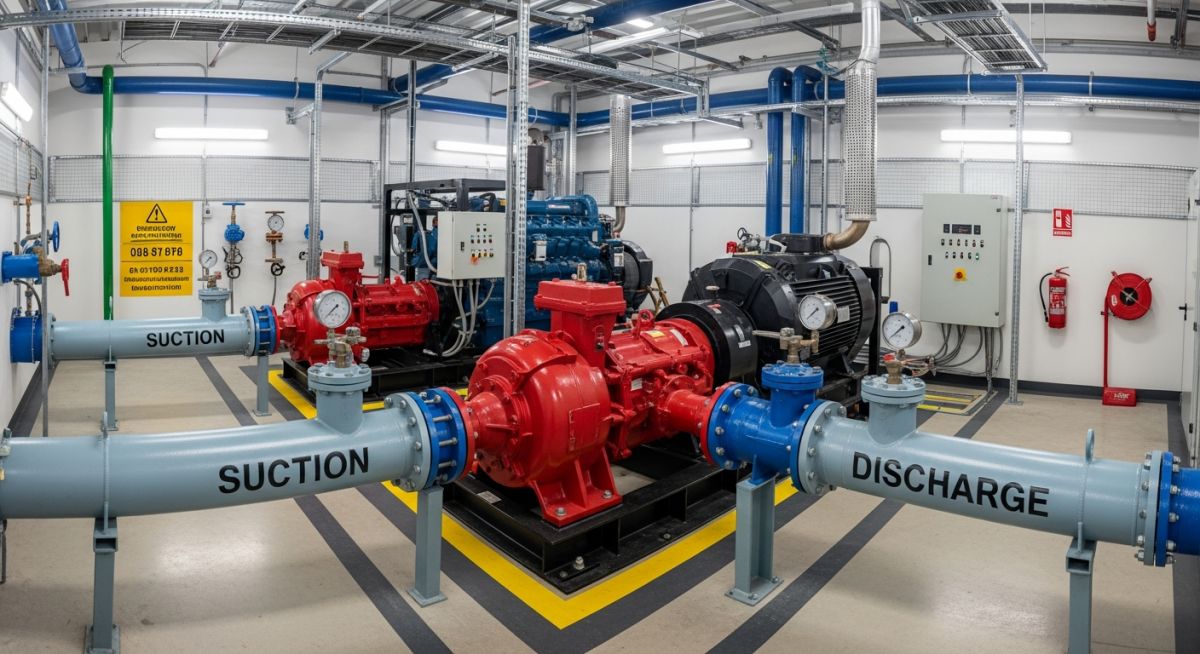
Figure 1: Standard NFPA 20 compliant Fire Pump assembly layout showing suction and discharge components.
A critical aspect of the Fire Pump working principle is its performance curve. Unlike other pumps that might have a steep decline in pressure as flow increases, a fire-service-listed pump must have a “relatively flat” curve. This ensures that even if more sprinklers open than originally calculated, the system can still provide at least 65% of its rated pressure while flowing at 150% of its rated capacity. This “over-capacity” buffer is the fundamental safety margin required by global engineering standards.
Common Types of Fire Pump Configurations
The selection of a Fire Pump type depends largely on the water source location and the required pressure head. Under NFPA 20, several centrifugal and positive displacement designs are permitted.
Centrifugal Fire Pump Varieties
Centrifugal pumps are the industry standard for fire protection due to their ability to handle large volumes of water and their simple mechanical design.
Horizontal and Vertical Split-Case Pumps
The Horizontal Split-Case (HSC) Fire Pump is the most common variety. Its name comes from the casing that can be “split” into two halves to access internal components like the impeller and bearings without disconnecting the suction or discharge piping. This ease of maintenance makes it a favorite for large industrial complexes.
Vertical Turbine Fire Pump Applications
When your water source is located below the pump room floor—such as an underground well or a lake—centrifugal pumps cannot be used because they cannot “lift” water effectively. In these scenarios, a Vertical Turbine Fire Pump is mandatory. The pump bowls are submerged in the water, eliminating priming issues and ensuring the system is always ready for immediate activation.
In-Line Pumps
Vertical In-Line pumps are space-saving units designed to be mounted directly into the piping. These are typically used in smaller commercial buildings where a dedicated large pump room is not available. They are limited in their flow capacity compared to split-case models but offer a compact footprint.
End Suction Top Discharge Pump
The End Suction Fire Pump is a compact centrifugal variant where the suction inlet is at the end (horizontal) and the discharge is at the top. These are highly efficient for smaller flow requirements, typically up to 1,500 GPM. Because they require a smaller footprint, they are often the primary choice for medium-sized commercial projects that utilize a municipal water supply with positive suction pressure.
Multistage Multiport Pump
In high-rise engineering, the Multistage Multiport Fire Pump is a revolutionary piece of equipment. Instead of installing multiple pump sets for different “zones” (low-rise, mid-rise, and high-rise), a single multiport pump can provide water at different pressures from different outlets. This reduces the total number of Fire Pump units required, saving significant capital expenditure and mechanical room space.
Positive Displacement Fire Pump Models
While centrifugal pumps dominate the market, Positive Displacement (PD) Fire Pumps are critical for Water Mist and Foam-Water systems. Unlike centrifugal types, PD pumps move a fixed volume of water with every stroke or revolution. They are capable of generating extremely high pressures (often exceeding 1,000 PSI) which are necessary to atomize water into the fine droplets required for high-pressure mist suppression.
Selecting Reliable Fire Pump Drivers
A Fire Pump is only as reliable as its driver. In 2026, engineering specifications strictly follow NFPA 20 and NFPA 70 guidelines to ensure power reliability during a catastrophe.
- Electric Motors: The most common driver due to lower maintenance. However, they require a “reliable” power source. If the utility connection is not deemed reliable, an on-site emergency generator is mandatory.
- Diesel Engines: These are the ultimate “stand-alone” drivers. They carry their own fuel supply (sized for 8 hours of operation) and utilize dual battery sets for redundant cranking. They are essential for remote sites or high-hazard industrial zones.
- Steam Turbines: Though rare in modern commercial buildings, steam turbines are still utilized in massive refineries or power plants where high-pressure steam is readily available as an energy source.
Engineering Standards & Sizing Data
Sizing a Fire Pump is a rigorous mathematical process. Engineers must calculate the “Hydraulically Most Demanding Area” (HMDA) of the building. The pump must be sized so that the total demand (Sprinkler demand + Hose stream allowance) does not exceed 150% of the pump’s rated capacity.
| Feature | Horizontal Split Case | Vertical Turbine | End Suction |
|---|---|---|---|
| Primary Source | Above-ground Tank / City Main | Underground Well / Reservoir | Small Storage Tanks |
| Typical GPM Range | 500 – 5,000+ | 250 – 4,500+ | 50 – 1,500 |
| Maintenance Ease | High (Easy access to internals) | Moderate (Requires pulling pump) | Moderate (Compact) |
| Compliance Standard | NFPA 20 / UL-FM | NFPA 20 / UL-FM | NFPA 20 / UL-FM |
Relevant International Standards:
- NFPA 20: Standard for the Installation of Stationary Pumps for Fire Protection.
- API 610: Centrifugal Pumps for Petroleum, Petrochemical and Natural Gas Industries (Relevant for Offshore Fire Pump units).
- EN 12845: Fixed firefighting systems – Automatic sprinkler systems – Design, installation and maintenance (European equivalent).
Fire Pump Performance Estimator
Calculate the required Net Pressure and Check NFPA 20 Compliance Curves
NFPA 20 Target Metrics
Note: Values represent the minimum NFPA 20 performance requirements for a Fire Pump assembly.
EPCLand YouTube Channel
2,500+ Videos • Daily Updates
Don’t miss this video related to Fire Pump

Summary: The Fire That Burned for Days In March 2019, the ITC Deer Park terminal in Texas became the site of a massive chemical fire that ……
Fire Pump Failure Case Study
Scenario: A 45-story commercial high-rise in a metropolitan district experienced a total system failure during a mandatory annual flow test. The 1,250 GPM Fire Pump was unable to reach its 150% flow requirement, and the motor began exhibiting extreme vibration and high-pitched metallic noise.
Investigation: Engineering forensics revealed that the suction-side piping had been “optimized” during construction to save space, resulting in multiple 90-degree elbows within 2 feet of the pump suction flange. This created massive turbulence and non-uniform flow into the impeller eye, leading to Severe Cavitation.
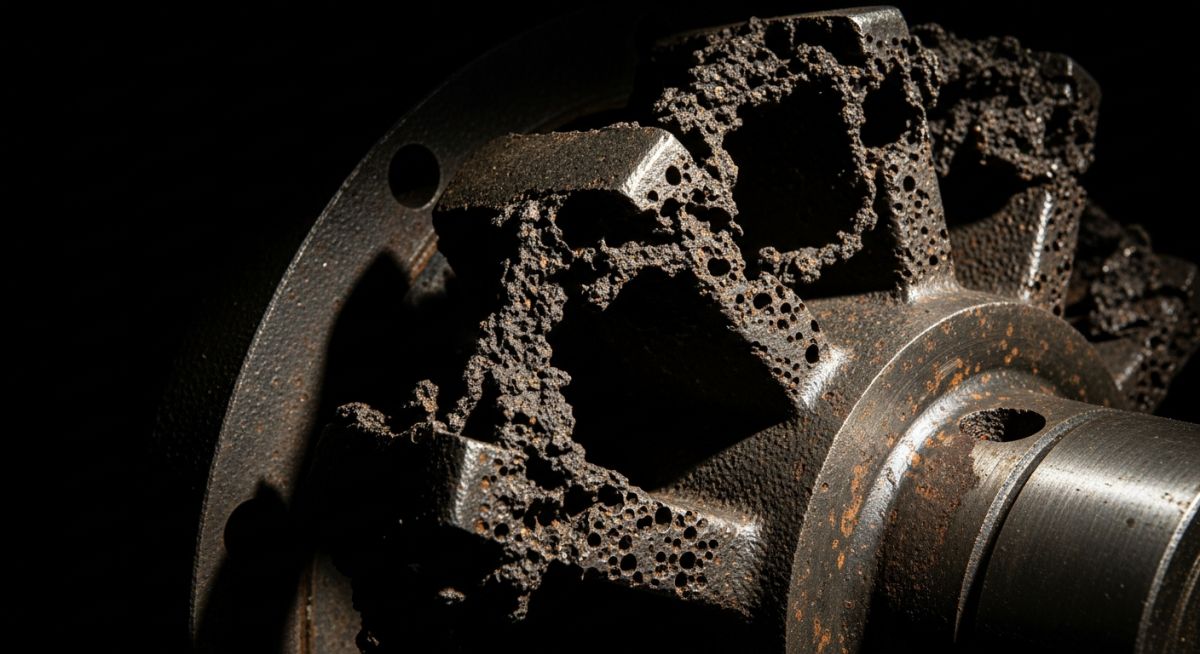
Figure 2: Forensic evidence of impeller pitting from the high-rise Fire Pump failure study.
Root Cause & Resolution
- Root Cause: Violation of NFPA 20 suction piping requirements (insufficient straight-pipe run before the suction flange).
- Outcome: The cavitation destroyed the Fire Pump impeller within less than 20 minutes of high-flow operation.
- Resolution: The suction header was re-engineered to provide 10 pipe diameters of straight run, and a vortex breaker was installed in the suction tank. Subsequent tests confirmed 100% compliance with the Fire Pump performance curve.
Expert Insights: Lessons from 20 years in the field
- Pressure Sensing Lines: Always use brass or stainless steel for sensing lines. Plastic or galvanized lines are prone to corrosion and clogging, which can prevent the Fire Pump from starting automatically when a fire occurs.
- Room Ventilation: For diesel-driven units, the air intake and exhaust ventilation are just as critical as the fuel supply. Many Fire Pump engines stall during prolonged operation because they “suffocate” in poorly ventilated mechanical rooms.
- The Jockey Pump Myth: Never size your jockey pump too large. If the jockey pump can meet the demand of a single sprinkler head, the main Fire Pump may never start, leading to a dangerous delay in high-pressure suppression.
- Weekly Run Tests: In 2026, automated testing is common, but nothing replaces a manual check for leaks at the packing glands and verifying the cooling water discharge for diesel engines.
Frequently Asked Questions
Does a Fire Pump require a specific listing?
Yes. Unlike general water pumps, a Fire Pump must be specifically listed by organizations like UL (Underwriters Laboratories) or FM (Factory Global). This ensures the pump has been tested to meet the rigorous performance curves required for life safety.
What is the “Churn” pressure limit for a Fire Pump?
Under NFPA 20, the shut-off (churn) pressure of a centrifugal Fire Pump should not exceed 140% of its rated pressure. This prevents the system from over-pressurizing and bursting downstream piping when there is no water flow.
How often should a Fire Pump be tested?
Standard maintenance (NFPA 25) requires a weekly no-flow (churn) test for diesel pumps and a monthly test for electric pumps. An annual full-flow performance test is required to verify the pump still meets its original design curve.
Why is my Fire Pump vibrating during high flow?
Excessive vibration during flow often indicates cavitation or air entrainment. Check your suction piping; NFPA 20 requires a minimum length of straight pipe before the Fire Pump suction flange to ensure laminar flow.
Can I use a variable speed drive (VFD) on a Fire Pump?
Yes, Variable Speed Fire Pump controllers are permitted, but they must be specifically listed for fire service. They are often used to prevent over-pressurizing systems in buildings with high-pressure municipal water supplies.
What happens if the Fire Pump suction is from a tank?
When drawing from a tank, the Fire Pump must be located at an elevation that ensures a positive suction head. If the tank is underground, you must use a Vertical Turbine pump instead of a Horizontal Split Case.
References & Standards
📚 Recommended Resources: Fire Pump
Read these Guides
- 📄 What is NFPA 37? Fire Safety Standards for Stationary Engines
- 📄 API 610 Pumps vs ANSI Centrifugal Pumps: 2026 Engineering Guide
- 📄 Solving the Impossible: How We Achieved OISD 118 Fire Water Compliance Brownfield in an Aging Plant
- 📄 Fire Response Considerations for Storage Tanks: A Comprehensive Guide
🎓 Advanced Training



Related posts:
![High-grade industrial Wing Nut Types and Applications for mechanical assemblies.]()
Wing Nut Types and Applications: The 2026 Engineering Guide
![Industrial Monorail Crane Systems installed in a modern manufacturing plant 2026.]()
Monorail Crane Systems: Design, Types & 2026 Standards Guide
![Lead engineer performing a Factory Acceptance Test FAT on an industrial skid system 2026]()
Factory Acceptance Test FAT: The 2026 Engineering Guide to Zero-Defect Delivery
![Professional engineering workspace showing a Basis of Design document layout for a 2026 project.]()
Basis of Design: How to Write a BOD for Engineering Projects in 2026
![Industrial Flare Knockout Drum Sizing and installation in a refinery relief system.]()
Flare Knockout Drum Sizing: Design & API 521 Standards (2026 Guide)
![Advanced Reboiler Control Systems in a modern petrochemical refinery 2026.]()
Reboiler Control Systems: Engineering Guide to Precision Control 2026