Complete Guide to ASTM A194 Nuts: Grades, Specifications, and 2026 Engineering Standards
ASTM A194 Nuts serve as the global benchmark for high-pressure and high-temperature fastening solutions in critical infrastructure. Whether utilized in petrochemical refineries or power generation facilities, these fasteners are engineered to maintain structural integrity under extreme thermal gradients and mechanical loads, adhering to rigorous metallurgical requirements.
Quick Summary: What are ASTM A194 Nuts?
ASTM A194 Nuts are high-strength carbon, alloy, and stainless steel fasteners designed for high-pressure or high-temperature service. Standardized under ASME B18.2.2 heavy hex dimensions, they are frequently paired with ASTM A193 bolts. Primary grades like 2H, 7, and 8M offer specific resistance to heat, corrosion, and cryogenic embrittlement.

Technical Article Roadmap
Engineering Knowledge Check
Question 1 of 5What are ASTM A194 Nuts?
ASTM A194 Nuts represent a specialized category of high-strength fasteners specifically engineered for high-pressure and high-temperature environments. Standardized by ASTM International, this specification covers a variety of carbon, alloy, and stainless steel nuts ranging in size from 1/4 inch to 4 inches (and metric equivalents). In 2026, these fasteners remain the primary choice for industrial flange bolting, pressure vessels, and valve assemblies where structural failure is not an option.
Unlike standard commercial nuts, ASTM A194 Nuts must undergo rigorous metallurgical processing, including specific heat treatments such as quenching and tempering. These processes ensure the material achieves the necessary hardness and proof load levels required to withstand the internal pressures of a system without thread stripping or catastrophic deformation.
Significance of ASTM A194 Nuts in High-Pressure Service
The application of ASTM A194 Nuts as high-pressure service fasteners is critical for the safety of oil and gas refineries, chemical processing plants, and steam power generation units. In these sectors, the mechanical integrity of a joint depends as much on the nut as it does on the bolt.
- Creep Resistance: These nuts are designed to resist plastic deformation (creep) when exposed to sustained temperatures exceeding 400 degrees Celsius.
- Thermal Expansion Matching: When paired with compatible studs, they maintain a consistent clamping force across fluctuating thermal cycles.
- Code Compliance: Their use is often mandated by ASME B31.3 (Process Piping) and ASME Section VIII (Pressure Vessels) to ensure the assembly meets 2026 safety factors.

Technical Analysis of ASTM A194 Nuts Grades
The versatility of the ASTM A194 specification lies in its various grades, each tailored for specific environmental stressors. Selecting the correct grade of ASTM A194 Nuts is a fundamental task for the 2026 design engineer.
Grade 2H: Quenched and Tempered Carbon Steel Properties
Grade 2H is the most common high-strength grade for ASTM A194 Nuts. It consists of quenched and tempered carbon steel, offering a higher hardness level than standard Grade 2 nuts. For sizes up to 1.5 inches, Grade 2H nuts typically exhibit a Brinell hardness between 248 and 327 HBW. They are the industry standard for heavy hex nut applications in structural and pressure-containing joints.
Grade 4: Performance as High-Pressure Service Fasteners
Although Grade 4 has seen shifts in its ASTM status, it remains relevant in legacy systems and specific high-temperature environments. Composed of carbon-molybdenum alloy steel, these high-pressure service fasteners provide enhanced strength at elevated temperatures compared to plain carbon steel, effectively bridging the gap between carbon and high-alloy alternatives.
Grade 7: Compatibility with ASTM A193 B7 Bolting
Grade 7 nuts are manufactured from chromium-molybdenum alloy steel and are heat-treated to perform in low-temperature (cryogenic) service down to minus 100 degrees Fahrenheit (minus 73 degrees Celsius). They are specifically designed for ASTM A193 B7 bolting compatibility, ensuring that the nut and the stud share similar metallurgical profiles for uniform stress distribution in cold-climate piping.
Grade 8 and 8M: Benefits of Austenitic Stainless Steel Nuts
When corrosion resistance is the primary concern, engineers turn to austenitic stainless steel nuts. Grade 8 (AISI 304) and Grade 8M (AISI 316) offer excellent resistance to oxidation and chemical attack. Grade 8M, containing Molybdenum, is preferred for marine environments and 2026 offshore drilling platforms due to its superior resistance to chloride-induced pitting.
Grade 3: Advanced Martensitic ASTM A194 Nuts Applications
Grade 3 nuts are made from martensitic stainless steel (12 percent Chromium). These ASTM A194 Nuts provide a unique balance of high hardness and moderate corrosion resistance. They are typically selected for steam service where both high strength and resistance to steam-induced erosion are required.
Chemical Composition and Metallurgy of ASTM A194 Nuts
The performance of ASTM A194 Nuts is strictly governed by their chemical makeup. Precise control over Carbon, Manganese, Phosphorus, Sulfur, and Silicon is required to ensure weldability (where applicable) and mechanical stability.
| Grade | Material Type | Carbon (%) | Chromium (%) |
|---|---|---|---|
| Grade 2H | Carbon Steel | 0.40 min | – |
| Grade 7 | Alloy Steel | 0.37 – 0.49 | 0.70 – 1.10 |
| Grade 8 | Stainless 304 | 0.08 max | 18.0 – 20.0 |
| Grade 8M | Stainless 316 | 0.08 max | 16.0 – 18.0 |
Complete Course on
Piping Engineering
Check Now
Key Features
- 125+ Hours Content
- 500+ Recorded Lectures
- 20+ Years Exp.
- Lifetime Access
Coverage
- Codes & Standards
- Layouts & Design
- Material Eng.
- Stress Analysis
Engineering Calculator: Torque and Tension for ASTM A194 Nuts
ASTM A194 Nuts Torque Calculator
Calculate the estimated tightening torque based on the Nut Grade, Bolt Diameter, and Lubrication Factor (K).
Estimated Installation Torque
Formula: T = (K * D * P) / 12. Engineering judgment is required for final assembly.
Advanced Coating Impact on K-Factors for ASTM A194 Nuts
In 2026 engineering practices, the application of surface coatings on ASTM A194 Nuts is no longer just about corrosion protection; it is a critical variable in achieving precise bolt tension. The relationship between applied torque and the resulting clamp load is governed by the Nut Factor, or K-factor. Because approximately 90 percent of applied torque is consumed by friction, changing the surface finish of the nut drastically alters the assembly dynamics.
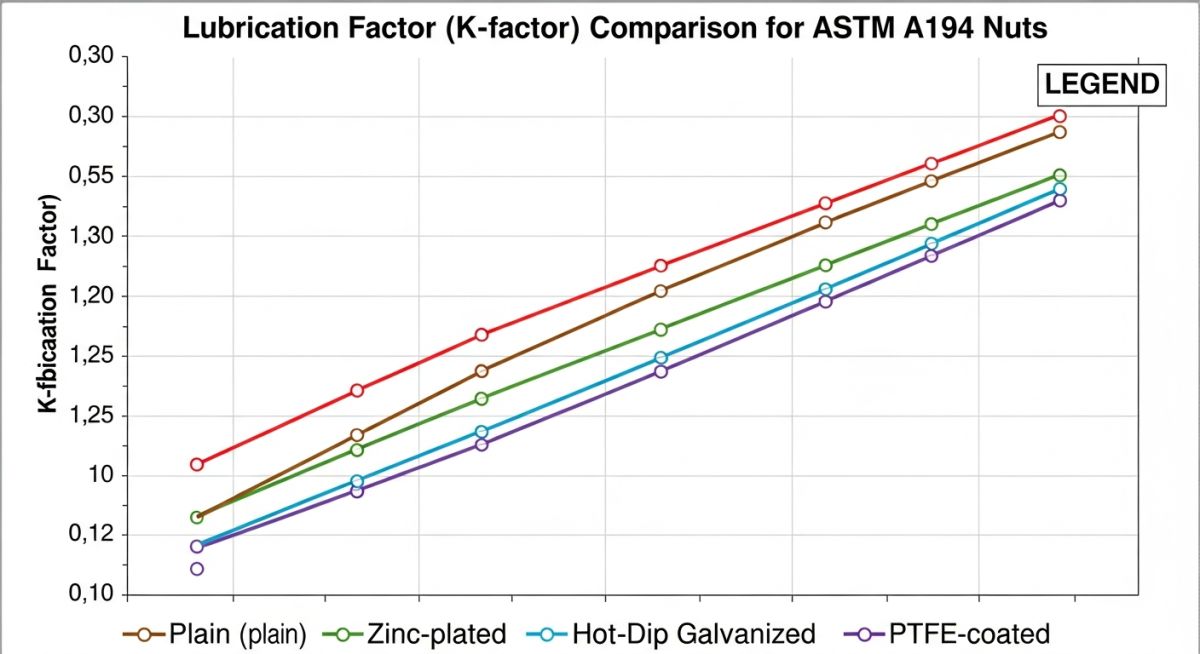
For high-strength grades like Grade 2H or Grade 7, using an incorrect K-factor during installation can lead to either under-tightened joints that leak or over-tightened bolts that surpass their yield strength. Modern 2026 coatings like Fluoropolymer (PTFE) and Zinc-Flake (Geomet) provide a much more predictable and lower coefficient of friction compared to traditional hot-dip galvanizing.
| Coating Type | Typical K-Factor Range | Engineering Impact |
|---|---|---|
| Plain (Lightly Oiled) | 0.15 to 0.18 | Standard baseline for calculation; high torque required. |
| Zinc Plated | 0.19 to 0.22 | Increased friction; higher risk of thread galling. |
| Hot-Dip Galvanized | 0.20 to 0.25 | Very high friction; requires over-tapping of ASTM A194 Nuts threads. |
| PTFE / Xylan 1070 | 0.08 to 0.12 | Lowest friction; enables lower torque for high clamp loads. |
Torque Accuracy and Lubrication Factors
When specifying ASTM A194 Nuts for 2026 critical service, the engineer must ensure the torque tables used by field technicians match the actual coating provided. For instance, moving from a dry Grade 2H nut (K=0.20) to a PTFE-coated nut (K=0.10) means that applying the same torque will result in double the tension, which can instantly snap the bolt. This highlights why high-performance ASTM A194 Nuts require a holistic approach to fastening strategy.
Don't miss this video related to ASTM A194 Nuts
Summary: Master Piping Engineering with our complete 125+ hour Certification Course: ......
Case Study: Mitigating Thermal Creep Failure with ASTM A194 Nuts
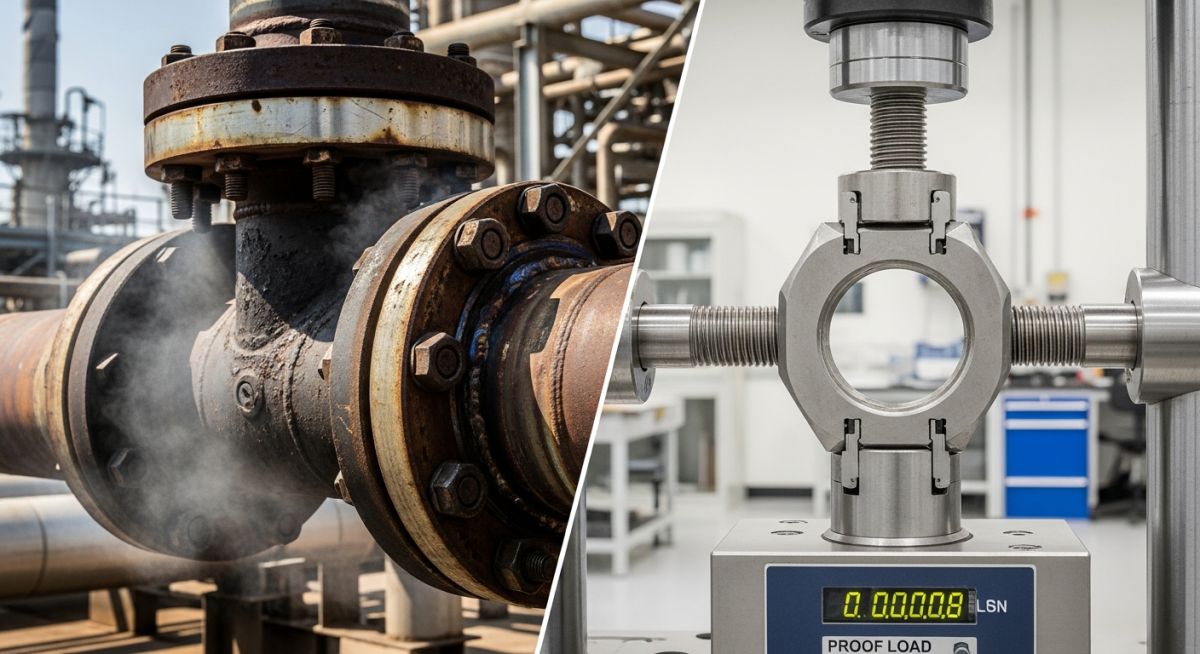
Project Data (2026 Audit)
- Facility: Gulf Coast Petrochemical Refinery
- Application: High-Pressure Steam Flange (Class 900)
- Operating Pressure: 1,450 PSI
- Operating Temperature: 850 Degrees Fahrenheit
- Original Fastener: Standard A563 Structural Nuts
Failure Analysis
During a routine 2026 maintenance cycle, inspectors identified significant steam leakage at the primary heat exchanger inlet. Metallurgical analysis revealed that the installed nuts had undergone substantial plastic deformation (creep). Because standard structural nuts lack the quenching and tempering required for high-heat service, the threads elongated, resulting in a total loss of bolt preload.
Engineering Fix and Solution
The engineering team mandated the immediate removal of all non-compliant hardware. The replacement specification called for ASTM A194 Nuts Grade 2H to match the existing ASTM A193 B7 studs. These ASTM A194 Nuts were selected for their ability to maintain a hardness of 24 to 35 HRC at temperature, ensuring the threads remained rigid under the 1,450 PSI internal pressure load.
Prior to installation, a 100 percent visual inspection was performed to verify the mandatory 2H marking and manufacturer traceability codes on the nut faces, as required by 2026 quality protocols.
Lessons Learned
- Material Traceability: Never substitute structural grade fasteners for pressure-containing applications.
- Hardness Verification: Field hardness testing can confirm that ASTM A194 Nuts have been properly heat-treated.
- Stamping Importance: Clear identification markings are the first line of defense against catastrophic flange failure in high-pressure service.
Frequently Asked Questions about ASTM A194 Nuts
What is the difference between an ASTM A563 nut and ASTM A194 Nuts?
ASTM A563 covers carbon and alloy steel nuts for general structural and mechanical use. ASTM A194 Nuts are specifically designed for high-pressure, high-temperature, or low-temperature applications where specialized heat treatment and rigorous chemical requirements ensure performance in critical engineering systems like pipelines and pressure vessels.
Are Grade 8M ASTM A194 Nuts suitable for marine environments?
Yes, Grade 8M ASTM A194 Nuts are highly recommended for marine environments. They are made from AISI 316 stainless steel which includes molybdenum, providing superior resistance to chloride-induced corrosion and pitting compared to standard Grade 8 (AISI 304) nuts.
What testing is required for ASTM A194 Nuts in 2026?
Mandatory testing includes chemical analysis, hardness testing (Brinell or Rockwell), and proof load testing according to ASTM A370 standards. These tests verify the material composition and the structural integrity of the threads under maximum rated load.
Can ASTM A194 Nuts be electroplated or galvanized?
Yes, but caution is needed, especially with high-strength grades like 2H. Electroplating introduces a risk of hydrogen embrittlement. If coating is necessary, processes like hot-dip galvanizing (ASTM A153) are preferred, provided the nuts are stress-relieved appropriately after plating to mitigate risks.
Conclusion: The Future of Fastening with ASTM A194 Nuts
As industrial infrastructure continues to push the boundaries of temperature and pressure, the role of reliable, standardized fasteners becomes even more critical. ASTM A194 Nuts provide a robust and predictable solution for engineers globally. Adherence to the 2026 standards outlined in this guide ensures the safety, integrity, and longevity of critical joints across the petrochemical, power generation, and marine industries. Proper selection of grades—whether the resilient 2H, cryogenic Grade 7, or corrosion-resistant 8M—remains a cornerstone of sound engineering practice.
About Me
Epcland Content & Dev Architect. Specializing in ASME/API compliance and high-ranking engineering content development.
📚 Recommended Resources: ASTM
Read these Guides
🎓 Advanced Training



Related posts:
![High-grade industrial Wing Nut Types and Applications for mechanical assemblies.]()
Wing Nut Types and Applications: The 2026 Engineering Guide
![Industrial Monorail Crane Systems installed in a modern manufacturing plant 2026.]()
Monorail Crane Systems: Design, Types & 2026 Standards Guide
![Lead engineer performing a Factory Acceptance Test FAT on an industrial skid system 2026]()
Factory Acceptance Test FAT: The 2026 Engineering Guide to Zero-Defect Delivery
![Professional engineering workspace showing a Basis of Design document layout for a 2026 project.]()
Basis of Design: How to Write a BOD for Engineering Projects in 2026
![Industrial Flare Knockout Drum Sizing and installation in a refinery relief system.]()
Flare Knockout Drum Sizing: Design & API 521 Standards (2026 Guide)
![Advanced Reboiler Control Systems in a modern petrochemical refinery 2026.]()
Reboiler Control Systems: Engineering Guide to Precision Control 2026