What is a Manifold Valve? Complete Guide to Types and Engineering Applications
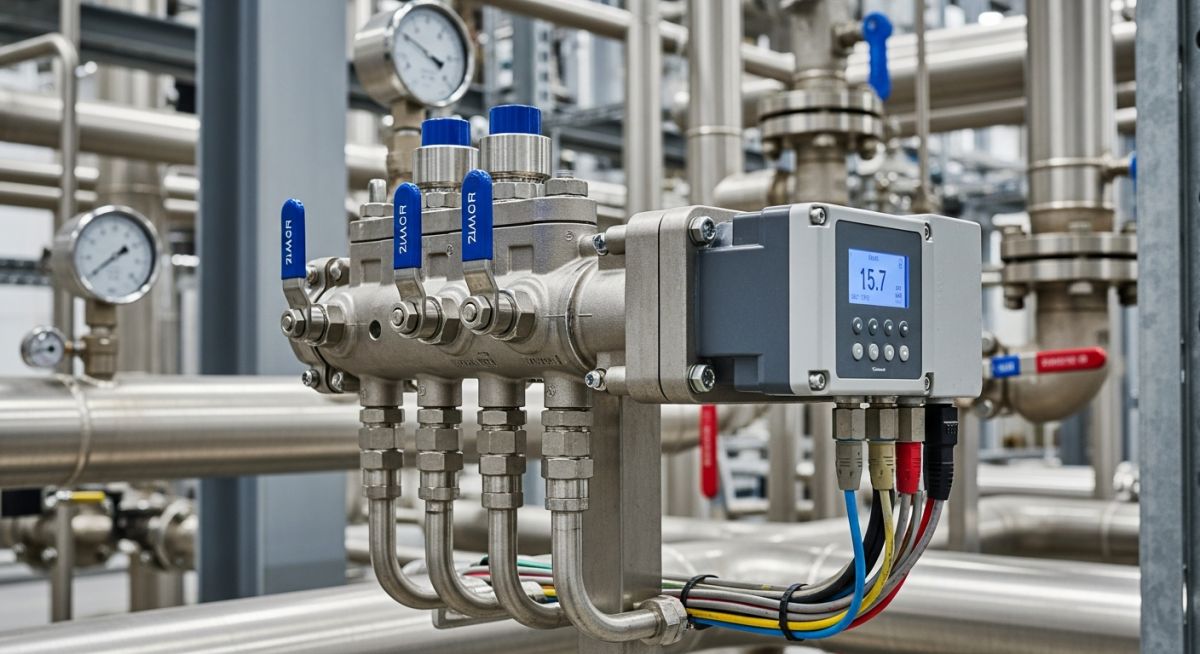
Key Engineering Takeaways
- Understanding the critical functional differences between 2-way, 3-way, and 5-way Manifold Valve configurations.
- Mastering direct vs. remote mounting techniques to minimize impulse line resonance.
- Compliance with ASME B31.3 and API 607 standards for high-pressure process isolation.
Definition: What is a Manifold Valve?
A Manifold Valve is a specialized instrument valve assembly used to isolate, bleed, or equalize pressure in process instrumentation. It combines multiple valves (usually needle valves) into a single block to connect transmitters to process lines, reducing leak points, weight, and installation space compared to discrete piping.
“In my 20 years of field inspections, I’ve seen more transmitter failures due to improper Manifold Valve operation than actual sensor defects. For 2026, we are pushing for integrated ‘Monoflange’ designs to further reduce fugitive emissions.”
— Atul Singla, Founder of Epcland
Table of Contents
Complete Course on
Piping Engineering
Check Now
Key Features
- 125+ Hours Content
- 500+ Recorded Lectures
- 20+ Years Exp.
- Lifetime Access
Coverage
- Codes & Standards
- Layouts & Design
- Material Eng.
- Stress Analysis
Engineering Challenge: Manifold Valve Proficiency
Test your knowledge on 2026 instrumentation standards.
1. Which Manifold Valve type is mandatory for a Differential Pressure (DP) transmitter measuring liquid flow?
Quiz Complete!
You’ve mastered the fundamentals of Manifold Valve engineering.
What is a Manifold Valve in Process Instrumentation?
A Manifold Valve is a critical fluid control component designed to integrate multiple valves into a single, compact body. In the context of process engineering and instrumentation, its primary role is to provide a secure interface between a process pipe and a sensitive measurement instrument, such as a pressure transmitter or a differential pressure gauge. By consolidating functions like isolation, venting, and equalization, the Manifold Valve eliminates the need for complex, leak-prone "Christmas tree" piping arrangements.
Engineers favor the Manifold Valve because it significantly reduces the number of potential leak paths (Fugitive Emissions). Each threaded or welded connection in a traditional piping system is a failure point; a manifold block reduces these connections to a single inlet and outlet interface. For 2026, the industry has shifted toward high-integrity manifolds that support ISO 15848-1 compliance, ensuring that even under extreme thermal cycling, the valve stem packing prevents hazardous gas release.
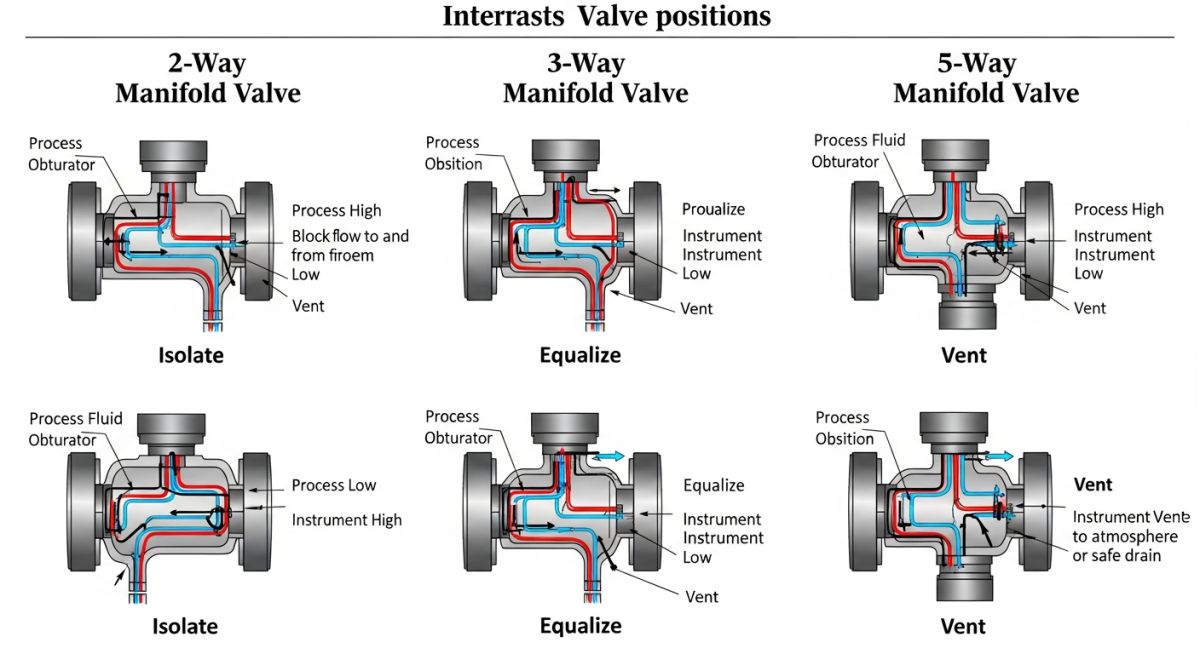
Primary Types of Manifold Valves for Engineering
The classification of a Manifold Valve is determined by the number of valve units (or "ways") integrated into the body. Each type serves a specific measurement objective, from simple static pressure readings to complex flow calculations.
2-Way Manifold Valve (Block and Bleed)
The 2-Way Manifold Valve is the standard for static pressure applications. It consists of one isolation valve (Block) and one drain or test valve (Bleed). Functional Logic: To calibrate the instrument, the block valve is closed to isolate the process, and the bleed valve is opened to vent the pressure to the atmosphere or a recovery system. This configuration is essential for pressure gauges and absolute pressure transmitters.
3-Way Manifold Valve (Differential Pressure)
Specifically engineered for Differential Pressure (DP) transmitters, the 3-Way Manifold Valve features two isolation valves (High and Low sides) and one equalization valve. The Equalization Rule: Before putting a DP transmitter into service, the equalization valve is opened to ensure both sides of the diaphragm see the same pressure, preventing "zero-shift" or diaphragm damage during startup.
5-Way Manifold Valve (Gas and Steam Metering)
The 5-Way Manifold Valve is the "Gold Standard" for accuracy in 2026 gas flow measurement. It includes two isolation valves, one equalization valve, and two independent vent/bleed valves. Advanced Calibration: The dual vents allow the engineer to vent both the high and low lines separately, ensuring no trapped liquids (in gas service) or gases (in liquid service) interfere with the DP reading. This is mandatory for custody transfer metering.
Key Characteristics of a Manifold Valve System
Modern Manifold Valve designs prioritize safety and maintenance. Key features include:
- Non-Rotating Tip (NRT): Prevents galling of the valve seat and extends the service life of the Manifold Valve during frequent operation.
- Back-Seating Design: Provides a secondary seal when the valve is fully open, protecting the packing from process pressure.
- Color-Coded Handles: Blue for Isolate, Green for Equalize, and Red for Vent/Bleed (Standard industry practice for 2026).
- Forged Body Construction: Eliminates the porosity issues found in cast bodies, making it suitable for high-vacuum and high-pressure services.
Manifold Valve Body Material and Design Standards
The integrity of a Manifold Valve depends heavily on its metallurgical composition and adherence to global engineering codes. For 2026 projects, materials are selected based on the NACE MR0175/ISO 15156 standard for sour service to prevent sulfide stress cracking. Most high-performance manifolds are machined from ASTM A479 316/316L stainless steel, though Monel 400 or Inconel 625 is utilized for high-chloride or extreme temperature environments.
Critical Compliance Checklist for 2026:
- ASME B31.3: Process Piping code for pressure rating and wall thickness.
- API 607 / ISO 10497: Fire-safe testing standards for thermal isolation.
- MSS SP-99: Specifically governs instrument valves and Manifold Valve ratings.
- ASME B16.34: Requirements for valves with flanged, threaded, and welding ends.
Proper Mounting of Manifold Valves
The installation geometry of a Manifold Valve significantly impacts measurement accuracy and maintenance accessibility. We categorize these into two primary engineering approaches:
Direct Mounting (T-Mount & H-Mount)
In Direct Mounting, the Manifold Valve is bolted directly to the transmitter flange. This "close-coupled" arrangement minimizes the length of impulse lines, which is crucial for reducing signal lag and preventing fluid "pulsation" errors. It uses a specialized flange interface (often 54mm centers) with PTFE or Graphite gaskets to ensure a leak-tight seal.
Remote Mounting (Distant Mounting)
When the process pipe is located in an inaccessible or high-vibration area, Remote Mounting is preferred. The Manifold Valve is installed on a 2-inch pipe stand or bracket, and impulse lines (tubing) connect the process tap to the manifold. This allows operators to perform zero-checks and calibration at grade level rather than at height.
Manifold Valve Selection Matrix
| Feature | 2-Way Manifold | 3-Way Manifold | 5-Way Manifold |
|---|---|---|---|
| Primary Application | Static Pressure / Gauge | Differential Pressure (DP) | Gas/Steam Flow Metering |
| Valve Count | 1 Isolate, 1 Vent | 2 Isolate, 1 Equalize | 2 Isolate, 1 Equalize, 2 Vent |
| Leak Path Risk | Minimal | Moderate (Equalizer) | Higher (Managed by Vents) |
| Standard Rating | 6,000 PSI | 6,000 PSI | Up to 10,000 PSI |
Engineering Benefits of Using a Valve Manifold
Transitioning from discrete piping to a consolidated Manifold Valve system provides several measurable advantages:
- Reduced Fugitive Emissions: Fewer threaded connections mean lower methane/VOC leakage, critical for 2026 ESG compliance.
- Improved Dynamic Response: Compact designs reduce the internal volume (dead space), allowing the transmitter to respond faster to process changes.
- Simplified Maintenance: Isolation and equalization can be performed using a single block, reducing the time required for loop checks.
- Structural Rigidity: Integral manifolds provide better support for heavy transmitters, reducing the risk of vibration-induced fatigue failure.
⚙️ Manifold Valve Pressure-Temperature (P-T) Calculator
Select your Manifold Valve material and operating temperature to calculate the maximum allowable working pressure (MAWP) based on 2026 ASME B16.34 simplified derating curves.
Calculated MAWP at Temperature
Don't miss this video related to Manifold Valve

Summary: The Fire That Burned for Days In March 2019, the ITC Deer Park terminal in Texas became the site of a massive chemical fire that ......
Manifold Valve Failure Case Study: The Cost of a Leaky Equalizer
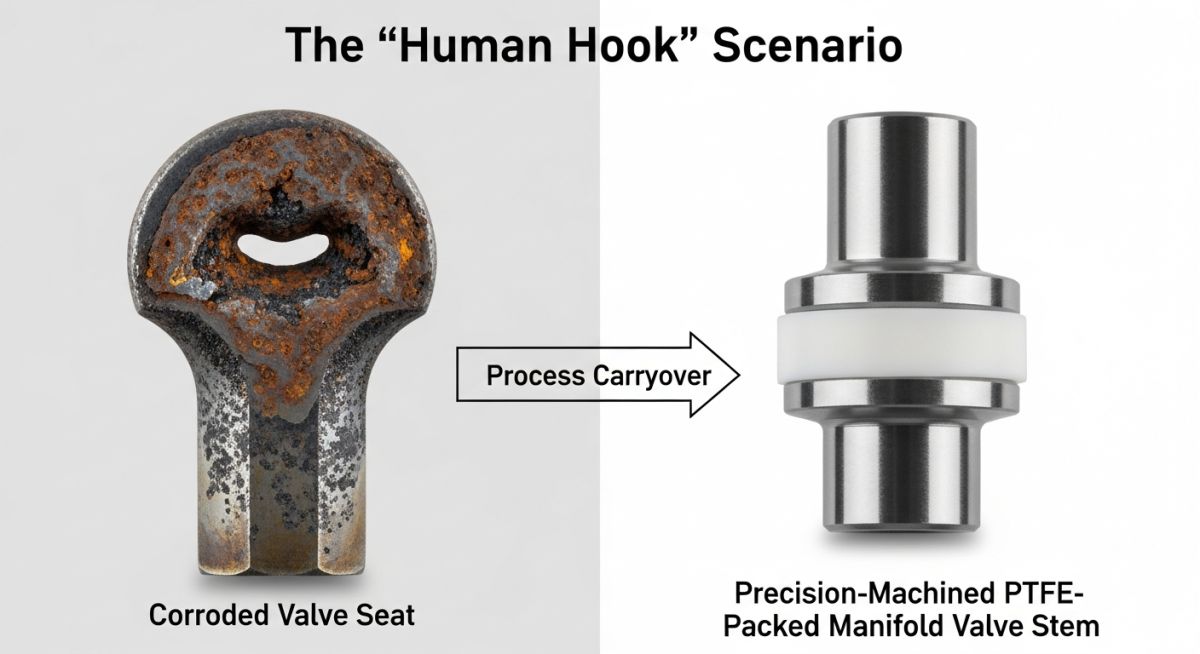
The Problem: Persistent Measurement Drift
At a natural gas processing facility in early 2026, a critical custody transfer flow meter began reporting a 4.5% discrepancy compared to downstream check meters. Maintenance teams initially suspected the Differential Pressure (DP) transmitter was faulty or required recalibration. However, bench tests showed the transmitter was within 0.05% accuracy.
The Root Cause Analysis (RCA)
Upon forensic inspection of the 3-Way Manifold Valve, engineers discovered "wire-drawing" on the equalization valve seat. A microscopic leak path had formed, allowing high-side pressure to bleed into the low-side chamber continuously. This "internal bypass" effectively dampened the differential pressure seen by the sensor, leading to significant under-reporting of flow volumes.
Engineering Solution & Lessons Learned:
- Material Upgrade: The standard 316SS manifold was replaced with a Stellite-tipped needle stem to resist high-velocity gas erosion.
- Operational Protocol: The facility updated its SOP to include a "Block-and-Bleed" integrity check of the Manifold Valve every 6 months to ensure zero cross-port leakage.
- Redundancy: For 2026 upgrades, the site transitioned to 5-Way Manifold Valves, providing dedicated vent ports to verify isolation during live process conditions.
Expert Insights: Lessons from 20 Years in the Field
- The "Equalizer Trap": Always ensure the equalization valve is fully closed before opening process isolation valves. Leaving it cracked even 1/8th of a turn is the #1 cause of false "stable" flow readings that are actually zeroed out.
- Packing Adjustments: In 2026, most Manifold Valve designs use live-loaded packing. Never over-tighten the gland nut during a leak; instead, cycle the valve once to redistribute the PTFE/Graphite seal.
- Vibration Mitigation: For remote-mounted manifolds, use a heavy-duty "G-bracket" or pipe stand. Impulse line vibration is the primary cause of fatigue failure at the manifold's NPT entry ports.