Types, Applications, and Selection of Diaphragm Valves
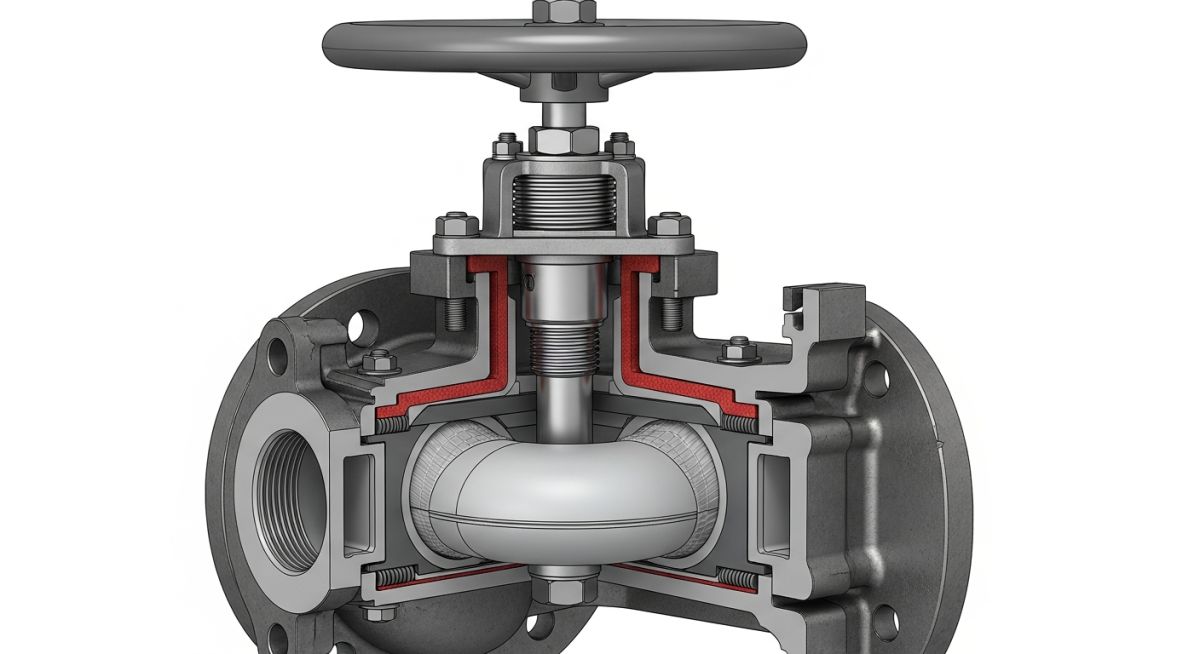
A diaphragm valve is a linear motion valve used to start, regulate, and stop fluid flow. The unique design utilizes a flexible, elastomeric diaphragm that is forced into a seating surface to create a bubble-tight seal. Because the diaphragm completely isolates the working parts of the valve from the process fluid, these valves are the premier choice for handling corrosive chemicals, abrasive slurries, and high-purity aseptic media.
What is a Diaphragm Valve?
A diaphragm valve is a specialized flow control device that uses a flexible membrane to isolate the valve’s bonnet and stem from the process fluid. Available in weir and straight-through designs, it provides excellent throttling capabilities and a leak-proof seal, making it ideal for corrosive, abrasive, and sanitary applications.
Article Contents
- Engineering Overview: Construction and Working of a Diaphragm Valve
- Anatomy of Flow Control: Essential Diaphragm Valve Parts
- Comparing the Primary Types of Diaphragm Valves
- Standard P&ID Symbols: The Diaphragm Valve Symbol Explained
- Materials of Construction (MOC) for Industrial Diaphragm Valves
- Engineering Checklist: Selection of a Diaphragm Valve
- Critical Applications of Diaphragm Valves in Modern Industry
- Technical Pros and Cons: Advantages and Disadvantages of a Diaphragm Valve
- Lifecycle Management and Maintenance Requirements for Diaphragm Valves
- Market Insights: Leading Manufacturers and Diaphragm Valve Price Trends
- Final Engineering Verdict: Conclusion on Diaphragm Valve Technology
Technical Knowledge Check
Question 1 of 5Quiz Completed!
Complete Course on
Piping Engineering
Check Now
Key Features
- 125+ Hours Content
- 500+ Recorded Lectures
- 20+ Years Exp.
- Lifetime Access
Coverage
- Codes & Standards
- Layouts & Design
- Material Eng.
- Stress Analysis
Engineering Overview: Construction and Working of a Diaphragm Valve
The fundamental mechanical principle of a diaphragm valve is the use of a flexible membrane to regulate flow by deforming against a seating area. Unlike globe or gate valves that use a metal-to-metal seal, the diaphragm valve relies on an elastomeric diaphragm to achieve a bubble-tight shutoff even when the process fluid contains suspended solids or aggressive chemicals.
The working mechanism is straightforward: as the valve handle is turned, the stem moves linearly, pushing a compressor against the diaphragm. In a closed position, the diaphragm is pressed firmly against the bottom of the valve body or a raised weir, completely blocking the flow path. This design is highly valued for corrosive fluid control because the valve's internal moving parts (stem, compressor, and bonnet) never come into contact with the media.
Anatomy of Flow Control: Essential Diaphragm Valve Parts
To understand the reliability of the diaphragm valve, one must examine its core components. Most industrial designs follow standards such as ASME B16.34 or MSS SP-88 to ensure structural integrity under pressure.
| Component | Engineering Function |
|---|---|
| Body | The pressure-retaining vessel with internal lining options. |
| Diaphragm | The flexible seal; provides primary shutoff and fluid isolation. |
| Bonnet | The upper housing that protects the stem and compressor. |
| Compressor | A bridge component that translates stem motion to the diaphragm. |
| Stem | Transmits manual or automated force to the compressor. |
Comparing the Primary Types of Diaphragm Valves
Selecting the correct diaphragm valve requires choosing between two fundamental body configurations: the weir-type and the straight-through design.

Weir Diaphragm Valves for Flow Throttling
The Weir-type Valve is the most common configuration. It features a raised bridge in the body flow path. This design requires a shorter stroke to achieve full shutoff, which reduces the mechanical stress on the elastomeric diaphragm. It is particularly effective for precision throttling and controlling gas or liquid flow in chemical processing.
Straight-through Diaphragm Valves for Slurries
In applications involving slurry handling, the straight-through diaphragm valve is preferred. The body has no internal bridge, allowing the fluid to pass through an unobstructed bore. This prevents the accumulation of solids that would otherwise clog a weir-type valve. While it requires a more flexible diaphragm and a longer stroke, it offers the lowest pressure drop among all diaphragm valve designs.
Specialized Sanitary Diaphragm Valves
A sanitary diaphragm valve is engineered for the food, beverage, and dairy sectors. These valves typically feature 316L stainless steel bodies that are electropolished to a mirror finish. The design ensures no "pockets" exist where bacteria could grow, facilitating effective Clean-in-Place (CIP) and Sterilize-in-Place (SIP) cycles.
Biotech and Hygienic Valves for Aseptic Use
In an aseptic process, any risk of external contamination must be eliminated. Hygienic diaphragm valves are the gold standard for biotech, as the diaphragm provides an impenetrable barrier between the mechanical actuator and the sterile media, ensuring the purity of high-value pharmaceuticals.
Zero Static Valves for High-Purity Water
Zero static valves are specialized diaphragm valve assemblies used in Water-for-Injection (WFI) loops. They are designed as a T-pattern block that allows for a sampling port or branch line with "zero dead-leg," ensuring that the process fluid remains in constant motion to prevent biofilm development.
Standard P&ID Symbols: The Diaphragm Valve Symbol Explained
In Piping and Instrumentation Diagrams (P&ID), the diaphragm valve is represented by a specific symbol that highlights its unique construction. The standard symbol consists of two triangles pointing toward each other (forming an "X" shape similar to a globe valve), but with a curved arc or semi-circle over the center point. This arc represents the flexible elastomeric diaphragm.
When an actuator is present, additional lines are added to represent manual handwheels, pneumatic diaphragms, or electric motors. Understanding the diaphragm valve symbol is crucial for engineers during the design and commissioning of complex corrosive fluid control systems.
Materials of Construction (MOC) for Industrial Diaphragm Valves
The reliability of a diaphragm valve is heavily dependent on the chemical compatibility of its wetted parts. Because the body can be lined with specialized materials, these valves often provide the performance of exotic alloys at a fraction of the cost.
| Material Category | Common Materials | Ideal Application |
|---|---|---|
| Body Materials | Ductile Iron, 316L SS, PVDF | Structural support and pressure retention. |
| Body Linings | PFA, ETFE, Hard Rubber | Corrosive chemicals and high-abrasion slurries. |
| Diaphragms | EPDM, PTFE, Butyl, Viton | Sealing and isolation of process media. |
Engineering Checklist: Selection of a Diaphragm Valve
Engineers must evaluate specific mechanical and chemical parameters to ensure the chosen diaphragm valve meets the system requirements. A primary consideration is the force required to achieve a bubble-tight shutoff.
Force Calculations for Diaphragm Valve Actuation
The total force (F) required to close the valve must overcome the line pressure (P) acting on the effective area (A) of the diaphragm. This can be estimated using the formula:
Where A = (π × d2 / 4) and 'd' is the effective diameter of the diaphragm.
Critical Applications of Diaphragm Valves in Modern Industry
Thanks to their isolation capabilities, diaphragm valves are indispensable in sectors where leak prevention and purity are paramount.
- Mining and Minerals: Handling slurry handling tasks where abrasive particles would quickly erode the seats of ball or gate valves.
- Water Treatment: Using plastic or lined diaphragm valves for chemical dosing of chlorine and caustic soda.
- Pharmaceuticals: Employing aseptic process valves for vaccine production and sterile filling lines.
- Power Generation: Controlling ion exchange and demineralized water systems.
Technical Pros and Cons: Advantages and Disadvantages of a Diaphragm Valve
While the diaphragm valve is a versatile tool, it has specific engineering limitations compared to other valve types.
Key Advantages of the Diaphragm Valve
- Complete isolation of the bonnet assembly from the process media.
- Excellent bubble-tight shutoff capabilities.
- Easy in-line maintenance and part replacement.
- Suitable for both throttling and on/off service.
Engineering Disadvantages and Limitations
- Temperature limitations: Restricted by the thermal limits of the elastomeric diaphragm (typically max 175°C).
- Pressure limitations: Generally not suitable for high-pressure steam service (typically limited to 200 psi / 13.8 bar).
- Weir-type valves may have "dead spots" where fluid can stagnate, unlike specialized sanitary designs.
Lifecycle Management and Maintenance Requirements for Diaphragm Valves
The diaphragm is a wear part and must be treated as a consumable in any preventive maintenance program. High-cycle applications or high-temperature processes will accelerate the degradation of the elastomer. Standard maintenance for a diaphragm valve includes:
- Visual Inspection: Checking the bonnet for "weep" holes that indicate a ruptured diaphragm.
- Fastener Torquing: Ensuring the bonnet-to-body bolts are torqued to manufacturer specifications after the first few thermal cycles.
- Elastomer Replacement: Proactive replacement of the diaphragm before it reaches its fatigue limit.
Market Insights: Leading Manufacturers and Diaphragm Valve Price Trends
The diaphragm valve price is largely influenced by the body material and lining type. For example, a standard cast iron weir-type valve is significantly cheaper than a 316L stainless steel sanitary diaphragm valve with a PTFE/EPDM diaphragm.
In 2026, market leaders include Saunders (Crane Co.), ITT Engineered Valves, GEMÜ, and Burkert. Prices for a 2-inch industrial lined valve typically range from USD 450 to USD 1,200 depending on the specific lining and actuation requirements.
Final Engineering Verdict: Conclusion on Diaphragm Valve Technology
The diaphragm valve remains the premier solution for applications requiring absolute fluid isolation and leak-proof performance. By understanding the nuances between weir and straight-through designs and selecting the appropriate elastomeric diaphragm material, engineers can ensure long-term reliability in even the most challenging industrial environments.
Don't miss this video related to Diaphragm Valve
Summary: Master Piping Engineering with our complete 125+ hour Certification Course: ......
Diaphragm Valve Closing Force Calculator
Estimate the vertical force required to achieve a bubble-tight shutoff against process line pressure.
Engineering Logic:
- Area (A) = (π × d2) / 4
- Closing Force (F) = Pressure (P) × Area (A)
- Note: This calculation provides the theoretical force required to counteract line pressure. Actual actuator sizing should include a safety factor for diaphragm stiffness and friction.
Case Study: Implementing Zero Dead-Leg Diaphragm Valve Systems in Pharmaceutical Manufacturing
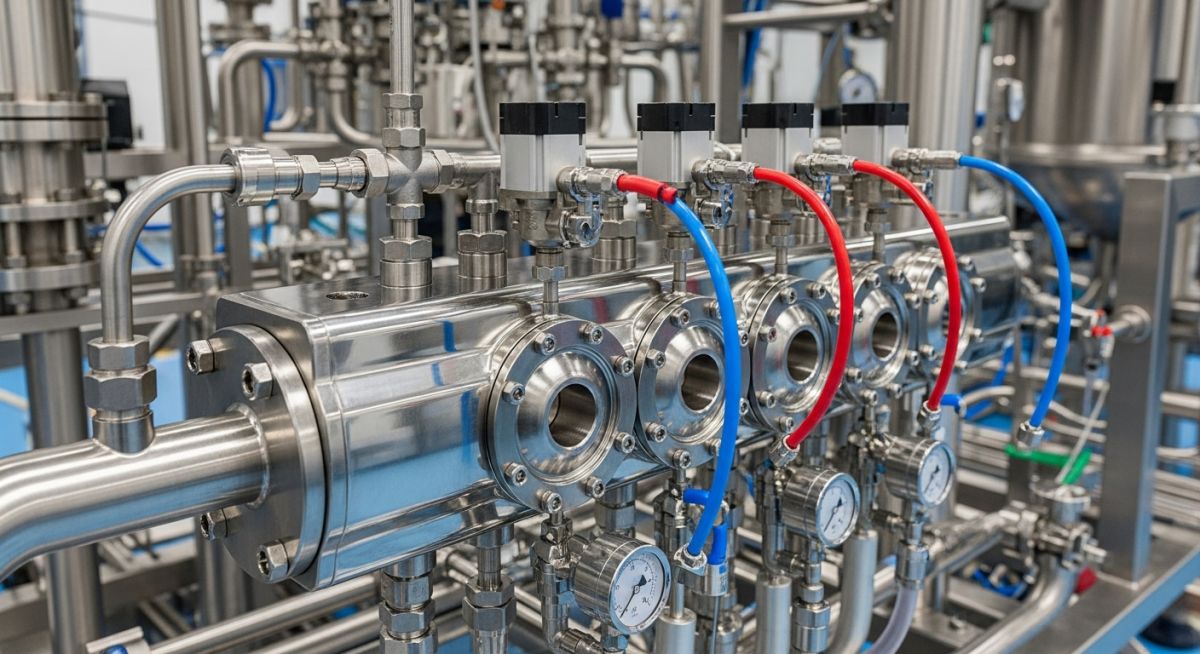
📊 Project Data
- Industry: Biopharmaceutical Vaccine Production
- Process: Water-for-Injection (WFI) Distribution Loop
- Valve Type: 316L Stainless Steel Diaphragm Valve
- Standard: ASME BPE (Bioprocessing Equipment)
⚠️ Failure Analysis
A vaccine manufacturer experienced repeated microbial contamination in their WFI loop. Investigation revealed that the existing ball valves, despite being stainless steel, had internal "dead zones" where water stagnated, allowing for the formation of biofilm. These pockets were unreachable by standard Clean-in-Place (CIP) chemicals.
The Engineering Fix
The facility replaced over 45 critical junctions with specialized diaphragm valve assemblies featuring "Zero Static" block designs. These blocks are machined from a single piece of stainless steel to ensure that the distance between the main flow path and the valve seat is less than two pipe diameters (the 2D rule). This configuration ensures constant turbulent flow across the diaphragm face, preventing any opportunity for bacterial growth.
💡 Lessons Learned
Conclusion: Transitioning to high-purity diaphragm valve technology provided a robust, aseptic solution that eliminated biofilm risks and ensured compliance with strict pharmaceutical regulatory standards.
Frequently Asked Questions about Diaphragm Valve Technology
What is the primary difference between a weir-type and a straight-through diaphragm valve?
The main difference lies in the body design. A weir-type diaphragm valve has a raised bridge (weir) that requires a shorter stroke for shutoff, making it ideal for throttling. A straight-through diaphragm valve has an unobstructed bore, which is essential for slurry handling to prevent solids from accumulating and clogging the valve.
Why is an elastomeric diaphragm critical for corrosive fluid control?
An elastomeric diaphragm acts as a physical barrier that isolates the valve's mechanical components (like the stem and compressor) from the process media. In corrosive fluid control, this prevents the acid or caustic media from attacking the metal internals of the bonnet, significantly extending the valve's service life compared to standard gate or globe valves.
How do sanitary diaphragm valves meet aseptic process requirements?
A sanitary diaphragm valve is designed with high-grade stainless steel (316L) and features a self-draining internal geometry. This ensures there are no pockets or "dead-legs" where bacteria can proliferate. In an aseptic process, these valves are critical because they can be easily sterilized using steam (SIP) or chemicals (CIP) without dismantling the piping system.
What are the common failure modes of a diaphragm valve in high-cycle applications?
The most common failure mode is diaphragm fatigue. Repeated flexing of the elastomeric diaphragm can lead to cracks or rupture, resulting in leakage into the bonnet. Additionally, overtightening the valve can crush the diaphragm material, while abrasive particles in high-velocity flows can cause erosion of the seating surface on the valve body.
Summary of Engineering Selection Criteria
Selecting the right diaphragm valve is a balance between chemical compatibility, mechanical pressure limits, and process purity requirements. By utilizing a weir design for throttling or a straight-through design for abrasive slurries, engineers can maximize the efficiency and safety of their fluid handling systems.
As industrial automation advances in 2026, the integration of smart pneumatic actuators with diaphragm valve technology is providing even greater precision in corrosive fluid control. Whether in pharmaceutical cleanrooms or heavy mining operations, the fundamental reliability of the isolated diaphragm remains an unmatched engineering advantage.