What is an Excavator? Comprehensive Guide to Applications and Types of Excavators
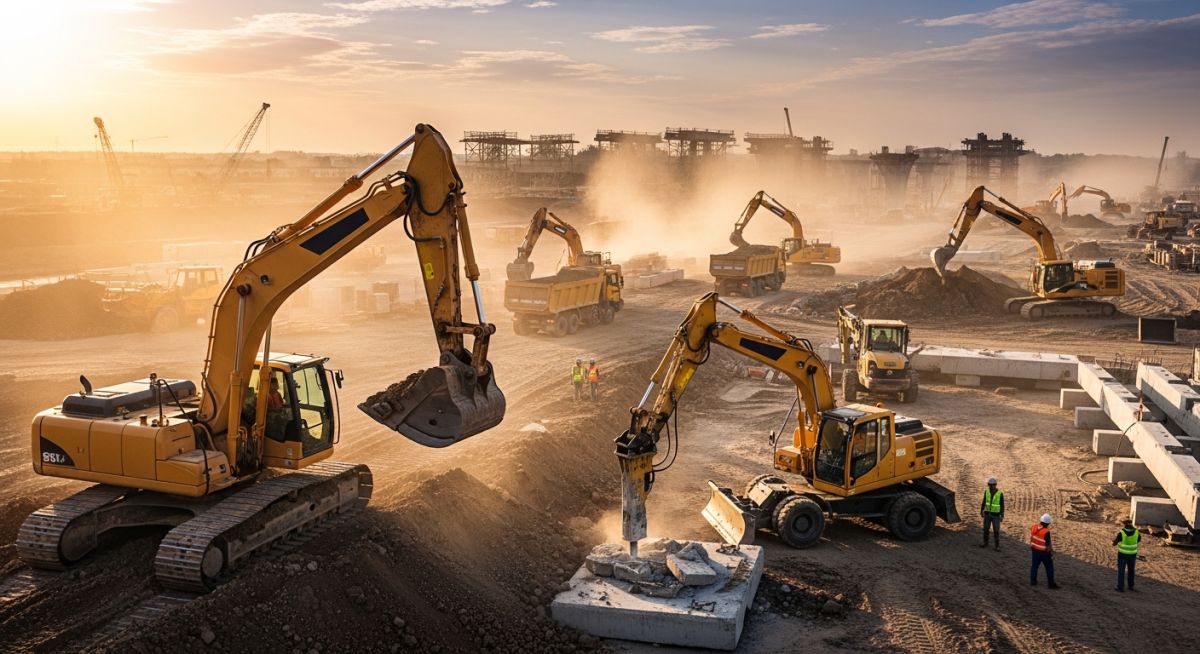
You are standing on a job site where the soil density is higher than expected, and your current machine is struggling with cycle times. Is the solution a higher-tonnage crawler, or should you have mobilized a suction excavator to avoid the underground utility maze? In 2026, selecting from the various Types of Excavators isn’t just about moving dirt; it is about maximizing hydraulic efficiency and minimizing environmental footprint. This guide breaks down the engineering specifics of modern diggers to ensure your fleet selection is data-driven.
Core Technical Takeaways
- Application Specificity: Understanding how different Types of Excavators like Dragline vs. Suction impact project timelines.
- Anatomy & Parts: Deep dive into hydraulic booms, swing gears, and undercarriage engineering.
- Selection Metrics: How to calculate the required operating weight and bucket capacity for 2026 project standards.
What are the different types of excavators?
The primary Types of Excavators include Crawler, Wheeled, Dragline, Suction, Skid Steer, Long Reach, and Mini excavators. Each type is defined by its movement system (tracks vs. wheels) and specialized boom configurations, designed for tasks ranging from mass excavation and dredging to high-precision urban utility work and trenching.
“In over two decades of heavy equipment procurement, I have seen more money lost through incorrect machine sizing than through mechanical failure. Choosing between various Types of Excavators requires a cold analysis of ground pressure and swing torque requirements, not just horsepower.”
— Atul Singla, Founder of Epcland
Table of Contents
Complete Course on
Piping Engineering
Check Now
Key Features
- 125+ Hours Content
- 500+ Recorded Lectures
- 20+ Years Exp.
- Lifetime Access
Coverage
- Codes & Standards
- Layouts & Design
- Material Eng.
- Stress Analysis
Technical Assessment: Types of Excavators
Test your knowledge on 2026 engineering standards and machinery classification.
1. Which of the following Types of Excavators is best suited for precision digging near underground utilities to prevent cable damage?
Quiz Complete!
You have mastered the fundamental classification of 2026 heavy machinery.
Core Applications of Different Types of Excavators in Construction
In the engineering landscape of 2026, the versatility of Types of Excavators has expanded far beyond simple trenching. These machines serve as the primary force in earthmoving, demolition, and material handling. Their application is dictated by hydraulic flow rates and lifting capacities, ensuring that whether it is a high-rise foundation in a congested city or a massive open-pit mine, the right machine is deployed for maximum fuel efficiency.
The most common applications include trenching for utility lines, where precision is paramount, and general grading, which requires high stability. In heavy industrial sectors, specialized Types of Excavators are utilized for river dredging to maintain maritime channels and bridge demolition using high-torque hydraulic shears. The integration of 3D Grade Control systems in 2026 allows these machines to achieve sub-centimeter accuracy, reducing the need for manual surveying on-site.
Beyond traditional construction, the Types of Excavators used in forestry and mining have adapted to extreme environments. Forestry-configured excavators feature reinforced cabs and specialized mulching heads, while mining-class shovels operate with buckets exceeding 40 cubic meters in capacity. The choice of machine directly impacts the "Cycle Time"—the duration it takes to dig, swing, dump, and return—making application-matching a critical role for project engineers.
Major Components and Parts of an Excavator
To understand the mechanical advantages of various Types of Excavators, one must analyze the three main structural assemblies: the Undercarriage, the House, and the Work Group (Boom, Arm, and Bucket).
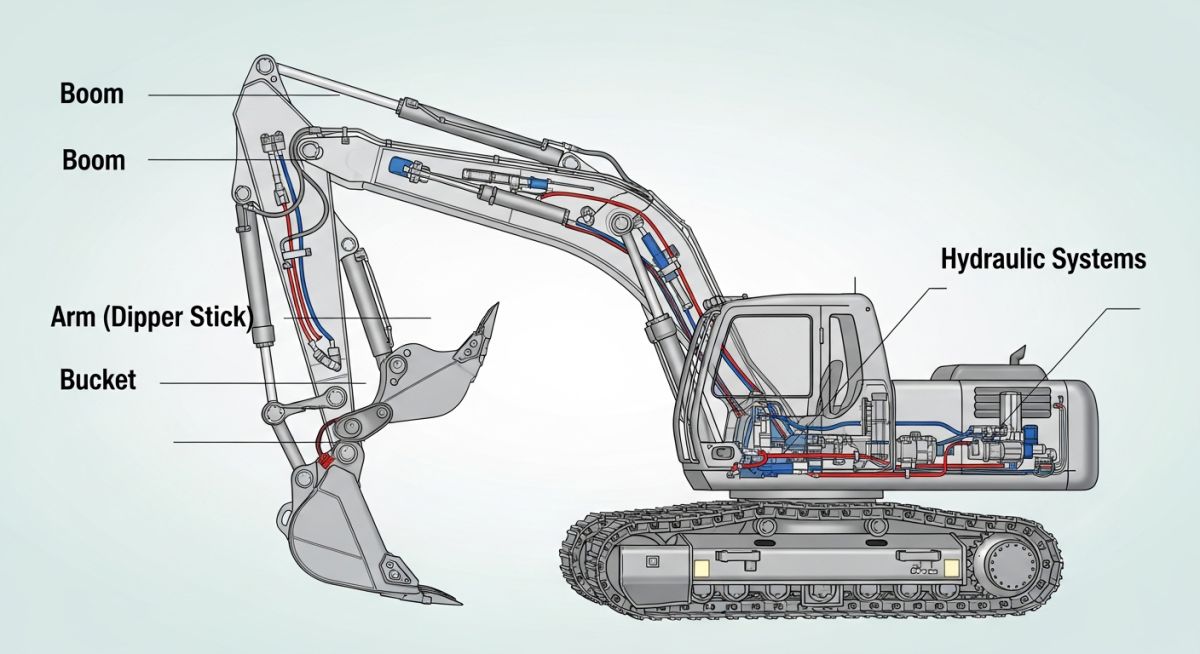
1. The Undercarriage: This provides the foundation and mobility. In Crawler Excavators, it consists of track frames, rollers, idlers, and tracks, distributing weight evenly to minimize ground pressure. In Wheeled Excavators, it features outriggers and a dozer blade for stabilization during high-torque lifts.
2. The House: This is the revolving superstructure that contains the engine, hydraulic pumps, and the operator's cab. The Swing Gear is a critical component here, allowing the house to rotate 360 degrees relative to the undercarriage. Modern 2026 models focus on "Zero Tail Swing" (ZTS) engineering, where the house stays within the width of the tracks during rotation to prevent collisions in tight spaces.
3. The Work Group: This consists of the Boom (the main extension), the Arm/Stick (the secondary extension), and the Bucket (the attachment). These are powered by high-pressure hydraulic cylinders. In various Types of Excavators, this work group can be swapped for hammers, augers, or grapples, turning the excavator into a multi-functional tool carrier.
Detailed Breakdown: 7 Main Types of Excavators and Their Uses
Crawler Excavators
The most ubiquitous of all Types of Excavators, the Crawler (or Track) model is the industry standard for heavy-duty earthmoving. By utilizing tracks rather than wheels, these machines provide exceptional traction on soft, uneven, or hilly terrain. They are the preferred choice for mass excavation where high breakout force is required. The track design ensures a low center of gravity, making them stable enough for heavy lifting without the need for additional outriggers.
Wheeled Excavators
Unlike their tracked counterparts, Wheeled Types of Excavators are designed for mobility and speed. They can travel on public roads at speeds up to 20-25 mph, eliminating the need for a low-boy trailer for short-distance transport. They are ideal for urban utility work, road maintenance, and projects involving asphalt surfaces where steel tracks would cause significant damage. However, due to their higher ground pressure, they require outriggers for stability during operation.
Dragline Excavators
When projects scale to civil engineering marvels or massive surface mining operations, Dragline Excavators become the primary movers. Unlike standard hydraulic Types of Excavators, a dragline uses a heavy-duty hoist rope system and a dragrope to maneuver the bucket. These machines are often assembled on-site due to their sheer size, with some models featuring boom lengths exceeding 100 meters. They are unparalleled for large-scale strip mining and canal construction where the material needs to be moved over vast distances.
Suction Excavators
Often referred to as vacuum excavators, these specialized Types of Excavators are the gold standard for "safe digging" in 2026. By utilizing a high-pressure water jet or air lance to loosen soil, and a powerful vacuum hose to remove it, they eliminate the risk of mechanical damage to underground gas, water, or fiber-optic lines. Engineering specifications for suction models focus on "Cubic Feet per Minute" (CFM) of airflow rather than bucket breakout force.
Skid Steer Excavators
Designed for maximum maneuverability in confined spaces, Skid Steer Types of Excavators (or loaders with excavator attachments) feature a unique steering system where the wheels or tracks on each side operate independently. This allows the machine to turn within its own footprint. In 2026, they are the preferred choice for residential landscaping, site cleanup, and interior demolition where larger machinery cannot navigate.
Long Reach Excavators
For deep-water dredging or high-slope finishing, Long Reach Types of Excavators provide the necessary extension. These machines feature an elongated boom and arm assembly, often reaching 18 to 30 meters (60 to 100 feet) from the center of rotation. While they offer incredible reach, their lifting capacity at full extension is significantly lower than standard models due to the leverage and stability constraints of the extended work group.
Mini Excavators
Mini (or compact) Types of Excavators have seen a massive surge in 2026 due to the densification of urban infrastructure. Typically weighing between 0.7 and 7 metric tons, these machines offer the functionality of a full-sized excavator with the ability to fit through narrow gates or operate on floors inside buildings. Their low ground pressure makes them ideal for work on sensitive turf or over existing underground structures.
Classifying Types of Excavators Based on Equipment Operating Weight
In accordance with ISO 6016:2026 standards, excavators are categorized by their operating weight, which determines their transport requirements and job site suitability. Operating weight is the total weight of the machine including a standard bucket, full fuel tank, and a 75kg operator.
| Class | Weight Range (Metric Tons) | Primary Application |
|---|---|---|
| Compact / Mini | 0.7t - 7t | Residential utilities, landscaping, interior work. |
| Midi Excavators | 7t - 11t | Urban construction, trenching, small bridge work. |
| Standard / Medium | 11t - 45t | General construction, pipeline installation, road work. |
| Large / Mining | 45t - 900t+ | Mass excavation, quarrying, heavy mining. |
Selection Criteria for Choosing the Right Types of Excavators
Selecting between different Types of Excavators requires a multi-variable analysis. Engineers must consider Maximum Digging Depth, Breakout Force (the amount of power the bucket can exert), and Lifting Capacity at specific radii. In 2026, environmental regulations also dictate the use of Stage V or Tier 4 Final engines, or increasingly, electric drive systems for urban projects.
Global Market Leaders: Top Excavator Manufacturers in 2026
The heavy equipment market in 2026 is dominated by manufacturers who have integrated telematics and autonomous capabilities into their Types of Excavators.
- Caterpillar (CAT): Industry leader in durability and global parts availability for all Types of Excavators.
- Komatsu: Pioneers in Intelligent Machine Control (iMC) and semi-autonomous digging cycles.
- Volvo CE: Focusing on electrification, especially in the mini and compact excavator segments.
- Hitachi: Renowned for their high-production hydraulic mining shovels and specialized medium-range diggers.
- Liebherr: The dominant force in high-tonnage mining and specialized dragline engineering.
Excavator Productivity & Cycle Time Calculator (2026 Edition)
Estimate the production rate (m3/hr) for different Types of Excavators based on bucket capacity and efficiency.
Engineering Note: These values are estimates based on standard 2026 earthmoving formulas. Real-world performance for specific Types of Excavators may vary by soil swell factor and operator skill.
Don't miss this video related to Piping engineering

Summary: Master Piping Engineering with our complete 125+ hour Certification Course: ......
Types of Excavators Failure Case Study: Deep Foundation Dredging
The Challenge: Canal Stabilization
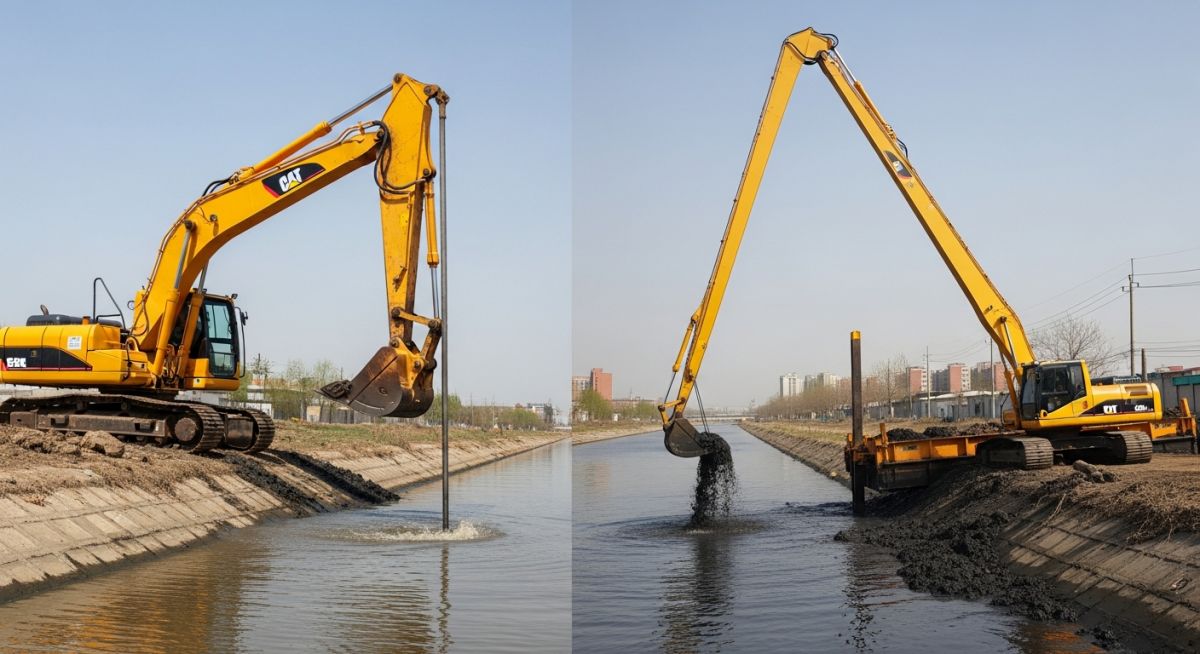
During a 2026 maritime expansion project, engineers initially deployed standard 45-ton Crawler Types of Excavators for slope stabilization. However, the machine's limited reach forced operators to position the equipment too close to the embankment edge, leading to soil instability and a near-rollover incident. The cycle time was also 40% slower than projected due to the constant repositioning required for the standard boom.
The Solution: Long Reach Optimization
The project team pivoted to specialized Long Reach Types of Excavators with a 22-meter boom extension. While the bucket capacity was reduced from 2.5m3 to 1.2m3 to maintain stability, the production rate increased because the machine could stay in a fixed, safe position for longer durations. This shift reduced site risk and met the ISO 12100 safety requirements for the 2026 project audit.
Key Lesson Learned:
Reach capability should never be sacrificed for bucket volume in maritime or slope applications. In this instance, selecting specialized Types of Excavators saved the project approximately $14,000 per week in potential downtime and embankment repair costs.
Expert Insights: Lessons from 20 Years in the Field
- Hydraulic Tuning: Always match your attachment's flow requirements to the machine's auxiliary hydraulic circuit. Using a high-flow hammer on a standard-flow Types of Excavators leads to rapid pump cavitation.
- Undercarriage Management: For Crawler Types of Excavators, counter-rotation (spinning in place) is the leading cause of premature track wear. Encourage operators to make wide turns to extend undercarriage life by up to 30%.
- Swing Brake Safety: In 2026, ensure your auto-dig systems are calibrated monthly. A 5-degree drift in the swing brake can lead to significant precision errors in deep-trenching utility projects.
Frequently Asked Questions
What is the most versatile among all Types of Excavators?
The Crawler Excavator (20-35 ton range) is considered the most versatile due to its balance of power, stability, and compatibility with hundreds of hydraulic attachments like shears, hammers, and grapples.
When should I choose a Wheeled Excavator over a Crawler?
Choose a wheeled model for urban projects, road repairs, or jobsites with paved surfaces where you need to move the machine frequently between locations without using a transport trailer.
How do 2026 emission standards affect excavator selection?
Modern Types of Excavators must comply with Tier 4 Final or Stage V regulations. In many 2026 urban contracts, electric or hybrid mini-excavators are now mandatory to meet localized carbon-neutral requirements.
Can a Mini Excavator handle heavy rock breaking?
While mini excavators can support hydraulic hammers, they lack the mass to provide significant down-pressure. For heavy rock breaking, a medium-sized (20t+) crawler is required for effective impact force.
Why are Suction Excavators becoming more popular in 2026?
The increasing density of underground utilities (5G fiber, smart grids) makes mechanical digging risky. Suction Types of Excavators provide a non-destructive method to "daylight" or expose these lines safely.
What is the expected lifespan of a modern excavator?
With rigorous maintenance, most Types of Excavators provide a first-life service of 8,000 to 10,000 hours. High-quality mining shovels can reach 25,000+ hours with structural rebuilds.