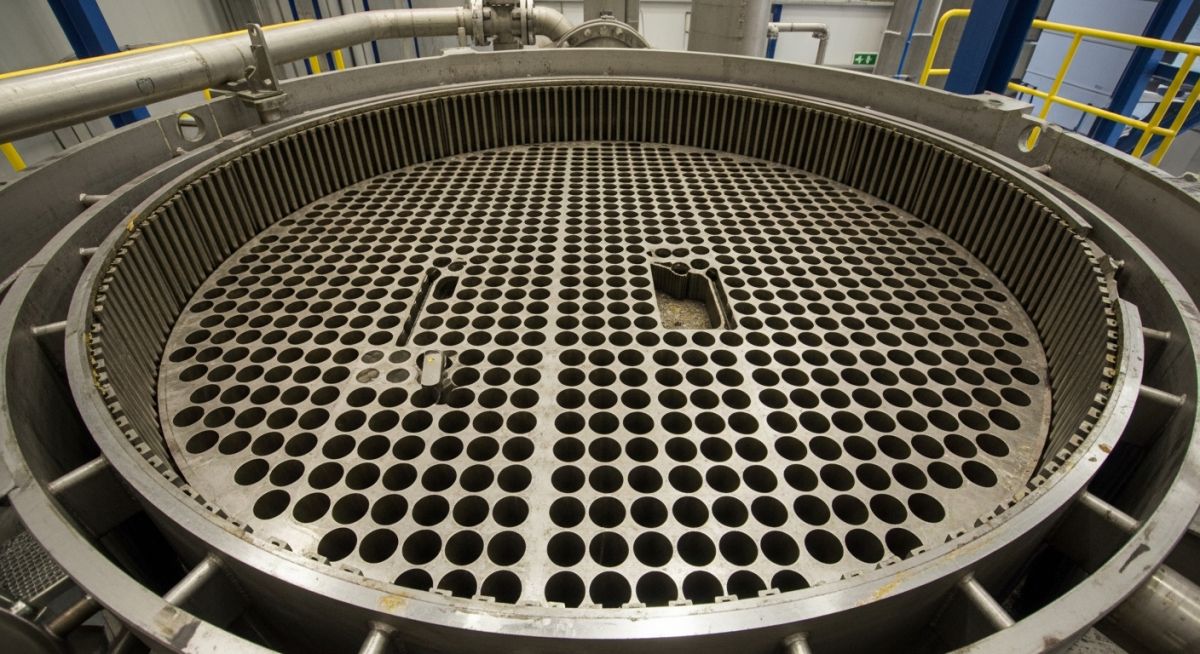
Verified Engineering Authority 2026 Heat Exchanger Tube Plugging: Comprehensive Guide to Types of Plugs and Plugging Steps Heat Exchanger Tube Plugging is a critical maintenance procedure used to isolate leaking or damaged tubes within a shell and tube heat exchanger to prevent cross-contamination and maintain system pressure. In 2026, engineering teams prioritize specialized plug selection to ensure long-term reliability and compliance with ASME standards. What is Heat Exchanger Tube Plugging? Heat Exchanger Tube Plugging is the process of sealing off specific tubes in a bundle that have developed leaks or thinning walls. By installing mechanical, tapered, or welded plugs, operators stop the flow of process fluid through compromised tubes, restoring unit integrity without requiring a full retubing or immediate bundle replacement. Technical Guide Contents 1. Critical Reasons for Heat Exchanger Tube Plugging 2. Engineering Standards for Heat Exchanger Tube Plugging 3. Various Types of Plugs for Heat Exchanger Tube Plugging 4. Technical Steps for Effective Heat Exchanger Tube Plugging 5. Calculating the Impact of Heat Exchanger Tube Plugging on Thermal Efficiency 6. Failure Analysis in Heat Exchanger Tube Plugging Operations Technical Knowledge Check: Tube Plugging Mastery Question 1 of 5 Next Question Quiz Completed! Restart Quiz Critical Reasons for Heat Exchanger Tube Plugging In industrial facilities, the decision to perform Heat Exchanger Tube Plugging is rarely arbitrary. It is a strategic response to operational anomalies that threaten the mechanical integrity or thermal performance of the unit. In 2026, predictive maintenance data often triggers these interventions before a catastrophic failure occurs. Tube Maintenance and Leak Prevention The most common driver is the detection of through-wall defects caused by pitting, stress corrosion cracking (SCC), or erosion. Plugging these specific tubes effectively stops the mixing of shell-side and tube-side fluids, preserving product purity and preventing hazardous chemical releases. Performance Optimization through Selective Isolation Sometimes, Heat Exchanger Tube Plugging is utilized to correct flow distribution imbalances. In large bundles, stagnant zones can lead to localized fouling. By selectively isolating certain tubes, engineers can increase the velocity in the remaining active tubes, potentially reducing the overall fouling rate and improving the heat transfer coefficient. Adapting to Industrial Process Changes As refinery or chemical plant throughput requirements evolve, a heat exchanger may become "over-surfaced" for a specific duty. Plugging tubes allows for a controlled reduction in heat transfer area, ensuring that process temperatures remain within target ranges without requiring a complete redesign of the thermal circuit. Emergency System Isolation Protocols During emergency shutdowns, rapid Heat Exchanger Tube Plugging provides a temporary fix that allows a plant to return to service while awaiting a scheduled turnaround. This proactive isolation prevents further damage to the internal baffles and tie rods caused by high-velocity fluid jetting from a failed tube. Engineering Standards for Heat Exchanger Tube Plugging Reliability in 2026 is built upon strict adherence to internationally recognized codes. ASME PCC-2 Article 3.12: This is the primary standard for "Inspection and Repair of Shell and Tube Heat Exchangers." It provides specific guidelines on plug materials, installation techniques, and the mandatory requirement for tube piercing to prevent pressure buildup. API 660: The American Petroleum Institute standard for refinery-service exchangers, which dictates maintenance margins and specifies when a bundle must be replaced rather than repaired via Heat Exchanger Tube Plugging. TEMA Standards: The Tubular Exchanger Manufacturers Association provides the geometric and structural basis used to calculate the maximum allowable tube plugging percentage for various bundle types. Various Types of Plugs for Heat Exchanger Tube Plugging Choosing the correct hardware is essential for a permanent seal. Below is an engineering overview of the most common 2026 plug technologies used for Heat Exchanger Tube Plugging. Tapered Pin Plugs These are conical, one-piece metal plugs driven into the tube end. They rely on a metal-to-metal interference fit. Pressure Limit: Low (Under 200 psi) Mechanical Expansion Plugs High-performance plugs that expand radially via a torque-controlled nut or hydraulic tool. Ideal for high-vibration environments. Pressure Limit: High (Up to 7000 psi) Welded Plugs Used for permanent closure in critical service. The plug is seal-welded to the tubesheet following ASME Section IX qualifications. Application: High Pressure / Nuclear Ring and Pin Plugs A two-piece design where a bushing (ring) is seated first, followed by a pin. This increases the total sealing surface area. Application: ASME PCC-2 Compliant Specialized Elastomeric and Friction Plugs For temporary testing or very low-pressure cooling water systems, rubber or elastomeric plugs provide a cost-effective Heat Exchanger Tube Plugging solution. These are typically used during turnaround leak testing before a permanent mechanical plug is selected and installed. Technical Steps for Effective Heat Exchanger Tube Plugging Execution of Heat Exchanger Tube Plugging requires precision. In 2026, failing to follow a standardized procedure can lead to plug ejection, which poses a significant safety risk to personnel and equipment during operation. Pre-Plugging Inspection and Leak Detection Before any hardware is installed, the exact location of the leak must be identified using Eddy Current Testing (ECT) or Internal Rotating Inspection Systems (IRIS). ASME PCC-2 requires that once a tube is identified for Heat Exchanger Tube Plugging, it must be punctured. Puncturing the tube prevents the buildup of pressure between two plugs, which could lead to a localized explosion or plug failure due to thermal expansion of trapped fluids. Surface Preparation and Cleaning Standards A reliable seal is only possible if the tube inner diameter (ID) is prepared correctly. All scale, oxidation, and process residue must be removed using wire brushes or abrasive honing tools. For Heat Exchanger Tube Plugging in high-pressure service, the tube ID should be polished to a finish of 63 to 125 micro-inches to ensure the mechanical serrations of the plug can bite into the metal effectively. Plug Installation and Torque Verification During the installation of mechanical plugs, technicians must use calibrated torque wrenches. Over-torquing can deform the tubesheet hole, making future retubing difficult, while under-torquing leads to leaks. In 2026, digital torque logs are standard for verifying that every instance of Heat Exchanger Tube Plugging meets the manufacturer's specified radial expansion pressure. Material Selection for Heat Exchanger Tube Plugging The table below provides a comparison of common plug materials used in 2026 to ensure galvanic compatibility between the plug and the tubesheet. Plug Material Max Pressure (PSI) Max Temp (F) Best Use Case Carbon Steel 5,000 800 Standard Oil/Gas Service Stainless 316L 7,000 1,000+ Corrosive Chemical Environments Brass/Copper 1,500 400 Sea Water Cooling Units Titanium 7,500 600 Desalination / Nuclear Power Calculating the Impact of Heat Exchanger Tube Plugging on Thermal Efficiency Each time a tube is isolated, the total heat transfer area (A) decreases. This forces the remaining tubes to carry a higher mass flow rate, which increases the tube-side velocity (v) and the pressure drop (Delta P). Area Reduction Formula Aeffective = Atotal × (1 - (Nplugged / Ntotal)) Where N represents the number of tubes. In 2026, most designs allow for a 10% margin before the overall Heat Transfer Coefficient (U) drops below the required process threshold. Failure Analysis in Heat Exchanger Tube Plugging Operations Failure in Heat Exchanger Tube Plugging usually manifests as "By-pass Leakage." This occurs when the plug material expands at a different rate than the tubesheet (Differential Thermal Expansion). If the plug becomes loose, it can be propelled like a projectile into the channel head, causing catastrophic secondary damage. To mitigate this in 2026, engineers perform a Finite Element Analysis (FEA) on the tubesheet if more than 15 percent of the tubes require Heat Exchanger Tube Plugging. This ensures that the structural integrity of the tubesheet remains intact despite the uneven thermal stresses. Don't miss this video related to Heat Exchanger Tube Summary: Master Piping Engineering with our complete 125+ hour Certification Course: ...... ✅ 2500+ VIDEOS View Playlists → JOIN EXCLUSIVE EDUCATION SUBSCRIBE Heat Exchanger Tube Plugging Calculator Estimate the impact of plugging on unit performance. Enter the total number of tubes in your bundle and the number of tubes intended for isolation. Total Number of Tubes (Count) Number of Tubes to Plug (Count) Calculate Impact Reset Plugged Percentage 0% Velocity Increase 1.0x Pressure Drop Factor 1.0x Engineering Case Study: High-Pressure Heat Exchanger Tube Plugging Project Data: In early 2026, a 500MW thermal power station experienced a sudden loss of feedwater temperature at the High-Pressure (HP) Heater. Eddy current testing identified three tubes with circumferential cracking near the tubesheet face on the inlet side. Failure Analysis: The root cause was determined to be Flow-Induced Vibration (FIV) combined with localized erosion. The operating pressure was 2,800 PSI, making traditional tapered pin plugs unsafe due to the risk of high-velocity ejection. Engineering Fix: Engineers opted for Heat Exchanger Tube Plugging using torque-controlled mechanical expansion plugs made of Monel 400 to match the tube material. Every tube was pierced at the mid-span according to ASME PCC-2 Article 3.12 protocols to prevent thermal expansion of trapped liquid. Lessons Learned: Material compatibility between the plug and the tube is vital to prevent galvanic corrosion in 2026 high-temp services. Tube piercing is a non-negotiable safety step to avoid "pressure-bomb" scenarios within isolated tubes. Mechanical expansion plugs provided a verifiable seal through torque-value logging, ensuring 100 percent leak-tight integrity. Frequently Asked Questions: Heat Exchanger Tube Plugging How many tubes can be plugged in a heat exchanger before replacement? ▾ In 2026 engineering practices, most shell and tube heat exchangers are designed with a 10 percent to 15 percent surface area margin. While you can technically plug more, exceeding this limit usually results in excessive pressure drop and a significant loss in thermal efficiency, making a bundle replacement more cost-effective. Are tapered pin plugs safe for high-pressure systems? ▾ Generally, no. Tapered pin plugs rely on a friction fit and are recommended for low-pressure cooling water services (typically under 200 PSI). For high-pressure or high-vibration systems, mechanical expansion plugs or welded plugs are the mandatory standard to prevent plug ejection. Why is tube piercing required during Heat Exchanger Tube Plugging? ▾ According to ASME PCC-2, any tube being plugged must be pierced to prevent pressure buildup. If a tube is sealed at both ends without piercing, trapped liquid can expand during heat-up, creating a high-pressure "bomb" that can cause the tube to rupture or the plugs to fail catastrophically. What are the best materials for Heat Exchanger Tube Plugging in 2026? ▾ The best material is one that matches the metallurgy of the existing tubes. Using a different metal can cause galvanic corrosion. Common 2026 materials include Stainless Steel 316L, Monel 400 for high-pressure heaters, and Titanium for desalination units to ensure maximum chemical resistance. Final Thoughts on Maintenance Excellence In 2026, Heat Exchanger Tube Plugging remains an indispensable tool for maintaining industrial uptime. By selecting the correct plug type—be it mechanical, tapered, or welded—and adhering strictly to ASME PCC-2 installation protocols, engineering teams can extend the lifecycle of their equipment while ensuring personnel safety. Remember that while plugging is an effective temporary solution, monitoring the total percentage of isolated tubes is critical to preventing long-term operational inefficiency. 📚 Recommended Resources: Heat Exchanger Tube Read these Guides 📄 Heat Exchanger Fouling Factor: Significance, Calculation & 2026 Standards 📄 Heat Exchanger Failure Mechanisms and Controls 📄 Exchanger Piping & Stress Analysis: Piping Course 📄 How to Clean Pipelines? (Industrial Cleaning Methods Guide 2026) 🎓 Advanced Training 🏆 Heat Exchanger Layout & Piping 🎥 Watch Tutorials 🔧 Expansion Bellows in Shell & Tube Heat Exchangers – Why, When & How? | #epclandtalks Understanding the Differences Between Floating Head and U-Tube Heat Exchangers 11.6 Heat Exchangers!! Optimizing layout!! Piping Engineering!! Piping Layouts!!