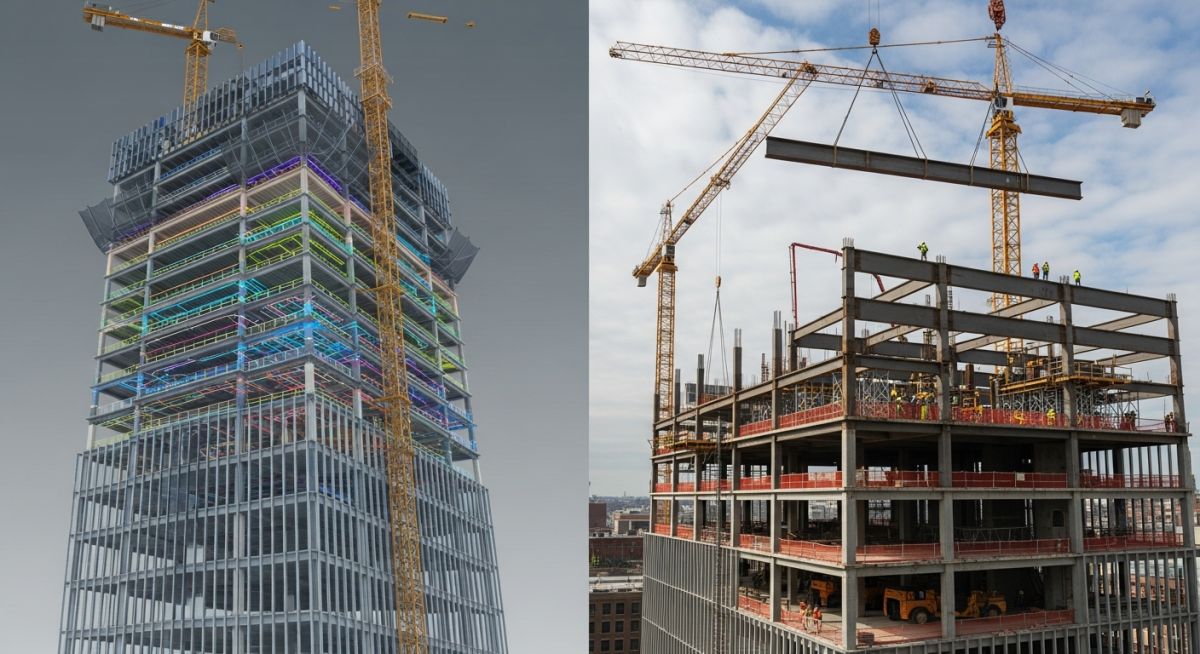
Professional Engineering Review 2026 Structural Design: Engineering Principles, Objectives, and Lifecycle Stages The field of Structural Design is the mathematical and scientific backbone of the built environment. It is the methodical process by which engineers ensure that a structure is capable of withstanding all applied loads throughout its intended lifespan without failure. From the initial load analysis to the final construction drawings, every phase of Structural Design must balance safety, economy, and compliance with rigorous international building codes like ASCE 7-22 and Eurocode standards. What is Structural Design in Modern Engineering? Structural Design is a specialized branch of civil engineering focused on creating the framework of a structure. Its primary goal is to determine the optimal arrangement and sizing of members (beams, columns, slabs) to resist internal forces (stress, strain) and external loads (gravity, wind, seismic). It integrates material science with advanced structural analysis to guarantee stability, durability, and safety. Table of Contents Primary Objectives of Professional Structural Design Building Codes and Safety Standards in Structural Design Critical Stages in the Structural Design Process Specialized Focus: Steel Structural Design Fundamentals Industry-Standard Software for Structural Design Interactive Calculator: Beam Deflection Case Study: Structural Design Optimization Advancements in Structural Design for 2026 Frequently Asked Questions Quiz: Structural Engineering Mastery Primary Objectives of Professional Structural Design The execution of Structural Design is governed by a hierarchy of objectives that prioritize human life while balancing economic constraints. In the modern engineering landscape of 2026, these objectives have evolved to include high-performance resilience and carbon footprint reduction. Safety and Structural Integrity The non-negotiable objective of Structural Design is to prevent collapse under the most extreme predicted loading conditions. This involves calculating "Limit States" where the structure must remain stable even if individual members experience localized yielding. Stability and Serviceability Beyond preventing collapse, Structural Design ensures serviceability. This means the building must not sway excessively in the wind or have floors that vibrate under foot traffic, as these factors affect occupant comfort and equipment precision. Economy and Efficiency Engineering excellence in Structural Design is defined by achieving safety with the minimum amount of material. Over-designing a structure leads to unnecessary costs and environmental impact, while under-designing leads to catastrophe. Aesthetic Integration Modern Structural Design works in tandem with architecture. The engineer's role is to hide the "skeleton" within the architectural skin or, in the case of "High-Tech" architecture, to turn the structural elements into the primary aesthetic feature. Building Codes and Safety Standards in Structural Design No Structural Design can be finalized without strict adherence to regional and international building codes. these documents are essentially legal mandates that define the minimum loads (wind, snow, seismic) that a structure must be designed to resist. Standard / Code Jurisdiction / Focus Key Application in Structural Design ASCE 7-22 United States / Global Minimum Design Loads and Associated Criteria. Eurocode 3 (EN 1993) European Union Design of Steel Structures and Connections. IBC (International Building Code) International General building safety and fire requirements. ACI 318-25 United States / Specialized Building Code Requirements for Structural Concrete. Adhering to these codes during the Structural Design process ensures that the engineer is protected legally and that the public is protected physically. Codes are updated regularly (typically every 3 to 6 years) to reflect new research in materials science and lessons learned from past structural failures. Critical Stages in the Structural Design Process A professional Structural Design is not produced in a single step but through an iterative lifecycle. This systematic approach ensures that every variable, from soil conditions to seismic risk, is accounted for before construction begins. Feasibility and Conceptual Structural Design During this phase, engineers determine the most viable structural system (steel, concrete, or timber) based on the project brief. Conceptual Structural Design involves preliminary sizing of members to provide the architect with column locations and floor thicknesses, ensuring the vision is physically achievable. Structural Analysis and Simulation (FEM Analysis) Once the concept is frozen, the engineer builds a detailed mathematical model. Using Structural Analysis software, they apply factored loads to simulate real-world conditions. Finite Element Method (FEM) analysis is used to identify areas of high stress concentration, allowing for the optimization of material distribution. Design Development and Construction Documentation The final stage of Structural Design involves creating the blueprints for construction. This includes detailed Construction Drawings, connection details, and specifications for material grades (e.g., 50 KSI steel or 4,000 PSI concrete). These documents are legal records used for permits and as a guide for the contractor. Specialized Focus: Steel Structural Design Fundamentals Steel is a preferred material for industrial and high-rise Structural Design due to its high strength-to-weight ratio and ductility. In 2026, steel design is primarily governed by the AISC 360-22 (Specification for Structural Steel Buildings). Key Considerations in Steel Design ● Limit State Design: Engineers must check both Strength Limit States (yielding, buckling) and Serviceability Limit States (deflection, vibration). ● Connection Design: The integrity of a steel structure relies on its joints. Structural Design must specify whether connections are bolted (Slip-Critical or Bearing) or welded (CJP or Fillet). ● Slenderness Ratios: Compression members must be checked for buckling using the formula KL/r, where K is the effective length factor, L is the length, and r is the radius of gyration. Industry-Standard Software for Structural Design and Analysis Modern Structural Design is inseparable from advanced computing. In 2026, Building Information Modeling (BIM) integration is the standard, allowing for seamless data transfer between the design model and the fabrication shop. Software Package Primary Strength Best For CSI ETABS Multi-story Building Analysis Skyscrapers and Commercial Towers SAP2000 General Finite Element Analysis Bridges, Industrial Plants, Stadiums Tekla Structures LOD 400 Detailing and BIM Steel Fabrication and Rebar Detailing STAAD.Pro International Code Integration Oil and Gas Industrial Frameworks The choice of Structural Analysis software often depends on the specific complexity of the project. While SAP2000 is excellent for non-linear analysis of complex geometries, ETABS provides optimized tools specifically for the lateral load analysis of tall buildings. Structural Design: Beam Deflection Calculator Calculate the maximum deflection for a Simply Supported Beam under a Uniformly Distributed Load (UDL). This tool helps verify Serviceability Limit States in your Structural Design. Span Length (L) Feet Uniform Load (w) lb/ft Modulus of Elasticity (E) PSI Default: 29,000,000 PSI (Steel) Moment of Inertia (I) in4 Calculate Deflection Reset Max Deflection (Δmax) 0.000 in Formula: Δ = (5 × w × L4) / (384 × E × I) Don't miss this video related to Structural Design Summary: This is an advanced lesson for engineers who want to understand the science behind pipe selection. We break down the ...... ✅ 2500+ VIDEOS View Playlists → JOIN EXCLUSIVE EDUCATION SUBSCRIBE Case Study: Structural Design Optimization for Seismic Resilience 1. Project Data and Background In early 2026, a 150,000-square-foot high-tech manufacturing facility was commissioned in a region with high seismic activity (Design Category D). The project required a Structural Design that could not only prevent collapse during a Maximum Considered Earthquake (MCE) but also ensure the protection of extremely sensitive, multi-million dollar lithography equipment. 2. Engineering Challenge The initial traditional Structural Design utilized rigid moment frames. However, the resulting stiffness led to high floor accelerations, which threatened the sensitive internal equipment. The base shear forces calculated were so immense that they required massive, un-economical foundation footings that would have extended well beyond the building's footprint. 3. Design Optimization and Solution The engineering team pivoted to a high-performance Structural Design optimization strategy. By integrating Buckling Restrained Braced Frames (BRBFs) and Base Isolation technology, the following results were achieved: Energy Dissipation: The BRBFs acted as structural fuses, absorbing seismic energy through stable yielding. Base Isolation: By decoupling the structure from ground motion, floor accelerations were reduced by 65 percent compared to the rigid frame design. Cost Efficiency: The optimized design reduced total steel weight by 18 percent, offsetting the cost of the isolators. Lessons Learned for Engineers Effective Structural Design in 2026 is moving away from brute-force strength and toward smart energy management. For facilities with high-value equipment, the "Serviceability Limit State" (preventing internal damage) is often more critical than the "Ultimate Limit State" (preventing collapse). Advanced FEA simulation early in the design phase is crucial for identifying these optimization opportunities. Frequently Asked Questions about Structural Design What are the most critical limit states in structural design engineering? In Structural Design, engineers primarily evaluate two types of limit states. Strength Limit States ensure the structure can resist the maximum factored loads without collapsing (e.g., yielding, buckling, or fracture). Serviceability Limit States focus on the everyday performance of the building, ensuring that deflections, vibrations, and crack widths remain within acceptable ranges for occupant comfort. How does structural design optimization reduce total project construction costs? Design optimization involves using advanced Structural Analysis to remove excess material where it is not required for strength. By refining member sizes and utilizing higher-strength material grades, engineers can significantly reduce the tonnage of steel or volume of concrete required, leading to lower material and labor costs while maintaining safety. What role does Building Information Modeling (BIM) play in modern structural design? BIM is central to 2026 Structural Design workflows. It allows for a single 3D model to be shared between architects, structural engineers, and contractors. This integrated approach facilitates "Clash Detection" (identifying physical overlaps before construction), improves the accuracy of quantity take-offs, and ensures that structural drawings are always synchronized with the analytical model. How often are structural design building codes and safety standards updated? Major building codes used in Structural Design, such as the International Building Code (IBC) or ASCE standards, are typically updated on a 3 to 6-year cycle. These updates incorporate findings from recent natural disasters, improvements in material testing, and new methodologies for seismic and wind analysis to ensure that new structures meet the highest safety requirements of 2026 and beyond. Conclusion: The Future of Structural Design Mastering the multifaceted stages of Structural Design is essential for any engineer looking to contribute to a resilient and sustainable future. From conceptualizing efficient load paths to utilizing cutting-edge FEA simulations and BIM technology, the 2026 landscape of Structural Design is more precise and collaborative than ever. By prioritizing safety through code compliance and innovation through material optimization, structural engineers continue to push the boundaries of what is possible in modern architecture and industrial infrastructure. ASCE 7-22 BIM Level 3 Resilience Engineering 📚 Recommended Resources: Structural Design Read these Guides 📄 8 Best Structural Engineering Design Software Tools for 2026 📄 Subsea Pipeline Design: 2026 Engineering Guide to Offshore Piping 📄 Minimum Design Metal Temperature (MDMT) and Impact Testing Guide 2026 📄 What is a Cryogenic Tank? Design, Construction & Use (2026 Guide) 🎓 Advanced Training 🏆 Mastering Industrial Piperack Design: Layout, Loads & Analysis 🎥 Watch Tutorials Underground Piping Design Course | Video 13: Wall Thickness Calculation Underground Piping Design Course | Video 16: Standard Fitting Dimensions