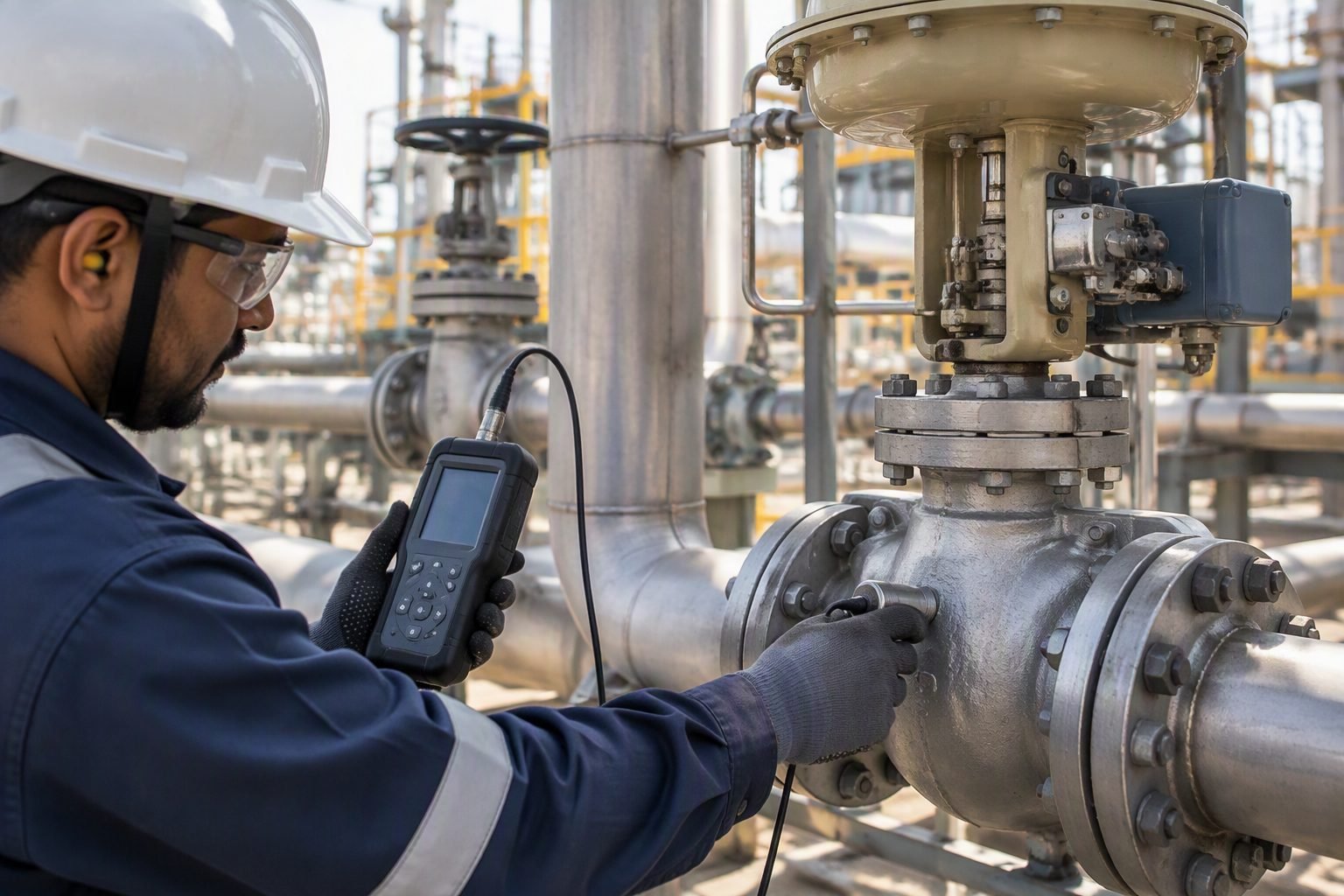
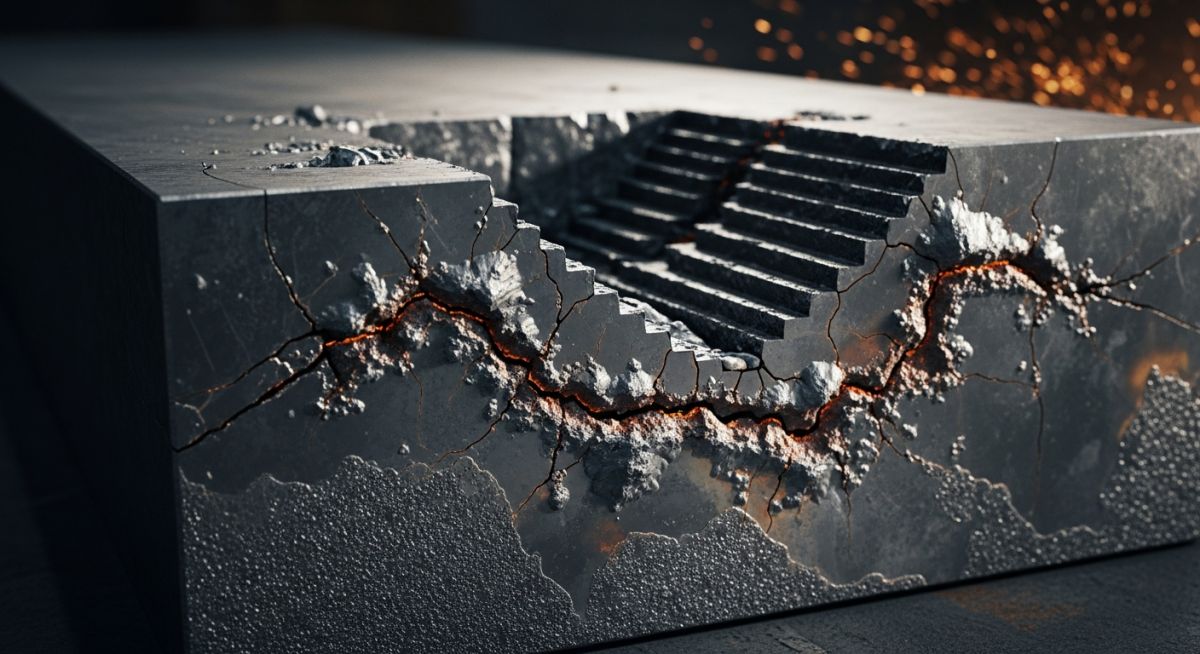
Verified Engineering Resource 2026 What is Hydrogen Induced Cracking (HIC)? | Hydrogen Induced Cracking Mechanism Imagine a high-pressure subsea pipeline, engineered to withstand thousands of PSI, suddenly developing internal "stepwise" fractures without any external warning signs. In wet H2S environments, commonly known as sour service, atomic hydrogen doesn't just corrode the surface—it migrates deep into the steel lattice, finding microscopic imperfections to call home. By the time you detect the bulging or blistering on the surface, the structural integrity of your asset may already be compromised beyond repair. In this technical deep-dive, we break down the Hydrogen Induced Cracking (HIC) mechanism, the critical material requirements for carbon and stainless steels, and the rigorous NACE testing protocols required to ensure your infrastructure survives the current year 2026 and beyond. Key Takeaways Hydrogen Induced Cracking (HIC) is an internal cracking phenomenon caused by the recombination of atomic hydrogen at inclusion sites. Material cleanliness, specifically the control of Manganese Sulfide (MnS) inclusions, is the primary defense against HIC. NACE TM0284 is the industry-standard test for evaluating a material's resistance to HIC in sour environments. What is Hydrogen Induced Cracking (HIC)? Hydrogen Induced Cracking (HIC) is a form of hydrogen embrittlement found in low-alloy and carbon steels exposed to aqueous H2S. Atomic hydrogen diffuses into the steel, accumulating at laminations or non-metallic inclusions, where it recombines into molecular hydrogen gas (H2), creating internal pressure that leads to stepwise cracking. "In my 20 years of pipeline integrity management, HIC remains one of the most 'silent' threats. It isn't just about the H2S concentration; it’s about the steel's chemistry. If your plate manufacturer isn't utilizing calcium treatment for inclusion shape control, you're essentially building a ticking time bomb in sour service." — Atul Singla, Founder of EPCLand Table of Contents 1. What is Hydrogen Induced Cracking (HIC)? 2. The Fundamental Hydrogen Induced Cracking Mechanism 3. Material Selection for Hydrogen Induced Cracking Resistance 4. Standardized Hydrogen Induced Cracking Testing (NACE TM0284) 5. Engineering Solutions to Prevent Hydrogen Induced Cracking Engineering Knowledge Check: HIC Fundamentals Validate your expertise on Hydrogen Induced Cracking 1. Which specific inclusion type is most responsible for initiating Hydrogen Induced Cracking (HIC)? A. Elongated Manganese Sulfide (MnS) B. Globular Calcium Oxides C. Iron Carbides (Cementite) 2. In the HIC mechanism, what is the specific role of Hydrogen Sulfide (H2S)? A. It acts as a poison preventing surface H2 recombination B. It physically erodes the steel surface C. It facilitates the transport of H2S molecules into the lattice 3. Which industry standard defines the test method for evaluating HIC resistance? A. NACE MR0175 B. NACE TM0284 C. API 5L 4. What does the "Stepwise" cracking pattern in HIC represent? A. Linking of blisters at different planes through the thickness B. Progressive cracking due to cyclic loading C. A pattern caused by high-velocity fluid flow 5. Which steelmaking process most effectively mitigates HIC susceptibility? A. Standard Electric Arc Furnace melting B. Post-weld heat treatment only C. Calcium treatment and Desulfurization Next Question → What is Hydrogen Induced Cracking (HIC)? Hydrogen Induced Cracking (HIC) is a devastating form of internal damage specifically affecting carbon and low-alloy steels in sour service environments (wet H2S). Unlike stress corrosion cracking, HIC can occur in the absolute absence of applied or residual tensile stress. It is primarily driven by the internal pressure of molecular hydrogen gas accumulating at microscopic trap sites within the steel's microstructure. The phenomenon is often referred to as stepwise cracking due to its characteristic morphology. Cracks initiate at different planes through the thickness of the material and eventually link up via shear, creating a staircase-like appearance. According to technical resources from AMPP (formerly NACE International), HIC is a critical integrity concern for pressure vessels, storage tanks, and pipelines operating in refinery units like fluid catalytic cracking (FCCU) and sour water strippers. For a material to be susceptible to HIC, three conditions must generally be met: a source of hydrogen (aqueous H2S), a corrosive environment that facilitates hydrogen absorption, and a susceptible microstructure—typically one containing elongated non-metallic inclusions like Manganese Sulfide (MnS). The Fundamental Hydrogen Induced Cracking Mechanism The Hydrogen Induced Cracking mechanism is a multi-stage electrochemical and metallurgical process. It begins at the metal-liquid interface where corrosion occurs. In a standard acidic environment, hydrogen ions (H+) are reduced to atomic hydrogen (H). Normally, these atoms quickly recombine on the surface to form hydrogen gas (H2) and bubble away harmlessly. However, in sour service, the presence of Hydrogen Sulfide (H2S) acts as a "recombination poison." The sulfide ions interfere with the surface reaction, preventing atomic hydrogen from forming molecules. This forces the tiny hydrogen atoms to diffuse into the steel lattice instead. Once inside, these atoms migrate through the crystal lattice until they encounter hydrogen traps. These traps are typically non-metallic inclusions, laminations, or regions of high impurity segregation. The most notorious initiators are elongated Type II Manganese Sulfide (MnS) inclusions, which provide large surface areas for hydrogen accumulation. At these trap sites, the atomic hydrogen recombines into molecular hydrogen gas (H2). Because the H2 molecule is too large to diffuse back out through the lattice, it becomes trapped, building immense internal pressure. When this localized pressure exceeds the yield strength or fracture toughness of the surrounding steel matrix, a micro-crack or hydrogen blister forms. As these blisters grow on parallel planes, they eventually connect through the thickness, resulting in the final stepwise cracking failure. As detailed in the TWI Global technical guides, the shape and volume fraction of these inclusions are the most critical factors in determining whether the Hydrogen Induced Cracking mechanism will trigger catastrophic failure in 2026 pipelines. Material Selection for Hydrogen Induced Cracking Resistance The primary defense against Hydrogen Induced Cracking (HIC) is the implementation of specialized "HIC-resistant" steels. According to NACE MR0175 / ISO 15156-2, carbon and low-alloy steels must meet strict metallurgical criteria to be considered suitable for sour service in 2026. Requirements for Carbon and Low Alloy Steels For carbon steel plates (typically ASTM A516 Grade 60/70) and line pipes (API 5L), the most critical factor is "cleanliness." This is achieved through advanced steelmaking processes: Ultra-Low Sulfur Content: Sulfur levels are typically restricted to ≤ 0.002% to minimize the formation of Manganese Sulfide (MnS) inclusions. Calcium Treatment: This process, also known as Inclusion Shape Control, converts elongated Type II MnS inclusions into hard, globular shapes that do not act as initiation sites for the Hydrogen Induced Cracking mechanism. Hardness Control: A maximum hardness of 22 HRC (237 HBW) is mandatory per ISO 15156 standards to prevent localized brittle zones. Requirements for Stainless Steels While austenitic grades like 316L are generally resistant, they must be in the solution-annealed condition with no cold work to maintain structural integrity. Duplex and Super Duplex Stainless Steels (e.g., S32205) are highly effective but require a strict ferrite/austenite balance, typically between 35% and 65%. Standardized Hydrogen Induced Cracking Testing (NACE TM0284) To verify resistance, materials undergo the NACE TM0284 test. Specimens are immersed in an H2S-saturated solution (Solution A for severe service or Solution B for synthetic seawater) for 96 hours. After exposure, specimens are sectioned to measure crack dimensions. Metric Abbreviation Engineering Calculation / Acceptance Crack Length Ratio CLR (Σ Crack Length / Section Width) × 100% Crack Thickness Ratio CTR (Σ Crack Thickness / Section Thickness) × 100% Crack Sensitivity Ratio CSR (Σ Crack Area / Total Section Area) × 100% Typical acceptance criteria for sour service pressure vessels require a CLR ≤ 15% and CTR ≤ 5%. For critical pipelines, many operators in 2026 demand even stricter results. You can find detailed testing equipment specifications on the Caltech India HIC Testing Resource. HIC Resistance Calculator (NACE TM0284) Calculate Crack Length Ratio (CLR) and Crack Thickness Ratio (CTR) to evaluate Hydrogen Induced Cracking resistance for 2026 project compliance. Total Crack Lengths (mm) Section Width (mm) Total Crack Thicknesses (mm) Section Thickness (mm) Calculate HIC Ratios Crack Length Ratio (CLR) 0% Crack Thickness Ratio (CTR) 0% Case Study: Sour Service Pipeline Failure Analysis Evaluating Hydrogen Induced Cracking in an API 5L X65 Midstream Asset (2026 Field Report) Asset Profile 24-inch API 5L X65 PSL2 line pipe transporting wet crude with 2,500 ppm H2S concentration. The Failure Unexpected pressure drop followed by a small-bore rupture. Ultrasonic testing revealed extensive mid-wall laminations. Outcome Root cause identified as Hydrogen Induced Cracking mechanism triggered by Type II MnS inclusions. Investigation Findings Upon laboratory sectioning of the failed pipe segment, macro-etching revealed a classic stepwise cracking pattern. Despite the material being specified for sour service, metallurgical analysis showed a sulfur content of 0.008%, which significantly exceeded the 2026 best practice limit of 0.002%. The Hydrogen Induced Cracking had initiated at the centerline segregation zone where manganese and phosphorus were concentrated during the casting process. Over five years of operation, atomic hydrogen diffused into these high-hardness zones, recombining into molecular H2 gas. The resulting internal pressure eventually linked these localized cracks across different planes, leading to the final wall breakthrough. NACE TM0284 Post-Mortem Results: CLR: 28.4% (Failed - Limit 15%) CTR: 9.2% (Failed - Limit 5%) Microstructure: Heavily banded ferrite-pearlite with elongated sulfides. This case emphasizes that Hydrogen Induced Cracking (HIC) resistance is not just a label; it requires rigorous supply chain verification and independent laboratory testing per AMPP Standard protocols to ensure the safety of energy infrastructure. Expert Insights: Lessons from 20 years in the field 1 The Centerline Segregation Trap: Even if your average sulfur check is low, "ghost lines" or centerline segregation during continuous casting can concentrate impurities. Always specify Macro-etch testing per ASTM E381 to ensure your HIC-resistant steel is uniform throughout its thickness. 2 Beyond H2S Concentration: pH is the silent multiplier of the Hydrogen Induced Cracking mechanism. As pH drops below 4.5, the hydrogen charging rate increases exponentially. Don't just monitor gas composition; monitor the water chemistry in your separators. 3 The "Batch" Fallacy: Never assume HIC resistance carries over between different heats of steel. In 2026, high-integrity projects must require NACE TM0284 testing on a "per-heat" basis rather than "per-batch" to mitigate the risk of stray inclusions. "Structural integrity in sour service isn't defined by the strength of the steel, but by its purity. In the fight against Hydrogen Induced Cracking, your most powerful tool is a high-resolution microscope during the FAT stage." — Atul Singla, Lead Integrity Engineer References & Standards ▶ NACE TM0284: Evaluation of Pipeline Steels for Resistance to HIC ▶ ISO 15156-2: Cracking-resistant Carbon and Low-alloy Steels ▶ API Specification 5L: Specification for Line Pipe ▶ ASME BPVC Section VIII: Rules for Construction of Pressure Vessels ▶ ASTM A516/A516M: Pressure Vessel Plates, Carbon Steel ▶ NACE MR0175: Materials for Use in H2S-Containing Environments Frequently Asked Questions: Hydrogen Induced Cracking (HIC) What is the difference between HIC and SCC? Hydrogen Induced Cracking (HIC) is an internal cracking mechanism driven by gas pressure at inclusions and requires no external stress. In contrast, Stress Corrosion Cracking (SCC) requires the simultaneous presence of a corrosive medium, a susceptible material, and tensile stress (applied or residual). How do you detect Hydrogen Induced Cracking in 2026? The most effective method for detecting HIC is Automated Ultrasonic Testing (AUT) or Phased Array UT (PAUT). These methods can map mid-wall laminations and stepwise cracking patterns that are invisible to visual inspection or standard radiography. Is HIC reversible through heat treatment? No. While Post-Weld Heat Treatment (PWHT) can help diffuse mobile atomic hydrogen and reduce hardness, the physical fractures and "steps" created by the Hydrogen Induced Cracking mechanism are permanent structural damage and cannot be repaired by heating. Why did my "HIC-resistant" steel fail the NACE TM0284 test? This often occurs due to "dirty" chemistry at the mid-thickness. Even with low bulk sulfur, phosphorus segregation or inadequate calcium-to-sulfur (Ca/S) ratios can lead to sulfide clustering. In 2026, ensure your mill uses vacuum degassing and electromagnetic stirring to prevent these localized susceptibility zones. Can I use standard API 5L X65 pipe in sour service? Only if it is specified as PSL2 and meets the additional requirements of Annex H. Standard API 5L pipe without HIC testing (TM0284) and hardness controls is highly susceptible to rapid failure in the presence of wet H2S. Does the presence of CO2 change the HIC risk? Yes. While CO2 causes weight-loss corrosion, its presence often lowers the pH of the aqueous phase. A lower pH increases the hydrogen charging efficiency, accelerating the Hydrogen Induced Cracking mechanism. Multi-phase flow modeling is critical for accurate risk assessment.