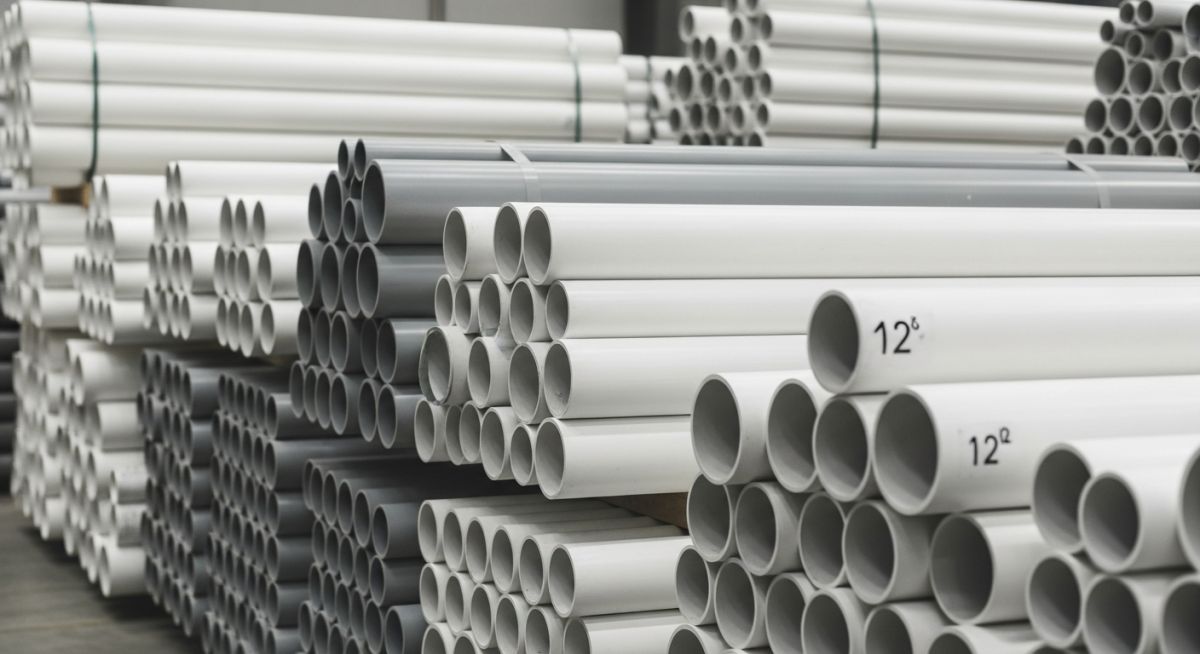
Focus Keyword: PVC Pipe Sizes SEO Title: Comprehensive Guide to PVC Pipe Sizes: PVC Piping Dimensional Chart (2026) Slug: pvc-pipe-sizes-dimensional-chart Meta Description: Explore the definitive 2026 guide on PVC Pipe Sizes. Includes dimensional charts for Schedule 40, 80, and 120, plus engineering standards for industrial piping. Tags: PVC Pipes, Plumbing Engineering, ASTM D1785, Piping Design, Schedule 40, Schedule 80, Schedule 120 Engineering Standard Document Edition 2026 Comprehensive Guide to PVC Pipe Sizes: PVC Piping Dimensional Chart Selecting the correct PVC Pipe Sizes is a fundamental requirement for ensuring the hydraulic efficiency and structural safety of any fluid transport system. In this technical resource, we provide a deep dive into the ASTM D1785 standards, exploring the dimensional variances between Schedule 40, 80, and 120 systems. Whether you are designing for municipal water supply or industrial chemical processing, understanding these dimensions is critical for accurate pressure rating calculations. Quick Summary: What are the standard PVC pipe dimensions? Standard PVC Pipe Sizes are categorized by Nominal Pipe Size (NPS) and Schedule. While the Outside Diameter (OD) remains constant for a specific NPS across different schedules, the wall thickness increases as the Schedule number rises (e.g., Schedule 80 is thicker than Schedule 40). This results in a smaller Internal Diameter (ID) for higher schedules. Article Navigation 1. The Nominal Outside Diameter (OD) System 2. PVC Schedules and Thickness Logic 3. PVC Piping Dimension Charts 3.1 Schedule 40 PVC Specifications 3.2 Schedule 80 PVC Specifications 3.3 Schedule 120 PVC Specifications 4. Engineering Flow and Pressure Calculations 5. Conclusion & Regulatory Standards PVC Dimensional Proficiency Quiz Validate your technical understanding of PVC piping standards and dimensions. Next Question Quiz Results Restart Module Understanding PVC Pipe Sizes and the Nominal Outside Diameter (OD) System In the world of thermoplastic engineering, PVC Pipe Sizes are governed by the Nominal Pipe Size (NPS) system. A common misconception for entry-level designers is that the nominal size represents the exact physical dimension of the pipe. However, for a 1-inch PVC pipe, neither the inside diameter nor the outside diameter is exactly 1.000 inch. The standardized PVC Pipe Sizes system ensures that pipes from different manufacturers are compatible with standard fittings. To achieve this, the Outside Diameter (OD) is kept constant for any given nominal size, regardless of the wall thickness or schedule. This design philosophy allows a Schedule 40 fitting to physically slip onto a Schedule 80 pipe, even though their internal flow characteristics and pressure ratings differ significantly. The Engineering Relationship Between PVC Schedules and PVC Pipe Sizes The term "Schedule" refers to the wall thickness of the pipe. As the schedule number increases, the wall becomes thicker to handle higher internal pressures. Because the Outside Diameter is fixed to ensure fitting compatibility, the additional wall thickness must grow inward. The Universal Dimensional Formula For any specific nominal PVC Pipe Sizes, the internal diameter can be calculated using this simple engineering relationship: ID = OD - (2 × t) Where ID is Inside Diameter, OD is Outside Diameter, and t is the Minimum Wall Thickness specified by ASTM D1785. This inward growth of the wall has two major implications for piping system design in 2026. First, Schedule 80 and Schedule 120 PVC Pipe Sizes will have a smaller cross-sectional area for fluid flow compared to Schedule 40, resulting in higher friction losses and flow velocities for the same volumetric flow rate. Second, the increased material volume in higher schedules provides greater mechanical strength and resistance to external collapse (vacuum) pressures. ASTM D1785 Compliance This is the primary regulatory standard for PVC Pipe Sizes. It defines the tolerances for OD, wall thickness, and eccentricity, ensuring that piping systems remain safe under the rated pressures at 73 degrees Fahrenheit. Fittings & Compatibility Since OD is constant across schedules, designers can use "Schedule 80 Fittings" on "Schedule 40 Pipes" for added safety at transition points, though the reverse is generally prohibited in high-pressure lines. Detailed Technical Reference: PVC Pipe Sizes Dimension Charts The following data tables provide the engineering specifications for PVC Pipe Sizes as defined by the ASTM D1785 standard. These dimensions are used by CAD designers and piping engineers in 2026 to perform hydraulic modeling and material take-offs. Note that all pressure ratings provided are for water at 73 degrees Fahrenheit (23 degrees Celsius). Schedule 40 PVC Pipe Sizes: Dimensions and Pressure Ratings Schedule 40 is the most widely used among all PVC Pipe Sizes for residential plumbing, irrigation, and low-pressure industrial water lines. It offers a balance of lightweight handling and sufficient strength for non-critical applications. Nominal Pipe Size (NPS) Outside Diameter (OD) Minimum Wall (t) Nominal Inside Dia (ID) Max Pressure (PSI) 1/2 inch 0.840 in 0.109 in 0.602 in 600 PSI 3/4 inch 1.050 in 0.113 in 0.804 in 480 PSI 1 inch 1.315 in 0.133 in 1.029 in 450 PSI 2 inch 2.375 in 0.154 in 2.047 in 280 PSI 4 inch 4.500 in 0.237 in 3.998 in 220 PSI Schedule 80 PVC Pipe Sizes: Heavy-Duty Industrial Specifications Schedule 80 PVC Pipe Sizes are designed for industrial applications where the pipe may be subject to mechanical impact, chemical stress, or higher internal pressures. These pipes are typically dark grey and have a significantly thicker wall. Nominal Pipe Size (NPS) Outside Diameter (OD) Minimum Wall (t) Nominal Inside Dia (ID) Max Pressure (PSI) 1/2 inch 0.840 in 0.147 in 0.526 in 850 PSI 1 inch 1.315 in 0.179 in 0.936 in 630 PSI 2 inch 2.375 in 0.218 in 1.913 in 400 PSI 4 inch 4.500 in 0.337 in 3.786 in 320 PSI Schedule 120 PVC Pipe Sizes: Extra-Heavy Wall Applications For specialized high-pressure systems where SDR pipe or standard schedules are insufficient, Schedule 120 PVC Pipe Sizes are utilized. These are rare in residential plumbing but essential for deep-well applications or aggressive chemical handling. Nominal Pipe Size (NPS) Outside Diameter (OD) Minimum Wall (t) Nominal Inside Dia (ID) Max Pressure (PSI) 1/2 inch 0.840 in 0.170 in 0.480 in 1,010 PSI 2 inch 2.375 in 0.250 in 1.845 in 470 PSI PVC Pipe Sizes Calculator Estimate flow velocity and check the maximum pressure rating for various PVC Pipe Sizes and schedules. This tool uses ID (Inside Diameter) logic for hydraulic accuracy. Flow Rate (GPM) Nominal Size (NPS) 1/2 inch 1 inch 2 inch 4 inch Pipe Schedule Schedule 40 Schedule 80 Schedule 120 Run Calculation Flow Velocity 0.00 ft/s Recommended limit: 5.0 ft/s for liquids Max Pressure (at 73°F) 000 PSI ASTM D1785 Rating Calculated Inside Diameter (ID): 0.000 in Safety Note: For temperatures above 73 degrees F, you must apply a derating factor. PVC should not be used for compressed air or high-temperature steam applications. PVC vs. CPVC: Understanding the CTS and IPS Dimensional Systems A critical error often made during the procurement of PVC Pipe Sizes is assuming that all plastic piping follows the same dimensional standard. In the industrial and residential sectors of 2026, two distinct sizing systems exist: IPS (Iron Pipe Size) and CTS (Copper Tube Size). Standard white PVC pipes (Schedule 40 and 80) follow the IPS system, while most residential CPVC (Chlorinated Polyvinyl Chloride) and PEX tubing follow the CTS system. The IPS Standard (Standard PVC) Most PVC Pipe Sizes used in irrigation, pool construction, and industrial process lines are IPS-rated. This system was designed to maintain the same outside diameter as the old iron pipes, allowing for legacy compatibility. Because IPS pipes have a larger outside diameter than CTS pipes of the same nominal name, standard PVC fittings cannot be used on CTS pipes. The CTS Standard (Residential CPVC) The Copper Tube Size (CTS) system is primarily used for indoor hot and cold water distribution. Pipes in this system have an outside diameter that matches standard copper tubing. This allows CPVC pipes to use the same hangers and supports as copper systems. However, the smaller OD means that a 1-inch CTS pipe is physically smaller than a 1-inch IPS PVC pipe. Dimensional Comparison: IPS vs. CTS Outside Diameters Nominal Size IPS Outside Diameter (PVC) CTS Outside Diameter (CPVC) Difference (Inches) 1/2 inch 0.840 in 0.625 in 0.215 in 3/4 inch 1.050 in 0.875 in 0.175 in 1 inch 1.315 in 1.125 in 0.190 in 2 inch 2.375 in 2.125 in 0.250 in Engineering Warning: Never attempt to force a standard PVC fitting onto a CPVC pipe or vice-versa. Even if the nominal PVC Pipe Sizes are the same, the gap created by the IPS/CTS difference will lead to immediate joint failure under pressure. Transition fittings (IPS-to-CTS adapters) must be used for any system cross-over. Don't miss this video related to PVC Pipe Sizes Summary: Master Piping Engineering with our complete 125+ hour Certification Course: ...... ✅ 2500+ VIDEOS View Playlists → JOIN EXCLUSIVE EDUCATION SUBSCRIBE Case Study: Solving Surge Failures by Optimizing PVC Pipe Sizes In early 2026, a regional chemical processing facility encountered recurring longitudinal cracks in their secondary coolant lines. The system was originally installed using 4-inch Schedule 40 PVC Pipe Sizes. While the static operating pressure was well within the 220 PSI rating, the system experienced frequent pump startups, leading to transient pressure surges (water hammer) that exceeded the material's fatigue limit. Project Evaluation Data • Original Spec: 4-inch Schedule 40 (Wall thickness: 0.237 inches) • Operational Issue: Fatigue cracking due to 15-cycle-per-day surge events. • Calculated Surge Pressure: 310 PSI (Exceeding Sch 40 limits). Engineering Fix & Implementation The engineering team performed a comparative analysis of PVC Pipe Sizes and decided to retrofit the entire manifold with Schedule 80 PVC. Although the Outside Diameter (4.500 inches) remained the same, the wall thickness increased to 0.337 inches. This technical adjustment raised the maximum pressure rating to 320 PSI, providing a safe margin for surge events. Because the OD was identical, the plant was able to reuse existing heavy-duty support brackets, saving approximately 12,000 USD in structural modification costs. Key Engineering Takeaways 1. Dimensional Interchangeability: The ability to switch between schedules while maintaining constant PVC Pipe Sizes (OD) is a major advantage for industrial retrofits. 2. Surge Margin: For systems with high-cycling pumps, selecting Schedule 80 over Schedule 40 is a "best practice" to account for the dynamic loads that static charts often ignore. Frequently Asked Questions Why does the nominal PVC Pipe Size not match the actual measured diameter? The Nominal Pipe Size (NPS) is an industry shorthand rather than a direct measurement. In the PVC Pipe Sizes system, the nominal size originally referred to the internal diameter of the pipe. However, to keep fittings standardized while allowing for various wall thicknesses, the industry moved to a fixed Outside Diameter (OD). For example, a 1-inch nominal pipe actually has an OD of 1.315 inches. Can I use Schedule 40 fittings with Schedule 80 PVC Pipe Sizes? Technically, a Schedule 40 fitting will fit onto a Schedule 80 pipe because they share the same Outside Diameter. However, in pressure applications, this is generally not recommended. The system's maximum pressure rating is only as strong as its weakest component. Using a lower-rated Schedule 40 fitting on a higher-rated Schedule 80 pipe effectively reduces the safe operating pressure of the entire line. How does temperature affect the pressure rating of standard PVC Pipe Sizes? The ASTM D1785 Standard pressure ratings are calculated based on an operating temperature of 73 degrees Fahrenheit (23 degrees Celsius). As the fluid temperature rises, the material softens and the pressure rating must be derated. For instance, at 140 degrees Fahrenheit (the maximum service temperature for PVC), the pipe can only handle approximately 22 percent of its original rated pressure. What is the main difference between Schedule 40 and SDR PVC Pipe Sizes? In the Schedule system, the wall thickness for a specific schedule (like 40) is fixed for each nominal size, which means the pressure rating decreases as the pipe diameter increases. In the Standard Dimension Ratio (SDR) system, the ratio of OD to wall thickness remains constant. This means all PVC Pipe Sizes within a specific SDR class (e.g., SDR 21) have the exact same pressure rating regardless of their diameter. Conclusion Mastering the nuances of PVC Pipe Sizes is essential for any engineer or contractor aiming to build efficient and reliable fluid transport systems. By understanding how the Nominal Outside Diameter system interacts with different wall schedules, you can optimize your material costs while ensuring your system meets the strict safety requirements of the ASTM D1785 standard. As we move further into 2026, the demand for precise thermoplastic piping design continues to grow in the municipal, agricultural, and industrial sectors. Always verify your hydraulic calculations against the latest dimensional charts and apply the necessary temperature derating factors to maintain the long-term integrity of your piping infrastructure. 📚 Recommended Resources: PVC Pipe Sizes Read these Guides 📄 Glass Reinforced Plastic (GRP) Pipes: Chemical Resistance and Applications 📄 Understanding PVC Pipes: The Durable and Cost-Effective Choice for Plumbing and Piping Systems 📄 Piping Interview Questions: All About Pipes 📄 Pipe Couplings, Types & Applications: Piping Quiz 🎥 Watch Tutorials FAQs: Understanding Pipes, Types, and Sizes: Piping Engineering Pipe Couplings II Types II Applications II Full & Half Couplings II EPCLand.com #couplings FAQs: Ultimate Guide to HDPE Pipes and PN: Everything You Need to Know