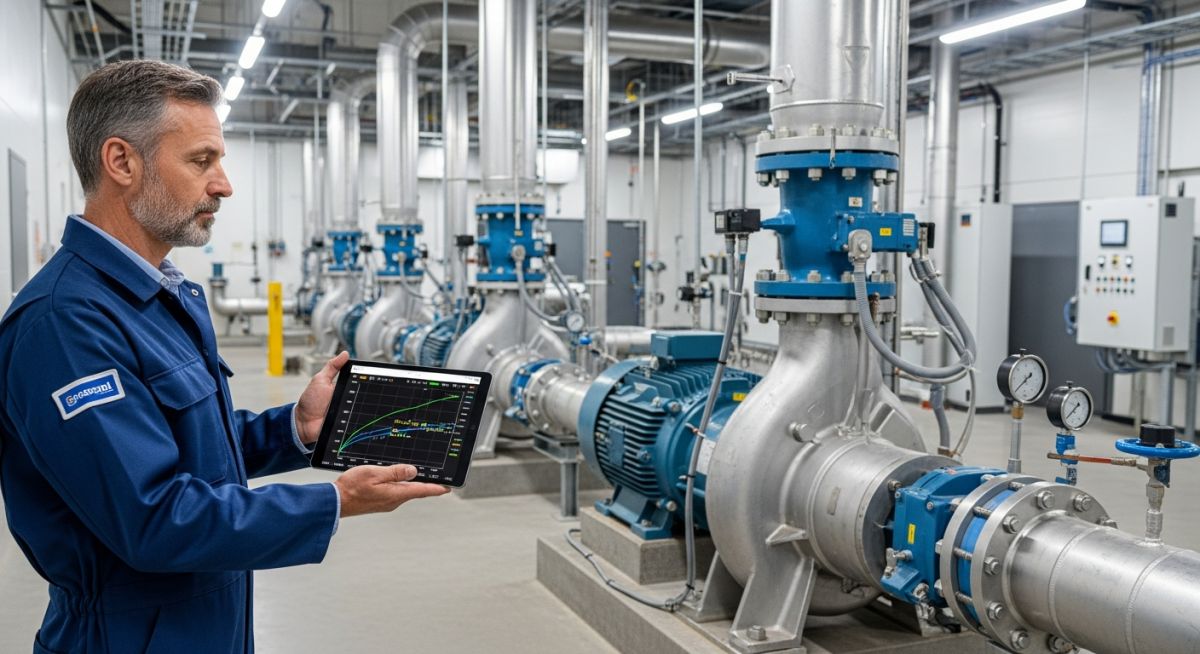
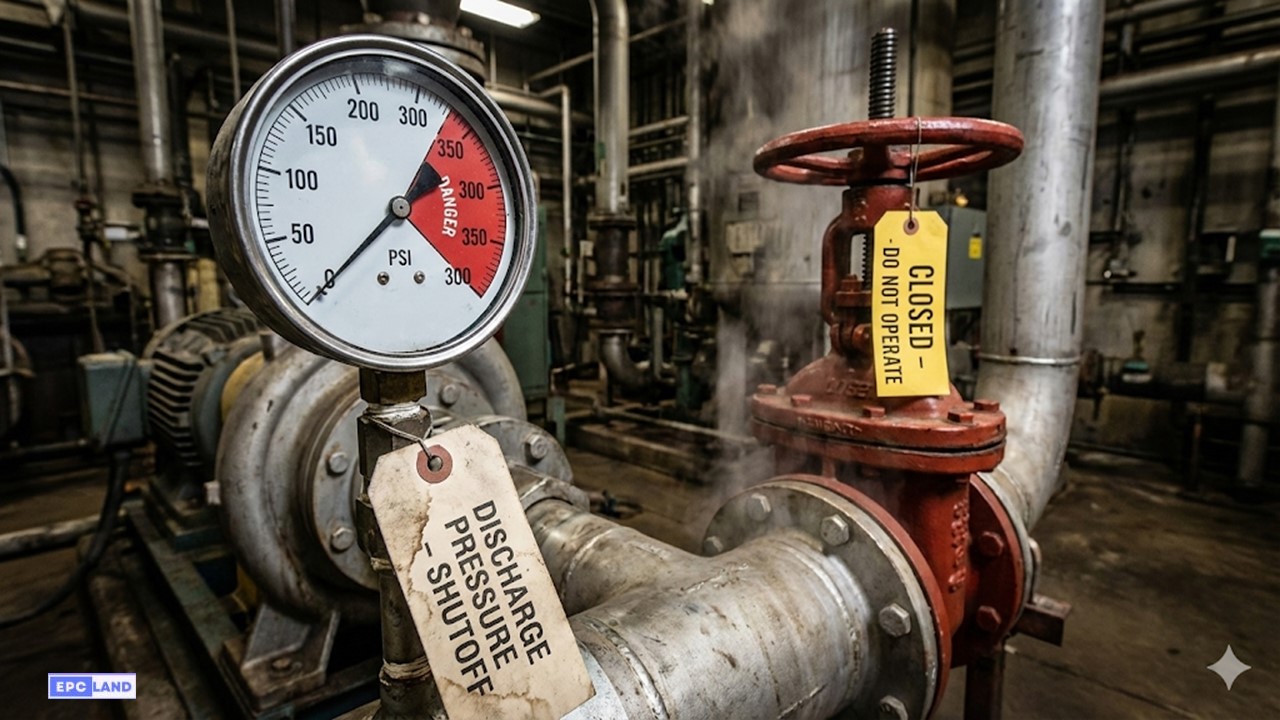
Verified Engineering Content Updated: January 2026 The Ultimate Guide to Pump Performance Curve: Types, Interpretation, and Optimization Imagine you’ve just installed a high-capacity centrifugal pump, but within weeks, the motor is overheating and the discharge pressure is fluctuating wildly. You check the valves, the seals, and the motor—everything seems fine. The culprit? You are likely operating "off the curve." In the world of fluid dynamics, the Pump Performance Curve is not just a chart in a manual; it is the heartbeat of your system. Understanding how flow rate interacts with head, power, and efficiency is the difference between a system that lasts 20 years and one that fails in 20 days. In this guide, we break down the complexities of hydraulic curves into actionable engineering data. Key Takeaways Define the relationship between Total Dynamic Head (TDH) and Flow Rate (Q). Identify the Best Efficiency Point (BEP) to maximize pump lifespan. Understand the critical role of NPSHr in preventing cavitation and mechanical failure. What is a Pump Performance Curve? A Pump Performance Curve is a graphical representation showing a pump's ability to produce flow against a specific head. It maps the relationship between Flow Rate (Q) and Total Dynamic Head (H), Efficiency, Brake Horsepower (BHP), and Net Positive Suction Head Required (NPSHr), typically tested by the manufacturer using clear water. "In my two decades of plant commissioning, I've seen millions of dollars lost simply because the system curve was never matched to the Pump Performance Curve. A pump doesn't choose its operating point—the system does. If you don't understand the curve, you're flying blind." — Atul Singla, Founder of Epcland Table of Contents 1. What is a Pump Performance Curve and Why is it Essential? 2. 5 Essential Types of Pump Performance Curves 3. Cases and Scenarios: When is a Pump Performance Curve Plotted? 4. Essential Technical Terms in Curve Analysis 5. Pump Performance Curve vs. System Curve 6. Failure Case Study: Cavitation and Performance Drop 7. Frequently Asked Questions Check Your Hydraulic IQ Test your knowledge of Pump Performance Curves 1. In a standard centrifugal pump, what happens to the Total Dynamic Head (TDH) as the Flow Rate (Q) increases? A) The Head increases linearly. B) The Head decreases. C) The Head remains constant regardless of flow. Next Question → 2. What is the specific point on the Pump Performance Curve where the pump operates with the least internal turbulence and vibration? A) Shut-off Head point. B) Best Efficiency Point (BEP). C) End of Curve (EOC). Next Question → 3. If the NPSH available in your system falls below the NPSH Required shown on the curve, what occurs? A) Higher motor efficiency. B) Increased discharge pressure. C) Cavitation and potential impeller damage. Finish & Start Reading What is a Pump Performance Curve and Why is it the Heart of Your System? A Pump Performance Curve is the graphical signature of a centrifugal pump's capability. At its core, it represents how a specific impeller design and casing geometry convert mechanical energy from a motor into hydraulic energy in a fluid. For engineers, this curve is a map of possibilities: it shows exactly how much pressure (Head) the pump can generate for every gallon per minute (Flow) it moves. Unlike positive displacement pumps, which provide a constant flow regardless of pressure, centrifugal pumps are dynamic; their performance is entirely dependent on the resistance they face from the system. The curve is typically generated under controlled laboratory conditions using clean water at standard temperatures (typically 20°C). It serves as the primary communication tool between the manufacturer and the end-user. Without a Pump Performance Curve, it is impossible to accurately size a motor, predict energy consumption, or ensure that the pump will operate without destroying its internal components through vibration or cavitation. It defines the "sweet spot"—the Best Efficiency Point (BEP)—where the radial forces on the impeller are balanced, ensuring the longest possible mean time between failures (MTBF). Figure 1: Anatomy of a typical multi-parameter centrifugal pump performance chart. 5 Essential Types of Pump Performance Curves When you look at a manufacturer's datasheet, you aren't just looking at one line. A comprehensive Pump Performance Curve consists of several distinct plots that must be analyzed simultaneously to understand the pump's true health and capability. 1. The Head-Flow (H-Q) Curve This is the primary curve. It shows the relationship between the Total Dynamic Head (TDH) and the Flow Rate (Q). In most centrifugal pumps, this curve slopes downward. The point of zero flow is called the Shut-off Head, representing the maximum pressure the pump can generate. As flow increases, the head drops until it reaches the "Run-out Point," where the pump can no longer maintain pressure against the high volume of fluid. 2. The Efficiency (η) Curve Efficiency is plotted as a percentage. It starts low at shut-off, rises to a peak at the Best Efficiency Point (BEP), and then drops off toward run-out. Operating a pump too far to the left (low flow) or too far to the right (high flow) of the BEP leads to internal recirculation, heat build-up, and shortened bearing life. 3. The Power (BHP) Curve The Brake Horsepower curve indicates the energy required from the driver (motor) to maintain a specific flow and head. For most pumps, the power required increases as the flow rate increases. Engineers use this curve to ensure the motor is "non-overloading," meaning the motor's rated horsepower is greater than the maximum power required at any point on the Pump Performance Curve. 4. Net Positive Suction Head Required (NPSHr) Curve This is perhaps the most critical curve for reliability. NPSHr is the minimum pressure required at the suction nozzle to prevent the fluid from vaporizing (boiling) and causing cavitation. As flow increases, the NPSHr rises exponentially. If your system's available pressure (NPSHa) drops below the curve's required value, the pump will suffer catastrophic damage. Cases and Scenarios: When is a Pump Performance Curve Plotted? Plotting and analyzing a Pump Performance Curve is not a one-time event during the design phase; it is a recurring necessity throughout the lifecycle of the equipment. Initial Selection & Sizing: During the FEED (Front End Engineering Design) stage, curves are plotted against the calculated System Resistance Curve to select a pump that operates within the Preferred Operating Region (POR). VFD Implementation: When a Variable Frequency Drive is added, engineers must plot a family of curves based on the Affinity Laws to determine how the pump will perform at 40Hz, 50Hz, or 60Hz. Parallel and Series Operation: If two pumps are used together, their individual Pump Performance Curves must be mathematically combined (added vertically for series or horizontally for parallel) to predict the combined output. Field Performance Testing: After years of service, internal wear on the impeller or wear rings will cause the curve to "droop." Plotting the current performance against the original factory curve is the best way to diagnose internal degradation without dismantling the pump. Essential Technical Terms Involved with Pump Performance Curve Analysis To master the Pump Performance Curve, one must speak the language of hydraulics. These terms are the building blocks used by software like Pipe-Flo or AFT Fathom to simulate real-world plant conditions: Static Head: The vertical distance the fluid must be lifted. This is constant and does not change with flow rate. On a graph, this is where the system curve starts on the Y-axis. Friction Head: The resistance caused by pipe walls, valves, and fittings. Unlike static head, friction head increases exponentially as flow increases. Duty Point (Operating Point): The exact point where the Pump Performance Curve intersects the System Resistance Curve. This is where the pump will actually run. Shut-off Head: The maximum head generated by the pump at zero flow. Running a pump at this point for extended periods causes rapid heat buildup and mechanical seal failure. Understanding the Intersection: Pump Performance Curve vs. System Curve A common mistake is believing the pump dictates the flow. In reality, the system dictates where the pump operates. The System Resistance Curve is a plot of the Total Dynamic Head required by the process at various flow rates. When you overlay the System Curve onto the Pump Performance Curve, the intersection is the only place the pump can physically operate. If your process requires more flow, you must either reduce system resistance (open a valve/increase pipe size) or increase the pump's speed (VFD). Understanding this intersection is vital for energy auditing; if the intersection is far from the Best Efficiency Point (BEP), you are wasting electricity and vibrating your pump to death. Comparing Curve Shapes and Their Applications Curve Characteristic Steep Curve Flat Curve Head Change Large change in head for small flow change. Small change in head across wide flow range. Best Application Filter press feeding, boiler feed. Cooling towers, HVAC systems. Control Method Excellent for VFD control. Better for throttling valve control. Stability Highly stable operating point. Can hunt or surge if operating in parallel. Engineering Standards Compliance The development and testing of a Pump Performance Curve must adhere to international standards to ensure accuracy and safety. The two primary governing bodies are: API 610 (Centrifugal Pumps for Petroleum, Petrochemical, and Natural Gas Industries): Specifies that the pump must have a continuously rising head curve to the shut-off point to ensure stable control. ASME B73.1: The standard for horizontal end suction centrifugal pumps used in chemical processes, detailing the allowable tolerances for head and flow during factory testing. HI 14.6 (Hydraulic Institute): Defines the standard for hydraulic performance acceptance tests, outlining the "Grade 1" or "Grade 2" accuracy levels for performance curves. Pump Affinity Laws & Curve Shift Calculator Estimate how your Pump Performance Curve shifts when changing speed (VFD) or impeller diameter. Enter your current operating point and the target speed to see the projected performance. Initial Speed (RPM) Initial Flow (GPM/m3/h) Initial Head (ft/m) Initial Power (HP/kW) Target Speed (RPM) * Simulating a frequency drop (e.g., 60Hz to 50Hz) Calculate New Performance Point New Flow -- New Head -- New Power -- Pump Performance Curve Failure Case Study: The High Cost of "Run-Out" Operation The Problem: "Pumping Marbles" A municipal wastewater plant reported severe vibration and a "gravel-like" noise coming from a 150 HP centrifugal pump only three months after installation. The maintenance team initially suspected bearing failure or shaft misalignment. However, physical inspection of the bearings showed no premature wear, yet the discharge pressure was 20% lower than the design specifications. The pump was vibrating at nearly 0.5 inches per second (ips), far exceeding the ISO 10816 safety limits. The Root Cause Analysis Upon plotting the actual field data (Flow and Pressure) against the original Pump Performance Curve, engineers discovered the pump was operating at 130% of its Best Efficiency Point (BEP). This is known as "operating at run-out." Technical Findings: NPSH Deficit: At the higher flow rate, the NPSH Required (NPSHr) by the pump increased from 12 feet to 28 feet. Available Head: The system's NPSH Available (NPSHa) was only 18 feet. Result: Classic classic suction cavitation. Vapor bubbles were forming at the impeller eye and collapsing with enough force to pit the metal, creating the "marbles" sound. The Resolution The system resistance was too low because the discharge valves were kept fully open. To fix this, a Variable Frequency Drive (VFD) was installed to slow the pump down, effectively shifting the Pump Performance Curve downward to intersect the system curve at the desired flow rate while staying near the BEP. Lessons Learned: Never assume a pump will "find its way" to the design point. Always verify the Duty Point using a pressure gauge and flow meter to ensure it aligns with the manufacturer's provided Pump Performance Curve. Expert Insights: Lessons from 20 years in the field After two decades of troubleshooting hydraulic systems, these are the "hidden" truths about the Pump Performance Curve that you won't find in most textbooks: ● The "Left-of-Curve" Silent Killer: Most engineers worry about run-out (right side), but operating too far to the left causes internal recirculation. This creates high-velocity vortices that can eat through a stainless steel impeller faster than cavitation. ● Viscosity is a Game Changer: Remember that the manufacturer's Pump Performance Curve is based on water. If you are pumping crude oil or glycol, the curve "collapses." You must apply Hydraulic Institute (HI) viscosity correction factors or you will undersize your motor every single time. ● The Stability Trap: Avoid pumps with a "drooping" curve (where the head at shut-off is lower than the head at a small flow). These pumps are notoriously difficult to control in parallel operation because they can "hunt" between two different flow points at the same pressure. ● Impeller Trimming Limits: While trimming an impeller shifts the curve down, never trim more than 20% of the original diameter. Beyond this, the gap between the impeller and the cutwater (volute tongue) becomes too large, leading to massive efficiency losses and hydraulic instability. Frequently Asked Questions What is the shut-off head on a pump curve? The shut-off head is the maximum head (pressure) that a pump can produce when the discharge valve is fully closed (zero flow). It is the starting point of the Pump Performance Curve on the vertical axis. How do you read a pump performance curve? To read the curve, locate your desired flow rate (Q) on the horizontal axis. Move vertically until you hit the H-Q curve, then move left to read the corresponding Total Dynamic Head. Check the same vertical line against the Power, Efficiency, and NPSHr curves to evaluate the full performance. What does BEP stand for in pump selection? BEP stands for Best Efficiency Point. It is the specific point on the Pump Performance Curve where the pump operates most efficiently, with minimum vibration and maximum component life. Why do 80% of pumps fail prematurely when operated at less than 50% of BEP flow? Operating too far left of the BEP causes low-flow cavitation and discharge recirculation. This creates massive radial thrust on the shaft, leading to mechanical seal failure, snapped shafts, and bearing burnout. Most "bad pumps" are simply "wrongly operated pumps." Can a pump performance curve "lie" when pumping non-Newtonian fluids? Yes. Standard Pump Performance Curves are derived from water tests. Non-Newtonian fluids (like slurries or polymers) change their viscosity under shear. For these fluids, the standard curve is merely a baseline and must be adjusted using laboratory rheology data to prevent motor stalling. Why does a "flat" pump curve cause control valve hunting? On a flat curve, a very small change in pressure (head) results in a massive change in flow rate. If your control valve is trying to maintain a specific flow, it will over-correct constantly because the pump doesn't provide enough "back pressure" stability. In such cases, a steeper curve is preferred for precise control. References & Official Standards API Standard 610: Centrifugal Pumps ASME B73.1: Chemical Process Pumps HI 14.6: Pump Performance Testing ISO 9906: Rotodynamic Pumps 📚 Recommended Resources: Pump Performance Curve Read these Guides 📄 Pump Performance Curve: Understanding the Key Components for Optimal Efficiency 📄 Impact of Increased Fluid Density on Pump Operation: A Complete Guide 📄 Masterclass on Rotating Equipment: Pumps, Compressors & More 📄 Pump Shutoff Pressure: The 2026 Calculation & Safety Guide