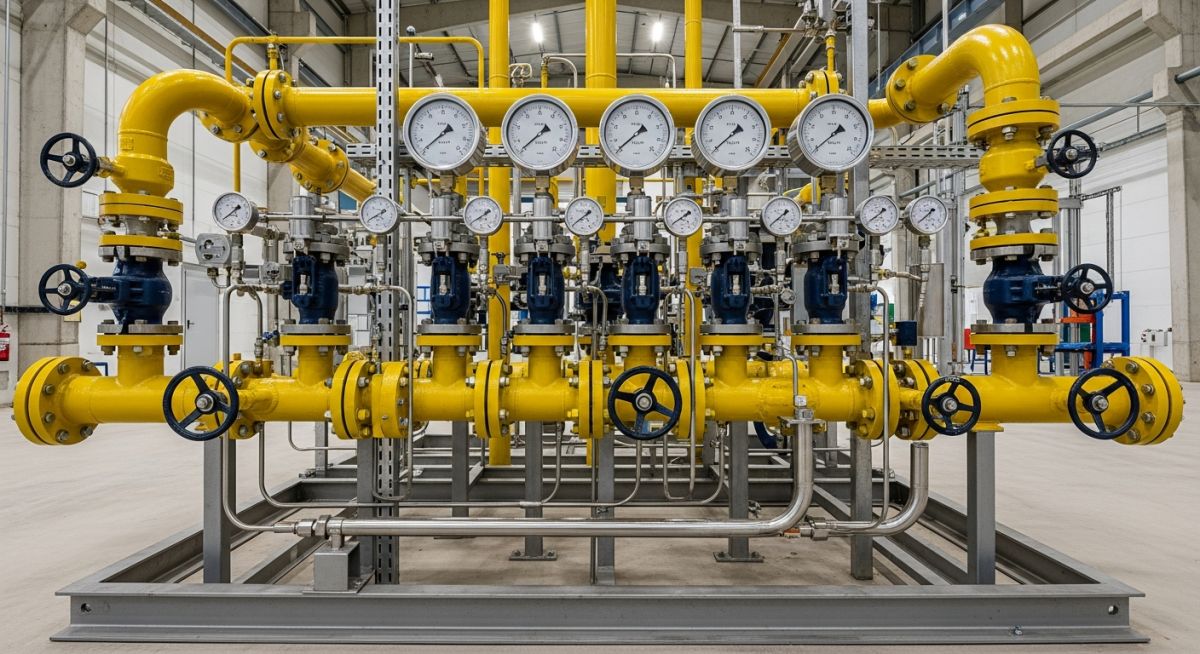
Verified Engineering Content 2026 Standards: ASME B31.8 / NFPA 54 The Ultimate Guide to Gas Piping System Engineering: Materials, Sizing, and Compliance in 2026 You are 48 hours away from a facility-wide commissioning when the third-party inspector flags a 15% pressure drop at the furthest manifold. Is it a sizing error in your Gas Piping System, or a fundamental material mismatch? In the high-stakes world of midstream and downstream engineering, a gas line isn't just a conduit; it is a pressurized vessel where any deviation from ASME B31.8 or NFPA 54 standards can lead to catastrophic rupture or operational paralysis. This guide provides the technical roadmap to designing, sizing, and maintaining a high-performance Gas Piping System. Key Takeaways Material Criticality: Why ASTM A53 Grade B remains the industry standard for high-pressure Gas Piping System configurations. Precision Sizing: Mastering the Longest Length Method to prevent pressure starvation in multi-stage systems. 2026 Compliance: Navigating the latest updates in CSST bonding and underground PE pipe tracer wire requirements. What is a Gas Piping System? A Gas Piping System is an engineered network of pipes, valves, and fittings designed to safely transport combustible gases (like Natural Gas or Propane) from a supply source to appliances. It must comply with ASME B31.8 (for transmission) or NFPA 54 (for fuel gas) to ensure structural integrity under pressure. "In my 20 years of field audits, the most frequent failure point isn't the pipe itself, but the lack of integrated cathodic protection on buried Gas Piping System segments. In 2026, real-time corrosion monitoring is no longer optional—it's an engineering necessity." — Atul Singla, Founder of Epcland Table of Contents 1. Working Principles of a Professional Gas Piping System 2. Material Selection Criteria for Gas Piping System Components 3. Critical Problems and Failure Modes in a Gas Piping System 4. Regulatory Legislation and ASME/NFPA Codes for Gas Piping System 5. Engineering Methodology for Gas Piping System Sizing 6. Advanced Troubleshooting: Maintaining Gas Piping System Integrity Engineering Knowledge Check: Gas Piping Systems Validate your technical expertise on 2026 standards. 1. Which ASME standard primarily governs Gas Transmission and Distribution Piping Systems? A) ASME B31.8 B) ASME B31.3 C) ASME B31.1 2. What is the standard schedule for carbon steel Gas Piping Systems using ASTM A53? A) Schedule 10 B) Schedule 40 C) Schedule 160 3. Why must CSST (Corrugated Stainless Steel Tubing) be electrically bonded? A) To prevent lightning-induced perforation B) To reduce friction loss C) To prevent external corrosion 4. In the "Longest Length Method" for sizing, which distance is used to determine pipe diameter? A) Total cumulative length of all branches B) Distance from the meter to the most remote outlet C) Distance to the first branch only 5. Which material is strictly forbidden for underground gas service without a specialized protective coating? A) Uncoated Carbon Steel B) Polyethylene (HDPE) C) Anodeless Risers Next Question → Quiz Complete! You are ready to proceed to the technical theory section. Working Principles of a Professional Gas Piping System The fundamental operation of a Gas Piping System relies on the controlled physics of pressure differentials. In 2026, engineering standards focus heavily on "Demand-Flow Synchronization." Natural gas typically enters a facility at a "high" pressure (usually 5 to 60 psi from the utility main) and is modulated through a primary regulator. The Gas Piping System then functions as a localized distribution network, where the potential energy stored as pressure is converted into kinetic energy at the burner tip or engine intake. To maintain consistent performance, the system must account for the "Specific Gravity" of the gas (typically 0.60 for natural gas) and the "Friction Factor" of the internal pipe walls. As gas flows through the Gas Piping System, it encounters resistance from fittings, valves, and the pipe's internal roughness. This resistance results in a measurable pressure drop. If the piping is undersized, the velocity of the gas increases, leading to turbulent flow and excessive pressure loss, which can cause intermittent appliance lockout or flame instability. Material Selection Criteria for Gas Piping System Components Selecting the correct material for a Gas Piping System in 2026 is no longer just about cost; it is about metallurgical compatibility and environmental exposure. The modern engineer must distinguish between metallic and non-metallic options based on the installation environment (buried vs. exposed) and the chemical composition of the fuel gas. Carbon Steel (ASTM A53 / A106) Black steel remains the backbone of industrial Gas Piping System designs. ASTM A53 Grade B (Seamless or ERW) is preferred for its high tensile strength and ability to withstand mechanical impacts. In 2026, the use of Schedule 40 is standard for low to medium pressure, while Schedule 80 is often mandated for high-vibration zones near compressors or where threaded joints require extra wall thickness for structural integrity. Polyethylene (PE 4710 / PE 2708) For underground segments of a Gas Piping System, Medium-Density Polyethylene (MDPE) and High-Density Polyethylene (HDPE) have largely replaced metallic pipes. PE is immune to electrochemical corrosion and soil acidity. However, engineering protocols strictly forbid the use of PE piping above ground due to UV degradation and low melting points during fire events. CSST (Corrugated Stainless Steel Tubing) Flexible Gas Piping System solutions like CSST (complying with ANSI LC 1) have revolutionized retrofitting. While providing ease of installation, 2026 codes emphasize "Arc-Resistant" jackets (often black or gold) to mitigate the risk of perforation from electrical surges. Proper bonding to the building’s electrical grounding system is a non-negotiable safety requirement for all CSST installations. Critical Problems and Failure Modes in a Gas Piping System In the 2026 engineering landscape, identifying failure modes early is critical for maintaining infrastructure longevity. The most pervasive issue within any Gas Piping System is Electrochemical Corrosion. When metallic pipes are buried without sacrificial anodes or impressed current cathodic protection (ICCP), soil moisture acts as an electrolyte, facilitating metal loss that leads to pinhole leaks. Another significant engineering challenge is Liquid Entrainment or "Condensate Dropout." In systems transporting non-conditioned gas, heavy hydrocarbons or water vapor can condense within the Gas Piping System during temperature fluctuations. This liquid accumulation creates "slug flow," which can damage sensitive regulators and cause erratic pressure readings at downstream equipment. Regulatory Legislation and ASME/NFPA Codes for Gas Piping System Compliance is the bedrock of Gas Piping System design. Engineers must navigate a hierarchy of standards to ensure legal and operational safety: ASME B31.8: The primary standard for gas transmission and distribution piping systems. It governs the design, fabrication, and inspection of pipelines from the wellhead to the customer's meter. NFPA 54 (National Fuel Gas Code): Focuses on the installation of fuel gas-consuming equipment and the Gas Piping System within residential and commercial buildings. 49 CFR Part 192: The federal safety standard in the United States governing the transportation of natural and other gas by pipeline, mandating specific leak survey intervals and operator qualifications. Engineering Methodology for Gas Piping System Sizing Proper sizing of a Gas Piping System ensures that the pressure at the appliance inlet meets the manufacturer's minimum requirements under "Full Load" conditions. The 2026 industry standard for sizing remains the Longest Length Method. This involves determining the total equivalent length from the point of delivery (the gas meter) to the most remote outlet. Material Type Typical Application Joining Method Corrosion Resistance ASTM A53 Steel High-Pressure Industrial Welded / Threaded Low (Requires Coating) MDPE / HDPE Underground Mains Heat Fusion High (Immune) Type L Copper Interior Residential Brazed / Flared Medium CSST Flexible Retrofits Mechanical Fittings High Gas Piping System: Quick Sizing Estimator (2026) Estimate the required pipe diameter based on BTU load and distance using the 0.5" w.c. pressure drop standard. Total Load (BTU/hr) Longest Run (Feet) Calculate Recommended Diameter Recommended Sch 40 Size -- Enter parameters to begin. Always verify with NFPA 54 sizing tables. Don't miss this video related to Gas Piping System Summary: Master Piping Engineering with our complete 125+ hour Certification Course: ...... ✅ 2500+ VIDEOS View Playlists → JOIN EXCLUSIVE EDUCATION SUBSCRIBE Gas Piping System Failure Case Study The Incident: Pressure Starvation In early 2026, a mid-sized industrial laundry facility reported intermittent boiler lockouts. Initial inspections suggested regulator failure. However, a deep-dive engineering audit revealed that a recent 1,000,000 BTU/hr expansion was tied into a 1-inch Gas Piping System branch that was already operating at 85% capacity. The resulting velocity exceeded 60 feet per second, creating a massive pressure drop that starved the downstream burners whenever the primary boiler cycled on. The Engineering Solution Hydraulic Modeling: Re-calculated the entire Gas Piping System using the "Longest Length Method." Main Header Upgrade: Replaced 60 feet of 1" pipe with 2" ASTM A53 Schedule 40 steel. Testing: Performed a 24-hour pressure test at 1.5x operating pressure per NFPA 54 Section 8.1. Outcome: Restored consistent 7" w.c. pressure to all appliances, eliminating downtime. Expert Insights: Lessons from 20 years in the field Redundancy in Regulation: In critical 2026 industrial designs, always specify a "Worker-Monitor" regulator setup for your Gas Piping System to prevent over-pressurization during a primary valve failure. Vibration Mitigation: For piping connected to reciprocating compressors, use braided flexible connectors to prevent fatigue cracking at the threaded joints of the Gas Piping System. The "Tracer Wire" Rule: When installing underground PE Gas Piping System lines, use a minimum 14 AWG solid copper tracer wire. Without it, the pipe is effectively "invisible" to standard utility locators. Galvanic Isolation: Always install dielectric unions when transitioning between dissimilar metals (e.g., Copper to Steel) to prevent localized galvanic corrosion. Frequently Asked Questions What is the best material for an underground Gas Piping System? ▼ In 2026, High-Density Polyethylene (HDPE) or Medium-Density Polyethylene (MDPE) is the industry standard for underground Gas Piping System segments due to its total immunity to soil-based corrosion. How often should a Gas Piping System be leak tested? ▼ Commercial and industrial systems should undergo an annual visual inspection and a soap-bubble or electronic leak survey. Federal standards (49 CFR 192) may require more frequent intervals for public distribution lines. Can I use galvanized pipe for a Gas Piping System? ▼ While allowed by some local codes, it is generally discouraged. The zinc coating can flake off over time and clog the small orifices in gas valves and burners within the Gas Piping System. Why is my Gas Piping System starving for pressure during peak load? ▼ This is almost always a result of "Diversity Factor" mismanagement. If your Gas Piping System was sized based on average load rather than peak simultaneous BTU demand, the friction loss exceeds the available pressure at the regulator. Is CSST bonding mandatory in the 2026 code? ▼ Yes. To prevent "Arced Perforation," the Gas Piping System must be bonded to the electrical service grounding electrode system using a minimum 6 AWG copper wire, as per NFPA 54 and current NEC requirements. What is the maximum allowed pressure for indoor Gas Piping Systems? ▼ Standard residential/commercial indoor Gas Piping System pressure is usually 0.5 psi (14" w.c.). Systems operating above 5 psi require specialized "Elevated Pressure" engineering approvals and industrial-grade containment. References & Standards 🔗 ASME B31.8: Gas Transmission and Distribution Piping Systems 🔗 NFPA 54: National Fuel Gas Code 🔗 ASTM A53/A53M: Standard Specification for Pipe, Steel, Black and Hot-Dipped 📚 Recommended Resources: Gas Piping System Read these Guides 📄 High Integrity Pressure Protection System (HIPPS): Engineering Guide 2026 📄 What is a Glass Piping System? Engineering Design & Logic 2026 📄 MSS Standards in Piping: Complete List & Engineering Guide 2026 📄 Role of Biologists in the Oil and Gas Sector: 2026 Engineering & Environmental Guide 🎓 Advanced Training 🏆 Piping Engineering Interview Preparation Course: 500+ Q&As 🏆 Compressor Piping and layouts 🎥 Watch Tutorials Mastering Piping Systems in Oil & Gas Projects | Quiz and Tutorial Piping Deliverables II Non-Deliverables II Piping Engineering