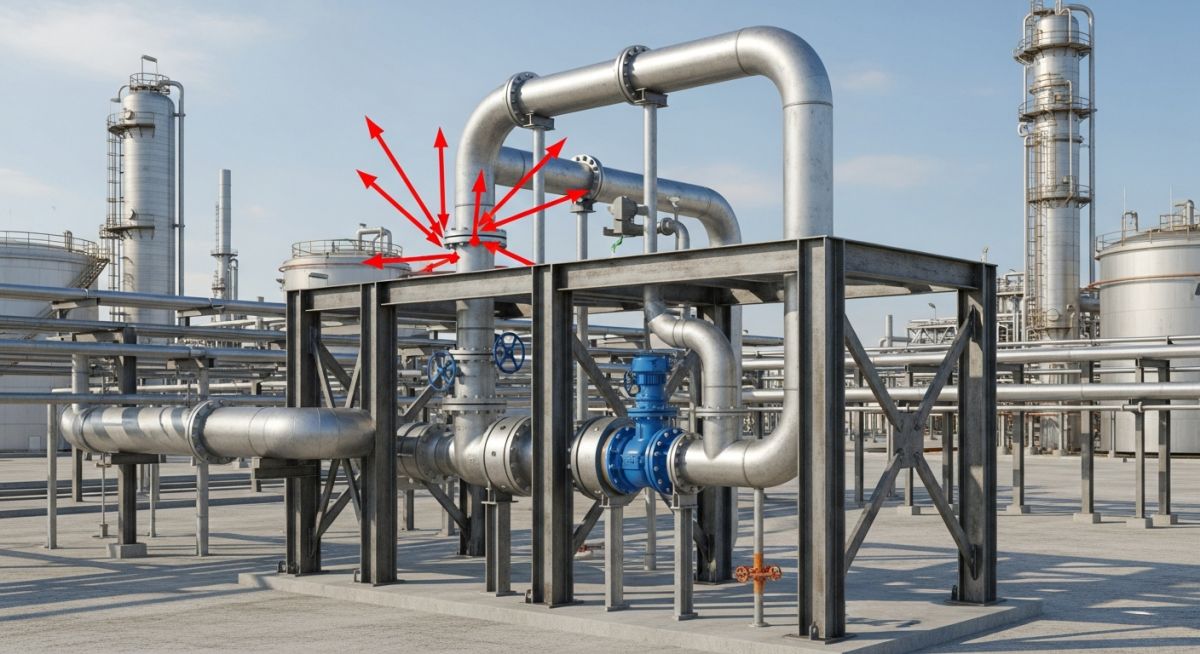
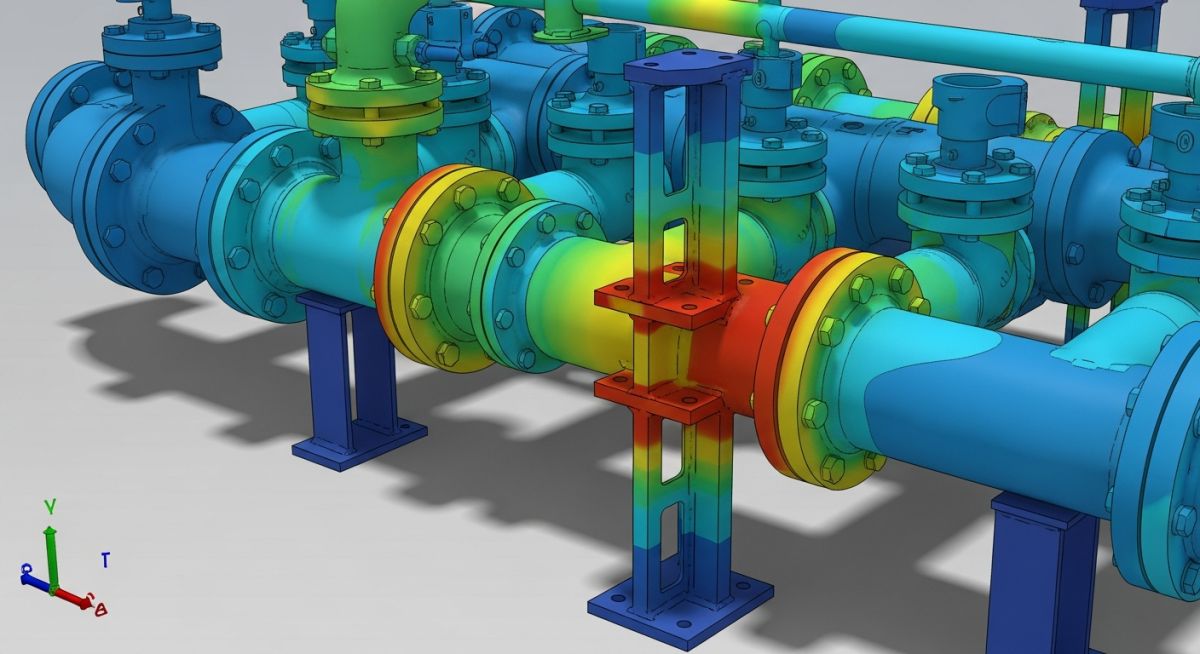
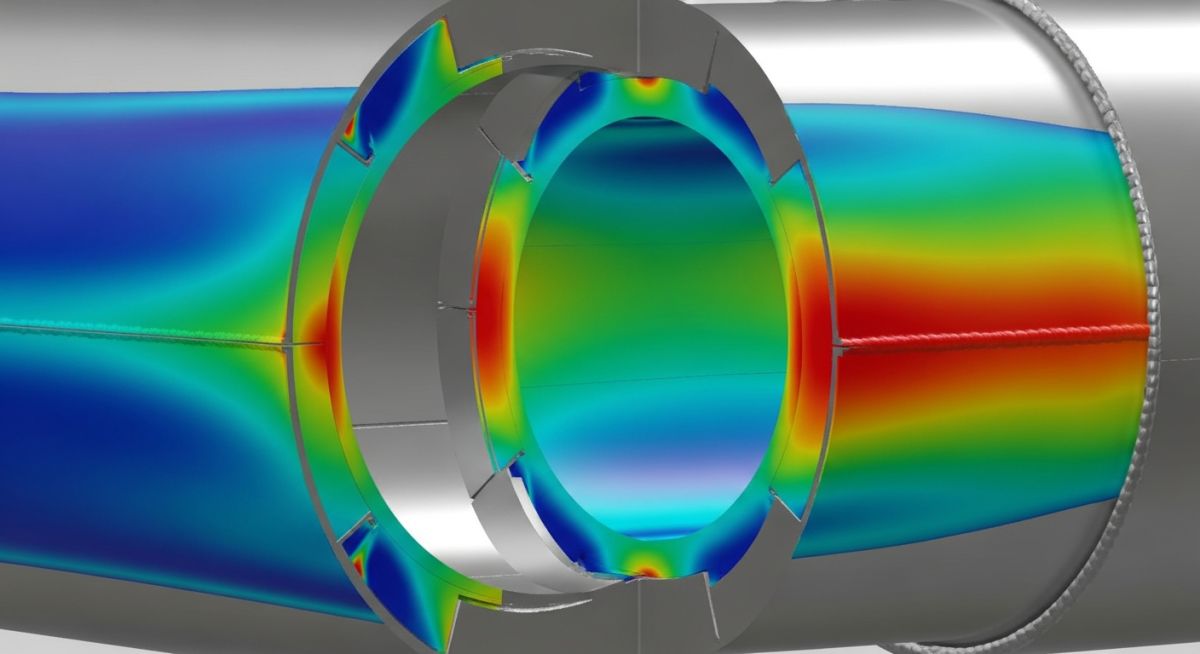
Focus Keyword: Jacketed Piping Stress Analysis SEO Title: Jacketed Piping Stress Analysis: Top 2026 Interview Questions and Answers Slug: jacketed-piping-stress-analysis-interview-questions Meta Description: Master Jacketed Piping Stress Analysis with this 2026 guide. Learn CAESAR II modeling, ASME B31.3 requirements, and core-jacket interconnection checks. Tags: Piping Engineering, Jacketed Piping, CAESAR II, Stress Analysis, ASME B31.3, Mechanical Engineering Verified Engineering Content 2026 Authored by Epcland Content & Dev Architect Jacketed Piping Stress Analysis: Top Interview Questions and Answers Jacketed Piping Stress Analysis is a critical competency for piping stress engineers working in refineries, petrochemical plants, and specialty chemical facilities where temperature control is paramount. In 2026, the complexity of thermal management systems requires a deep understanding of how core and jacket components interact under extreme pressure and temperature differentials. Jacketed Piping Stress Analysis evaluates the interaction between an inner core pipe and an outer jacket. Key considerations include differential thermal expansion, interconnection weld stresses, and modeling in CAESAR II. Engineers must ensure compliance with ASME B31.3 Chapter IX and verify that the core can withstand external pressure from the jacket medium. In This Technical Guide Fundamental Principles of Jacketed Piping Stress Analysis CAESAR II Modeling for Jacketed Piping Stress Analysis Critical Evaluations in Jacketed Piping Stress Analysis Compliance and Code Requirements for Jacketed Piping Stress Analysis Technical Competency Quiz Question 1 of 5 Next Question Restart Quiz Fundamental Principles of Jacketed Piping Stress Analysis In modern process engineering, Jacketed Piping Stress Analysis involves a sophisticated understanding of how two concentric pipes behave under varying thermal and pressure conditions. Unlike standard piping, these systems must comply with the rigorous requirements of ASME B31.3 Chapter IX (High Pressure Fluid Service) or standard process piping sections depending on the service. The interaction between the inner "core" and the outer "jacket" creates complex mechanical constraints that must be modeled with precision to prevent structural failure. 1. Why is Jacketed Piping used in Process Plants to Manage Thermal Gradient Loads? The primary reason for utilizing jacketed systems is to maintain a specific temperature profile for the core fluid. This is essential for managing Thermal Gradient Loads in fluids like liquid sulfur, phthalic anhydride, or polymers which would solidify if the temperature dropped below a certain threshold. By surrounding the core with a heating medium (steam, hot oil, or water), engineers ensure that the core fluid remains in a pumpable state, minimizing the risk of process downtime. 2. Core vs. Jacket: Understanding Differential Thermal Expansion in Jacketed Piping Stress Analysis The most significant challenge in Jacketed Piping Stress Analysis is Differential Thermal Expansion. If the core pipe is made of Stainless Steel and the jacket is Carbon Steel, their expansion coefficients differ significantly. Even with identical materials, the core usually operates at a higher temperature than the jacket. This difference in longitudinal expansion generates massive forces at the Core-Jacket Interconnection points, which must be carefully balanced through the use of expansion loops or bellows. CAESAR II Modeling Techniques for Jacketed Piping Stress Analysis When performing simulation, CAESAR II Modeling Techniques require a dual-element approach. The software treats the core and jacket as separate pipelines that are linked at specific node points representing spacers, spiders, and end caps. 3. What Density Value is Used for Water in CAESAR II Modeling Techniques? When water (density = 1000 Kg/m3) is flowing through the jacket annulus, the density value entered into the spreadsheet depends on the modeling method. In a standard jacketed piping spreadsheet, the engineer must account for the fluid volume occupying the space between the core's outer diameter and the jacket's inner diameter. For accurate Jacketed Piping Stress Analysis, the weight of the jacket fluid is added as an additional load case. If the spreadsheet calculates weight based on pipe volume, the actual density of 1000 Kg/m3 is used, but the software must be instructed to apply it only to the annular cross-section to avoid overestimating the static weight. 4. Modeling the Core-Jacket Interconnection Points for Stress Evaluation The Core-Jacket Interconnection is modeled using rigid elements or internal restraints. Spacers (or "spiders") are used to maintain the concentricity of the pipes. In a CAESAR II model, these are typically represented by 2-way restraints that allow axial movement but restrict lateral displacement. However, the end caps where the core and jacket are welded together are modeled as "anchor" connections between the two pipes, as they must transfer the full force of Differential Thermal Expansion. Critical Evaluations in Jacketed Piping Stress Analysis In 2026, the complexity of chemical processing requires more than just basic flexibility checks. Jacketed Piping Stress Analysis must account for the synchronized movement of both components. When one pipe expands at a different rate than its neighbor, the resulting stresses can exceed the elastic limit of the material if not properly mitigated through engineering design. 5. What are the Major Stress Checks for a Jacketed System under ASME B31.3? During the Jacketed Piping Stress Analysis workflow, three primary categories of stress must be verified against ASME B31.3 limits: Sustained Stress: Evaluation of weight (pipe + fluid + insulation) and internal pressure for both core and jacket. Expansion Stress: Assessing the range of displacement between the cold state and the maximum operating temperature. Occasional Stress: Checking for wind, seismic, and relief valve discharge loads which may impact the outer jacket differently than the core. Stress Category Applicable Component Code Compliance Requirement Internal Pressure Core Pipe Burst Pressure vs Hoop Stress External Pressure Core Pipe ASME BPVC Section VIII Div 1 Differential Expansion Interconnection Weld SA (Allowable Displacement Stress Range) 6. Analyzing Discontinuity Stresses at Weld Joints in Jacketed Piping Stress Analysis Discontinuity stresses occur at locations where the geometry of the piping system changes abruptly, such as at the weld connecting the jacket to the core. In Jacketed Piping Stress Analysis, these points often represent the highest stress intensification factors (SIF). Engineers must ensure that the local bending moments do not cause plastic deformation at the weld root. Compliance and Code Requirements for Jacketed Piping Stress Analysis 7. What Allowable Value is Used for Welding Checks at Core-Jacket Interconnections? The allowable stress for the Core-Jacket Interconnection weld is usually governed by the expansion stress range (SA). In 2026 engineering practices, we calculate the longitudinal stress (SL) at the interconnection using the following relationship: SL = (Fax / Am) + (Mb / Zm) Where: Fax = Axial Force from Differential Expansion | Am = Metal Area of Weld | Mb = Resultant Bending Moment | Zm = Section Modulus of the Weld The calculated SL must be less than or equal to 1.5 times the basic allowable stress of the material at operating temperature. For critical services, Finite Element Analysis (FEA) is often performed to validate these local stresses when CAESAR II results approach the allowable limits. 8. Material Selection and Fatigue Considerations in 2026 Designs Modern Jacketed Piping Stress Analysis also considers the fatigue life of the system. For systems subject to frequent thermal cycling (e.g., batch reactors), the 2026 version of ASME codes mandates a more detailed fatigue evaluation. Material selection is key; utilizing materials with similar coefficients of thermal expansion (CTE) can significantly reduce the internal loads and extend the operational lifespan of the interconnection welds. Don't miss this video related to Jacketed Piping Stress Analysis Summary: Master Piping Engineering with our complete 125+ hour Certification Course: ...... ✅ 2500+ VIDEOS View Playlists → JOIN EXCLUSIVE EDUCATION SUBSCRIBE Jacketed Piping Stress Analysis Calculator Use this tool to estimate the Differential Thermal Expansion between the core and jacket. This calculation is a fundamental step in Jacketed Piping Stress Analysis to determine if expansion loops or bellows are required in 2026 designs. Length of Pipe Segment (m) Operating Temperature (degree C) Core Expansion Coeff (mm/m/degree C) Jacket Expansion Coeff (mm/m/degree C) Calculate Expansion Reset Analysis Results Core Expansion 0.00 mm Jacket Expansion 0.00 mm Differential (Net) 0.00 mm Note: This calculator assumes an ambient temperature of 21 degrees C. The differential value represents the total axial displacement that the Core-Jacket Interconnection must withstand. Case Study: Optimizing Jacketed Piping Stress Analysis for a Molten Sulfur Transfer Line Project Context & Data In early 2026, a major refinery in the Middle East reported recurring weld failures at the Core-Jacket Interconnection points of their 6-inch molten sulfur transfer line. The system utilized a Carbon Steel jacket (operating at 150 degrees C) and a Stainless Steel core (operating at 145 degrees C). Core Material: ASTM A312 TP316L Jacket Material: ASTM A106 Gr. B Service Medium: Molten Sulfur (Core) / Low Pressure Steam (Jacket) Length: 45-meter straight run between fixed anchors Failure Analysis & Engineering Fix The Jacketed Piping Stress Analysis conducted during the forensic phase revealed that while the operating temperatures were similar, the difference in thermal expansion coefficients (CTE) resulted in a net differential expansion of 28 mm over the 45-meter run. This expansion was completely restrained by the end-cap welds, leading to longitudinal stresses exceeding 350 MPa, well above the ASME B31.3 allowable limit for expansion stress. The Solution & Lessons Learned To resolve the issue, the engineering team implemented two critical changes: Expansion Loop Integration: A vertical expansion loop was added to the jacketed assembly. This allowed the system to flex, absorbing the 28 mm of movement without concentrating stress at the welds. Axial Stop Optimization: The rigid anchors were replaced with guided supports and one main anchor point, allowing the jacket and core to expand in a controlled direction. Key 2026 Takeaway "Always validate the differential expansion between dissimilar materials even if operating temperatures are close. Jacketed Piping Stress Analysis is not just about temperature; it is about the physics of material interaction." Frequently Asked Questions (FAQ) about Jacketed Piping Stress Analysis How does ASME B31.3 Chapter IX apply to Jacketed Piping Stress Analysis? ASME B31.3 Chapter IX applies if the internal pressure in the core pipe exceeds 600 psi (approx. 41 bar). For Jacketed Piping Stress Analysis, this chapter imposes more stringent allowable stress values and requires more detailed design checks for components operating under high-pressure conditions. What are the best CAESAR II Modeling Techniques for the core-jacket interconnection? The most common CAESAR II Modeling Techniques involve modeling the core and jacket as two separate lines linked by restraints. At end caps, engineers use rigid elements or a shared node to force common displacement, allowing the software to calculate the resulting discontinuity stresses accurately during the Jacketed Piping Stress Analysis. How do I calculate the differential thermal expansion for design? Calculating Differential Thermal Expansion involves determining the free expansion of both the core and the jacket pipe independently (L * alpha * DeltaT) and then finding the difference. This value represents the total relative movement that must be accommodated by the flexibility of the system during Jacketed Piping Stress Analysis. What is the main challenge with core-jacket interconnection reliability? The primary challenge at the Core-Jacket Interconnection is managing the localized Discontinuity Stresses. The connection point acts as a structural hinge, where significant bending moments can occur due to restrained thermal growth, requiring careful design and often FEA analysis to ensure integrity. Conclusion: Mastering Jacketed Piping Stress Analysis in 2026 Achieving mastery in Jacketed Piping Stress Analysis is crucial for ensuring the safety and efficiency of modern process plants. By following ASME B31.3 guidelines, utilizing effective CAESAR II Modeling Techniques, and paying close attention to Differential Thermal Expansion, engineers can design robust systems that prevent catastrophic failures at critical connections. The insights provided here form a comprehensive guide to succeeding in technical interviews and ensuring design integrity for vital industrial infrastructure in 2026. 📚 Recommended Resources: Jacketed Piping Stress Analysis Read these Guides 📄 The Root Cause of Persistent Leaks: How We Overcame Flange Face Damage Leakage in Process Piping 📄 Piping Interview Questions: All About Pipes 🎥 Watch Tutorials 2MinFundas-40 : Jacketed Pipe #Piping 2MinFundas-86 : Pump Piping : Handling Hot suctions #Piping Piping Material Specification (Part-4 of10) II Flanges #PipingCourse