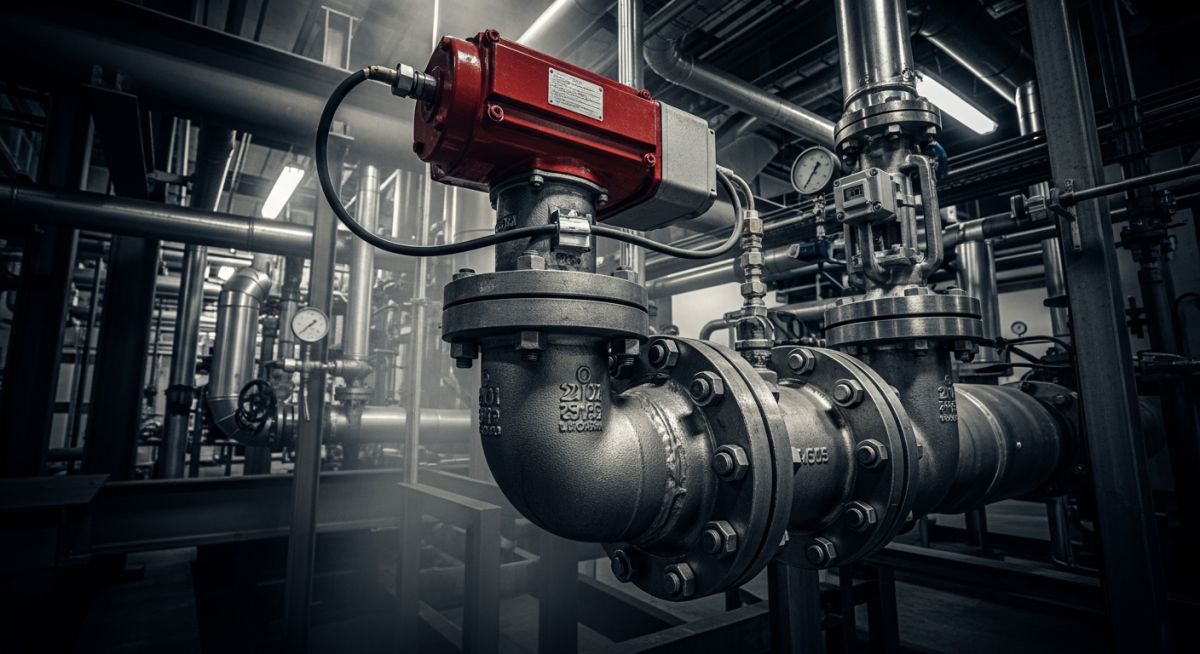
Verified Engineering Content Updated for 2026 The Ultimate Guide to the Blowdown Valve: Engineering Design & 2026 Standards Imagine a high-pressure steam boiler operating at peak capacity when Total Dissolved Solids (TDS) begin to concentrate beyond critical limits. Without a precise Blowdown Valve, these impurities quickly transform into rock-hard scale, insulating your heating surfaces and inviting catastrophic tube failure. In the modern plant, this valve isn't just a drain; it is the precision instrument that balances thermal efficiency with mechanical integrity. Core Engineering Insights Precision TDS Management: How the Blowdown Valve maintains water chemistry to prevent foaming and carryover. Standard Compliance: Understanding the role of ASME BPVC Section I in valve selection. Operational Modes: Differentiating between continuous surface extraction and intermittent bottom sludge removal. What is a Blowdown Valve? A Blowdown Valve is a specialized high-pressure valve designed to remove impurities, sludge, and concentrated dissolved solids from boiler water. By discharging a portion of the water, it prevents scale formation and ensures steam purity, typically operating under extreme pressure drops and erosive flow conditions. Expert Perspective "In my 20 years of field inspections, the most common cause of boiler efficiency loss isn't the burner—it is a poorly maintained blowdown system. In 2026, automation in Blowdown Valve sequencing is the single best ROI for steam plant reliability." — Atul Singla Technical Overview Critical Working Principles of the Blowdown Valve Major Categories: Blowdown Valve Types Material Selection for High-Pressure Service Industrial Applications of the Blowdown Valve Maintenance Advantages and ROI Common Engineering Challenges Technical Assessment Question 1 of 5 Next Question Critical Working Principles of the Blowdown Valve The fundamental operation of a Blowdown Valve revolves around the controlled release of high-energy boiler water to manage the concentration of impurities. In steam generation, as water evaporates, it leaves behind minerals and suspended solids. If left unchecked, these impurities reach a saturation point, leading to "carryover" where contaminated water enters the steam header, damaging downstream turbines and heat exchangers. The Blowdown Valve acts as the system's kidney, selectively purging high-TDS water while maintaining the delicate mass balance of the boiler. Engineers must account for the physical phenomenon of "flashing" during valve operation. As high-pressure boiler water crosses the valve seat into a lower-pressure discharge line, a portion of the liquid instantly transforms into steam. This creates a high-velocity, two-phase flow that is incredibly erosive. Modern Blowdown Valve designs utilize hardened trim materials and specific internal geometries, often following guidelines found in the ASME BPVC Section I Standards, to dissipate this kinetic energy without destroying the valve internals. Major Categories: Blowdown Valve Types and Functions The selection of a Blowdown Valve depends entirely on the nature of the impurities being targeted. Surface impurities require a different mechanical approach than bottom-dwelling sludge. In 2026, high-efficiency plants utilize a dual-valve strategy to ensure both steam purity and heat-transfer surface cleanliness. Continuous Blowdown Valve Systems Often referred to as "Surface Blowdown," these valves are positioned near the water level in the steam drum. Their primary role is the constant extraction of concentrated dissolved solids (TDS). Because the flow is steady, these systems are frequently paired with heat recovery heat exchangers, allowing the plant to recapture thermal energy from the blowdown stream before it is sent to the flash tank. Intermittent Blowdown Valve Mechanisms Also known as "Bottom Blowdown," these valves are located at the lowest point of the boiler. Unlike the continuous type, the Blowdown Valve here is opened fully for short durations. This creates a high-velocity "suction" effect that pulls settled sludge and heavy precipitates out of the mud drum. These valves are built for rugged durability, as they must handle abrasive particles at full boiler pressure. Surface vs. Bottom Blowdown Valve Configurations While surface valves focus on water chemistry and preventing foam, bottom valves focus on mechanical cleanliness. A comprehensive boiler management system integrates both, typically utilizing automated controllers to trigger the Blowdown Valve based on real-time conductivity sensors or timed intervals to maximize water savings. Material Selection for High-Pressure Blowdown Valve Service The metallurgical requirements for a Blowdown Valve are exceptionally stringent due to the synergistic effects of high temperature, flashing-induced cavitation, and abrasive sludge. Under 2026 engineering protocols, standard carbon steel is often insufficient for the valve trim. Engineers prioritize materials like Stellite-faced stainless steel or 13% Chromium steel (ASTM A182 F6a) to ensure the seating surfaces resist wire-drawing and erosion. Designers must strictly adhere to pressure-temperature ratings defined by ASME B16.34 Standards. For ultra-high-pressure utility boilers, forged Chrome-Moly (ASTM A182 F22) valve bodies are the industry benchmark, providing superior creep resistance and structural integrity at temperatures exceeding 500°C. Component Standard Material Advanced (2026) Material Primary Benefit Valve Body ASTM A105 Carbon Steel ASTM A182 F22 (Cr-Mo) Thermal Creep Resistance Valve Trim/Seat 410 Stainless Steel Stellite No. 6 Overlay Anti-Galling & Hardness Stem 316 Stainless Steel 17-4 PH Stainless Steel High Tensile Strength Industrial Applications of the Blowdown Valve While primarily associated with steam boilers, the Blowdown Valve serves critical functions across several heavy industries. In the petrochemical sector, these valves are utilized in quench water systems and high-pressure separator vessels where solids must be purged without losing system pressure. In the power generation sector, the Blowdown Valve is integral to the Heat Recovery Steam Generator (HRSG) cycle. Here, precise control over water chemistry is non-negotiable to protect high-speed turbine blades from silica carryover. Modern plants often utilize automated blowdown controllers that interface directly with the plant’s Distributed Control System (DCS) for real-time optimization. Maintenance Advantages and ROI Investing in a high-quality Blowdown Valve pays dividends through reduced fuel consumption and extended boiler life. By maintaining the optimal "Cycles of Concentration," the valve ensures that heat transfer surfaces remain free of insulating scale. Engineering data suggests that even 1mm of scale can increase fuel consumption by up to 2%, making the Blowdown Valve a critical component for operational sustainability. Boiler Blowdown Rate Calculator Estimate the required blowdown percentage based on Feedwater and Boiler Water TDS limits. Feedwater TDS (ppm) Max Allowable Boiler TDS (ppm) Steam Evaporation Rate (kg/hr) Calculate Blowdown Requirements Blowdown Percentage Blowdown Flow Rate Engineering Case Study Optimizing Blowdown Valve Automation in a 50-Bar Boiler The Challenge A textile processing plant experienced frequent "foaming" and steam carryover in their fire-tube boiler. Manual Blowdown Valve operation led to inconsistent TDS levels, causing a 4% drop in thermal efficiency due to scale formation. The Solution Engineers installed a motorized Blowdown Valve integrated with a continuous conductivity sensor. The system was programmed to maintain TDS at a steady 2,200 ppm, utilizing a heat recovery module on the discharge line. The Result Fuel consumption decreased by 2.5% annually. The automated Blowdown Valve reduced water wastage by 15%, and internal inspections showed zero new scale accumulation after 12 months of service. Key Engineering Takeaway Transitioning from manual intermittent purging to an automated Blowdown Valve system ensures the boiler operates within its "sweet spot" for water chemistry. In high-pressure environments, the consistency of automated discharge prevents the thermal shocks associated with large-volume manual blowdowns. Don't miss this video related to Blowdown Valve Summary: A safety valve opens at one pressure, but closes at a lower one. The difference between those two points is called "Blowdown.... ✅ 2500+ VIDEOS View Playlists → JOIN EXCLUSIVE EDUCATION SUBSCRIBE Expert Insights: Lessons from 20 years in the field Trim Hardening is Mandatory: For high-pressure differential service, always specify a Blowdown Valve with Satellite Grade 6 or tungsten carbide trim. In my experience, standard stainless steel trims often fail within six months due to wire-drawing and flashing erosion. Sizing Beyond the Pipe: Never assume the Blowdown Valve size should match the pipe size. Proper sizing must account for the specific volume of water and the mass flow rate of flashing steam to avoid "choked flow" conditions that limit discharge capacity. Thermal Shock Mitigation: When automating a bottom Blowdown Valve, ensure the PLC logic includes a "warm-up" cycle or gradual opening sequence. Rapidly introducing 250°C boiler water into a cold discharge header can lead to catastrophic water hammer and flange leaks. References & Standards → ASME BPVC Section I: Rules for Construction of Power Boilers → ASME B31.1: Power Piping Design & Blowdown Systems → ISO 16528: Boilers and Pressure Vessels - Part 1 & 2 → API Standard 526: Flanged Steel Pressure-Relief and Blowdown Design Frequently Asked Questions: Blowdown Valve Mastery How often should a Blowdown Valve be operated? The frequency depends on water analysis. A surface Blowdown Valve usually runs continuously or semi-continuously based on TDS levels. A bottom Blowdown Valve is typically operated once per shift for 5-10 seconds to eject accumulated sludge without wasting excessive treated water. Why is my Blowdown Valve leaking even after a seat replacement? This is often caused by "wire-drawing." High-velocity steam flashing across the seat cuts microscopic grooves that a new seat cannot seal. If the valve body's seating area is eroded, the entire Blowdown Valve assembly or the body itself may need re-surfacing or replacement to ensure a tight shut-off. What is the difference between a Blowdown Valve and a Blow-off Valve? While often used interchangeably, a Blowdown Valve typically refers to the continuous removal of water for TDS control, whereas a blow-off valve is a rugged, heavy-duty valve used for intermittent removal of sludge and for draining the boiler under pressure. Can I use a standard gate valve as a Blowdown Valve? No. Standard gate valves are not designed to handle the throttling and flashing conditions inherent in boiler discharge. A dedicated Blowdown Valve is engineered with specific trim materials to resist erosion that would destroy a standard valve's seating surfaces in days. How does ASME BPVC Section I impact Blowdown Valve selection? ASME BPVC Section I mandates that every boiler must have at least one Blowdown Valve. For boilers with pressures exceeding 100 psi, two valves in series (typically one slow-opening and one quick-opening) are often required for safety during sludge removal. What is the best way to prevent water hammer in blowdown lines? Always open the Blowdown Valve slowly. If using a two-valve system, open the valve closest to the boiler (the blowing valve) first, then the sealing valve. Reverse this to close. This sequence protects the piping from sudden pressure surges and thermal shock. 📚 Recommended Resources: Blowdown Valve Read these Guides 📄 Meaning of LO and LC in Valves: Engineering Guide (2026) 📄 Industrial Steam Valves: 2026 Engineering Guide to Types & Sizing 📄 Pressure Safety Valve Sizing: API 520 Calculation Guide 2026 📄 What is PSV Testing? Its Requirements, Procedure, and Standards (2026 Guide) 🎥 Watch Tutorials What is Valve "Blowdown" and Why Does It Matter? 💨 #shorts #engineeringlife