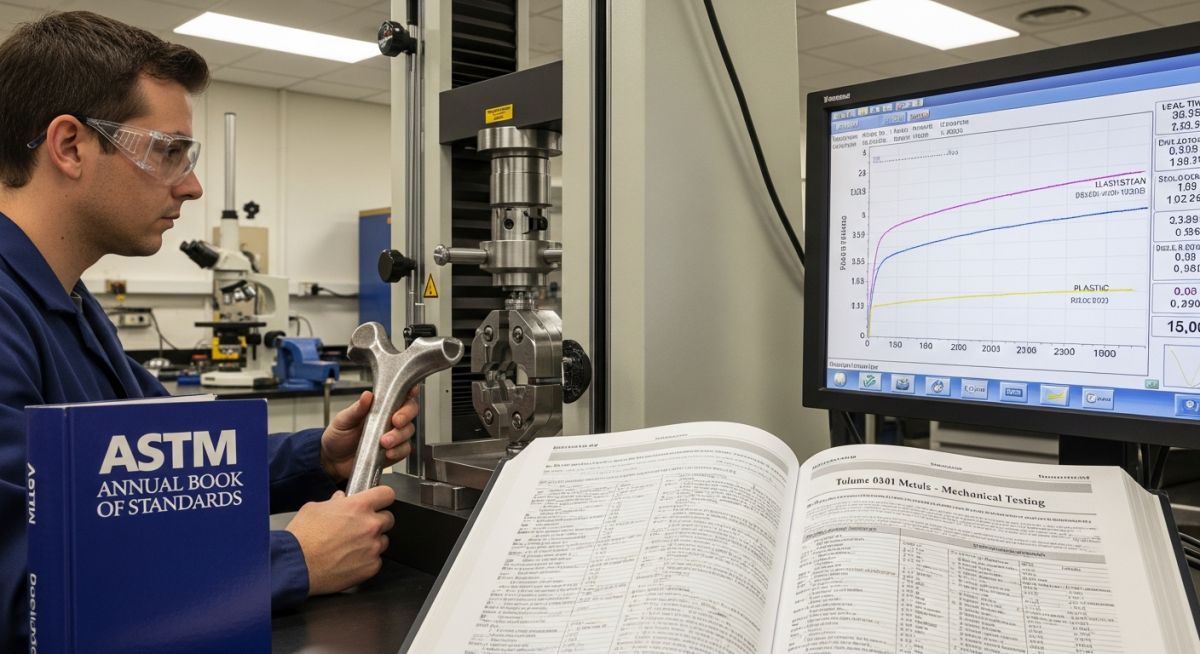
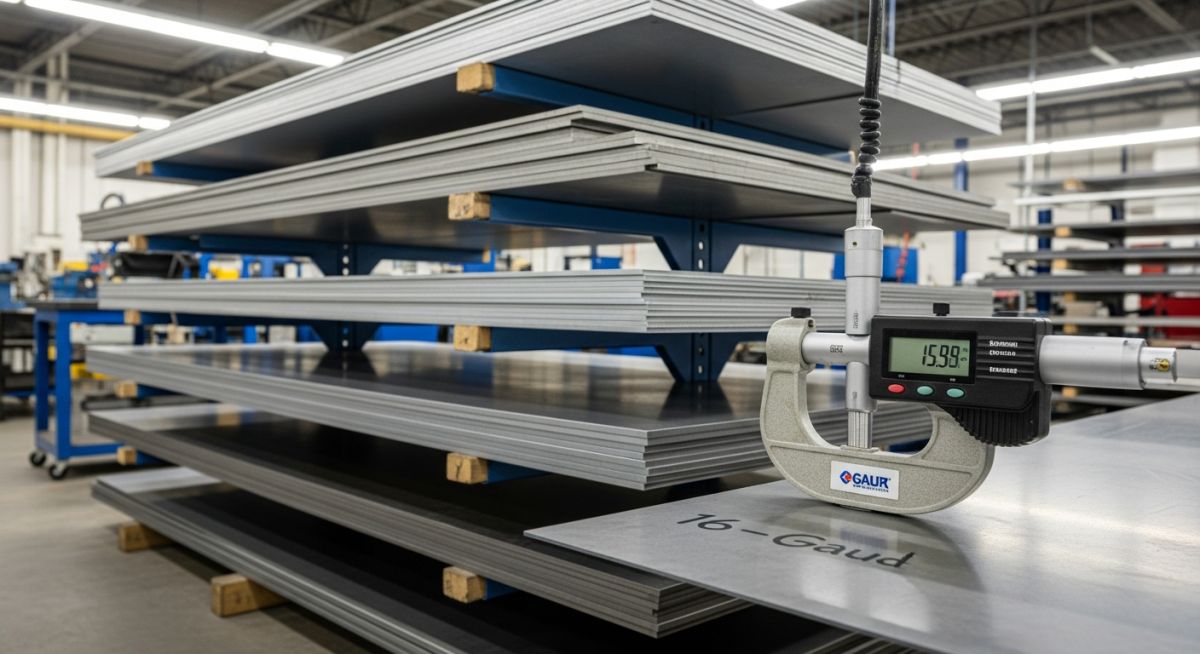
Focus Keyword: Sheet Metal Gauge Chart SEO Title: Comprehensive Sheet Metal Gauge Chart: Thickness Standards for Engineering (2026) Slug: sheet-metal-gauge-chart-thickness-standards Meta Description: Access the definitive 2026 Sheet Metal Gauge Chart. Compare thickness for mild steel, aluminum, and stainless steel with decimal equivalents and ASTM standards. Tags: Sheet Metal, Gauge Chart, Manufacturing, Metal Fabrication, Mechanical Engineering, Steel Thickness, ASTM Standards Manufacturing Data Sheet Updated January 2026 Comprehensive Sheet Metal Gauge Chart: Thickness Standards for Engineering The Sheet Metal Gauge Chart is an indispensable tool in the world of precision manufacturing, serving as the universal language between design engineers and fabrication shops. Understanding that "gauge" is not a linear measurement is critical for ensuring structural integrity and cost-efficiency in any project. In this 2026 technical guide, we break down the complexities of gauge systems across different materials, from the Manufacturer’s Standard Gauge (MSG) for steel to the Brown and Sharpe system for aluminum. Quick Answer: How does the gauge system work? In a Sheet Metal Gauge Chart, the gauge number has an inverse relationship with the thickness of the material. This means that a higher gauge number represents a thinner sheet of metal (e.g., 22-gauge is thinner than 16-gauge). Furthermore, the exact thickness for a specific gauge number varies depending on whether the metal is ferrous (steel) or non-ferrous (aluminum). Article Navigation 1. What is a Sheet Metal Gauge Chart? 2. The Engineering Logic Behind the System 3. Technical Variations in Gauge Charts 3.1 Mild Steel Gauge (MSG) 3.2 Aluminum Gauge (B&S) 3.3 Stainless and Galvanized Steel 4. How to Interpret Charts for Design 5. Engineering Tolerances & Decimal Equivalents 6. Practical Industrial Applications 7. Conclusion: Future Fabrication Trends Sheet Metal Measurement Quiz Test your ability to accurately interpret sheet metal thickness standards. Continue Module Complete! Restart Quiz What is a Sheet Metal Gauge Chart and Why is it Necessary? A Sheet Metal Gauge Chart is a standardized technical reference that correlates a numerical "gauge" to a specific decimal thickness in inches or millimeters. In the 2026 manufacturing landscape, these charts are essential because they provide a common ground for designers, fabricators, and material suppliers to communicate precise thickness requirements without confusion. Without a standardized Sheet Metal Gauge Chart, engineers would face significant risks in structural calculations and weight estimations. For instance, the difference between a 14-gauge and 16-gauge steel sheet might seem negligible to the naked eye, but it represents a nearly 25 percent change in thickness and weight. This variance is critical when designing aerospace components, automotive chassis, or high-pressure HVAC systems where every gram and millimeter matters for performance and safety. The Engineering Logic Behind the Sheet Metal Gauge Chart Number System To understand the Sheet Metal Gauge Chart, one must understand its historical and physical origins. The gauge system is an inverse scale, meaning that as the number increases, the material thickness decreases. This logic stems from the traditional wire-drawing process: the gauge number originally referred to the number of times a wire had to be pulled through a drawing die to achieve its final diameter. A 20-gauge wire required 20 passes, making it much thinner than a 4-gauge wire that only required four passes. Weight-Based Origins for Ferrous Metals For steel and other ferrous metals, the Sheet Metal Gauge Chart is traditionally based on the weight of the material per square foot. In the Manufacturer’s Standard Gauge (MSG) system, the thickness is derived from the weight of iron at 41.82 pounds per square foot per inch of thickness. This is why the thickness of 10-gauge steel is exactly 0.1345 inches. Technical Variations in Sheet Metal Gauge Chart Standards One of the most common mistakes in engineering is assuming a single Sheet Metal Gauge Chart applies to all metals. In reality, the decimal equivalent for "16-gauge" changes significantly depending on the material's metallurgical properties and the governing standard (e.g., ASTM A1008 for steel vs. ASTM B209 for aluminum). Ferrous (Steel) Logic Uses the Manufacturer’s Standard Gauge. It is based on a density of 0.2833 pounds per cubic inch. This system accounts for the slight variations in density found in carbon and alloy steels. Non-Ferrous (Aluminum/Copper) Logic Uses the Brown and Sharpe (B&S) or American Wire Gauge (AWG) system. The thickness steps in this Sheet Metal Gauge Chart are based on a geometric progression, making the increments between gauges mathematically consistent. As we move into the following sections, we will examine the specific Sheet Metal Gauge Chart data for each material group, highlighting the critical decimal differences that engineers must account for during the design-to-manufacture transition. Detailed Technical Data: Sheet Metal Gauge Chart for Common Metals The following tables represent the industry-standard decimal equivalents used in 2026 for precision fabrication. These values are based on ASTM A1008 for cold-rolled steel and ASTM B209 for aluminum alloys. Sheet Metal Gauge Chart for Mild Steel (MSG) The Manufacturer’s Standard Gauge (MSG) for mild steel is the baseline for most structural and enclosure fabrication. Note how the thickness relates to a weight of 41.82 pounds per square foot per inch. Gauge Number Decimal Inches (in) Millimeters (mm) Weight (lb/sq.ft) 10 Gauge 0.1345 3.416 5.625 12 Gauge 0.1046 2.657 4.375 14 Gauge 0.0747 1.897 3.125 16 Gauge 0.0598 1.519 2.500 18 Gauge 0.0478 1.214 2.000 20 Gauge 0.0359 0.912 1.500 Sheet Metal Gauge Chart for Aluminum (B&S) Aluminum uses the Brown and Sharpe (B&S) system. Notice that a 16-gauge aluminum sheet is approximately 15 percent thinner than a 16-gauge steel sheet. Gauge Number Decimal Inches (in) Millimeters (mm) Relative Density 10 Gauge 0.1019 2.588 0.098 lb/in3 12 Gauge 0.0808 2.052 0.098 lb/in3 14 Gauge 0.0641 1.628 0.098 lb/in3 16 Gauge 0.0508 1.290 0.098 lb/in3 Sheet Metal Gauge Chart for Stainless and Galvanized Steel Stainless steel gauges are based on the U.S. Standard Gauge system, which differs slightly from mild steel. For instance, 16-gauge stainless is exactly 0.0625 inches (1/16"), whereas mild steel is 0.0598 inches. Galvanized Steel presents another variation. The gauge number for galvanized sheets includes the thickness of the zinc coating applied to both sides. As a result, a 16-gauge galvanized sheet will measure approximately 0.0635 inches, making it thicker and heavier than its standard carbon steel counterpart. How to Correctly Interpret the Sheet Metal Gauge Chart for Design When a mechanical engineer specifies a material on a 2026 technical drawing, they must refer to the Sheet Metal Gauge Chart but always include the decimal equivalent in brackets. Relying on "14 GA" alone can lead to manufacturing errors if the shop uses a different standard or material type. Engineering Tolerances in the Sheet Metal Gauge Chart Every Sheet Metal Gauge Chart represents a nominal thickness. Under ASTM A1008, manufacturers are allowed a specific tolerance range. For a 16-gauge mild steel sheet (nominal 0.0598"), the actual thickness could range from 0.0548" to 0.0648" depending on the width of the sheet and the rolling mill's precision. Design Best Practice: Always perform structural Finite Element Analysis (FEA) using the minimum possible thickness allowed by the tolerance, rather than the nominal value found in the Sheet Metal Gauge Chart, to ensure a conservative safety factor. Sheet Metal Gauge Chart Calculator Select your material and gauge number to retrieve the precise decimal thickness and weight per square foot based on the 2026 Sheet Metal Gauge Chart standards. Select Material Type Mild Steel (MSG) Aluminum (B&S) Stainless Steel (U.S. Std) Gauge Number (4 to 30) Calculate Dimensions Reset Thickness (Inches) 0.0000 in Thickness (mm) 0.00 mm Weight (lb/sq.ft) 0.00 lb Note: These values are nominal. For 2026 fabrication projects, always check the ASTM A1008 or ASTM B209 tolerance tables as actual thickness can vary by up to 10 percent depending on mill width and grade. Case Study: Avoiding Thermal Distortion Through Precise Sheet Metal Gauge Chart Selection In 2026, a precision instrumentation company faced significant yield losses during the fabrication of stainless steel enclosures for offshore sensors. The initial design specified 22-gauge stainless steel to minimize weight and material costs. However, during the TIG welding process, the enclosures suffered from severe "oil-canning" and thermal warping, making them impossible to seal against environmental ingress. Project Data & Technical Failure • Initial Specification: 22 Gauge Stainless Steel (0.0312 inches) • Failure Mode: Elastic buckling and thermal distortion exceeding 5.0mm. • Root Cause: Insufficient heat-sink capacity of thin-gauge material during fusion welding. The Engineering Solution The engineering team consulted the Sheet Metal Gauge Chart for U.S. Standard Stainless Steel and performed a thermal-mechanical simulation. The results indicated that the material thickness needed to increase by at least 100 percent to handle the heat input of the automated welding cells. The specification was upgraded to 16-gauge stainless steel (0.0625 inches). While this increased the material weight, it eliminated 100 percent of the warping issues and reduced the post-weld straightening labor by 85 percent, resulting in a net project saving of over 45,000 USD across the 2026 production run. Key Lessons Learned 1. Gauge vs. Manufacturability: Selecting the thinnest material on a Sheet Metal Gauge Chart to save cost often backfires during welding or forming phases due to lack of structural rigidity. 2. Heat Dissipation: Thick-gauge materials act as better heat sinks. In 2026 automated welding, 16-gauge or thicker is generally preferred for butt-welded corner joints to maintain dimensional tolerances. Frequently Asked Questions Why do steel and aluminum have different thicknesses for the same gauge number? This discrepancy occurs because ferrous and non-ferrous metals follow different historical measurement systems. In a Sheet Metal Gauge Chart, mild steel follows the Manufacturer's Standard Gauge (MSG), which is based on weight per square foot. Aluminum and copper follow the Brown and Sharpe (B&S) system, which is based on a geometric progression. Consequently, a 16-gauge steel sheet is always thicker than a 16-gauge aluminum sheet. How is the sheet metal gauge chart used in calculating material weight? To calculate weight, engineers first identify the decimal thickness from the Sheet Metal Gauge Chart and then multiply it by the density of the specific metal. For standard carbon steel, the density is approximately 0.2833 pounds per cubic inch. For example, a 10-gauge steel sheet (0.1345 inches thick) weighs exactly 5.625 pounds per square foot. This weight-to-thickness ratio is the fundamental building block of the MSG system. Can the gauge system be applied to non-metallic materials like plastics? Generally, no. The Sheet Metal Gauge Chart is strictly an engineering standard for metallic sheets. Plastics, polymers, and composite materials are almost exclusively measured in decimal inches or millimeters. Attempting to order "16-gauge polycarbonate" would likely lead to errors in the supply chain, as there is no standardized gauge-to-decimal conversion for non-metallic industrial materials. How do ASTM A1008 tolerances affect the accuracy of a gauge chart? The decimal values in a Sheet Metal Gauge Chart are nominal targets. However, ASTM A1008 and other rolling standards allow for specific manufacturing tolerances. For instance, a sheet may be thinner at the edges than in the center due to roll deflection. In high-precision engineering, it is standard practice to measure each batch with a calibrated micrometer to ensure the actual thickness falls within the allowable tolerance range of the nominal gauge. Conclusion The Sheet Metal Gauge Chart remains a cornerstone of mechanical design and metal fabrication in 2026. By bridging the gap between historical weight-based standards and modern decimal precision, these charts allow engineers to select materials that perfectly balance structural requirements with cost and weight constraints. Whether you are working with mild steel, aluminum, or stainless alloys, always remember the inverse nature of the gauge system and the critical variations between material types. As precision fabrication continues to evolve with fiber laser cutting and automated forming, the baseline data provided by a reliable Sheet Metal Gauge Chart will continue to be the primary reference for manufacturing excellence. 📚 Recommended Resources: Sheet Metal Read these Guides 📄 Jacketed Piping Stress Analysis: Top 2026 Interview Questions and Answers 📄 Mill Finish: The Complete Engineering Guide for 2026 📄 Sight Glasses for Oil and Gas: The Definitive 2026 Engineering Guide –> 📄 FEED for Petrochemical Plant: Managing Licensors & Complexity [2026] 🎥 Watch Tutorials The Ultimate Guide to Galvanizing: What It Is and How It Works Exploring the Different Types of Carbon Steel: Low, Medium, High, and Ultra-High Carbon: FAQs Welding 101: The Ultimate Guide to Welding Processes & Machines