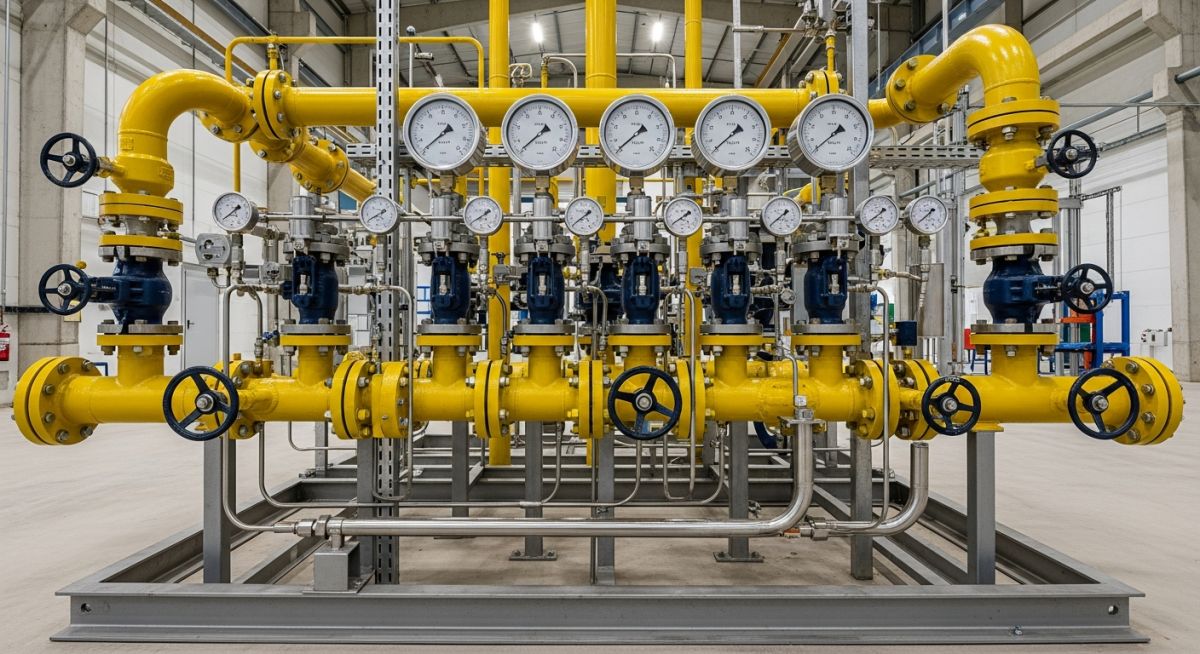
Updated for 2026 ASTM Standards What is ASTM A53 Pipe? Engineering Guide to Composition, Standards, and Applications The ASTM A53 Pipe specification covers seamless and welded black and hot-dipped galvanized steel pipe in NPS 1/8 to NPS 26. This standard is intended for mechanical and pressure applications and is also acceptable for ordinary uses in steam, water, gas, and air lines. Understanding the nuances between its types (S, E, and F) and grades (A and B) is essential for ensuring the structural integrity and cost-efficiency of industrial piping systems. Defining the ASTM A53 Pipe Standard ASTM A53 Pipe is a standard alloy of carbon steel used primarily for low-pressure plumbing and structural applications. It is available in three types: Type F (Furnace Butt-Welded), Type E (Electric Resistance Welded), and Type S (Seamless). Grade B is the most common industrial variant, offering a higher tensile strength (60,000 PSI) compared to Grade A (48,000 PSI). Table of Contents Technical Types and Industrial Applications Chemical Composition and Mechanical Properties Engineering Advantages of ASTM A53 ASTM A53 Pipe Specification and Procurement Standard Dimensions: Schedule 40 Table Comparison: ASTM A53 vs. ASTM A106 Interactive Calculator: Pressure and Weight Case Study: High-Temp Service Failure Frequently Asked Questions Test Your Knowledge: ASTM A53 Fundamentals Technical Types and Industrial Applications of ASTM A53 Pipe The versatility of ASTM A53 Pipe stems from its categorization into three distinct fabrication types. Each type is engineered for specific structural or pressure-containing capabilities. As per the 2026 updated standards, these types are defined by their manufacturing process and the resulting integrity of the pipe wall. Type S (Seamless): High-Pressure ASTM A53 Pipe Applications Type S ASTM A53 Pipe is produced by the seamless extrusion process. Because it has no longitudinal weld seam, it offers the highest level of structural uniformity. It is typically utilized in high-pressure steam lines, refineries, and complex mechanical systems where the risk of weld failure must be eliminated. Engineers specify Type S when the pipe is subject to severe bending or flanging operations. Type E (ERW) and Type F (Furnace Butt-Welded) Variants Type E (Electric Resistance Welded): This ASTM A53 Pipe contains a longitudinal weld joint produced without the addition of filler metal. The weld seam is heat-treated to a minimum of 1000 degrees Fahrenheit (540 degrees Celsius) to ensure no untempered martensite remains. It is widely used in water distribution and structural supports. Type F (Furnace Butt-Welded): This is the most basic form of ASTM A53 Pipe, where a continuous coil is heated in a furnace and joined by mechanical pressure. Due to its lower weld integrity compared to ERW, it is restricted to Grade A only and is primarily used for low-pressure gas or liquid transport. Chemical Composition and Mechanical Properties of ASTM A53 Pipe The performance of ASTM A53 Pipe is strictly governed by its chemical makeup. The standard defines maximum allowable percentages for elements that affect weldability, ductility, and strength. Grade B is the most common choice for industrial projects due to its higher carbon and manganese content, which provides superior mechanical strength. Element (Max %) Grade A Grade B Carbon (C) 0.25 0.30 Manganese (Mn) 0.95 1.20 Phosphorus (P) 0.05 0.05 Sulfur (S) 0.045 0.045 Copper (Cu)* 0.40 0.40 *Note: Combined total of Cu, Ni, Cr, Mo, and V shall not exceed 1.00%. Mechanical Limits: Grade A Tensile Strength: 48,000 PSI (330 MPa) Yield Strength: 30,000 PSI (205 MPa) Common Use: Close coiling and bending applications. Mechanical Limits: Grade B Tensile Strength: 60,000 PSI (415 MPa) Yield Strength: 35,000 PSI (240 MPa) Common Use: Structural columns and pressure piping. Engineering Advantages of Selecting ASTM A53 Pipe Engineers and contractors specify ASTM A53 Pipe because it offers a unique combination of mechanical flexibility and economic value. As of 2026, it remains the most specified pipe for non-critical pressure services and structural frameworks. Atmospheric Corrosion Resistance One of the primary advantages of ASTM A53 Pipe is its ability to be hot-dipped galvanized. This zinc coating provides superior protection in outdoor environments, preventing rust and extending the service life of piping in HVAC and plumbing systems. Fabrication Flexibility Whether using Type S or Type E, ASTM A53 Pipe is highly weldable and ductile. Grade A is particularly suited for applications requiring close coiling or cold bending, while Grade B provides the structural rigidity needed for supports and columns. ASTM A53 Pipe Specification and Procurement Guide To ensure safety in pressure applications, ASTM A53 Pipe must pass several mechanical and hydrostatic tests before leaving the mill. These tests are mandatory for all Type E and Type S variants. 1 Hydrostatic Testing: Each length of pipe is subjected to internal fluid pressure to verify wall integrity. The test pressure (P) is calculated using the formula: P = 2St / D, where S is 60 percent of the specified minimum yield strength, t is the wall thickness, and D is the outside diameter. 2 Nondestructive Electric Test: For Type E (ERW) pipes, the weld seam must be inspected using ultrasonic or electromagnetic methods to ensure a full-penetration, defect-free joint. 3 Flattening Test: A sample of the pipe is flattened between two plates. For welded pipes, the weld must not show any cracks until the distance between the plates is less than a specified value. Standard Dimensions: ASTM A53 Pipe Schedule 40 Table The table below outlines the Nominal Pipe Size (NPS), Outside Diameter (OD), and wall thickness for common ASTM A53 Pipe Schedule 40 configurations. NPS (Inches) OD (Inches) Wall Thickness (In) Weight (lb/ft) 1/2 0.840 0.109 0.85 1 1.315 0.133 1.68 2 2.375 0.154 3.66 4 4.500 0.237 10.80 6 6.625 0.280 18.99 Engineering Comparison: ASTM A53 Pipe vs. ASTM A106 A common point of confusion for piping engineers is whether to specify ASTM A53 Pipe or ASTM A106. While they appear similar, their application envelopes are significantly different. The Critical Selection Logic ● Service Temperature: ASTM A106 is intended for high-temperature service (up to 800 degrees Fahrenheit). ASTM A53 Pipe is better suited for low-to-medium temperature transport and mechanical applications. ● Fabrication: A106 is exclusively seamless. ASTM A53 Pipe can be seamless or welded. ● Chemical Analysis: A106 has higher silicon content (minimum 0.10 percent) to improve performance at high temperatures, whereas A53 does not have a mandatory silicon requirement. ASTM A53 Pipe Calculator Calculate the theoretical Weight per Foot and Internal Pressure Capacity for different Schedule sizes of ASTM A53 Pipe based on Barlow's Formula. Outside Diameter (D) Inches Wall Thickness (t) Inches Pipe Grade (Allowable Stress Selection) Grade A (Seamless/ERW) - 12,000 PSI Allowable Grade B (Seamless/ERW) - 15,000 PSI Allowable Type F (Furnace Welded) - 8,400 PSI Allowable Values are based on standard 2026 safety factors for ASTM A53 Pipe at ambient temperature. Calculate Results Reset Theoretical Weight 0.00 lb/ft Internal Design Pressure 0.00 PSI Hot-Dipped Galvanizing Process and Zinc Coating for ASTM A53 Pipe A defining feature of the ASTM A53 Pipe specification is the provision for hot-dipped galvanizing. This process involves coating the carbon steel with a layer of zinc to provide sacrificial protection against atmospheric corrosion. According to the 2026 engineering standards, galvanized A53 pipe is the preferred choice for HVAC, chilled water systems, and outdoor structural supports. The galvanizing of ASTM A53 Pipe is not merely a surface spray; it is a metallurgical reaction. The pipe is cleaned in an acid bath (pickling) and then submerged in a kettle of molten zinc at approximately 840 degrees Fahrenheit (450 degrees Celsius). This creates a series of zinc-iron alloy layers topped with a final layer of pure zinc. Zinc Coating Weight Requirements ASTM A53 mandates specific coating weights to ensure durability. The weight of the zinc coating is typically expressed in ounces per square foot (oz/sq ft) of surface area. Requirement Type Minimum Weight (oz/sq ft) Average Weight (oz/sq ft) Individual Specimen 1.60 1.80 Average of Samples 1.80 2.00 Engineering Note: Galvanized Pipe Welding When welding galvanized ASTM A53 Pipe, the zinc coating must be removed (ground off) at least 1 to 2 inches back from the weld area. Welding over zinc produces toxic zinc oxide fumes and can lead to weld porosity and embrittlement. Once the weld is complete and cooled, the area should be repaired using a zinc-rich cold galvanizing spray to maintain corrosion resistance. Don't miss this video related to ASTM A53 Pipe Summary: How do you prove the strength of the pipe? Module 3 covers the mechanical property requirements and destructive testing ...... ✅ 2500+ VIDEOS View Playlists → JOIN EXCLUSIVE EDUCATION SUBSCRIBE Case Study: Failure Analysis of ASTM A53 Pipe in High-Temperature Service 1. Project Data and Background In early 2026, a mechanical contractor installed a 6-inch condensate return line for a district heating system in the Midwest. The design specified ASTM A53 Pipe Type E (Electric Resistance Welded), Grade B. The system operated at 150 PSI with localized steam spikes reaching 400 degrees Fahrenheit. Although the pressure was within the pipe's rated limit, the environment proved too severe for the welded seam over time. 2. Failure Analysis After 18 months of service, a "fish-mouth" rupture occurred along a 12-inch section of the longitudinal weld. Forensic engineering revealed that the failure was caused by Preferential Seam Corrosion combined with thermal fatigue. The Electric Resistance Weld (ERW) seam in the ASTM A53 Pipe exhibited a slightly different microstructure than the parent metal, making it a target for the corrosive condensate and the stresses of thermal expansion. 3. Engineering Fix and Remediation The remediation strategy focused on material upgrading to eliminate the risk of seam failure. The following steps were taken: The entire welded section was replaced with ASTM A106 Grade B Seamless Pipe, which lacks a longitudinal joint. The system's water chemistry was adjusted to maintain a higher pH, reducing the corrosivity of the condensate. Stress-absorbing expansion loops were added to the piping layout to reduce mechanical load on the pipe walls during startup cycles. Lessons Learned for Engineers While ASTM A53 Pipe is a cost-effective solution for general utility lines, it is not a universal substitute for seamless standards like A106 in high-temperature steam applications. When thermal cycling and corrosive condensate are present, the longitudinal weld of a Type E or Type F pipe becomes a critical point of failure. Engineers must prioritize seamless pipes for high-temperature pressure containment to ensure mechanical integrity. Frequently Asked Questions about ASTM A53 Pipe Can ASTM A53 Pipe be used for high-temperature steam applications? While ASTM A53 Pipe is rated for pressure service, it is generally limited to low and medium temperatures. For high-temperature steam service exceeding 400 degrees Fahrenheit, engineers typically specify ASTM A106 Seamless pipe because its chemical composition (specifically silicon content) is better suited for high-heat environments and prevents graphitization. What is the difference between black and galvanized ASTM A53 pipe? Black ASTM A53 Pipe is coated with a dark iron oxide and oil for basic protection, while galvanized pipe is hot-dipped in zinc. Galvanized pipes offer significantly better protection against atmospheric corrosion and are preferred for outdoor structures or water lines where rust prevention is critical. Is ASTM A53 Grade B weldable in the field? Yes, ASTM A53 Pipe Grade B is highly weldable using standard industrial techniques like Shielded Metal Arc Welding (SMAW) or Gas Tungsten Arc Welding (GTAW). However, for Type E (ERW) pipe, care must be taken to ensure the welding process does not negatively impact the existing longitudinal seam. When should I choose Grade A over Grade B for A53 pipes? Grade A is preferred for applications involving close coiling or cold bending because it has a lower carbon content, making it more ductile. Grade B should be chosen for general structural applications and pressure piping where higher tensile strength and yield strength are required for the design. Final Engineering Overview The ASTM A53 Pipe standard remains the backbone of general-purpose piping in modern industry. Its availability in seamless (Type S) and welded (Type E/F) formats allows engineers to optimize material costs while meeting specific mechanical requirements. By understanding the chemical limits and testing mandates updated for 2026, project managers can ensure that every length of A53 pipe provides the necessary safety and durability for long-term service. ASTM International Pipe Specifications Piping Engineering 📚 Recommended Resources: ASTM A53 Pipe Read these Guides 📄 Subsea Pipeline Design: 2026 Engineering Guide to Offshore Piping 📄 Carbon Steel vs LTCS Pipe: Engineering Guide to Material Substitution 2026 📄 Types of Plumbing Pipes: The Definitive Engineering Guide (2026) 📄 What is a Galvanized Steel Pipe? (Specs, Welding & Uses 2026) 🎓 Advanced Training 🏆 ASTM A53 – Complete Guide to Carbon Steel Pipe Standards 🏆 Piping Engineering Fundamentals Series- Part-3 🎥 Watch Tutorials ASTM A53 Standard: Explained in Detail for Plumbing, Construction, and More: FAQs ASTM A53 Explained: Module 1 - Scope, Pipe Types (F, E, S) & Grades ASTM A53 Explained: Module 3 - Mechanical Properties & Destructive Testing